Company profile for Veranova

API & Services Provider in U.S.A


Generic APIs: Controlled Substances & CDMO for HPAPIs, Narcotics, Steroids, Biologics, ADCs


Veranova
Veranova-PSE
Data Compilation

BOS Manchester

Industry Trade Show


Attending

24-25 November, 2026

Manchester, U.K

Book a Meeting

Contact this supplier


Phone

-

Email

info@veranova.com

Latest Content by PharmaCompass

speak-pharma/companies-are-looking-for-strong-us-based-cdmos-for-adcs-hpapis-psychedelics-and-complex-molecules
PharmaCompass
U.S.A
92 APIs
48 USDMF
23 CEP/COS

Veranova: A CDMO that manages complexity with confidence.

About

Veranova is a global leader in developing and manufacturing specialist and complex APIs for pharma and biotech customers, with over 50 years of experience supporting the healthcare industry and building trusted customer relationships. Operating in two divisions-Generics and Originators-it offers tailored services for every stage of the drug development lifecycle. Macfarlan Smith Limited trades as Veranova in ...

Veranova is a global leader in developing and manufacturing specialist and complex APIs for pharma and biotech customers, with over 50 years of experience supporting the healthcare industry and building trusted customer relationships. Operating in two divisions-Generics and Originators-it offers tailored services for every stage of the drug development lifecycle. Macfarlan Smith Limited trades as Veranova in the United Kingdom. Note: Product(s) under patent(s) are offered only for R&D purposes as per the Patent Act & not for commercial sale.

TRADE SHOWS

CONTACT DETAILS

Click the arrow to open the dropdown
United_States_of_America Flag
U.S.A
25 Patton Road, Devens, MA 01434

Events

Webinars & Exhibitions

Digital content read-more

Explore the latest content creation from this company

SUPPLIER INTERVIEW #SpeakPharmaSUPPLIER INTERVIEW #SpeakPharma

2read-more
read-more
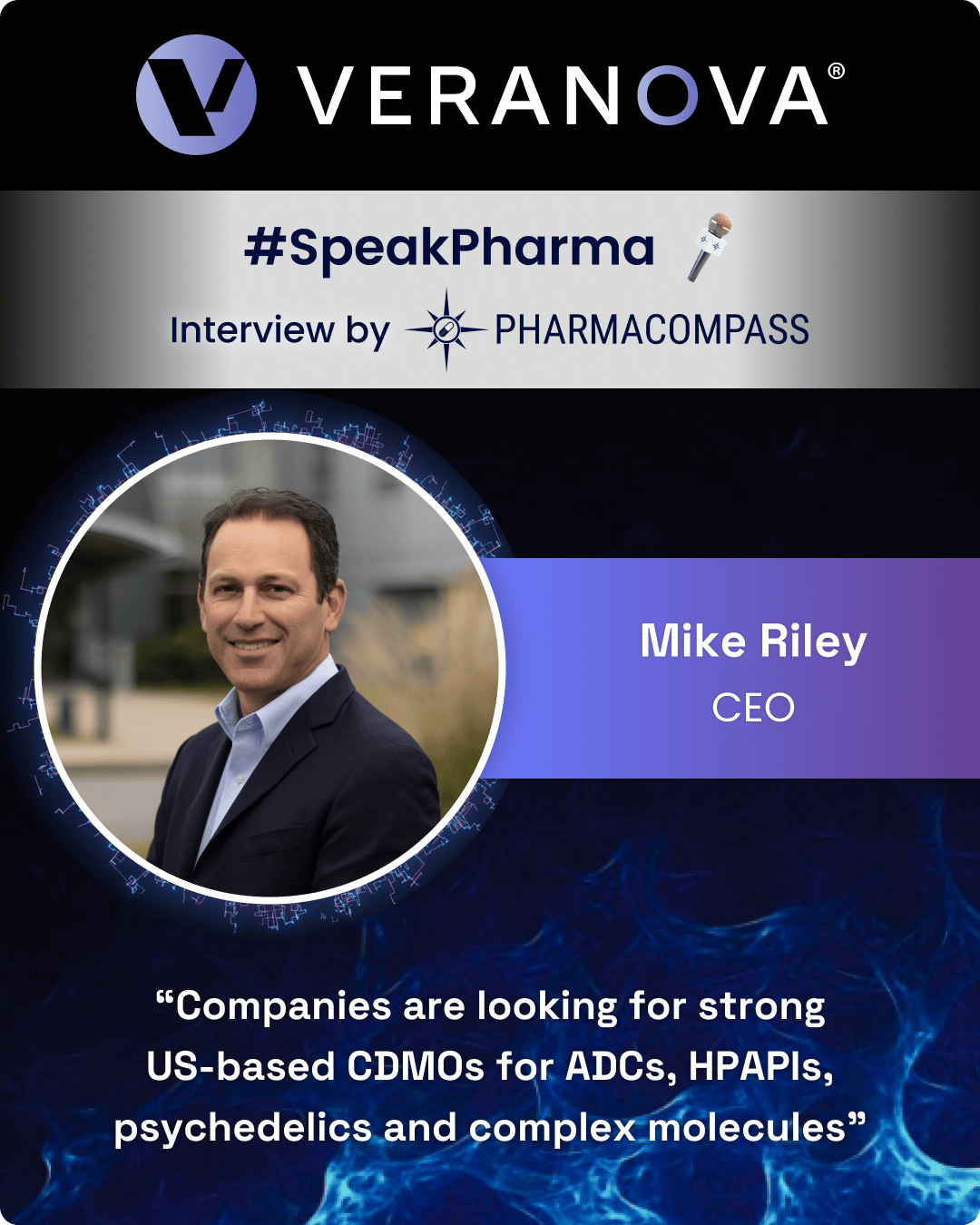
“Companies are looking for strong US-based CDMOs for ADCs, HPAPIs, psychedelics and complex molecules”
This week, SpeakPharma interviews Mike Riley, chief executive officer of Veranova, a global contract development and manufacturing organization (CDMO). Veranova specializes in the production of active pharmaceutical ingredients (APIs), antibody-drug conjugates (ADCs), high potency APIs (HPAPIs), peptides, and complex small molecule chemistries. After taking over as its CEO in 2023, Riley had announced a US$ 30 million investment at Veranova’s Devens, Massachusetts facility. Last year, the company had moved its headquarters to Devens, Massachusetts. In this interview, Riley talks about this new investment, and challenges the company is facing in working with complex molecules.  Since our last conversation with Veranova in 2024, how have customer requirements for complex and advanced molecules evolved, and how is Veranova adapting its operations to meet these changing needs?  We are continuing to see strong customer interest in advanced synthetic modalities, notably ADCs, high potent/complex small molecules and controlled substances like psychedelics. Customers are also looking for strong US-based development and manufacturing partners for these products. The investment in new high potent capacity for ADC linker payloads that we are completing this quarter in our Devens, Massachusetts facility is an example of how we are positioning Veranova to meet this demand.   Veranova works across ADCs, HPAPIs, PROTACs, peptides and oligonucleotides. What are the biggest development and scale-up challenges customers face with these newer modalities? These are all complex molecules which can require development and/or tech transfer of complex manufacturing processes as well as complex analytics. As that complexity can create unforeseen challenges during scale-up, the expertise of our process development and analytical scientists is very important to be able to troubleshoot issues and develop solutions for our customers. Veranova is expanding its ADC capabilities from linker-payload development and manufacturing into cGMP bioconjugation. How does bringing more of the ADC value chain together help customers reduce risk and accelerate development? Veranova has over 20 years of experience with the development and manufacturing of ADC linker payloads. That experience combined with our chemistry and analytical expertise logically positions Veranova to be able to provide a more integrated solution to simplify customers' supply chains. What are the most common challenges you see when moving complex molecules from laboratory development to commercial manufacturing, and how does Veranova address them during scale-up and technology transfer? The more complex the molecule, the more potential for unexpected issues to arise during tech transfer and scale-up. Having a rigorous tech transfer process as well as strong process development and analytical resources co-located on our manufacturing sites allows us to more quickly diagnose and address issues as they arise. As molecules become more potent and manufacturing processes more complex, how does Veranova balance speed and operational efficiency with quality and regulatory compliance? While we seek to be fast, flexible, and efficient in our processes, safety, quality and regulatory compliance are the top non-negotiable priorities that can never be sacrificed for speed. How are sustainability and green chemistry becoming part of Veranova’s day-to-day process development and manufacturing decisions, and can these approaches also improve cost efficiency for customers? We have a Green Chemistry Team at Veranova that has developed a proprietary tool to help us measure the environmental footprint of processes that we develop or run in our facilities. Understanding the elements of a process that drive that footprint allows our scientists to pursue process optimizations that we can measure over time. Generally we find that “greening” a process also drives better efficiencies and lower costs. What do pharma and biotech companies increasingly expect from a strategic CDMO partner, and how is Veranova evolving the way its technical, project management and manufacturing teams work with customers? The key elements that really define a strategic relationship between a sponsor and a CDMO are responsiveness and transparency in communication. Veranova takes that very seriously, and has set that expectation for all of our teams that work with our partners. We believe that comes through clearly in our customer satisfaction scores, and was recognized recently through an industry award given to Veranova for the strength of our project management.

Impressions: 1776

https://dev1.pharmacompass.com/speak-pharma/companies-are-looking-for-strong-us-based-cdmos-for-adcs-hpapis-psychedelics-and-complex-molecules

PharmaCompass
06 Nov 2026

CORPORATE CONTENT

24

DOCUMENTS (10)

    https://dev1.pharmacompass.com/pdf/party/content/veranova-party-content-65595.pdf

    https://dev1.pharmacompass.com/pdf/party/content/veranova-party-content-1658294699.pdf

    https://dev1.pharmacompass.com/pdf/party/content/veranova-party-content-53011.pdf

    https://dev1.pharmacompass.com/pdf/party/content/veranova-party-content-61276.pdf

    https://dev1.pharmacompass.com/pdf/party/content/veranova-party-content-37959.pdf

    https://dev1.pharmacompass.com/pdf/party/content/veranova-party-content-40990.pdf

    https://dev1.pharmacompass.com/pdf/party/content/veranova-party-content-58681.pdf

    https://dev1.pharmacompass.com/pdf/party/content/veranova-party-content-95098.pdf

    https://dev1.pharmacompass.com/pdf/party/content/johnson-matthey-plc-party-content-1654146392.pdf

    https://dev1.pharmacompass.com/pdf/party/content/johnson-matthey-plc-party-content-1633922688.pdf

VIDEOS (14) read-more

PHARMA & BIOTECH INSIGHTS #PharmaFlo...PHARMA & BIOTECH INSIGHTS #PharmaFlow

7read-more
read-more
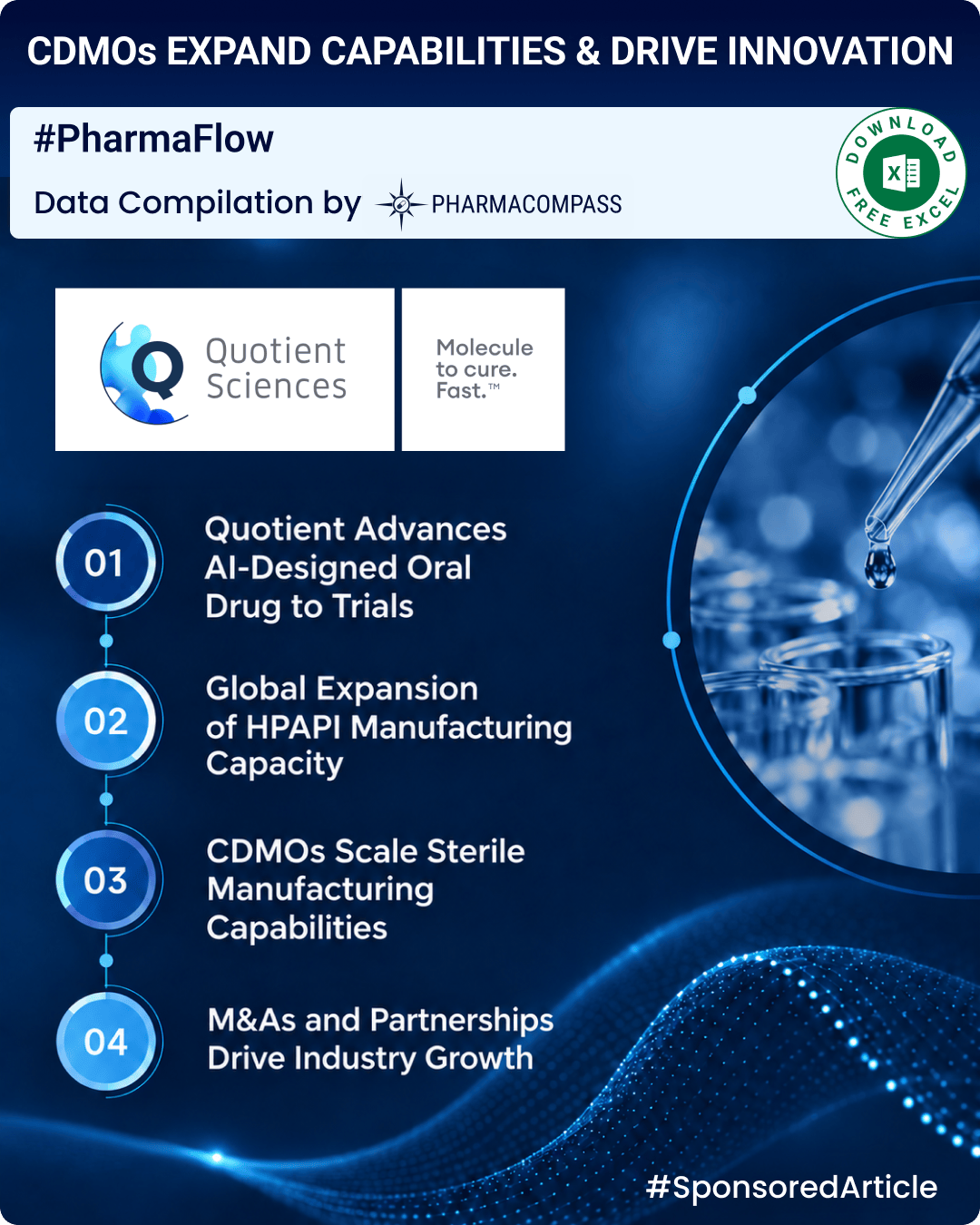
CDMO Activity Tracker: Quotient advances AI-designed oral drug product into trials; Axplora, Veranova, Evonik expand HPAPI capacity
The contract development and manufacturing organization (CDMO) sector has emerged as a key partner in new drug development. Activity Tracker has written about several changes in the past. Amongst the foremost is the use of artificial intelligence in accelerating process development, improving manufacturing efficiency, optimizing supply chains, and enabling more integrated, value-added services for pharmaceutical and biotech companies. Quotient Sciences is one such CDMO that is focusing on AI-enabled drug development. High-potency active pharmaceutical ingredient (HPAPI), or a chemical compound that produces major therapeutic effects at very small doses, have been gaining prominence. Many CDMOs, such as Quotient Sciences, Axplora, Veranova and Evonik, are expanding their HPAPI facilities, while others such as Aurigene Pharmaceutical Services are expanding their capabilities across small molecules, peptides, and biologics.  View CDMO Activity Tracker for Jan–Aug 2026 (Free Excel Available)Quotient advances AI-designed drug product into trials; Recipharm expands US capabilities  Quotient Sciences, a globally integrated contract research, development, and manufacturing organization (CRDMO) specializing in drug product development has advanced an AI-designed oral drug product into a phase 1 clinical study following  approval from the Medicines and Healthcare products Regulatory Agency (MHRA). The experimental drug combines machine learning with Quotient’s Translational Pharmaceutics platform to accelerate formulation development and clinical progression. Separately, Ipsen has invested in new equipment at Quotient Sciences’ facility in Boothwyn, Pennsylvania. The investment expands Quotient’s capability to manufacture HPAPI drug molecules and products. Recipharm has announced a multi-million-dollar investment to expand its US sterile fill-finish capabilities for biologics and advanced therapies. German CDMO Vetter Pharma has announced plans to build a state-of-the-art  commercial manufacturing facility in Saarland, Germany, as part of its €1.5 billion (US$ 1.73 billion) global investment plan. The first phase includes an investment of approximately €480 million (US$ 554 million) to significantly expand the company’s sterile injectable manufacturing capacity. Curia has expanded its Glasgow, UK sterile drug product facility by adding a vial filling line and lyophilizer. The company also enhanced its proprietary platform to accelerate biologics development and manufacturing. And Bachem plans to invest more than CHF 500 million (US$ 610.6 million) in a new large-scale production facility in Sisslerfeld, Switzerland, with commercial production expected to begin in 2030. Polpharma acquires Biofarm; Lone Star Funds to buy Lonza’s capsule & health ingredients unit  Polpharma has acquired Romanian pharmaceutical company Biofarm, strengthening its position in Central and Eastern Europe. The transaction expands Polpharma’s regional pharmaceutical manufacturing and commercial footprint. Separately, the Polish drugmaker has also invested PLN 238.7 million (US$ 63.4 million) in Starogard Gdański, Poland, to develop and manufacture RNA-based medicines, creating an end-to-end platform covering API synthesis, process development, analytics and finished drug product (FDF) manufacturing. Lone Star Funds has agreed to acquire Lonza’s Capsules & Health Ingredients (CHI) division for an enterprise value of CHF 2.3 billion (US$ 3 billion). The transaction is part of Lonza's transformation into a pure-play CDMO, with Lonza retaining a 40 percent equity stake in the CHI business. ChemExpress and Orivie Technology entered into a strategic partnership — the two companies will work to build an integrated CRO/CDMO service ecosystem. And Samsung Biologics completed the acquisition of GSK’s biologics manufacturing facility in Rockville, Maryland, thereby establishing its first manufacturing presence in the US. India-based Neuland Laboratories is investing in a dedicated process-development facility and has  also entered into a long-term strategic partnership with Gland Pharma focused on sterile API manufacturing. Under the agreement, Gland Pharma will establish a dedicated sterile manufacturing suite at its facility in Visakhapatnam. And India-based Aarti Pharmalabs has commissioned a new manufacturing block at its Tarapur facility in Maharashtra. Axplora, Veranova, Evonik expand HPAPI capacities; Mikart, Benuvia join hands for API development Germany-based Axplora has announced a US$ 60 million expansion of its Farmabios facility in Italy to increase its HPAPI manufacturing capacity. The investment strengthens its capabilities in oncology manufacturing and supports growing global demand for complex HPAPIs. Veranova is expanding its Devens, Massachusetts facility that focuses on high-potency and bioconjugation manufacturing. The expansion includes a new process-development laboratory and two HPAPI suites. Evonik has announced a US$ 100 million investment to expand its drug substance manufacturing facility in Lafayette, Indiana. The site is home to one of the world’s largest facilities for the production of APIs, and is the industry’s biggest HPAPI operation. The project enhances late-stage clinical and commercial manufacturing capabilities while strengthening the company's integrated CDMO offering. Bengaluru-headquartered Aurigene Pharmaceutical Services Limited announced a US$ 100 million investment to expand its CRDMO capabilities across small molecules, peptides, nutraceuticals, and biologics, with the first US$ 40 million invested in its Hyderabad (India) facility. US-based CDMOs Mikart and Benuvia have formed a strategic partnership to provide fully integrated, end-to-end solutions spanning API development through finished drug product manufacturing. Our view The latest CDMO activity points to a sector that is increasingly competing on specialized capabilities and integrated offerings rather than on their manufacturing capacity alone. Going forward, CDMOs with differentiated technologies, end-to-end capabilities and global manufacturing networks are likely to gain an edge over their competitors.

Impressions: 1722

https://dev1.pharmacompass.com/radio-compass-blog/cdmo-activity-tracker-quotient-advances-ai-designed-oral-drug-product-into-trials-axplora-veranova-evonik-expand-hpapi-capacity

#PharmaFlow by PHARMACOMPASS
17 Sep 2026
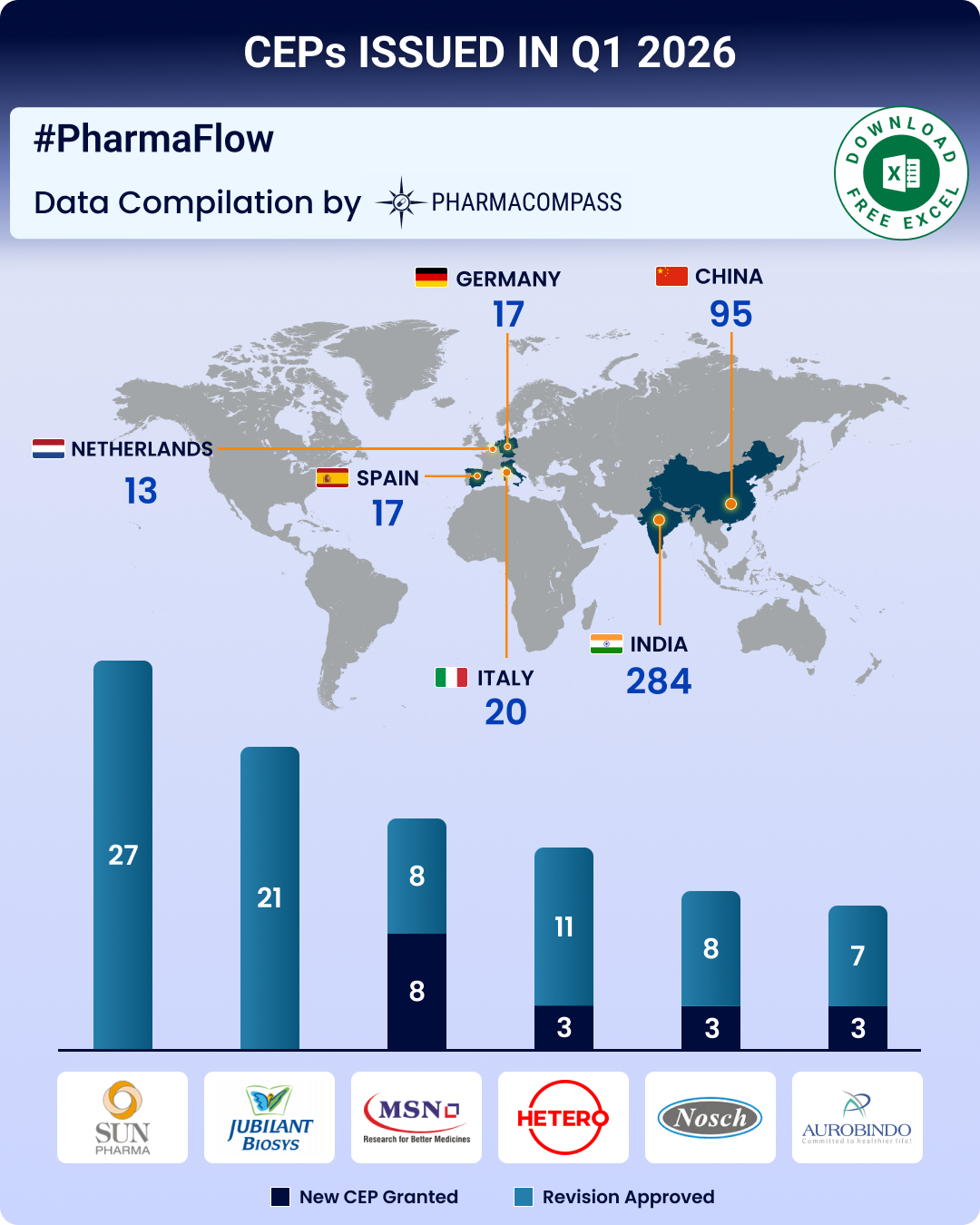
CEP Q1 2026 Update: CEP 2.0, EDQM’s new guidelines strengthen ecosystem; Indian firms top list of CEPs issued
PharmaCompass is introducing a new regulatory update that tracks developments in Certificates of Suitability to the Monographs of the European Pharmacopoeia, referred to as CEPs. These certificates are a critical regulatory instrument in the global pharmaceutical supply chain. Also known as a Certification of Suitability (COS), CEPs are issued by the European Directorate for the Quality of Medicines and HealthCare (EDQM), with or without inspection of the manufacturing site. A CEP must be renewed every five years from its original issue date to remain valid, regardless of any revisions made during the interim period. However, a CEP does not replace Good Manufacturing Practice certification. CEPs are recognized as a trusted reference for API quality, thereby simplifying global registration strategies. Apart from Europe, the CEP system is widely used by many regulatory authorities, including those in Canada, Australia, Brazil, Singapore and South Africa.  View CEPs Issued in Q1 2026 (Power BI Dashboard, Free Excel Available) CEP 2.0 enhances regulatory clarity, brings efficiency, global interoperability  There are several types of CEPs, depending on the nature of the substance and evaluation. The most common type is the Chemical CEP, which confirms that a chemically synthesized API meets standards for purity and impurity control. Then there are Herbal CEPs for herbal substances and preparations. Another key category is the TSE CEP, which addresses risks associated with transmissible spongiform encephalopathies in animal-derived materials. In addition, there are Combined CEPs that may cover multiple aspects, such as chemical quality, TSE risk, and sterility. However, biological products such as vaccines and blood products fall outside the scope of the CEP framework. In 2023, the CEP system underwent a major transformation with the introduction of CEP 2.0, which marks a shift from a largely document-based system to a more structured, transparent, and digitally aligned model. This makes it easier for companies to manage compliance while improving trust among global regulators. While increasing data and compliance requirements for API manufacturers, CEP 2.0 enables better regulatory clarity, streamlined dossier integration, and stronger global acceptance. Overall, CEP 2.0 is designed to enhance regulatory clarity while making the system more efficient and globally interoperable. Indian firms issued maximum CEPs; Sun Pharma and its subsidiaries, Jubilant Biosys top list India topped the charts for CEPs issued, both in terms of new CEPs and revisions in the first quarter (Q1) of 2026. Indian companies were issued 81 new CEPs in Q1 2026 (as against 40 in Q1 2025) and 203 revisions (as against 129 in Q1 2025). In comparison, Chinese companies were issued 42 new CEPs in Q1 2026 (against 25 in Q1 2025) and 53 revisions (against 67 in Q1 2025). Italy came a distant third, followed by Germany and Spain. India’s Sun Pharmaceuticals and its subsidiaries topped the list of companies with the maximum number of CEPs issued— while no new CEP was issued, 27 CEPs were revised in Q1 2026. At second place was Jubilant Biosys — 21 CEPs were revised in Q1 2026. In terms of products, the maximum CEPs were issued for amlodipine besylate (a calcium channel blocker used for treating hypertension), followed by sitagliptin phosphate (a type 2 diabetes medicine) and pregabalin (a drug used to treat neuropathic pain, fibromyalgia, seizures, and generalized anxiety disorder). Both amlodipine besylate and sitagliptin phosphate had not been issued new CEPs or revisions in Q1 2025. EDQM introduces new guidelines to accelerate CEP assessments The EDQM charges fees for various services related to CEPs that depend on the type of request or regulatory activity involved. In general, fees apply to handling CEP applications, revisions or renewals and for offering technical advice (where applicants seek scientific or regulatory guidance). In March 2026, the EDQM introduced two new guidelines aimed at accelerating CEP assessments. The first is a reliance-based assessment pathway, which allows regulators to leverage prior approvals from trusted authorities, such as those in the EU, UK, Australia, Canada, and the WHO pre-qualification program. The second is a fast-track assessment route designed to expedite reviews in situations such as medicine shortages and to support initiatives like the EU Critical Medicines Act. Timelines have been significantly compressed under these new pathways. Initial evaluations are completed within 46 working days, compared to up to 115 days under the standard procedure. Applicants are given 30 calendar days to respond to queries, after which regulators complete the final assessment within 23 working days. Another important regulatory update relates to electronic submissions. From April 1, 2026, the EDQM will reject non-compliant CEP applications at the point of submission. All applications must include a validated electronic Common Technical Document (eCTD) dossier along with a proper validation report, submitted in line with the updated Common European Submission Portal (CESP) guidelines. Taken together, these developments signal a more rigorous yet efficient CEP ecosystem. Our view The shift to CEP 2.0 signals a move toward greater transparency, digitalization, and global regulatory alignment. Though enhanced disclosure and stricter e-submission requirements may increase the compliance burden, especially for smaller manufacturers, the long-term gains are expected to be significant. Going forward, companies that invest in data quality and regulatory readiness stand to gain from these changes.

Impressions: 3972

https://dev1.pharmacompass.com/radio-compass-blog/cep-q1-2026-update-cep-2-0-edqm-s-new-guidelines-strengthen-ecosystem-indian-firms-top-list-of-ceps-issued

#PharmaFlow by PHARMACOMPASS
09 Apr 2026
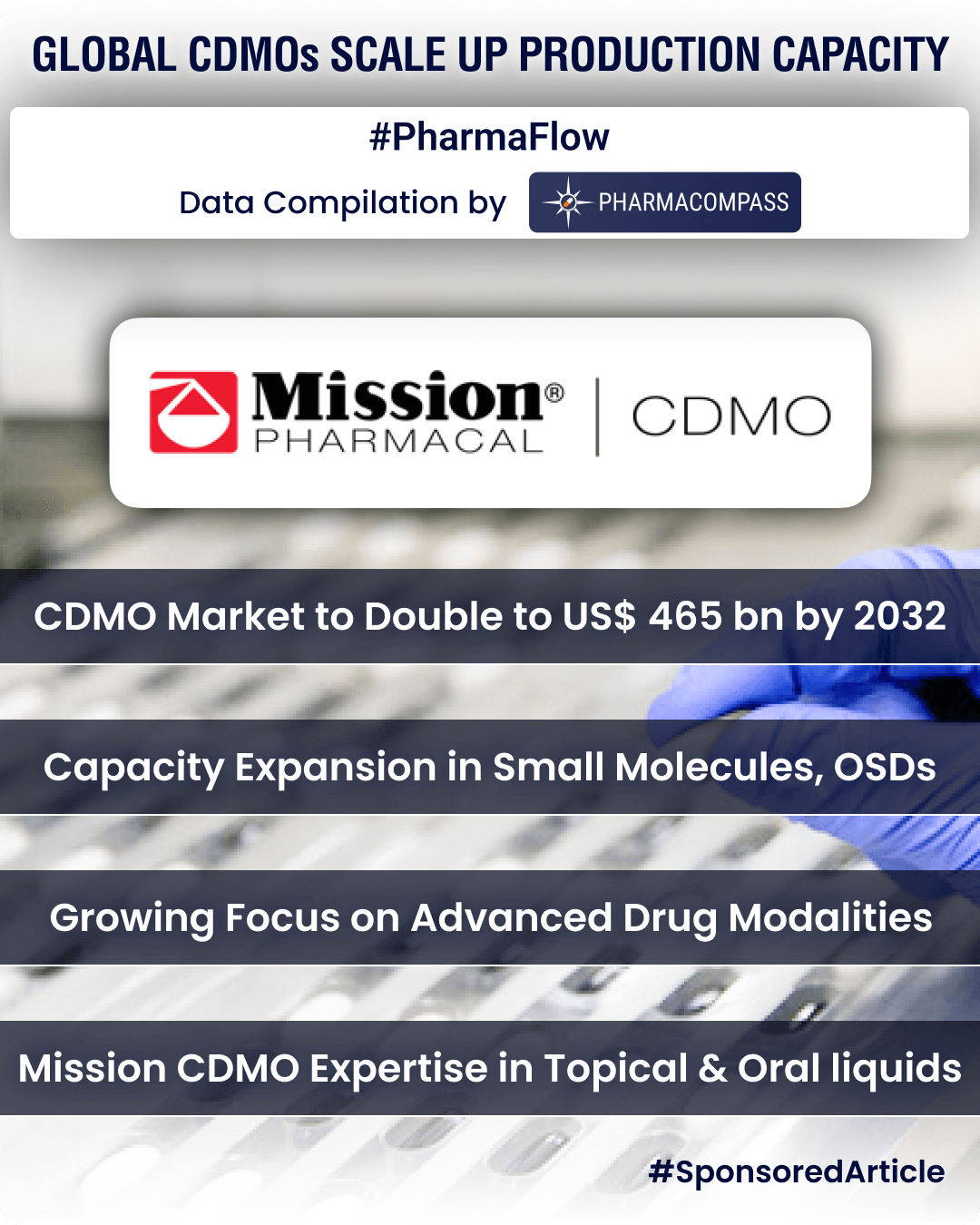
CDMO Activity Tracker: Lupin’s CDMO commissions oncology block in India; Cambrex, Axplora, Hovione expand operations
The global contract development and manufacturing organization (CDMO) market has been growing at a healthy compound annual growth rate (CAGR) of 9 percent, and is poised to attain a size of US$ 465.24 billion by 2032 from US$ 255.01 billion in 2025. During the current quarter, the sector has witnessed increase in manufacturing capacities and a rapid expansion in specialized modalities. CDMOs are gearing up for higher growth. The global antibody and antibody-drug conjugate (ADC) CDMO market, for instance, was estimated at US$ 21.1 billion in 2024 and is projected to reach US$ 45.8 billion by 2033, growing at a CAGR of 9.38 percent. Similarly, the peptide and oligonucleotide CDMO market was valued at US$ 2.8 billion in 2024, and is expected to grow at 12.8 percent CAGR, attaining a size of US$ 8.14 billion by 2033. Even though cell and gene therapies (CGTs) have been facing considerable challenges in recent years, the CDMO market for CGTs is estimated to witness a very high growth rate of 27.92 percent CAGR — catapulting it from an estimated US$ 6.31 billion in 2024 to US$ 74.03 billion by 2034. According to a report by Precedence Research, the integration of artificial intelligence in CGT manufacturing is playing an important role in optimizing cell selection, predicting treatment results and analyzing large datasets that help identify potential issues. With the world facing a growing burden of chronic diseases, and the pharmaceutical industry facing a shortage of in-house manufacturing and R&D capabilities, CDMOs in the global small-molecule market are also witnessing high growth. Currently valued at around US$ 78.01 billion, the market for small molecule CDMOs is growing at 7.14 percent CAGR and is expected to reach US$ 145.12 billion by 2034. Some of the key players in the CDMO space include Lonza, Axplora, Mission CDMO, LGM Pharma, Veranova, EUROAPI, Evonik, Thermo Fisher, Lupin Manufacturing Solutions, Bora Pharmaceuticals, Samsung Biologics, and Syngene.  View CDMO Activity Tracker for Q4 2025 (Free Excel Available) Lupin Manufacturing Solutions, Serán BioScience, Alcami Simtra expand capacities  CDMOs across the globe are increasing capacities. Lupin Manufacturing Solutions (LMS), a wholly owned subsidiary of Lupin Limited, commissioned a dedicated oncology Block at its Vizag (India) facility. The high-containment unit enhances LMS’ end-to-end CDMO capabilities for high potent active pharmaceutical ingredients (HPAPIs), supporting oncology programs from preclinical development through commercial manufacturing.  American CDMO Serán BioScience completed two of the three new buildings and commenced the construction of a third facility at its new 100,000-square-foot commercial manufacturing campus in Oregon (US). The campus includes a 50,000-square-foot facility dedicated to specialized packaging and supply chain operations. Similarly, Texas-based Mission CDMO has added new large-scale equipment for the production of oral solutions and semi-solids, thereby increasing its annual capacity to 13 million liters. New Jersey-based CDMO Simtra is expanding manufacturing operations in both the US and Germany. In Halle/Westfalen, Germany, Simtra commissioned a conjugation and purification suite and inaugurated a new building equipped with two high-speed isolator lines for syringes and vials. And American CDMO Alcami Corporation has expanded its laboratory services at its Creekstone Drive facility in Durham, North Carolina. Cambrex, Axplora, Hovione expand operations; India’s Syngene upgrades its sites In other capacity expansion news, US-based CDMO Cambrex has announced a US$ 120 million investment to expand its manufacturing operations in the US. The investment increases the large-scale manufacturing capacity at its Charles City, Iowa site, by 40 percent, taking total capacity close to one million liters. European CDMO Axplora has stated that total investments initiated across its global network in 2025 will exceed €100 million (US$ 117 million). This includes €60 million (US$ 70.4 million) allocated to the ongoing expansion of its Mourenx (France) site, along with €35 million (US$ 41 million) at its Gropello (Italy) facility and €8.5 million (US$ 9.9 million) at its Vizag (India) site, both announced earlier in the year. In addition, Axplora has expanded its ADC manufacturing capabilities at its Le Mans (France) site. India-based Syngene International has announced site upgrades aimed at accelerating drug discovery and development timelines for its clients. The investments include a dedicated peptide laboratory at its Bengaluru site and the introduction of advanced automation across drug metabolism and pharmacokinetics and direct-to-biology workflows in Hyderabad. Portugal-headquartered Hovione has completed an initial US$ 100 million investment cycle to expand its manufacturing site in East Windsor, New Jersey. The expansion supports Hovione’s strategy to grow its US operations and strengthen its integrated capabilities across drug substance, drug product intermediates, and finished drug products. Lonza buys microbial testing firm, launches two products for manufacturing CGTs Swiss CDMO Lonza has launched two products — TheraPEAK AmpliCell Cytokines and TheraPEAK 293-GT Medium —to expand its GMP-grade solutions for CGT manufacturing. TheraPEAK products are used in FDA-approved therapies and over 130 clinical trials globally. The expanded portfolio provides scalable, regulatory-ready solutions to support workflows from discovery through clinical development. Lonza has  also signed an agreement to acquire Redberry SAS, a France-based microbial testing technology company. The acquisition adds Redberry’s Red One rapid microbial detection platform to Lonza’s portfolio. Separately, Oxford Biomedica has signed and closed an asset purchase agreement to acquire a custom-built viral vector manufacturing facility for CGTs in North Carolina (US) from RTP Operating, LLC, a subsidiary of National Resilience Holdco. OXB paid £3.4 million (US$ 4.5 million) for the assets. Bora partners Corealis for oral drugs; Piramal, IntoCell join hands for bioconjugates Bora Pharmaceuticals and Corealis Pharma have entered into a strategic alliance to provide end-to-end services for oral soild dose (OSD) development and manufacturing. The collaboration offers a scalable pathway from early development to commercial production for pharmaceutical and biotech companies. Piramal Pharma Solutions has signed a non-exclusive and non-binding MoU with IntoCell. The collaboration combines IntoCell’s proprietary drug-linker technologies with Piramal’s experience in developing and manufacturing ADCs through its ADCelerate platform. In other deals, UK-based eXmoor Pharma has entered into two collaborations to support the development of CGTs. The first is with University College London’s Translational Research Office, while the second is with Royal Free London NHS Foundation Trust’s Cell and Vector Innovation Centre. Our view The current spate of investments underscores how the CDMO sector is emerging as a capability-driven ecosystem. While incremental capacity additions continue across small molecules and OSD forms, the sharper strategic focus is clearly on high-growth, high-complexity areas such as ADCs, CGTs, peptides and oligonucleotides.

Impressions: 4136

https://dev1.pharmacompass.com/radio-compass-blog/cdmo-activity-tracker-lupin-s-cdmo-commissions-oncology-block-in-india-cambrex-axplora-hovione-expand-operations

#PharmaFlow by PHARMACOMPASS
18 Dec 2025
CDMO Activity Tracker: Veranova, ChemExpress invest in ADC facilities; Cohance to set up oligonucleotide facility in India
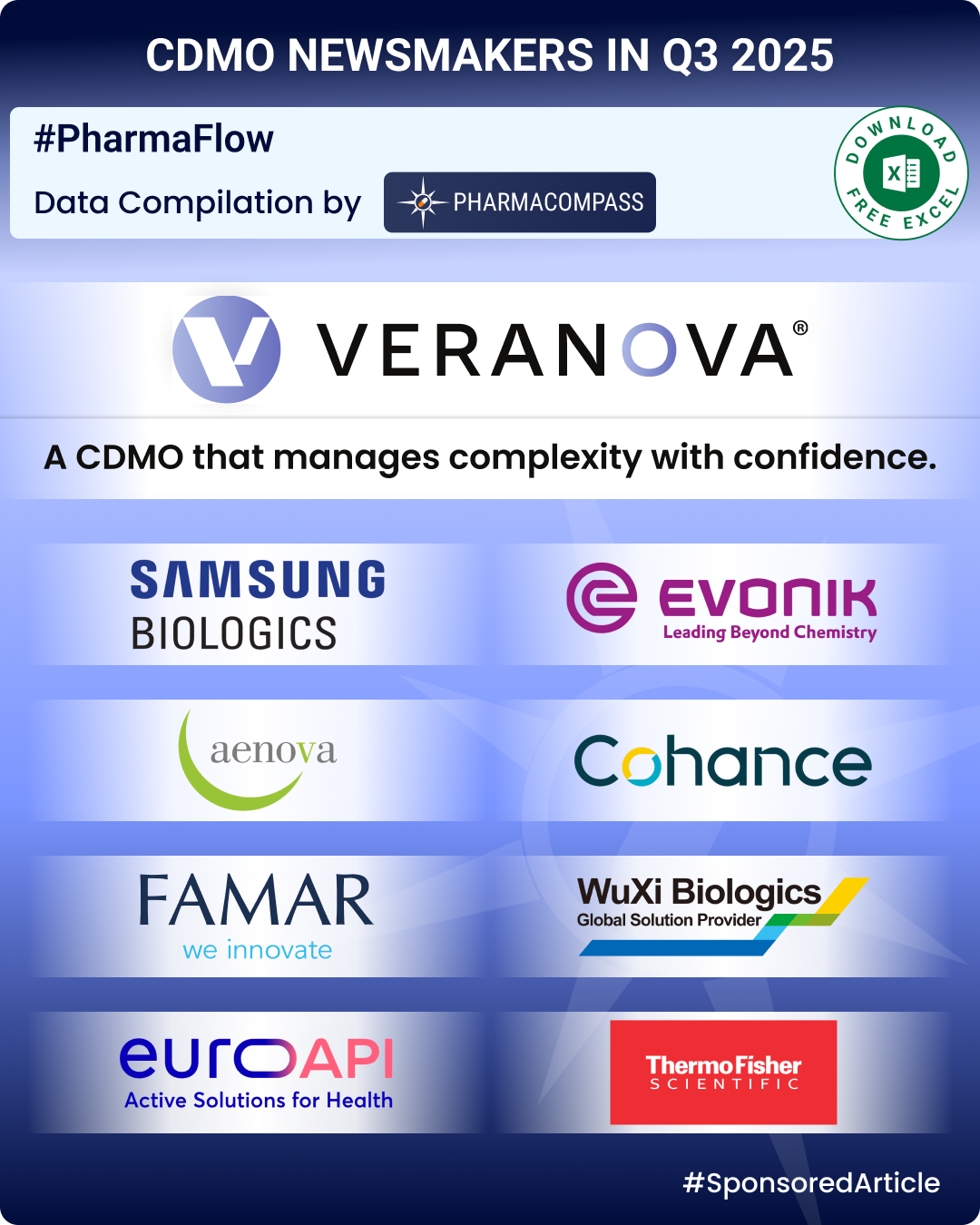
The contract development and manufacturing organization (CDMO) sector has emerged as a key partner in new drug development. This was evident from the strategic investments, partnerships, and expansions witnessed in the third quarter (Q3) of 2025. Several CDMOs, such as Cohance Lifesciences, Fermion Oy, Axplora, AGC Pharma Chemicals invested in new projects. Others, including Veranova, Aenova, and Biosynth, expanded capacities, while Ofichem strengthened its footprint with the acquisition of Avivia BV. CDMOs like Fareva, Evonik, and Samsung Biologics forged strategic partnerships for growth. During Q3, the sector continued to adopt artificial intelligence (AI). This prompted the US Food and Drug Administration (FDA) to issue guidance that recognizes the increasing use of AI and data analytics in drug development.  View CDMO Activity Tracker for Q3 2025 (Free Excel Available) Cohance, Veranova invest in bioconjugation suites in US; ChemExpress inks ADC deal  Earlier this year, Indian drugmaker Suven Pharmaceuticals Limited merged with  leading CDMO Cohance Lifesciences Limited. The merged entity — Cohance Lifesciences — has invested US$ 10 million in a current Good Manufacturing Practice (cGMP) bioconjugation suite at its subsidiary NJ Bio in Princeton, New Jersey.  NJ Bio is executing a major program for an existing innovator client with multiple antibody-drug conjugate (ADC) candidates. Cohance also announced an INR 230 million (approximately US$ 2.58 million) investment in a cGMP oligonucleotide facility at its Hyderabad (India) site. Veranova’s Devens (Massachusetts) site successfully passed a routine FDA cGMP surveillance inspection with a “No Action Indicated” (NAI) classification. Earlier, the company had initiated a US$ 50 million investment to expand its ADC and bioconjugate capabilities at its Devens site. This includes a 9,000-square-foot facility expansion with a new process development lab, two additional cGMP suites, and state-of-the-art bioconjugation development and manufacturing capabilities. These initiatives strengthen the site’s highly potent API (HPAPI) and ADC development and manufacturing capabilities. Biosynth has expanded its Berlin facility with a new GMP bioconjugation suite. The expansion supports the company’s manufacturing capabilities in conjugate vaccines, conjugate drugs, activated polyethylene glycol (PEGs), and polymer-based drug delivery excipients. ChemExpress, Mabwell Bioscience, and Insilico Medicine have entered into a strategic partnership to jointly develop a large ADC compound library and advance next-generation ADC candidates. The collaboration combines Mabwell’s antibody and ADC technology, Insilico’s AI-powered drug design platform, and ChemExpress’s expertise in linker-payload chemistry. Together, they aim to build a complete, AI-driven ADC development model that accelerates discovery, optimization, and commercialization. This partnership is expected to enhance R&D efficiency and deliver safer, more effective cancer treatments. Fermion, Axplora, Aenova increase API manufacturing capacities; ICE Pharma expands India facility Finnish CDMO Fermion Oy has launched a renovation project at its Hanko (Finland) production site to modernize its API manufacturing capabilities. This expansion is part of Fermion's broader strategy to increase production, enhance flexibility in the manufacturing of both existing and future pharmaceutical products, and enable potential contract manufacturing opportunities. German CDMO Axplora has announced a €6.5 million (approximately US$ 7.5 million) investment to expand its API manufacturing capacity at its Vizag site in India. This expansion aims to strengthen both production capabilities and supply chain resilience. India-based Aarti Pharmalabs has inaugurated the first phase of its greenfield manufacturing facility in Gujarat (India). This expansion aims to bolster Aarti's CDMO and contract manufacturing organization (CMO) services, targeting a revenue goal of INR 10 billion (approximately US$ 112 million). Snapdragon Chemistry, which was acquired by Cambrex in 2023, has expanded its Massachusetts facility to better support peptide drug development and manufacturing. With this upgrade, the company can now handle peptide projects from early development through full-scale manufacturing. Italy-headquartered ICE Pharma has expanded its Raichem facility in India. The new facility will enhance the production of ursodeoxycholic acid (UDCA), an API it derives from chicken bile. This expansion increases the site’s raw UDCA output by 120 metric tons annually. Spain-headquartered AGC Pharma Chemicals inaugurated a new advanced manufacturing plant in Barcelona, with an investment of €110 million (approximately US$ 128.3 million). The plant spans 7,500 square meters and integrates cutting-edge technologies to support the entire drug development lifecycle — from R&D to commercial manufacturing. This represents a 30 percent increase in the company’s production capacity and introduces a segment dedicated to HPAPIs. Germany-headquartered Aenova has launched a new hot melt extrusion platform at its Regensburg (Germany) site. This new equipment enables the production of advanced drug formulations, while handling all testing and quality checks in-house. The move strengthens Aenova’s capabilities in developing and manufacturing complex medications. US-based Cytovance Biologics has introduced in-house formulation development services, enhancing its role as a comprehensive partner for biologic drug developers. These services utilize quality-by-design principles to ensure speed, safety, and precision in current and future client programs. Ofichem acquires Avivia BV; Evonik, Samsung Biologics form strategic collaborations Europe-based CDMO Ofichem Group announced the acquisition of Avivia BV, a formulation development company in the Netherlands. This acquisition is part of Ofichem’s strategy to become a fully integrated provider of development solutions across both drug substance and drug product, with a focus on complex formulations. Ofichem has also acquired Meribel Pharma Solutions’ site in Uppsala (Sweden) to strengthen its support for biotech innovators and expand its presence in the Nordic region.  Simtra BioPharma Solutions has acquired a 65-acre property near its Bloomington, Indiana (US) facility, adding over 300,000 square feet of potential expansion space. With this site, Simtra now has the flexibility to rapidly expand in the US. German specialty chemicals company Evonik is partnering with German biotech Ethris to develop and commercialize a next-generation lipid nanoparticle (LNP) platform for delivering nucleic acid therapies. Evonik will assist in formulation using Ethris’ SNaP LNP technology. The LNP market alone is projected to grow to US$2.3 billion by 2032. Luxembourg-headquartered Fareva has partnered with Zhaoke Ophthalmology to expand its footprint in China’s pharma market. Zhaoke will act as Fareva’s go-to partner for customers seeking pharmaceutical manufacturing in China. Samsung Biologics has signed a 1.8 trillion won (US$ 1.3 billion) manufacturing agreement with an undisclosed US-based drugmaker. And UK-based eXmoor Pharma has partnered with Anthony Nolan to provide end-to-end services for cell therapy developers. Our view The global CDMO market, valued at around US$ 255 billion in 2025, is projected to grow to over US$ 465 billion by 2032. Significantly, about 60 percent of new drug approvals in the US and over 65 percent in Europe now involve CDMO support. The developments outlined above underscore the increasing role CDMOs are playing today in bringing about growth and innovation in the pharmaceutical industry.

Impressions: 4879

https://dev1.pharmacompass.com/radio-compass-blog/cdmo-activity-tracker-veranova-chemexpress-invest-in-adc-facilities-cohance-to-set-up-oligonucleotide-facility-in-india

#PharmaFlow by PHARMACOMPASS
16 Oct 2025
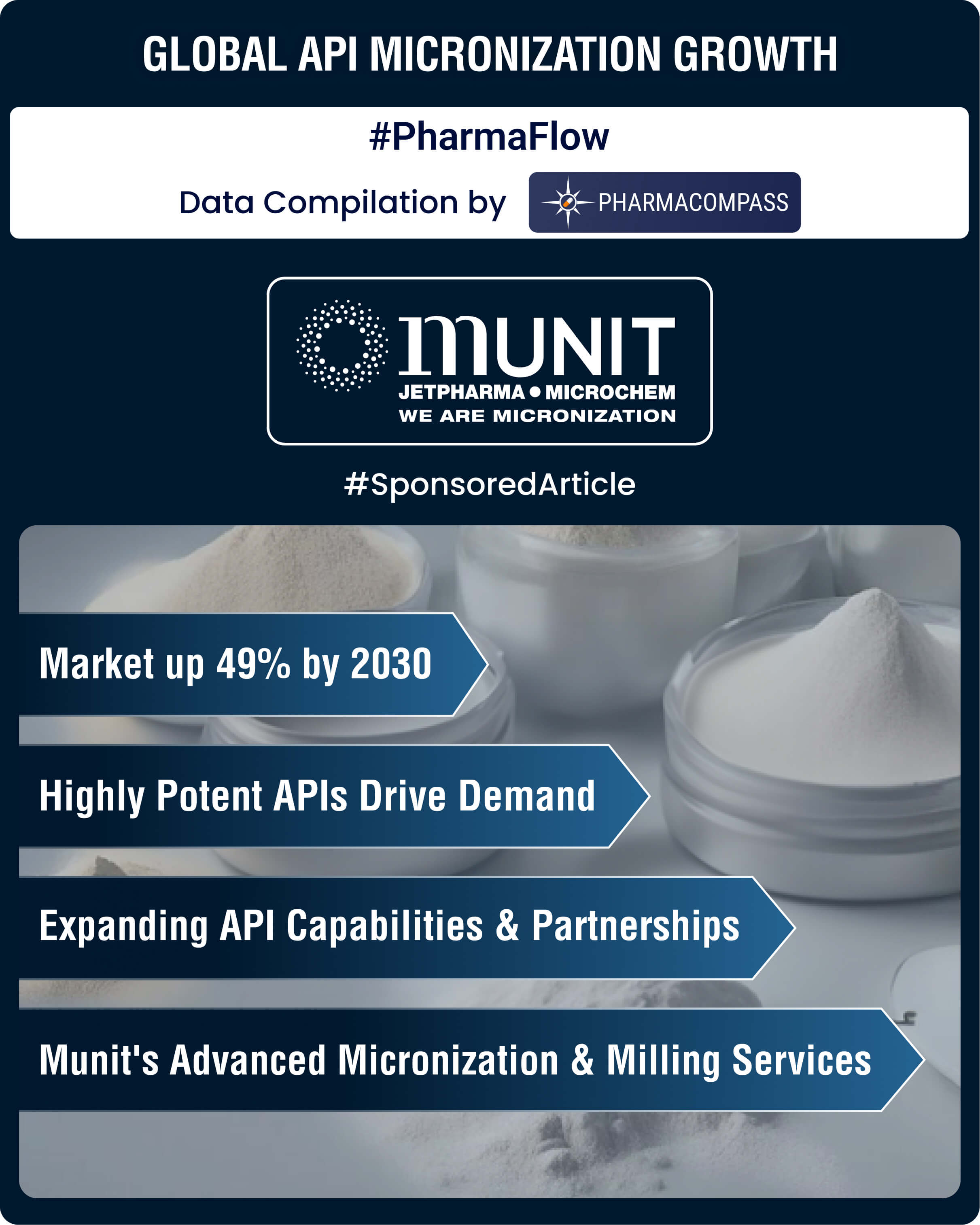
Global API micronization market set to surge 49% by 2030, led by specialized industry pioneers
Precise particle size control has become the cornerstone of modern pharmaceutical manufacturing. With highly potent active pharmaceutical ingredients (HPAPIs) and complex formulations driving unprecedented demand, micronization technology is no longer optional — it's critical. The market reflects this urgency. The global API micronization market will jump from US$ 2.47 billion in 2024 to US$ 3.68 billion by 2030 — a 49 percent surge driven by a robust 6.84 percent CAGR. What's powering this growth? Strategic innovation by industry leaders. Companies like Munit SA, Lonza, Catalent, Veranova, EUROAPI, AGC Pharma Chemicals, Hovione and Coral Drugs aren't just participating — they're defining the future of pharmaceutical particle engineering. The Micronization Landscape: How leading companies are advancing pharmaceutical particle engineering  The API micronization space is being shaped by companies with specialized expertise. Munit’s proprietary fluid jet milling technology brings particle sizes down to the 1-micron level — critical for inhalation therapies. In addition, this technology enables precise control over particle size distribution without mechanical impact, making it ideal for heat-sensitive and high-potency APIs. With decades of hands-on experience, Munit ensures batch-to-batch consistency, scalability from R&D to commercial volumes, and full compliance with GMP standards.  Munit offers high-containment isolators — including glove boxes for R&D and half-suit isolators for larger batches — with industry-leading containment levels, limiting airborne drug exposure to as low as 0.025 micrograms per cubic meter. This makes it particularly well-suited for handling highly potent or sensitive compounds, exceeding the capabilities of other commercial-scale players like Catalent, who typically achieve containment levels of 0.05 micrograms per cubic meter or higher. EUROAPI has taken a broad particle engineering approach, offering both micronization and spray drying across multiple dosage routes — oral, inhaled, and parenteral. AGC Pharma Chemical leverages spray drying and amorphous solid dispersion technologies across small molecules, peptides, ADCs, and oligonucleotides, exemplifying the evolving intersection of particle engineering and modern drug delivery innovation. Coral Drugs delivers cutting-edge technology and customization capabilities that tailor particle sizes to specific client requirements across tablets, injectables, and topicals. This dynamic competitive landscape continues to evolve as companies expand capabilities and form strategic partnerships. This year, Dec Group announced the launch of their cutting-edge Micronization Suite, now operational in Brick, New Jersey, while Lonza joined the Centre for Continuous Manufacturing and Advanced Crystallisation, an international research hub, to develop innovative continuous processing and crystallization solutions. Selecting the right micronization partner: Key success factors In a pharmaceutical landscape increasingly defined by complexity, precision, and speed-to-market, the choice of a micronization partner can significantly influence a drug’s success. Among the players in this space, Munit SA has emerged as a trusted and strategic ally for pharmaceutical companies worldwide. But what exactly sets Munit apart in the micronization market? To begin with, Munit SA brings over 60 years of experience in particle size engineering. This legacy is not just a number; it reflects decades of accumulated knowledge, process refinement, and a deep understanding of how particle size impacts drug performance. In an industry where even minor deviations can compromise efficacy or safety, this level of experience is invaluable. It has delivered over 500 successful micronization projects to more than 150 customers globally. At its core, Munit SA is laser-focused on micronization and milling — not as ancillary services, but as its primary mission. Their facilities are designed for processing high-potency APIs, cytotoxic and cytostatic compounds, non-beta-lactam antibiotics, steroids, and controlled substances under stringent containment protocols. The company also handles inhalation products, peptides, biological drugs, generics, and R&D compounds. Whether it's micronization for ophthalmic formulations, transdermal or oral products, Munit offers a tailored approach. It stands as a world-leading provider of micronization services in inhalation powders with particle sizes of 1-5 microns and specialized oncology applications for small molecules. In an increasingly complex global landscape, Munit SA addresses supply chain challenges through its dual-site operational model, with facilities in Switzerland (Jetpharma SA) and Italy (Microchem S.r.l). This strategic setup mitigates risks from regulatory changes, geopolitical tensions, or environmental disruptions, ensuring continuous production and delivery of critical APIs. This resilience makes Munit a trusted partner for companies prioritizing business continuity. Why pharmaceutical companies choose Munit for advanced micronization and milling Munit’s proprietary MC Jet Mill is a testament to its engineering excellence. For heat-sensitive APIs, Munit’s cryogenic micronization process uses liquid nitrogen to cool materials, preventing thermal degradation and preserving the integrity of delicate molecules. This is particularly valuable for biologics and APIs with low melting points, where stability is paramount. Additionally, Munit’s under containment micronization employs advanced systems to safely handle HPAPIs, protecting both operators and the environment while meeting stringent regulatory standards.  Their co-micronization service, which processes APIs alongside excipients, further enhances formulation stability and solubility, offering innovative solutions for complex drug profiles. These capabilities, executed under Good Manufacturing Practices (GMP), make Munit a reliable choice for pharmaceutical companies seeking precision and quality. While micronization is Munit’s flagship, it offers milling services through an array of technologies, each suited to specific needs. The Pin Mill uses a grinding chamber and particle size reduction is achieved due impact against a high-speed pin rotor, producing sizes from 50 to 150 microns. It’s particularly effective for APIs needing improved flow for tableting, offering precise size control that ensures uniformity. The Quadro Co-Mill excels at soft de-lumping and homogenization, using a conical sieve and impeller to gently process powders without altering primary particle sizes. For tougher materials, the HammerMill C-10 employs hammer bars on a rotor to crush particles. State-of-the-Art Particle Engineering: Munit's strategic innovation push delivers next-gen solutions Munit’s leadership in micronization is underpinned by a deliberate and sustained investment in innovation — aimed at building the next generation of particle size engineering. In response to client challenges with condensation and product degradation, Munit developed a proprietary conditioning system that precisely controls humidity and temperature. Engineered with ergonomic design and fluid dynamics principles, their machine represents a qualitative leap in conditioning. Munit's new AIFA-approved Building C transforms the Italian hub's capacity. Equipped for high potent, toxic, cytotoxic, and cytostatic compounds, alongside hormones, it features cutting-edge safety systems and integrated technologies, enabling broader API processing with precision and compliance. Munit has merged quality assurance and regulatory affairs into one strategic unit, streamlining workflows and enhancing client responsiveness during critical validation phases. This delivers tailored regulatory support and accelerates time-to-market. These initiatives position Munit at the forefront of particle size engineering, where state-of-the-art innovation, regulatory excellence, and client-centric design converge to set new industry standards. Our view The API micronization market is projected to grow 49 percent to US$ 3.68 billion by 2030. In this evolving landscape, companies that combine deep technical expertise with operational resilience are positioned to capture the greatest value. Munit SA exemplifies this winning formula.

Impressions: 9178

https://dev1.pharmacompass.com/radio-compass-blog/global-api-micronization-market-set-to-surge-49-by-2030-led-by-specialized-industry-pioneers

#Phispers by PHARMACOMPASS
10 Sep 2025
CDMO Activity Tracker: Veranova, Carbogen lead ADC investments; Axplora, Polfa Tarchomin, Famar expand European footprint
During the second quarter (Q2) of 2025, contract development and manufacturing organizations (CDMOs) made substantial investments in specialized therapeutic manufacturing. The quarter also saw CDMOs pursue high-value, complex manufacturing niches, particularly in antibody-drug conjugates (ADCs), cell and gene therapies (CGTs) and oligonucleotides. Alongside these trends, Q2 also saw CDMOs strengthen their footprint in the United States amid concerns over rising tariffs and unpredictable trade policies being enforced by the Trump administration. Regeneron Pharmaceuticals committed over US$ 3 billion through a 10-year agreement with Fujifilm Diosynth Biotechnologies to nearly double its US manufacturing capacity for biologics. Under this agreement, Fujifilm will manufacture and supply drug products for Regeneron at its large-scale facility in Holly Springs, North Carolina. Thermo Fisher Scientific announced plans to invest an additional US$ 2 billion in the US over four years, reinforcing its manufacturing and R&D capabilities. With 64 facilities spread across 37 states, Thermo Fisher aims to bolster American innovation and competitiveness. Similarly, Piramal Pharma announced a US$ 90 million investment plan for expanding two facilities in the US, thereby bringing its total investment in the country to US$ 570 million.  View CDMO Activity Tracker for Q2 2025 (Free Excel Available) Veranova, Carbogen lead ADC wave; Axplora doubles down on HPAPI production in Italy  The quarter saw substantial investments in ADC manufacturing. Veranova announced a US$ 20 million investment in bioconjugation development and cGMP manufacturing capacity at its Devens, Massachusetts campus. With this investment, Veranova will be able to provide a more comprehensive suite of services to its partners developing ADCs and other bioconjugates. Veranova’s total investment in the Devens facility now stands at over US$ 50 million.  Swiss CDMO Carbogen announced a US$ 31 million co-investment with an unnamed Japanese investor to expand its capabilities across its Aarau and Neuland (Switzerland) facilities. The facility will address increasing demand for complex and high-value compounds such as ADC drug linkers. Axplora announced a further €35 million (US$ 41 million) expansion of its Farmabios site in Italy, doubling the facility to approximately 108,000 square meters by mid-2026. This investment raises its total spend on the site to over €80 million (US$ 94.05 million) since 2019, supporting the production of highly potent active pharmaceutical ingredients (HPAPIs). Farmabios now stands as a key hub in Axplora’s global CDMO network. Polish pharmaceutical manufacturer Polfa Tarchomin is positioning itself as a significant player in the European CDMO market through its investment in the Center for Development and Production of Highly Potent Drugs. This 12,000 square meter facility has two state-of-the-art production lines designed for filling vials and pre-filled syringes with an annual capacity of 26 million product units. Skyepharma’s projected annual revenues from oncology-linked activities touched €10 million (US$ 11.2 million). The CDMO’s facility in Saint-Quentin-Fallavier is equipped to handle cytotoxic and cytostatic compounds, and is one of the few facilities in France capable of managing HPAPIs for oral anticancer treatments. Athena acquires Medipha Santé, Famar buys MiP Pharma’s German site to strengthen European footprint During the quarter, several CDMOs enhanced their strategic capabilities through M&As. Athena Pharmaceutiques acquired  Medipha Santé to build a fully integrated pharmaceutical services platform in Europe. Based in Paris, Athena has strengthened its commercial and regulatory toolbox by bringing aboard Medipha Santé’s 35-strong team, which supports over 100 partner organizations and files approximately 350 dossiers annually with ANSM and other European agencies. With this integration, Athena positions itself as a one-stop CDMO partner. With the acquisition of MiP Pharma’s sterile manufacturing site in Homburg, Germany, the Famar Group has expanded its capabilities in aseptic and lyophilized fill-and-finish operations. The acquisition has strengthened Famar’s position in sterile drug manufacturing. The CDMO now has seven manufacturing facilities in Europe. PCI Pharma Services’ acquisition of Ajinomoto Althea has established a world-class, large-scale manufacturing hub in the San Diego region with state-of-the-art aseptic facilities for prefilled syringes, cartridges and high-potent formulations such as ADCs. PCI Pharma is now amongst the few US-based CDMOs capable of comprehensive ADC manufacturing. Samsung Biologics’ strategic spinoff of its biosimilar business stood out as a significant corporate restructuring exercise during the quarter. The separation of Samsung Bioepis, tentatively renamed Samsung Epis Holdings, aims to enhance Samsung Biologics’ strategic focus and build client trust, as it eliminates potential conflicts between CDMO services and proprietary drug development. The move came after Samsung Biologics inked a contract worth 737.3 billion Korean won (US$ 518 million) with an undisclosed US pharmaceutical company. WuXi Biologics announced a US$ 167 million divestment of its German facility to Terumo and broke ground on a microbial production plant in China. National Resilience, which was launched five years ago as the US drug manufacturer dedicated to broadening access to medicines and protecting biopharma supply chains, said it is shuttering six of its 10 facilities. The company said the sites were “not being fully utilized.” MilliporeSigma, Simtra form 5-year ADC alliance; Silexion partners Catalent for siRNA development Merck KGaA’s MilliporeSigma and Simtra struck a five-year strategic alliance, combining expertise across the ADC value chain to reduce development timelines and complexity for biopharmaceutical companies. Viralgen collaborated with Trogenix to rapidly scale product supply for TGX-007, an AAV gene therapy for glioblastoma (a type of cancer of the brain and spinal cord).  Silexion announced a collaboration with Catalent for small interfacing RNA (siRNA) development and manufacturing. Catalent’s Limoges (France) facility will conduct formulation development and clinical manufacturing for Silexion’s SIL204 candidate, supporting both systemic and intra-tumoral delivery formulations. Skyepharma’s collaboration with Eneapharm through the Skyehub platform aims to support the treatment of patients suffering from exocrine pancreatic insufficiency, including those affected by cystic fibrosis or pancreatic cancer. Orion Corporation reached an agreement with Shilpa Biocare for the distribution of recombinant human albumin in Europe. Meanwhile, Aenova announced the launch of its Aenovation program, an initiative designed to fast-track early development of pharmaceutical formulations. The program addresses the critical challenges of bioavailability and time-to-market faced by poorly soluble drug candidates. Our view  The quarter saw CDMO developments mimic the broader trends in the pharmaceutical industry, such as onshoring of critical manufacturing capabilities in the US, consolidation of specialized expertise through strategic partnerships, and the relentless focus on emerging therapeutic modalities that promise to transform patient care. With CDMOs continuing to invest in next-generation manufacturing capabilities, we expect the sector to play a crucial role in drug innovation.

Impressions: 10438

https://dev1.pharmacompass.com/radio-compass-blog/cdmo-activity-tracker-veranova-carbogen-lead-adc-investments-axplora-polfa-tarchomin-famar-expand-european-footprint

#PharmaFlow by PHARMACOMPASS
10 Jul 2025
CDMO Activity Tracker: Bora, PolPharma make acquisitions; Evonik, EUROAPI, Porton announce technological expansions
The contract development and manufacturing organization (CDMO) space continued to grow at an impressive pace in the second half (H2) of 2024, with significant progress being made across cell and gene therapies (CGTs), antibody-drug conjugates (ADCs), novel drug modalities, and digital solutions. Some of the key players in the CDMO space include Lonza, EUROAPI, Evonik, SEQENS, Fujifilm Diosynth Biotechnologies, Quotient Sciences, Axplora, PolPharma, and Famar from Europe; Mission CDMO, LGM Pharma, Veranova, and Thermo Fisher from the US; and Samsung Biologics, Bora Pharmaceuticals, and Porton Pharma Solutions from Asia. Texas-based Mission CDMO has been in the pharma industry for over 75 years. Today, it is known for its comprehensive contract services and high-quality manufacturing capabilities that have reinforced its position as a trusted partner.  View CDMO Activity Tracker for H2 2024 (Free Excel Available) Bora, PolPharma drive CDMO acquisitions; Samsung Biologics clocks over US$ 4 bn in contract value  The second half of 2024 saw several high-value acquisitions and expansions that reshaped the CDMO landscape. South Korea-based Samsung Biologics clocked a cumulative contract value of over US$ 4 billion. It signed its largest manufacturing deal with an Asia-based pharmaceutical company, valued at US$ 1.24 billion. It also announced a series of manufacturing deals with a European drugmaker worth over US$ 668 million. Samsung Biologics is also building a dedicated ADC facility that is likely to be complete soon.  Taiwan’s largest CDMO, Bora Pharmaceuticals, announced its second acquisition of the year. It bought New Jersey-based Pyros Pharmaceuticals, a developer of rare disease treatments. Pyros recently launched Vigafyde, the only ready-to-use vigabatrin oral solution and the first new product approved to treat infantile spasms in 15 years. Bora also announced a strategic investment in Tanvex Biopharma, thereby creating a global platform for biologics development and supply. PolPharma acquired Ziołolek, a renowned manufacturer of dermatological products, medical devices, and OTC medicines, thereby expanding its product portfolio. It also launched a state-of-the-art HPAPI (highly potent active pharmaceutical ingredients) facility in Poland, which is being seen as another step towards securing Europe’s drug supply chain. In other developments, Avid Bioservices got acquired by funds managed by Ampersand and British healthcare investment firm GHO Capital Partners in an all-cash deal worth US$ 1.1 billion. And Agilent Technologies agreed to acquire Canadian specialty CDMO Biovectra for US$ 925 million, thereby enhancing its capabilities in gene-editing technologies and sterile fill-finish services. Evonik, EUROAPI, Porton Pharma, GSK announce tieups, technological expansions Several CDMOs announced new collaborations and acquired new capabilities to enhance their service offerings. Evonik expanded its formulation capabilities for lipid nanoparticles used for mRNA and gene therapies through a collaboration with KNAUER Wissenschaftliche Geräte. This partnership aims to expand Evonik’s portfolio of biosolutions. Evonik is also restructuring its keto and pharma amino acid business to focus on strategic core growth areas. Evonik launched Eudracap colon functional capsules for targeted delivery of oral drugs. These ready-to-fill capsules are designed to release their contents specifically in the colon, improving the efficacy of treatments for various gastrointestinal conditions. Evonik also opened a new facility for drying aqueous dispersions of Eudragit polymers in Darmstadt, Germany. This facility will enhance Evonik’s capabilities in producing high-quality polymers for pharmaceutical applications. EUROAPI launched a new AI-powered Electronic Batch Record solution in collaboration with Aizon to enhance manufacturing productivity. This collaboration aims to digitize operations towards more data-driven manufacturing, focusing on small-scale productions and highly flexible plants. Porton Pharma Solutions has expanded its reach through several strategic initiatives. In October, Porton entered into a partnership with Shanghai InnoStar to enhance its service offerings beyond small molecules, targeting peptides, oligonucleotide drugs, conjugated drugs, and advanced therapies. It continued to grow its capabilities by enhancing its GMP manufacturing capacity in Fengxian, Shanghai (China). The facility’s expansion is aimed at increasing the production of novel therapies, including peptides and oligonucleotide drugs. These moves are part of Porton’s broader strategy to position itself at the forefront of advanced pharmaceutical manufacturing. Corden Pharma is investing € 900 million (US$ 985 million) over the next three years to expand its peptide platform facilities in Colorado (US) and Europe. While the US site will help meet the rising demand for GLP-1 peptides, in Europe, CordenPharma will construct a greenfield facility for small to large-scale peptide development and manufacturing. CDMO Touchlight signed a licensing agreement with GSK that grants the drug behemoth non-exclusive rights to use Touchlight’s proprietary enzymatic doggybone DNA (dbDNA) technology for the development and production of mRNA-based products, particularly vaccines. Curia also integrated enzymatic dbDNA solutions through a collaboration with Touchlight, enhancing mRNA production for vaccine and cancer therapies. Lonza, Merck, Dr. Reddy’s owned Aurigene invest in cell and gene therapies The CGT space continued to draw both deals and investments. Lonza and Vertex signed a long-term commercial supply agreement for Casgevy, the world’s first CRISPR/Cas9 gene-edited cell therapy, to treat sickle cell disease and beta thalassemia. This agreement includes manufacturing at Lonza’s Geleen (the Netherlands) cell therapy manufacturing facility, with plans to expand to Portsmouth, New Hampshire (US). Miltenyi Biotec began manufacturing lentiviral vectors for Adaptimmune’s Tecelra, the first engineered TCR T-cell therapy for the rare soft tissue cancer synovial sarcoma approved by the US Food and Drug Administration. Merck KGaA commenced commercial production at its first GMP-compliant manufacturing line for cell culture media (CCM) in China. This facility addresses the growing local demand for quality custom CCM used in biopharmaceuticals, vaccines, and novel therapeutics. Aurigene and Edity Therapeutics announced a strategic collaboration in cell therapy, with Aurigene providing cell therapy discovery services to support Edity’s clinical development. Additionally, Aurigene and its parent, Dr. Reddy’s Laboratories, signed a memorandum of understanding (MoU) with Kainomyx for the development and commercialization of an affordable anti-malarial drug.  ProBio and UCI Therapeutics signed an MoU for a comprehensive collaboration in gene delivery technologies, including viral and non-viral approaches. Additionally, Korea’s VaxCell-Bio partnered with ProBio to accelerate the development of its chimeric antigen receptor (CAR)-related therapies. The ADC market continued to be a hotbed of innovation and strategic expansion. Merck KGaA invested € 70 million (US$ 75 million) to triple its ADC manufacturing capacity at its Missouri (US) facility, aiming to support the rising demand for oncology therapies. Sterling Pharma entered into a partnership with GlycoNex to support the clinical trials of their ADCs that target solid tumors. And, NJ Bio and Charles River Laboratories also announced a collaboration to optimize ADC manufacturing. The adeno-associated viral (AAV) vector field also saw activity with Rentschler Biopharma and Forge Biologics announcing the launch of a new service offering and a manufacturing platform, respectively. Similarly, Andelyn Biosciences was selected by Hubble Therapeutics to manufacture clinical grade AAV. Meanwhile, Lonza has gone in for a restructuring exercise in order to become a “pure-play CDMO”. It has exited its capsules and health ingredients business, and adopted a new organizational structure. The Swiss CDMO has also extended a collaboration with a major global biopharmaceutical partner for commercial-scale manufacture of ADCs. Our view As pharmaceutical development becomes increasingly complex, CDMOs are no longer just manufacturing partners, but critical innovation hubs. Little wonder then that 2024’s biggest pharma deal was in the CDMO space – Novo Holdings’ US$ 16.5 billion buyout of Catalent. This trend should gather momentum. We expect more M&A activity in this space in 2025.  

Impressions: 6939

https://dev1.pharmacompass.com/radio-compass-blog/cdmo-activity-tracker-bora-polpharma-make-acquisitions-evonik-euroapi-porton-announce-technological-expansions

#PharmaFlow by PHARMACOMPASS
19 Dec 2024
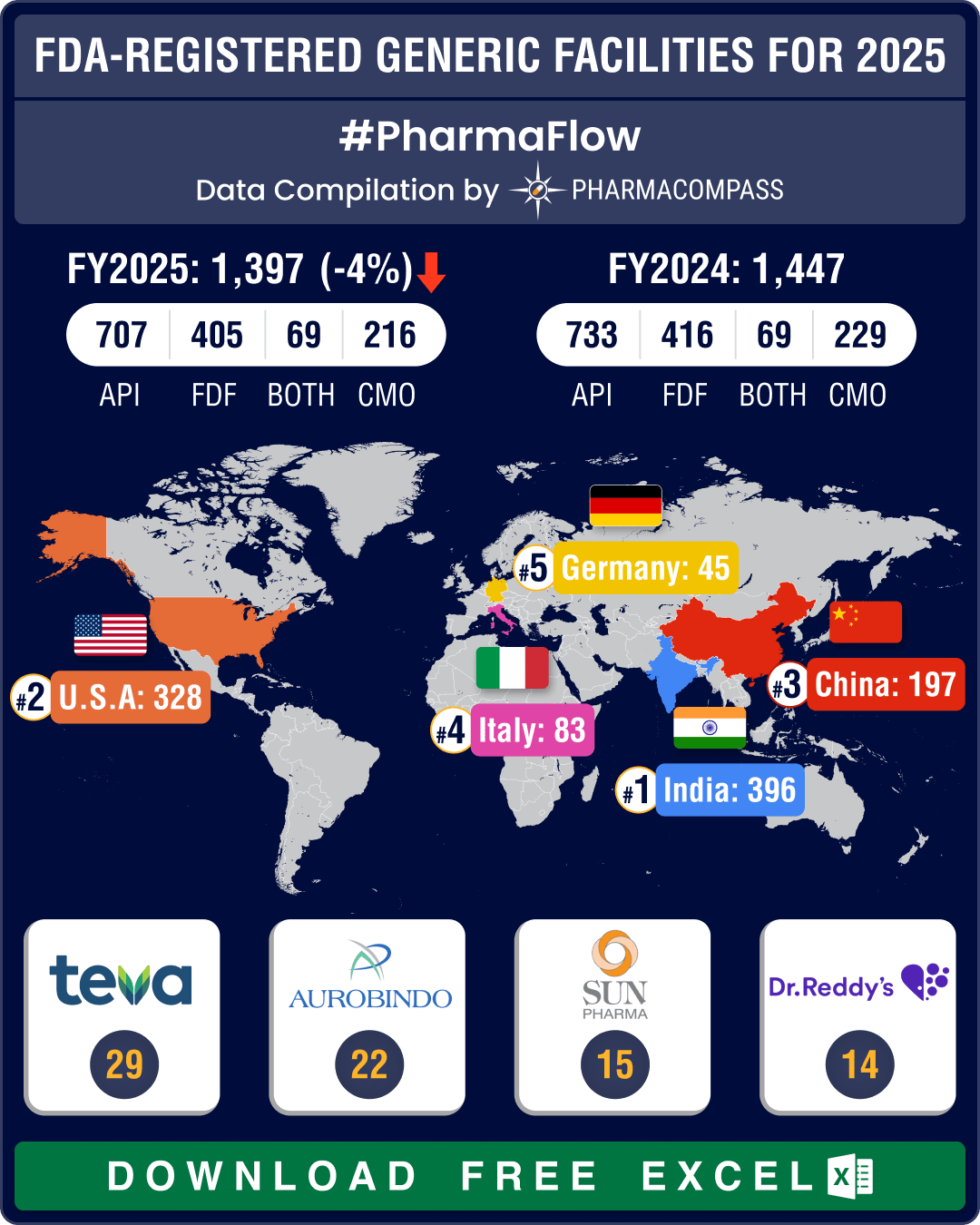
Chinese FDA-registered generic facilities gain steam, India maintains lead with 396 facilities
Every year, the US Food and Drug Administration (FDA) publishes the user fee amounts it will collect from manufacturers of pharmaceuticals, generic drugs, biosimilars and medical devices in the coming financial year. The fee for fiscal year 2025 under the Generic Drug User Fee Act (GDUFA) was published on July 31, 2024. The GDUFA, established in 2012, authorizes FDA to assess and collect fees from drug manufacturers to expedite the delivery of safe, high-quality, and affordable generic drugs to the American public. The FDA’s facility payments list under GDUFA reveals that as of November 14, 2024, 1,397 facilities had paid their registration fees for financial year 2025. Of these facilities, 707 or 50.6 percent are active pharmaceutical ingredients (API) facilities, 405 or 29 percent are finished dosage forms (FDF) facilities, 69 (4.9 percent) are facilities that produce both APIs and FDFs, and 216 (15.5 percent) are contract manufacturing services (CMO) sites. Teva Pharmaceuticals, with 29 facility registrations, led the list of companies, followed by Aurobindo Pharma, Sun Pharma, and Dr. Reddy's Laboratories. Fiscal year Facility Registrations 2016 1,425 2017 1,442 2018 1,269 2019 1,286 2020 1,300 2021 1,340 2022 1,385 2023 1,394 2024 1,447 2025 1,397    Generic Drug Facilities Registered with the US FDA for FY2025 (Free Excel Available)    India continues to lead with 396 facilities, US and China follow  India maintains its dominance in total facility registrations with the FDA, registering 396 facilities for FY2025. This includes 214 API facilities, 135 FDF facilities, 21 facilities engaged in both API and FDF activities, and 26 CMO facilities. The United States holds the second position with 328 facilities, while China strengthened its third position with 197 facilities. With 214 API facilities, India continues to have the largest share of API manufacturing sites, outmatching the combined total of China (128) and the US (83), which together account for 211 facilities. Among European manufacturers, Italy leads with 59 API manufacturing sites, followed by Spain (30) and Germany (25). The US has maintained its lead in FDF facilities with 143 sites, followed closely by India with 135 sites and China with 45 sites. Country API FDF Both CMO Total India 214 135 21 26 396 US 83 143 13 89 328 China 128 45 12 12 197 Italy 59 3 2 19 83 Germany 25 4 1 15 45 Spain 30 9 1 4 44 Canada 7 17   13 37 Taiwan 9 6 5 4 24 Switzerland 15 4   4 23 France 16     6 22 Japan 18   1   19 United Kingdom 12 1   2 15 Mexico 9 1   1 11 Ireland 5 5   1 11   GDUFA III user fee rates increase across categories for FY25 The GDUFA, which was reauthorized on September 30, 2022 (as GDUFA III), continues with provisions that will last until September 30, 2027. In July 2024, the FDA published updated user fee rates for FY2025. The facility fees have seen increases across all categories. API facility fees increased by 3 percent for domestic sites (to US$ 41,580) and 2 percent for foreign sites (to US$ 56,580). FDF facility fees rose by 5 percent for both domestic (to US$ 231,952) and foreign sites (to US$ 246,952). CMO facility fees increased by 5 percent for domestic sites (to US$ 55,668) and 4 percent for foreign sites (to US$ 70,668). Additionally, the fee for large-, medium- and small-sized drug applicants has increased by over 9 percent, compared to the 7 percent increase seen in 2023. China leads new facility registrations as FDA records 41 new units in FY25 Out of the total 1,397 facilities registered for FY2025, 41 were new registrations (going by Facility FDA Establishment Identifier numbers). China led the way with 13 new facilities, followed closely by India with 11 new facilities, while the US secured the third position with eight new facilities. The new registrations included 15 API facilities, 13 CMO facilities, 12 FDF facilities, and one facility engaged in both API and FDF activities.  Chinese companies dominated the new FDF registrations with six facilities: Chengdu Shuode Pharma, Chengdu Suncadia Medicine, Cipla (Jiangsu), GE Healthcare (Shanghai), Luoxin Aurovitas Pharma (Chengdu), and Zhejiang Xianju Pharma. India added two new FDF facilities through Eugia Steriles and Zydus Pharma. Malaysia registered two FDF facilities through Novugen Pharma and Novugen Oncology, while Turkey’s Insud Pharma subsidiary Exeltis and US’ RK Pharma registered one FDF facility each. The 13 new CMO facilities included, Acme Generics, Emcure, Esjay Pharma, Fordoz Pharma, Fourrts Laboratories, Laboratoires KABS, PharmaMax, Quality Packaging Specialists International, Ritsa Pharma, Shanghai Aucyun Pharma, Sichuan Huiyu Pharma, Taejoon Pharm, and Tubilux Pharma. In the API category, the 15 new registrations included Acharya Chemicals, Hainan Poly Pharma, CBL Patras, EUROAPI, Hybio Pharma, Medilux Laboratories, Metrochem API, Purolite, Chengdu Easton Biopharma, Sionc Pharma, Smithfield Bioscience, Xttrium Laboratories, Zhejiang Hengkang Pharma, Moehs Iberica and Shilpa Pharma. Armstrong Pharmaceuticals registered the sole facility for both APIs and FDFs. So far, 92 facilities have not renewed their registration. Among these was a facility owned by Sandoz subsidiary Eon Labs in Wilson, North Carolina (US), which is permanently closed. In fact, the geographical distribution of non-renewals shows that 30 facilities were from the US, while India and China accounted for 14 and nine non-renewals respectively. Our view The FY 2025 GDUFA facility registration data indicates a continued strong presence of Indian manufacturers in the US generic drug market, particularly in API production. However, China's leadership in new facility registrations, especially in FDF manufacturing, suggests that the global generic drug supply chain landscape may evolve considerably in the coming years.  

Impressions: 17135

https://dev1.pharmacompass.com/radio-compass-blog/chinese-fda-registered-generic-facilities-gain-steam-india-maintains-lead-with-396-facilities

#PharmaFlow by PHARMACOMPASS
21 Nov 2024
CDMO Activity Tracker: Novo’s parent buys Catalent for US$ 16.5 bn; Fujifilm, Merck KGaA, Axplora expand capabilities
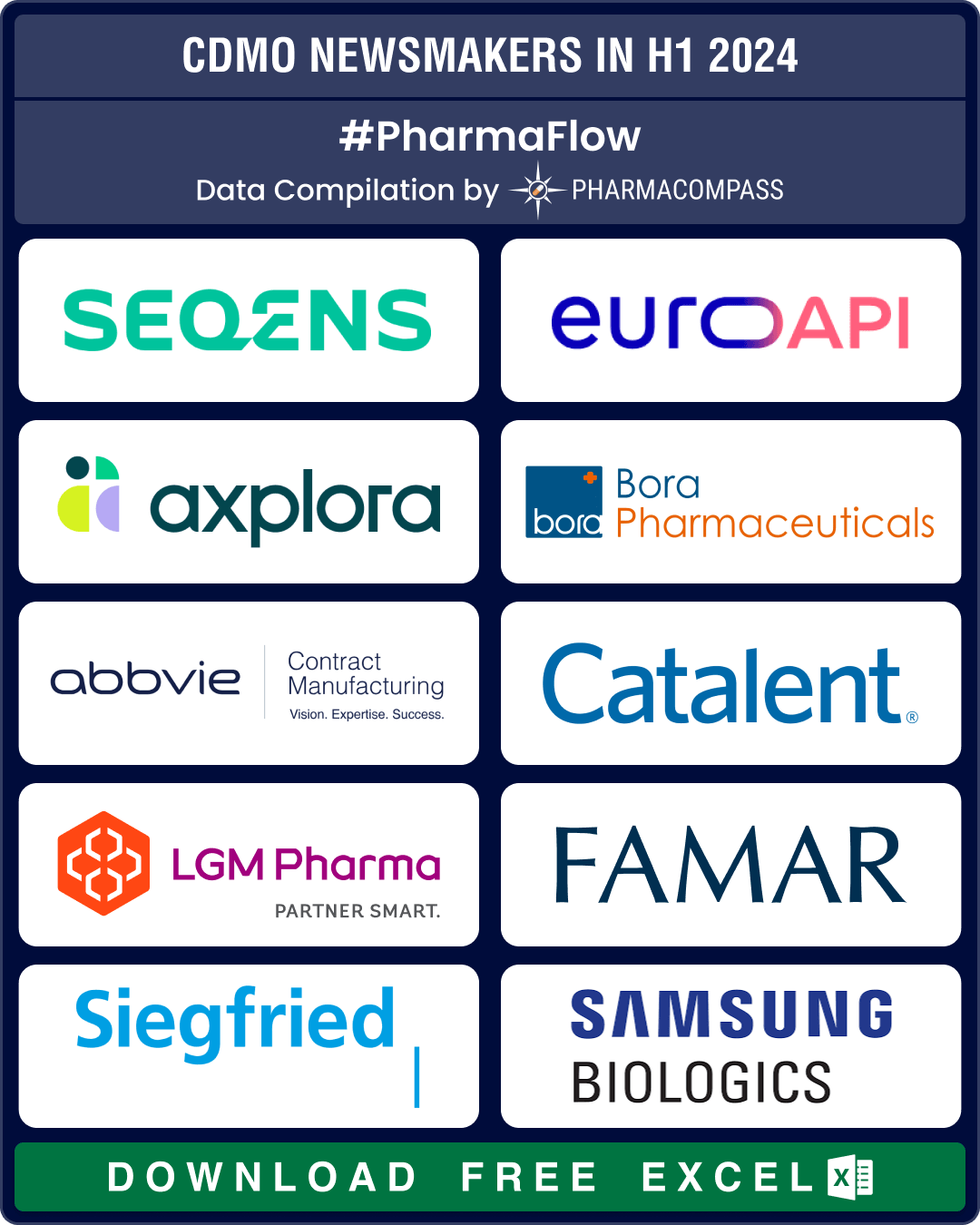
During the first half (H1) of 2024, the global contract development and manufacturing organization (CDMO) landscape was driven by the escalating demand for complex drug development and manufacturing. With the industry grappling with constantly evolving therapeutic modalities, CDMOs are racing to invest in cutting-edge technologies and infrastructure to meet the growing needs of pharmaceutical and biotech companies. Some of the key players in the CDMO space are Catalent, EUROAPI, Lonza, Axplora, Thermo Fisher, SEQENS, Samsung Biologics, Fujifilm Diosynth Biotechnologies, Quotient Sciences, Famar, LGM Pharma, Veranova, and Evonik.  View CDMO Activity Tracker for H1 2024 (Free Excel Available) Novo’s parent buys Catalent for US$ 16.5 bn; Bora, Lonza, Siegfried expand US footprint  During H1 2024, several European and Asian drugmakers expanded their footprints in the US. In February, Novo Nordisk’s parent company, the Novo Nordisk Foundation, announced the acquisition of Catalent through its investment arm Novo Holdings for US$ 16.5 billion. Novo Holdings plans to sell three of Catalent’s “fill-finish” sites to Novo Nordisk for US$ 11 billion. The deal is expected to allow the Danish drugmaker “to serve significantly more people living with diabetes and obesity,” a company statement said. Taiwan-headquartered Bora Pharmaceuticals forged ahead with its expansion plans in the US market by acquiring Minnesota-based generics manufacturer Upsher-Smith Laboratories.  Emergent BioSolutions said it is selling its Maryland facility to an affiliate of Bora. This site in Camden is part of its CDMO, Emergent Bioservices, and offers clinical and commercial non-viral aseptic fill/finish services on four fill lines, including lyophilization, formulation development, and support services. Swiss drugmaker Lonza has agreed to acquire Genentech’s manufacturing facility in California, US, from Roche for US$ 1.2 billion in cash. The site, located in the city of Vacaville, is one of the largest biologics manufacturing facilities in the world by volume. Lonza also launched an artificial intelligence-driven route design technology for choosing the optimal synthetic pathway to manufacture novel APIs. Switzerland’s Siegfried is acquiring a Wisconsin (US)-based CDMO that specializes in early-phase development and manufacturing services from Curia Global to strengthen its capabilities in North America. Siegfried will further develop the site into its North American Siegfried Acceleration Hub for early-phase CDMO services. Merck Millipore, SK Bioscience lead CGT boom; Fujifilm, Axplora, expand CDMO capabilities The burgeoning field of cell and gene therapies (CGTs) is driving significant investments in CDMOs. CGTs saw considerable deal-making too. Merck KGaA agreed to buy Wisconsin-based Mirus Bio for US$ 600 million. Mirus Bio is a specialist in the development and commercialization of transfection reagents that are used to help introduce genetic material into cells. These reagents play a key role in the production of viral vectors for CGTs. Similarly, South Korea’s SK Bioscience acquired a 60 percent stake in IDT Biologika GmbH for KRW 339 billion (US$ 244 million). IDT Biologika is a 104-year-old German company that ranks among the top 10 vaccine producers in the world. CDMOs are also expanding their capabilities in order to lead innovation for their pharmaceutical partners. Fujifilm Diosynth Biotechnologies is investing US$ 1.2 billion in its large-scale cell culture CDMO business to further expand its end-to-end bio-manufacturing facility in North Carolina, bringing the total investment in the facility to over US$ 3.2 billion. Similarly, Merck KGaA owned MilliporeSigma made its biggest investment in the Asia-Pacific region in March when it invested € 300 million (US$ 327 million) in a new bioprocessing production center in Daejeon, South Korea. German CDMO giant Axplora is investing € 8 million (US$ 8.73 million) to expand capacity for antibody drug conjugate (ADC) payload manufacturing at its Le Mans site in France. Catalent completed upgrades to its capsule filling capabilities of dry powders for inhalation to handle potent drugs at its Boston facility. This now positions Catalent as the CDMO with the largest GMP capacity for capsule spray-dried and carrier-based inhaled powders. LGM Pharma increased its Analytical Testing Services (ATS) by 50 percent with a US$ 2 million investment and introduced new suppository manufacturing capabilities to its CDMO portfolio. Minakem has invested in a new production unit in Montreal, Canada, for steroid APIs. EUROAPI kicks off four-year sweeping plan; LegoChem partners Samsung Biologics for ADC program Sanofi’s spinoff EUROAPI marked 2024 as a “transition year”, setting in motion its Focus-27 plan for profitable growth in the future. The sweeping four-year plan includes a streamlined value-added portfolio focused on highly differentiated and profitable APIs, and a CDMO focused on late-stage and high-value complex small molecules and tides supported by unique technological platforms. The leading French small molecules player signed a five-year collaboration with Ireland’s Priothera wherein EUROAPI will develop and industrialize the manufacturing process of an innovative, complex molecule for blood cancers – mocravimod. The project will be carried out at EUROAPI’s site in Budapest, which is its center of excellence for complex chemistry. South Korea’s CDMO powerhouse Samsung Biologics has partnered LegoChem Biosciences and will provide antibody development and drug substance manufacturing services as a part of LegoChem’s ADC program designed to treat solid tumors. LegoChem aims to submit an investigational new drug application to the US Food and Drug Administration (FDA) in the first half of 2025.  Aurigene and Vipergen have joined forces to offer DNA-encoded library (DEL) screening for drug discovery. By combining Aurigene’s drug discovery capabilities with Vipergen’s DEL screening technologies, they seek to create a powerful tool that can quickly test over a billion small-molecule compounds against different disease targets. Dr. Reddy’s Laboratories’ company Aurigene also inaugurated its biologics facility spread across 70,000 square feet. Chinese biotech startup Pleryon is collaborating with France’s SEQENS, a leader in specialty ingredients, to develop and manufacture the former’s lead candidate, an innovative polymer to treat osteoarthritis. Famar is collaborating with Lavipharm and will serve as the contract manufacturer for the latter’s recently added analgesic pharmaceutical products — Lonarid N and Lonalgal. Our view  Key trends observed in H1 2024 include a surge in investments for fill-finish facilities, a growing emphasis on cell and gene therapies, and advancements in ADC manufacturing. With the proliferation of these new classes of drugs, the CDMO space has been rapidly changing in recent years. In the future, the integration of digital technologies, such as AI and automation, will be a key differentiator for CDMOs looking to optimize their operations and accelerate drug development timelines.  

Impressions: 6071

https://dev1.pharmacompass.com/radio-compass-blog/cdmo-activity-tracker-novo-s-parent-buys-catalent-for-us-16-5-bn-fujifilm-merck-kgaa-axplora-lonza-expand-capabilities

#PharmaFlow by PHARMACOMPASS
08 Aug 2024

NEWS LIBRARY #PharmaBuzz

218read-more
read-more

https://veranova.com/news/veranova-launches-green-chemistry-assessment-tool/

PRESS RELEASE
24 Jul 2026

https://veranova.com/news/inside-veranovas-next-generation-hpapi-and-adc-expansion/

PRESS RELEASE
24 Jul 2026

https://veranova.com/news/veranova-wins-best-in-class-project-management-award-at-the-2026-cdmo-leadership-awards/

PRESS RELEASE
24 Jul 2026

https://veranova.com/news/veranova-appoints-dr-bob-huang-vice-president-and-general-manager-of-west-deptford-site/

PRESS RELEASE
03 Jun 2026

https://veranova.com/news/cambridge-science-day-2026-showcases-innovation-in-solid-form-and-particle-engineering/

PRESS RELEASE
21 Mar 2026

https://veranova.com/news/veranova-is-building/

PRESS RELEASE
11 Mar 2026

KEY PRODUCTS

read-more
read-more

TOP RANKED SUPPLIER FOR:

Sponsored Ads.
full-view
Sponsored Ads.full-view

Services

Discover the service capabilities from this company

Analytical

Discover their expertise for : Analytical

API Manufacturing

Discover their expertise for : API Manufacturing

API Development

Discover their expertise for : API Development

Preformulation & Material Science

Discover their expertise for : Preformulation & Material Science

KEY SERVICES

read-more
read-more

TOP RANKED SUPPLIER FOR:

GMP and ICH compliant Method Development & Validation
full-view
Controlled Substance API Development
full-view
Containment of High Potency API (HPAPI)
full-view
Solid State Studies
full-view
End-to-end CDMO for ADCs
full-view
Handling of Controlled Substances
full-view
Oligonucleotide API Contract Manufacturing
full-view
Process Development & Scale-Up
full-view

Inspections and registrations

Check the inspections & registration from this company

ABOUT THIS PAGE

pharma-servicesPC100508##c
Contact Veranova

Veranova is a supplier offering 80 products (APIs, Excipients or Intermediates).

Find Apomorphine Hydrochloride bulk with DMF, CEP, JDMF offered by Veranova

Find Buprenorphine Hydrochloride bulk with DMF, CEP, JDMF offered by Veranova

Find Carboplatin bulk with DMF, CEP, JDMF offered by Veranova

Find Cisplatin bulk with DMF, CEP, JDMF offered by Veranova

Find Methylphenidate Hydrochloride bulk with DMF, CEP, JDMF offered by Veranova

Find Alfentanil Hydrochloride bulk with DMF, CEP offered by Veranova

Find Buprenorphine bulk with DMF, CEP offered by Veranova

Find Codeine Phosphate bulk with DMF, CEP offered by Veranova

Find Fentanyl bulk with DMF, CEP offered by Veranova

Find Fentanyl Citrate bulk with DMF, CEP offered by Veranova

Find Hydromorphone Hydrochloride bulk with DMF, CEP offered by Veranova

Find Morphine Sulfate bulk with DMF, CEP offered by Veranova

Find Naloxone Hydrochloride bulk with DMF, CEP offered by Veranova

Find Oxycodone Hydrochloride bulk with DMF, CEP offered by Veranova

Find Remifentanil bulk with DMF, CEP offered by Veranova

Find Sufentanil Citrate bulk with DMF offered by Veranova

Find Alfentanil Hydrochloride bulk with CEP offered by Veranova

Find Amphetamine Aspartate bulk with DMF offered by Veranova

Find Amphetamine Sulfate bulk with DMF offered by Veranova

Find Auranofin bulk with DMF offered by Veranova

Find Cannabidiol bulk with DMF offered by Veranova

Find Carmustine bulk with DMF offered by Veranova

Find Cocaine Hydrochloride bulk with CEP offered by Veranova

Find Codeine Phosphate bulk with CEP offered by Veranova

Find Decitabine bulk with DMF offered by Veranova

Find Dexmethylphenidate bulk with DMF offered by Veranova

Find Dextroamphetamine Saccharate bulk with DMF offered by Veranova

Find Difenoxin Hydrochloride bulk with DMF offered by Veranova

Find Dihydrocodeine Hydrogen Tartrate bulk with CEP offered by Veranova

Find Diphenoxylate Hydrochloride bulk with DMF offered by Veranova

Find Dofetilide bulk with DMF offered by Veranova

Find Edrophonium Chloride bulk with DMF offered by Veranova

Find Fentanyl Citrate bulk with CEP offered by Veranova

Find Hydrocodone Bitartrate bulk with DMF offered by Veranova

Find Lenalidomide bulk with DMF offered by Veranova

Find Lisdexamfetamine Dimesylate bulk with DMF offered by Veranova

Find Lurasidone Hydrochloride bulk with DMF offered by Veranova

Find Methamphetamine Hydrochloride bulk with DMF offered by Veranova

Find Methylphenidate bulk with DMF offered by Veranova

Find Morphine Hydrochloride bulk with CEP offered by Veranova

Find Nintedanib Esylate bulk with DMF offered by Veranova

Find Oxycodone Hydrochloride bulk with DMF offered by Veranova

Find Oxymorphone Hydrochloride bulk with DMF offered by Veranova

Find Pirfenidone bulk with DMF offered by Veranova

Find Sodium Oxybate bulk with DMF offered by Veranova

Find Alfentanil Hydrochloride bulk offered by Veranova

Find Ambrisentan bulk offered by Veranova

Find Atropine Sulfate bulk offered by Veranova

Find Benzhydrocodone Hydrochloride bulk offered by Veranova

Find Buprenorphine bulk offered by Veranova

Find Buprenorphine Hydrochloride bulk offered by Veranova

Find Calcium Oxybate bulk offered by Veranova

Find Cangrelor bulk offered by Veranova

Find Carboplatin bulk offered by Veranova

Find Clevidipine bulk offered by Veranova

Find Codeine bulk offered by Veranova

Find Codeine Sulfate bulk offered by Veranova

Find Diamorphine Hydrochloride bulk offered by Veranova

Find Dihydrocodeine Hydrogen Tartrate bulk offered by Veranova

Find Dimethyl Fumarate bulk offered by Veranova

Find Dofetilide bulk offered by Veranova

Find Fentanyl bulk offered by Veranova

Find Fentanyl Hydrochloride bulk offered by Veranova

Find Hydromorphone Hydrochloride bulk offered by Veranova

Find Isoproterenol Hydrochloride bulk offered by Veranova

Find Magnesium Oxybate bulk offered by Veranova

Find Methylphenidate Hydrochloride bulk offered by Veranova

Find Miglustat bulk offered by Veranova

Find Morphine Hydrochloride bulk offered by Veranova

Find Morphine Sulfate bulk offered by Veranova

Find Morphine Tartrate bulk offered by Veranova

Find Nabilone bulk offered by Veranova

Find Naloxone Hydrochloride bulk offered by Veranova

Find Opium bulk offered by Veranova

Find Oxaliplatin bulk offered by Veranova

Find Oxycodone Terephthalate bulk offered by Veranova

Find Remifentanil bulk offered by Veranova

Find Sufentanil Citrate bulk offered by Veranova

Find Umirolimus bulk offered by Veranova

Find Vitamin K1 bulk offered by Veranova

Ask Us for Pharmaceutical Supplier and Partner
Ask Us, Find A Supplier / Partner
No Commissions, No Strings Attached, Get Connected for FREE

What are you looking for?

How can we help you?

The request can't be empty

Please read our Privacy Policy carefully

You must agree to the privacy policy

The name can't be empty
The company can't be empty.
The email can't be empty Please enter a valid email.
The mobile can't be empty