Please Wait
Applying Filters...
Menu

Digital Content read-more

Create Content with PharmaCompass, ask us

PHARMA & BIOTECH INSIGHTS

1read-more
read-more

A PHP Error was encountered

Severity: 8192

Message: mb_convert_encoding(): Handling HTML entities via mbstring is deprecated; use htmlspecialchars, htmlentities, or mb_encode_numericentity/mb_decode_numericentity instead

Filename: blog/grid.php

Line Number: 52

Backtrace:

File: /var/www/html/application/views/include/media/blog/grid.php
Line: 52
Function: mb_convert_encoding

File: /var/www/html/application/models/Cmn.php
Line: 3595
Function: view

File: /var/www/html/application/views/include/product/digitalContent/grid.php
Line: 17
Function: common

File: /var/www/html/application/views/include/desc/inner.php
Line: 13
Function: view

File: /var/www/html/application/views/include/desc/indexNew.php
Line: 2433
Function: include

File: /var/www/html/application/controllers/Common.php
Line: 11303
Function: view

File: /var/www/html/index.php
Line: 231
Function: require_once

FDA okays 50 new drugs in 2024; BMS’ Cobenfy, Lilly’s Kisunla lead pack of breakthrough therapies
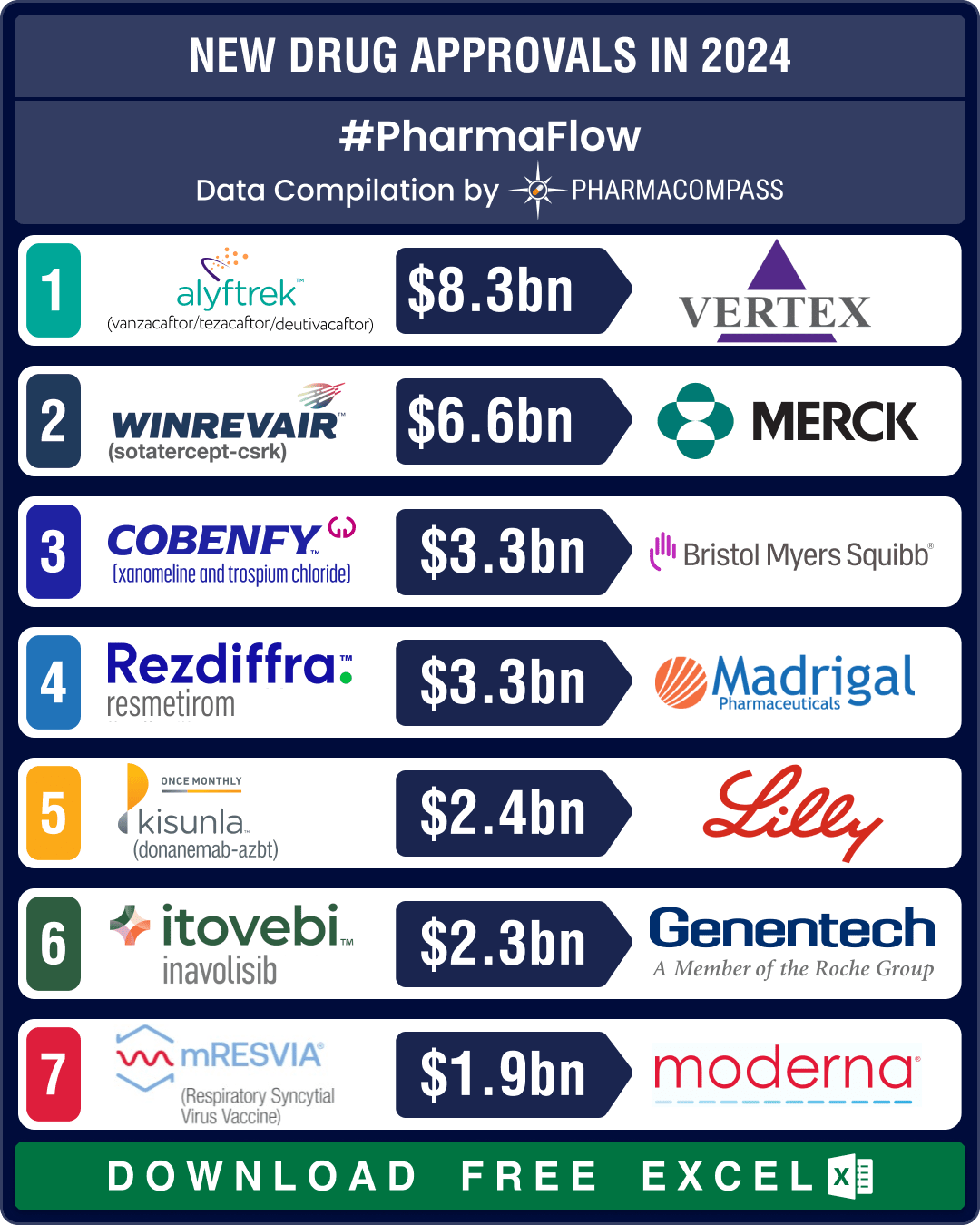
In 2024, the biopharma industry continued to advance on its robust trajectory of innovation. Though the US Food and Drug Administration’s Center for Drug Evaluation and Research (CDER) and the Center for Biologics Evaluation and Research (CBER) approved fewer drugs, there was a significant increase in medical breakthroughs.  While the CDER approved 50 new drugs in 2024, as compared to 55 in 2023, the CBER granted 14 biologics approvals in 2024, down from 20 in 2023. The European Medicines Agency (EMA) approved 34 new therapies, up from 32 in 2023, while Health Canada granted 28 approvals, down from 38 in 2023. The year saw long-awaited treatments being approved in areas such as schizophrenia and Alzheimer’s disease in the second half (H2) of 2024. In H1 2024, drugs to treat metabolic dysfunction-associated steatohepatitis (MASH) and chronic obstructive pulmonary disease (COPD) had been granted FDA approvals. As the year drew to a close, FDA began approving drugs at a feverish pace, with 29 of the CDER’s 50 approvals coming in H2. Like most years, the landscape of drug approvals was dominated by oncology, with 15 of the 50 drugs (30 percent) approved targeting various forms of cancer. This was followed by dermatology and non-malignant hematology, each accounting for 12 percent of approvals. Notably, small molecules continued to dominate the market, making up for 64 percent of the new drug approvals, while 32 percent were proteins, including monoclonal and bi-specific antibodies.  View New Drug Approvals in 2024 with Estimated Sales (Free Excel Available) Karuna-BMS’ schizophrenia drug, Lilly’s Alzheimer’s med, Neurocrine’s Crenessity dominate list of pathbreaking approvals in H2  Out of the 50 new drugs approved in 2024, CDER identified 24 (48 percent) as first-in-class, showcasing novel mechanisms of action. The most anticipated approval of 2024 was Karuna and Bristol Myers Squibb’s Cobenfy, a groundbreaking treatment for schizophrenia. This fixed-dose combination of xanomeline and trospium chloride represents the first novel mechanism of action in decades for this debilitating psychiatric condition. Analysts forecast peak annual sales of over US$ 3.3 billion for Cobenfy.  Eli Lilly’s Alzheimer’s drug Kisunla (donanemab) became the third amyloid-targeting antibody to gain FDA approval. Unlike its predecessors, Kisunla offers a unique limited-duration treatment regimen, allowing patients to discontinue therapy once amyloid levels in the brain drop below a certain threshold. Priced at approximately US$ 32,000 per year, it is positioned as a cost-effective alternative to existing treatments. Analysts estimate peak sales of US$ 2.4 billion for Kisunla. Crenessity (crinecerfont), developed by Neurocrine Biosciences, became the first FDA-approved treatment in decades for classic congenital adrenal hyperplasia (genetic conditions that affect the adrenal glands). Similarly, Vertex’s triple combination therapy of deutivacaftor, tezacaftor & vanzacaftor (Alyftrek) for cystic fibrosis represents a significant advancement in genetic disease treatment. Analysts forecast peak sales exceeding US$ 8.3 billion, underscoring the therapy’s potential to transform patient care. Meanwhile, Bridgebio’s Attruby (acoramidis hydrochloride) emerged as a promising treatment for cardiac amyloidosis, a life-threatening condition. Roche’s Itovebi, Checkpoint’s Unloxcyt clinch FDA approvals in H2 2024; forecast to achieve blockbuster status The dominance of cancer drug approvals reflects the ongoing focus on targeted therapies, immuno-oncology, and precision medicine to improve outcomes for patients with hard-to-treat cancers. Among the year’s notable FDA approvals was Genentech’s Itovebi (inavolisib), another targeted therapy that treats hormone receptor-positive (HR+), HER2-negative breast cancer. Itovebi is a PI3Kα inhibitor designed specifically for patients with PIK3CA mutations, a common driver of resistance to endocrine therapy in breast cancer. It demonstrated a more tolerable safety profile. Roche projects Itovebi’s peak (annual) sales to reach CHF 2 billion (US$ 2.3 billion). Checkpoint Therapeutics’ Unloxcyt (cosibelimab) joined the crowded checkpoint inhibitor market as the eleventh PD-1/PD-L1-targeting monoclonal antibody approved by the FDA. It was granted approval for cutaneous squamous cell carcinoma (cSCC), an aggressive form of skin cancer with high recurrence rates. As compared to other checkpoint inhibitors, like Keytruda (pembrolizumab) and Opdivo (nivolumab), Unloxcyt is likely to offer an advantage in immune activation. FDA also approved Astellas’ Vyloy (zolbetuximab), a first-in-class monoclonal antibody for metastatic gastric and gastroesophageal junction (GEJ) adenocarcinoma. Analysts forecast peak sales of approximately US$ 850 million for Vyloy. Syndax Pharmaceuticals’ Revuforj (revumenib) was approved by FDA to treat a type of acute leukemia in both adults and children. This approval introduces a novel class of medications known as menin inhibitors. These agents are currently in clinical development for the treatment of genetically defined subsets of acute leukemia. These inhibitors function by preventing the activation of cancer growth-related proteins. Potential blockbusters Lilly’s Ebglyss, Galderma’s Nemluvio lead advances in dermatology Eli Lilly’s Ebglyss (lebrikizumab) garnered significant attention. Approved by FDA for moderate-to-severe atopic dermatitis, this monoclonal antibody introduces a less burdensome dosing regimen compared to its competitors, with maintenance therapy required only once a month. This feature positions it as a potential contender to Dupixent (dupilumab), a market leader in atopic dermatitis. Ebglyss sales are forecast to reach US$ 1.9 billion by 2030. Galderma’s Nemluvio (nemolizumab) secured FDA approval for two indications in 2024 — prurigo nodularis (a chronic disorder of the skin) and moderate-to-severe atopic dermatitis in patients aged 12 years and older. As the first humanized IgG2 monoclonal antibody targeting the IL-31 receptor, Nemluvio directly inhibits the key driver of itch and inflammation in both these conditions. With its unique mechanism and broad dermatology potential, analysts forecast peak sales of approximately US$ 1.66 billion.  Ebglyss and Nemluvio underscore the growing importance of biologics in dermatological care. Botanix Pharmaceuticals also made strides in dermatology by clinching an FDA approval for Sofdra (sofpironium) in June. The drug has been okayed for the treatment of primary axillary hyperhidrosis, a condition characterized by excessive sweating. Ascendis Pharma’s Yorvipath (palopegteriparatide), a therapy approved by FDA to treat hypoparathyroidism, is forecast to achieve blockbuster sales of US$ 1.8 billion by 2030, highlighting its potential to transform endocrine care. Our view Overall, 2024 was defined by its breakthrough drug approvals. The year also saw significant reduction in complete response letters (CRLs) — they dropped from 43 in 2023 to just 29 in 2024. This suggests improved industry preparedness and alignment with regulatory expectations. The new year began with the approval of Datroway (datopotamab deruxtecan) from AstraZeneca and Daiichi Sankyo, marking a significant advancement in oncology. Several other promising new drugs are coming up for FDA approval this year, such as J&J’s nipocalimab, Vertex Pharmaceuticals’ suzetrigine, Elevar Therapeutics’ rivoceranib/camrelizumab, Sanofi’s fitusiran and GSK’s gepotidacin. Hopefully, the momentum of breakthrough approvals will continue through 2025, political headwinds in the US notwithstanding.

Impressions: 14617

https://dev1.pharmacompass.com/radio-compass-blog/fda-okays-50-new-drugs-in-2024-bms-cobenfy-lilly-s-kisunla-lead-pack-of-breakthrough-therapies

#PharmaFlow by PHARMACOMPASS
30 Jan 2025

WEEKLY INDUSTRY NEWS

1read-more
read-more
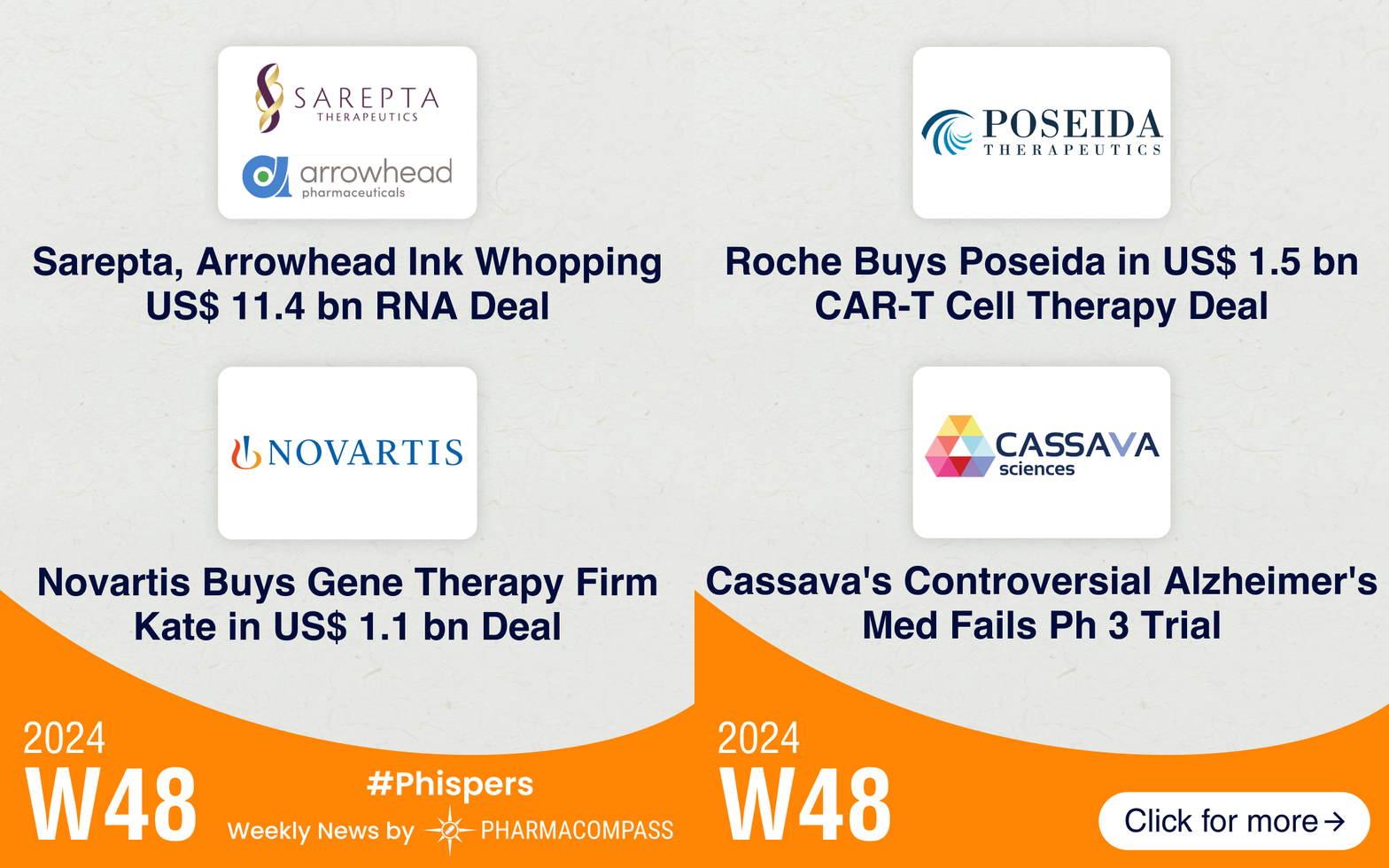
Sarepta inks US$ 11 bn RNA deal with Arrowhead; Roche expands CAR-T arsenal; Novartis buys Kate for US$ 1 bn
The week saw three large deals signed in promising fields. First, Sarepta Therapeutics signed a US$ 11.4 billion deal with Arrowhead Pharmaceuticals, securing worldwide rights to seven RNA-based programs. Second, Novartis announced the acquisition of Kate Therapeutics for up to US$ 1.1 billion, focusing on addressing neuromuscular diseases like Duchenne muscular dystrophy (DMD). And Roche expanded its CAR-T treatment capabilities by acquiring Poseida Therapeutics for up to US$ 1.5 billion.In drug approvals, the US Food and Drug Administration (FDA) approved BridgeBio’s Attruby. This is the first new treatment for transthyretin amyloid cardiomyopathy in over five years.In news from clinical trials, Biohaven’s experimental drug taldefgrobep alfa that had failed a spinal muscular atrophy trial, showed promising results in body composition. The company is now exploring its potential as an obesity treatment.Cassava Sciences faced a significant setback when its controversial Alzheimer’s drug simufilam failed to meet primary endpoints in a pivotal late-stage trial. The drug’s development was under scrutiny due to research fraud allegations against a neuroscientist linked to its research.Sarepta’s US$ 11.4 bn mega-deal with Arrowhead promises ‘multiple potential blockbusters’Sarepta Therapeutics has entered into a global licensing and collaboration agreement with Arrowhead Pharmaceuticals, which is valued at up to US$ 11.4 billion. This comprehensive deal includes an upfront payment of US$ 500 million and an equity investment of US$ 325 million. It grants Sarepta worldwide rights to seven RNA-based programs — four clinical and three preclinical.Additionally, the agreement “affords multiple potential blockbuster opportunities” and encompasses milestone payments that could significantly increase the total value of the deal. The agreement also includes a discovery partnership targeting six more indications across skeletal muscle, cardiac, and central nervous system disorders.Novartis bets US$ 1.1 bn on Kate Therapeutics for its neuromuscular pipelineNovartis has acquired Kate Therapeutics for up to US$ 1.1 billion to address unmet needs in the treatment of neuromuscular diseases like DMD, facioscapulohumeral muscular dystrophy (FSHD) and myotonic dystrophy (DM1). While FSHD is a rare genetic muscle disease, DM1 is a serious condition that causes prolonged muscle contractions and weakness. And DMD is a condition that causes skeletal and heart muscle weakness.This acquisition comes on the heels of late-stage setbacks faced this year by competitors in the muscular dystrophy arena. The Swiss drugmaker is learning from “the experiences of the first wave of companies that have had failures and perhaps some success with targeting these diseases,” said CEO Vas Narasimhan, adding that Kate has “really solved some of the challenges of delivering the right targets or the right genes for patients with FSHD and DM1.”During a recent investor day, Narasimhan also indicated that Novartis plans to pursue additional acquisitions, particularly in the sub-US$ 5 billion range, as part of its ongoing strategy to invest in early-stage science.Roche expands CAR-T treatment arsenal with US$ 1.5 bn acquisition of PoseidaRoche has announced the acquisition of Poseida Therapeutics for up to US$ 1.5 billion, including US$ 1 billion in upfront cash. By bringing Poseida’s promising technologies in-house, Roche aims to enhance its existing collaboration focused on developing cutting-edge CAR-T therapies for blood cancers.San Diego, California-based Poseida is known for its pioneering non-viral technology platform that enables the creation of allogeneic, T stem cell memory (TSCM)-rich CAR-T therapies. Among Poseida’s promising candidates is P-BCMA-ALLO1, which has shown compelling interim clinical data in patients with multiple myeloma.Meanwhile, Roche’s TIGIT candidate, tiragolumab, combined with its anti-PD-L1 drug Tecentriq, has failed to improve overall survival in a recent phase 3 trial for non-small cell lung cancer (NSCLC). This marks the second failure for tiragolumab in NSCLC trials. It has also not succeeded in a late-stage test for small cell lung cancer.BridgeBio’s Attruby gains FDA nod for rare heart condition, to compete with Pfizer’s VyndagelFDA has approved BridgeBio’s drug Attruby (acoramidis), marking the first new treatment for transthyretin amyloid cardiomyopathy (ATTR-CM) in over five years. This oral medication is designed to stabilize transthyretin (TTR) proteins, which, when destabilized, can lead to the accumulation of amyloid deposits in the heart, severely impairing its function.The approval is based on promising results from a late-stage study, which demonstrated that Attruby significantly reduces cardiovascular death and related hospitalizations, ultimately improving patients’ quality of life. This approval positions BridgeBio to compete directly with established players like Pfizer, whose blockbuster Vyndaqel (tafamidis meglumine) has dominated the market.After research fraud probe, Cassava’s controversial Alzheimer’s drug fails late-stage trialOnce hailed as a potential breakthrough in Alzheimer’s treatment, Cassava Sciences’ simufilam has failed to meet primary endpoints in a pivotal late-stage trial. The experimental treatment has been at the center of scrutiny after a medical professor linked to its development was charged with fraud in June. Neuroscientist Hoau-Yan Wang allegedly submitted false data to secure millions of dollars in public funds for research into the drug, prompting investigations by the Securities and Exchange Commission (SEC) and the National Institutes of Health (NIH). Critics have questioned the validity of the preclinical and early clinical data, suggesting that the promising results may have been overstated or fabricated, and why the trial was allowed to proceed.Biohaven’s failed drug shows promise as obesity treatment: Biohaven’s experimental drug, taldefgrobep alfa, failed to meet its primary endpoint for spinal muscular atrophy (SMA) – the world’s leading genetic cause of infant deaths. While the treatment did show some improvements in motor function, these results did not achieve statistical significance when compared to placebo and standard care. Interestingly, the trial revealed that taldefgrobep alfa had a positive impact on body composition, leading to a reduction in body fat and an increase in lean muscle mass and bone density. This unexpected outcome has prompted Biohaven to explore the drug’s potential as a treatment for obesity, with plans to initiate a phase 2 trial soon.Amgen’s weight loss med: In a closely-watched, phase 2 study, Amgen’s experimental weight loss drug, MariTide (maridebart cafraglutide), demonstrated up to 20 percent weight loss after a year. Administered monthly or less frequently, it did not reach a weight loss plateau, suggesting the potential for further weight loss beyond 52 weeks. Despite these promising results, some investors remain cautious, as the weight loss is at the lower end of the 20 to 25 percent benchmark set by  analysts.  

Impressions: 2007

https://dev1.pharmacompass.com/radio-compass-phisper/sarepta-inks-us-11-bn-rna-deal-with-arrowhead-roche-expands-car-t-arsenal-novartis-buys-kate-for-us-1-bn

#Phispers by PHARMACOMPASS
28 Nov 2024

NEWS LIBRARY

16read-more
read-more

https://www.biospace.com/press-releases/acoramidis-associated-with-significantly-improved-clinical-outcomes-versus-tafamidis-in-attr-cm-in-an-independent-real-world-study-of-u-s-electronic-health-records

BIOSPACE
11 Oct 2026

https://www.globenewswire.com/news-release/2026/09/23/3367401/0/en/acoramidis-demonstrates-real-world-benefit-versus-tafamidis-in-attr-cm-reducing-risk-of-clinical-worsening.html

GLOBENEWSWIRE
23 Sep 2026

https://www.globenewswire.com/news-release/2026/08/30/3352965/0/en/acoramidis-demonstrates-reversal-of-cardiac-structural-disease-progression-and-functional-decline-and-significantly-increases-days-alive-and-free-from-hospitalization-in-attr-cm.html

GLOBENEWSWIRE
30 Aug 2026

https://www.globenewswire.com/news-release/2026/07/02/3321249/0/en/acoramidis-associated-with-first-ever-early-and-sustained-direct-kidney-protective-effects-in-attr-cm.html

GLOBENEWSWIRE
02 Jul 2026

https://www.globenewswire.com/news-release/2026/05/11/3291995/0/en/acoramidis-continues-to-demonstrate-disease-modifying-effects-in-attr-cm-reducing-sttr-variability-and-outpatient-worsening-heart-failure.html

GLOBENEWSWIRE
11 May 2026

https://www.globenewswire.com/news-release/2026/05/06/3288693/0/en/beyonttra-acoramidis-the-first-near-complete-ttr-stabilizer-90-approved-by-anvisa-to-treat-attr-cm-in-brazil.html

GLOBENEWSWIRE
06 May 2026
digital-content135307127##p