Please Wait
Applying Filters...
Menu

Digital Content read-more

Create Content with PharmaCompass, ask us

MARKET PERFORMANCE RECAP

2read-more
read-more

A PHP Error was encountered

Severity: 8192

Message: mb_convert_encoding(): Handling HTML entities via mbstring is deprecated; use htmlspecialchars, htmlentities, or mb_encode_numericentity/mb_decode_numericentity instead

Filename: ppb/grid.php

Line Number: 54

Backtrace:

File: /var/www/html/application/views/include/media/ppb/grid.php
Line: 54
Function: mb_convert_encoding

File: /var/www/html/application/models/Cmn.php
Line: 3616
Function: view

File: /var/www/html/application/views/include/product/digitalContent/grid.php
Line: 18
Function: common

File: /var/www/html/application/views/include/desc/inner.php
Line: 13
Function: view

File: /var/www/html/application/views/include/desc/indexNew.php
Line: 2433
Function: include

File: /var/www/html/application/controllers/Common.php
Line: 11303
Function: view

File: /var/www/html/index.php
Line: 231
Function: require_once

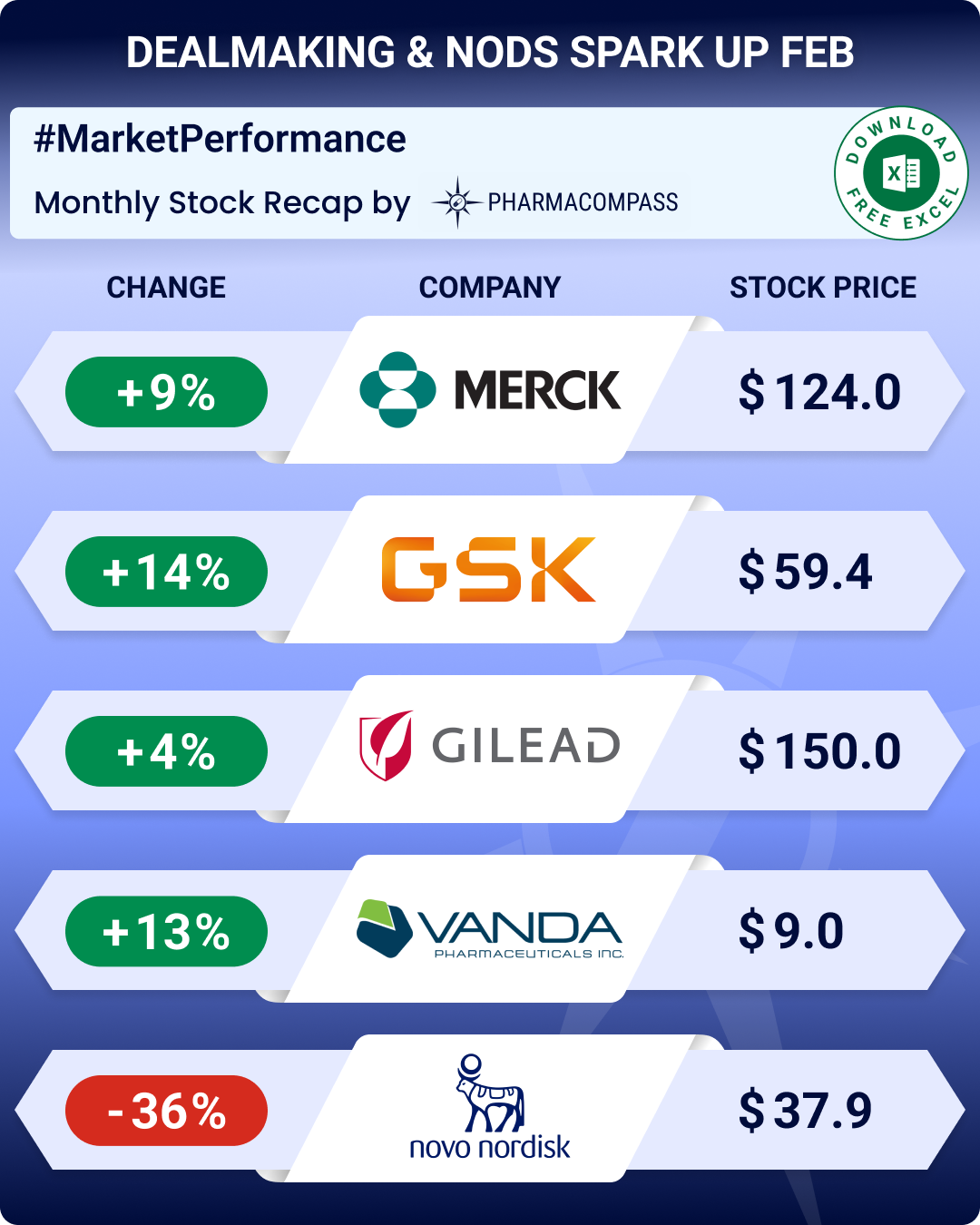
Pipeline Prospector February 2026 highlights: Gilead buys Arcellx for US$ 7.8 bn; FDA okays Vanda’s psychotic pill
February was a month of upheavals. In the US, the Supreme Court ruled that President Donald Trump exceeded his authority by imposing broad tariffs. Soon after the ruling, Trump imposed a temporary 15 percent global tariff under a separate trade law. The month ended with the US and Israel launching a major military operation against Iran, and the region now appears headed for a prolonged conflict. Despite the turbulent geopolitical environment, the biotech indices continued to grow steadily. The Nasdaq Biotechnology Index (NBI) rose 3.68 percent, moving from 5,852.67 to 6,041.31. The SPDR S&P Biotech ETF (XBI) gained 2.4 percent, rising from 124.75 to 127.27, and the S&P Biotechnology Select Industry Index (SPSIBI) increased 2.4 percent, rising from 9,746.25 to 9,954.51. In comparison, the S&P 500 fell by 0.55 percent — from 6,916.64 to 6,878.88.   Access the Pipeline Prospector Dashboard for February 2026 Newsmakers (Free Excel) Gilead buys Arcellx for US$ 7.8 billion; Lilly acquires Orna for its circular RNA therapeutics  The month’s biggest acquisition was made by Gilead Sciences, which acquired its cancer therapy partner Arcellx for US$ 7.8 billion. The two companies have been collaborating on cell therapy development since 2022 through Kite Pharma, Gilead’s subsidiary. The centerpiece of the deal is Arcellx’s investigational CAR-T therapy for multiple myeloma — anitocabtagene autoleucel. Eli Lilly announced the acquisition of Orna Therapeutics for up to US$ 2.4 billion in cash. The deal will give Lilly access to a new class of therapeutics, known as circular RNA, that allows patients’ own cells to generate therapies (to treat underlying diseases) inside the body, doing away with the need for cell extraction. Among other deals, GSK acquired Canadian biotech 35Pharma for US$ 950 million in cash. The acquisition includes HS235, an investigational therapy being studied for pulmonary arterial hypertension (PAH) and pulmonary hypertension associated with heart failure with preserved ejection fraction. GSK’s stock was up 14 percent in February. FDA approves Vanda’s antipsychotic pill Bysanti; Dupixent okayed for allergic fungal rhinosinusitis The month saw several key approvals. The US Food and Drug Administration (FDA) approved Vanda Pharmaceuticals’ Bysanti (milsaperidone) tablets, a first-line therapy for acute bipolar I disorder and schizophrenia. This marks the company’s third FDA approval in recent months. The agency also approved Sanofi and Regeneron’s Dupixent (dupilumab) for the treatment of adults and pediatric patients with allergic fungal rhinosinusitis (AFRS) who have a history of sino-nasal surgery. AFRS is a chronic inflammatory condition that can cause nasal polyps, persistent congestion, and loss of smell. This is Dupixent’s ninth FDA approval. Merck’s Keytruda (pembrolizumab) and Keytruda Qlex (pembrolizumab and berahyaluronidase alfa-pmph) in combination with paclitaxel, with or without bevacizumab, were approved for treating a form of ovarian cancer. This marks Keytruda’s first FDA approval in ovarian cancer. Pfizer’s Braftovi (encorafenib) was granted full approval when used in combination with Erbitux (cetuximab) and fluorouracil-based chemotherapy to treat adults with a type of metastatic colorectal cancer. The combo therapy had received accelerated approval in 2024. FDA also approved AbbVie’s supplemental new drug application for the combination regimen of Venclexta (venetoclax) and AstraZeneca’s Calquence (acalabrutinib) for the treatment of previously untreated adult patients with chronic lymphocytic leukemia (CLL). Venclexta is manufactured by AbbVie and Genentech. Lilly in another oncology deal with Innovent worth up to US$ 8.85 bn; Novo inks obesity deal with Vivtex Lilly entered into a strategic collaboration with Chinese drugmaker Innovent Biologics to advance novel medicines in oncology and immunology. This is the seventh collaboration between the two drugmakers. Lilly will pay US$ 350 million upfront and as much as US$ 8.5 billion in milestone payments. Madrigal Pharmaceuticals entered into a global license agreement with Suzhou Ribo Life Science and its subsidiary Ribocure Pharmaceuticals for six preclinical small interfering RNA programs targeting metabolic dysfunction-associated steatohepatitis (MASH). Madrigal will pay US$ 60 million upfront and US$ 4.4 billion in milestone payments. Novo Nordisk has inked a deal worth up to US$ 2.1 billion with privately-held American company Vivtex Corp to develop next-generation oral drugs for obesity and diabetes. Astellas Pharma (stock up 16 percent) has entered into a global strategic collaboration with Vir Biotechnology to advance a T-cell engager targeting prostate-specific membrane antigen and CD3 proteins for the treatment of prostate cancer. The deal involves an upfront payment, milestone payments and royalties that could together add up to US$ 1.7 billion. There were also a few AI deals. Takeda Pharmaceutical has entered into a multi-year partnership that could be worth over US$ 1.7 billion with San Diego-headquartered Iambic to use AI to design small-molecule drugs for cancer and gastrointestinal diseases. And, Novartis (stock up 13 percent in February) signed a research collaboration and licensing deal worth up to US$ 1.8 billion with American biotech Unnatural Products (UNP) to develop therapeutics with potential applications in cardiovascular diseases. Novartis will license UNP’s AI-enhanced macrocycle platform. Roche’s Gazyva scores phase 3 win in rare autoimmune kidney disorder; Novo’s CagriSema beats Wegovy In a phase 3 trial, Roche’s Gazyva (obinutuzumab) met its primary endpoint, holding the potential to become the first approved therapy for primary membranous nephropathy, a rare autoimmune kidney disorder. According to top-line results, significantly more patients achieved complete remission at two years with Gazyva, compared to immunosuppressant tacrolimus.  Novo Nordisk said its experimental next-generation weight-loss drug CagriSema (cagrilintide and semaglutide) delivered greater reductions in body weight and blood sugar than its blockbuster Wegovy (semaglutide) in a late-stage trial in patients with type 2 diabetes. Novo has positioned CagriSema as a successor to Wegovy and a potential rival to Eli Lilly’s Zepbound (tirzepatide). Eli Lilly’s Retevmo (selpercatinib), an FDA-approved drug for lung and thyroid cancers that have RET gene alterations, has demonstrated statistically significant improvement in event-free survival in patients with early-stage (2-3A) RET fusion-positive non-small cell lung cancer. In a phase 3 trial, Bayer’s experimental blood thinner — asundexian — reduced the risk of recurrence of stroke by 26 percent. And Compass Pathways’ psilocybin-based therapy — COMP360 — eased symptoms in treatment-resistant depression. This is the second such late-stage trial win for the therapy. Our view The rapidly shifting geopolitical landscape, particularly the conflict in the Middle East and rising trade tensions, is adding a fresh layer of uncertainty for the industry. If the deal-making momentum and progress in clinical trials are maintained, we can safely assume that the innovation pipeline is resilient, the geopolitical turbulence notwithstanding.

Impressions: 2471

https://dev1.pharmacompass.com/pipeline-prospector-blog/pipeline-prospector-february-2026-highlights-gilead-buys-arcellx-for-us-7-8-bn-fda-okays-vanda-s-psychotic-pill

#PharmaFlow by PHARMACOMPASS
05 Mar 2026

WEEKLY INDUSTRY NEWS

3read-more
read-more
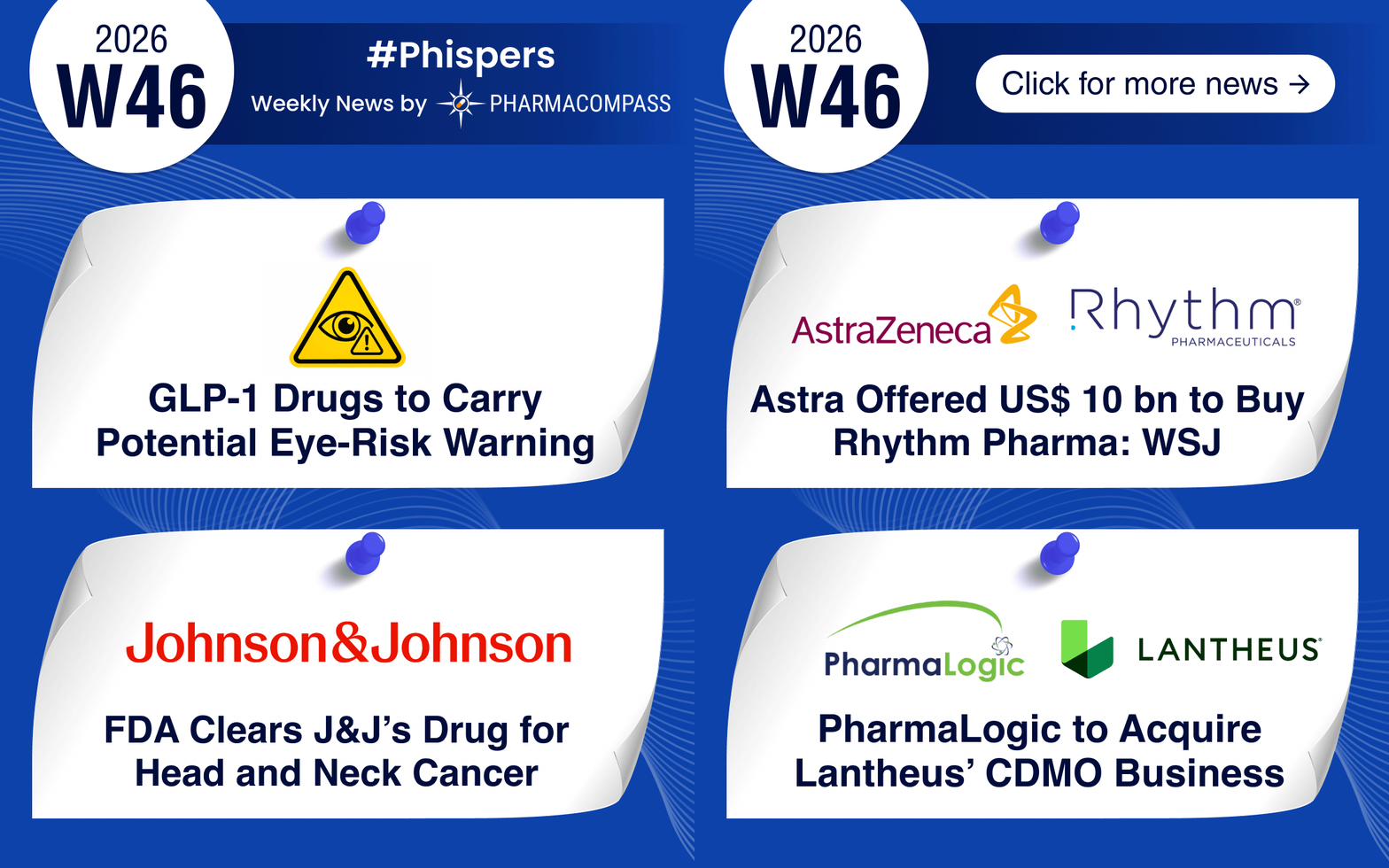
FDA flags potential risk of serious eye condition linked with GLP-1 drugs; Astra in talks to buy Rhythm Pharma, says report
The US Food and Drug Administration (FDA) has announced a potential increased risk of a serious eye condition associated with GLP-1 drugs used for weight loss and diabetes. The agency approved Johnson & Johnson’s Rybrevant Faspro (amivantamab and hyaluronidase-lpuj) for adults with recurrent or metastatic head and neck squamous cell carcinoma, and Bayer’s Sunharbo (asundexian), a blood thinner that reduces the risk of stroke in adults with recent non-cardioembolic ischemic stroke or high-risk transient ischemic attack (TIA), so-called “mini-stroke”. It also cleared Merck’s drug for treating rare tumors in or around joints. In deals, there were reports that AstraZeneca is in talks to acquire Rhythm Pharma for about US$ 10 billion. Boehringer Ingelheim signed a deal with Sino Biopharmaceutical to develop six new cancer treatments. AbbVie bought rights to an experimental oral drug for inflammatory bowel disease from Nxera Pharma’s UK subsidiary. Mumbai-based contract development and manufacturing organization (CDMO) BDR Pharma is acquiring a controlling stake in the oral solid formulations business of Acme Formulation. And PharmaLogic, an American CDMO focused on radiopharmaceuticals, agreed to acquire Lantheus’ CDMO business and its manufacturing facility in Springfield, New Jersey. The US Department of Defense has removed biotech WuXi AppTec from its list of “Chinese military companies”. Meanwhile, FDA is probing the risk of developing tumors, including cancers, linked to Novartis’ Zolgensma (onasemnogene abeparvovec). The agency issued a Form 483 with three observations to Pinnacle Life Science, a subsidiary of India’s Aarti Drugs, after an inspection earlier this month. FDA announces ‘eye-risk’ warning for GLP-1 drugs, such as Ozempic, Mounjaro  FDA has announced a “potential increased risk” of a serious eye condition associated with GLP-1 drugs used for weight loss and diabetes. The condition, though rare, is known as non-arteritic anterior ischemic optic neuropathy (NAION) and can cause acute, painless, decreased vision in one eye, including vision loss. GLP-1 drugmakers need to add a warnings and precautions section on the label, informing about the potential risk. The requirement covers 12 drugs, including Novo’s Ozempic, Rybelsus and Wegovy (semaglutide), Eli Lilly’s Mounjaro and Zepbound (tirzepatide) and Foundayo (orforglipron). FDA grants accelerated approval to J&J’s Rybrevant Faspro in head and neck cancer FDA has granted accelerated approval to Johnson & Johnson’s Rybrevant Faspro (amivantamab and hyaluronidase-lpuj) for adults with recurrent or metastatic head and neck squamous cell carcinoma that has worsened after chemotherapy and immunotherapy. Rybrevant Faspro is already approved for lung cancer. The treatment can be administered as a subcutaneous injection. Clears Bayer’s blood thinner: FDA has approved Bayer’s Sunharbo (asundexian), a blood thinner that reduces the risk of stroke in adults with recent non-cardioembolic ischemic stroke or high-risk transient ischemic attack (TIA), so-called “mini-stroke”. Sunharbo needs to be taken in combination with an anti-platelet therapy. Okays Merck’s rare joint tumor drug: FDA has approved Merck KGaA’s Pimjetmi (pimicotinib), a once-daily oral drug for adults with symptomatic tenosynovial giant cell tumor (TGCT) when surgery could worsen function or cause severe morbidity. TGCT is a rare, locally aggressive tumor in or around the joints. Boehringer inks up to US$ 7.4 bn deal with Sino Biopharm for six cancer treatments Within weeks of opening its R&D facility in Shanghai, Boehringer Ingelheim has signed a deal with Sino Biopharmaceutical to potentially develop six new cancer treatments. The agreement seeks to advance potential next-generation cancer treatments based on antibody-drug conjugate (ADC) and T-cell engager (TcE) technologies. Sino, which recently adopted the global name SBP, will receive US$ 358 million in upfront and near-term payments and is eligible for up to US$ 7 billion in milestone payments. AbbVie licenses IBD drug from Nxera: AbbVie has bought exclusive worldwide rights to an experimental oral drug for inflammatory bowel disease from Nxera Pharma’s UK subsidiary. Nxera will receive US$ 100 million upfront and up to US$ 1.37 billion in milestone payments, plus royalties. Evommune-Hinova deal: Evommune has bought licensing rights to an experimental autoimmune drug from China’s Hinova Pharmaceuticals for all territories outside Greater China in a deal worth up to US$ 1.1 billion. AstraZeneca offered US$ 10 bn to acquire Rhythm Pharma, reports WSJ AstraZeneca has offered about US$ 10 billion to acquire Rhythm Pharmaceuticals, the Wall Street Journal has reported, citing sources. Rhythm specializes in drugs that treat metabolic conditions and severe obesity. The acquisition is being pursued by AstraZeneca’s rare-disease business Alexion, Reuters said. Argenx to buy Unnatural Products: Argenx has agreed to acquire Unnatural Products, an American biotech working on macrocyclic peptides (chains of amino acids), in a deal worth up to US$ 1.15 billion. FDA probes tumor risk tied to Novartis’ spinal muscular atrophy therapy Zolgensma FDA is investigating a risk of tumors, including cancers, linked to Novartis’ Zolgensma (onasemnogene abeparvovec), the one-time gene therapy for spinal muscular atrophy (SMA). The Swiss drugmaker has confirmed new ‌cases of tumors in children being treated with Zolgensma, taking the number of such cases to nine since the approval of the therapy in 2019. Aarti Drugs’ unit gets FDA’s Form 483: FDA has issued a Form 483 with three observations to Pinnacle Life Science, a subsidiary of India’s Aarti Drugs, after inspecting its formulations plant in Baddi, Himachal Pradesh, from November 2 to 6. WuXi AppTec removed from Pentagon’s Chinese military company list The US Department of Defense has removed biotech WuXi AppTec from its list of “Chinese military companies.” The Pentagon had added WuXi to the list in June 2026. The removal comes after a federal court order in August this year. Companies on the list risk being named ‘biotechnology companies of concern’ under the Biosecure Act. PharmaLogic to acquire Lantheus’ CDMO business, plant in New Jersey PharmaLogic, an American CDMO focused on radiopharmaceuticals, has agreed to acquire Lantheus’ CDMO business and its manufacturing facility in Springfield, New Jersey. The financial terms of the deal were not disclosed. Meanwhile, Indian CDMO BDR Pharma will acquire a controlling stake in the oral solid formulations business of Acme Formulation, another India-based CDMO, from shareholders led by private equity firm PAG. The terms of the deal were not disclosed. Vir Biotechnology’s chronic hepatitis delta combo clears phase 3 trial  Vir Biotechnology has said elebsiran plus tobevibart met the primary endpoint of a pivotal phase 3 trial in chronic hepatitis delta, the most severe form of viral hepatitis. The disease was recently classified as carcinogenic by the World Health Organization. Meanwhile, J&J has said its drug Icotyde (icotrokinra) eased symptoms in patients with active psoriatic arthritis as opposed to a placebo in a phase 3 trial.

Impressions: 3334

https://dev1.pharmacompass.com/radio-compass-phisper/fda-flags-potential-risk-of-serious-eye-condition-linked-with-glp-1-drugs-astra-in-talks-to-buy-rhythm-pharma-says-report

#Phispers by PHARMACOMPASS
12 Nov 2026

NEWS LIBRARY

12read-more
read-more

https://www.reuters.com/legal/litigation/us-fda-approves-bayers-blood-thinner-prevent-repeat-strokes-2026-11-09/

REUTERS
09 Nov 2026

https://www.bayer.com/media/en-us/european-medicines-agency-confirms-asundexian-marketing-authorization-application-for-assessment-in-secondary-prevention-of-ischemic-stroke/

PRESS RELEASE
10 Jul 2026

https://www.businesswire.com/news/home/20260518787299/en/Bayer-Granted-Priority-Review-by-U.S.-FDA-for-Asundexian-in-Patients-After-a-Non-Cardioembolic-Ischemic-Stroke-or-Transient-Ischemic-Attack

BUSINESSWIRE
19 May 2026

https://www.reuters.com/business/healthcare-pharmaceuticals/bayer-says-its-experimental-blood-thinner-cuts-risk-severity-repeat-strokes-2026-05-06/

REUTERS
06 May 2026

https://www.indianpharmapost.com/clinical-trials/bayers-asundexian-demonstrated-26-reduction-in-stroke-after-a-non-cardioembolic-ischemic-stroke-19055

INDPHARMAPOST
07 Feb 2026

https://www.businesswire.com/news/home/20260127937551/en/Bayer-to-Present-Results-From-Phase-III-OCEANIC-STROKE-Study-of-Asundexian-in-Secondary-Stroke-Prevention

BUSINESSWIRE
27 Jan 2026
digital-content135206011##p