Please Wait
Applying Filters...
Menu

Digital Content read-more

Create Content with PharmaCompass, ask us

PHARMA & BIOTECH INSIGHTS

1read-more
read-more

A PHP Error was encountered

Severity: 8192

Message: mb_convert_encoding(): Handling HTML entities via mbstring is deprecated; use htmlspecialchars, htmlentities, or mb_encode_numericentity/mb_decode_numericentity instead

Filename: blog/grid.php

Line Number: 52

Backtrace:

File: /var/www/html/application/views/include/media/blog/grid.php
Line: 52
Function: mb_convert_encoding

File: /var/www/html/application/models/Cmn.php
Line: 3595
Function: view

File: /var/www/html/application/views/include/product/digitalContent/grid.php
Line: 17
Function: common

File: /var/www/html/application/views/include/desc/inner.php
Line: 13
Function: view

File: /var/www/html/application/views/include/desc/indexNew.php
Line: 2433
Function: include

File: /var/www/html/application/controllers/Common.php
Line: 11303
Function: view

File: /var/www/html/index.php
Line: 231
Function: require_once

FDA okays 50 new drugs in 2024; BMS’ Cobenfy, Lilly’s Kisunla lead pack of breakthrough therapies
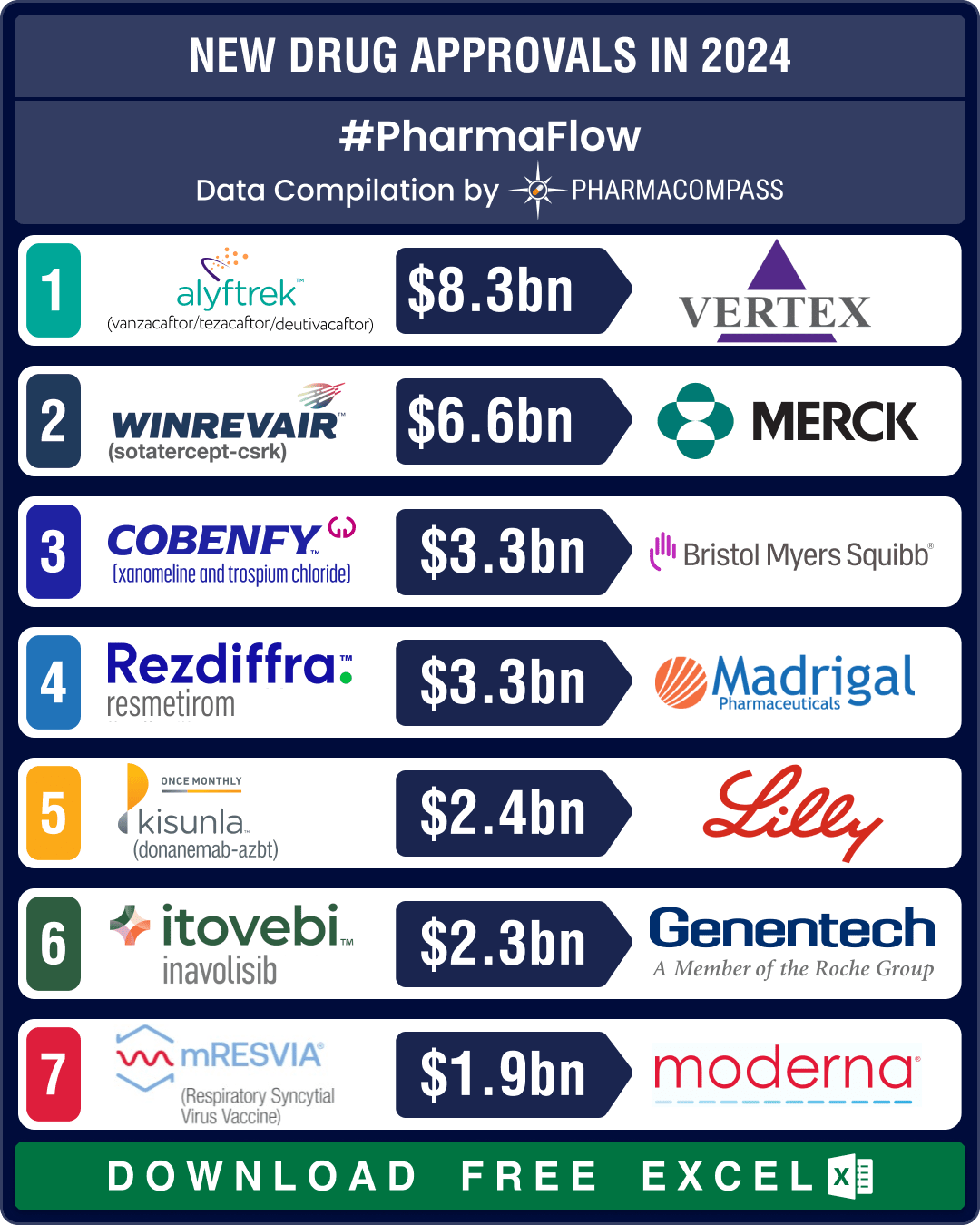
In 2024, the biopharma industry continued to advance on its robust trajectory of innovation. Though the US Food and Drug Administration’s Center for Drug Evaluation and Research (CDER) and the Center for Biologics Evaluation and Research (CBER) approved fewer drugs, there was a significant increase in medical breakthroughs.  While the CDER approved 50 new drugs in 2024, as compared to 55 in 2023, the CBER granted 14 biologics approvals in 2024, down from 20 in 2023. The European Medicines Agency (EMA) approved 34 new therapies, up from 32 in 2023, while Health Canada granted 28 approvals, down from 38 in 2023. The year saw long-awaited treatments being approved in areas such as schizophrenia and Alzheimer’s disease in the second half (H2) of 2024. In H1 2024, drugs to treat metabolic dysfunction-associated steatohepatitis (MASH) and chronic obstructive pulmonary disease (COPD) had been granted FDA approvals. As the year drew to a close, FDA began approving drugs at a feverish pace, with 29 of the CDER’s 50 approvals coming in H2. Like most years, the landscape of drug approvals was dominated by oncology, with 15 of the 50 drugs (30 percent) approved targeting various forms of cancer. This was followed by dermatology and non-malignant hematology, each accounting for 12 percent of approvals. Notably, small molecules continued to dominate the market, making up for 64 percent of the new drug approvals, while 32 percent were proteins, including monoclonal and bi-specific antibodies.  View New Drug Approvals in 2024 with Estimated Sales (Free Excel Available) Karuna-BMS’ schizophrenia drug, Lilly’s Alzheimer’s med, Neurocrine’s Crenessity dominate list of pathbreaking approvals in H2  Out of the 50 new drugs approved in 2024, CDER identified 24 (48 percent) as first-in-class, showcasing novel mechanisms of action. The most anticipated approval of 2024 was Karuna and Bristol Myers Squibb’s Cobenfy, a groundbreaking treatment for schizophrenia. This fixed-dose combination of xanomeline and trospium chloride represents the first novel mechanism of action in decades for this debilitating psychiatric condition. Analysts forecast peak annual sales of over US$ 3.3 billion for Cobenfy.  Eli Lilly’s Alzheimer’s drug Kisunla (donanemab) became the third amyloid-targeting antibody to gain FDA approval. Unlike its predecessors, Kisunla offers a unique limited-duration treatment regimen, allowing patients to discontinue therapy once amyloid levels in the brain drop below a certain threshold. Priced at approximately US$ 32,000 per year, it is positioned as a cost-effective alternative to existing treatments. Analysts estimate peak sales of US$ 2.4 billion for Kisunla. Crenessity (crinecerfont), developed by Neurocrine Biosciences, became the first FDA-approved treatment in decades for classic congenital adrenal hyperplasia (genetic conditions that affect the adrenal glands). Similarly, Vertex’s triple combination therapy of deutivacaftor, tezacaftor & vanzacaftor (Alyftrek) for cystic fibrosis represents a significant advancement in genetic disease treatment. Analysts forecast peak sales exceeding US$ 8.3 billion, underscoring the therapy’s potential to transform patient care. Meanwhile, Bridgebio’s Attruby (acoramidis hydrochloride) emerged as a promising treatment for cardiac amyloidosis, a life-threatening condition. Roche’s Itovebi, Checkpoint’s Unloxcyt clinch FDA approvals in H2 2024; forecast to achieve blockbuster status The dominance of cancer drug approvals reflects the ongoing focus on targeted therapies, immuno-oncology, and precision medicine to improve outcomes for patients with hard-to-treat cancers. Among the year’s notable FDA approvals was Genentech’s Itovebi (inavolisib), another targeted therapy that treats hormone receptor-positive (HR+), HER2-negative breast cancer. Itovebi is a PI3Kα inhibitor designed specifically for patients with PIK3CA mutations, a common driver of resistance to endocrine therapy in breast cancer. It demonstrated a more tolerable safety profile. Roche projects Itovebi’s peak (annual) sales to reach CHF 2 billion (US$ 2.3 billion). Checkpoint Therapeutics’ Unloxcyt (cosibelimab) joined the crowded checkpoint inhibitor market as the eleventh PD-1/PD-L1-targeting monoclonal antibody approved by the FDA. It was granted approval for cutaneous squamous cell carcinoma (cSCC), an aggressive form of skin cancer with high recurrence rates. As compared to other checkpoint inhibitors, like Keytruda (pembrolizumab) and Opdivo (nivolumab), Unloxcyt is likely to offer an advantage in immune activation. FDA also approved Astellas’ Vyloy (zolbetuximab), a first-in-class monoclonal antibody for metastatic gastric and gastroesophageal junction (GEJ) adenocarcinoma. Analysts forecast peak sales of approximately US$ 850 million for Vyloy. Syndax Pharmaceuticals’ Revuforj (revumenib) was approved by FDA to treat a type of acute leukemia in both adults and children. This approval introduces a novel class of medications known as menin inhibitors. These agents are currently in clinical development for the treatment of genetically defined subsets of acute leukemia. These inhibitors function by preventing the activation of cancer growth-related proteins. Potential blockbusters Lilly’s Ebglyss, Galderma’s Nemluvio lead advances in dermatology Eli Lilly’s Ebglyss (lebrikizumab) garnered significant attention. Approved by FDA for moderate-to-severe atopic dermatitis, this monoclonal antibody introduces a less burdensome dosing regimen compared to its competitors, with maintenance therapy required only once a month. This feature positions it as a potential contender to Dupixent (dupilumab), a market leader in atopic dermatitis. Ebglyss sales are forecast to reach US$ 1.9 billion by 2030. Galderma’s Nemluvio (nemolizumab) secured FDA approval for two indications in 2024 — prurigo nodularis (a chronic disorder of the skin) and moderate-to-severe atopic dermatitis in patients aged 12 years and older. As the first humanized IgG2 monoclonal antibody targeting the IL-31 receptor, Nemluvio directly inhibits the key driver of itch and inflammation in both these conditions. With its unique mechanism and broad dermatology potential, analysts forecast peak sales of approximately US$ 1.66 billion.  Ebglyss and Nemluvio underscore the growing importance of biologics in dermatological care. Botanix Pharmaceuticals also made strides in dermatology by clinching an FDA approval for Sofdra (sofpironium) in June. The drug has been okayed for the treatment of primary axillary hyperhidrosis, a condition characterized by excessive sweating. Ascendis Pharma’s Yorvipath (palopegteriparatide), a therapy approved by FDA to treat hypoparathyroidism, is forecast to achieve blockbuster sales of US$ 1.8 billion by 2030, highlighting its potential to transform endocrine care. Our view Overall, 2024 was defined by its breakthrough drug approvals. The year also saw significant reduction in complete response letters (CRLs) — they dropped from 43 in 2023 to just 29 in 2024. This suggests improved industry preparedness and alignment with regulatory expectations. The new year began with the approval of Datroway (datopotamab deruxtecan) from AstraZeneca and Daiichi Sankyo, marking a significant advancement in oncology. Several other promising new drugs are coming up for FDA approval this year, such as J&J’s nipocalimab, Vertex Pharmaceuticals’ suzetrigine, Elevar Therapeutics’ rivoceranib/camrelizumab, Sanofi’s fitusiran and GSK’s gepotidacin. Hopefully, the momentum of breakthrough approvals will continue through 2025, political headwinds in the US notwithstanding.

Impressions: 14617

https://dev1.pharmacompass.com/radio-compass-blog/fda-okays-50-new-drugs-in-2024-bms-cobenfy-lilly-s-kisunla-lead-pack-of-breakthrough-therapies

#PharmaFlow by PHARMACOMPASS
30 Jan 2025

MARKET PERFORMANCE RECAP

1read-more
read-more
Pipeline Prospector June 2026 highlights: FDA approves GSK-Spero’s antibiotic for UTIs; AbbVie buys Apogee for US$ 10.9 bn
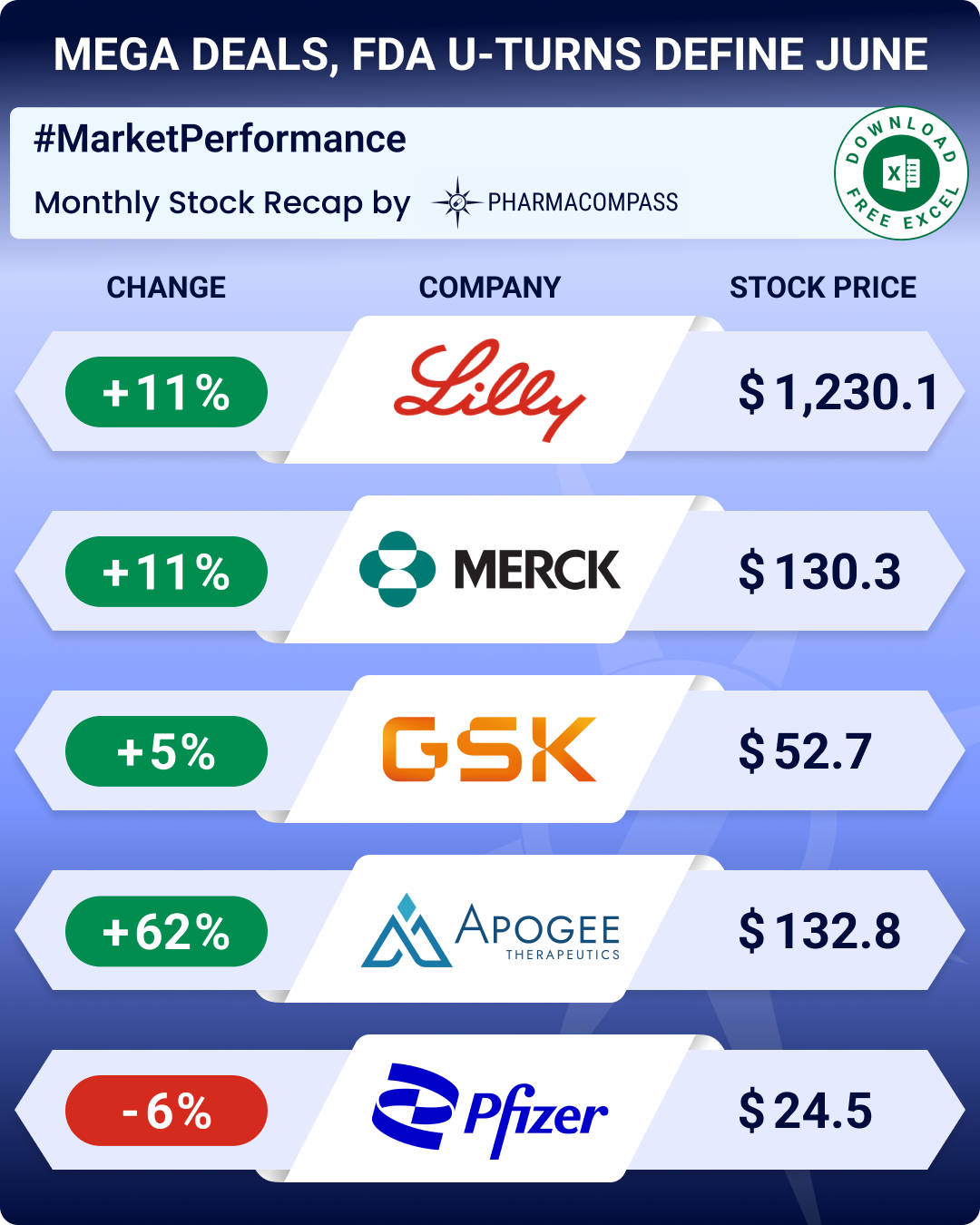
The US Food and Drug Administration (FDA) made considerable news in June. The agency reversed critical decisions in the case of two gene therapies, and also announced that it would hire 2,200 employees, after firing over 3,000 last year. In drug approvals, FDA cleared the first and only oral carbapenem antibiotic to treat complicated urinary tract infections. The month also witnessed two deals worth over US$ 10 billion — AbbVie’s acquisition of Apogee Therapeutics for approximately US$ 10.9 billion, and GSK’s acquisition of Nuvalent, a clinical-stage biopharma, for US$ 10.6 billion. The indices continued to move upwards. The Nasdaq Biotechnology Index (NBI) increased by 10.65 percent — from 5,932.87 at the end of May to 6,564.93 by June-end. The SPDR S&P Biotech ETF increased from 135.62 to 158.25, an increase of 16.69 percent. The S&P Biotechnology Select Industry Index (SPSIBI) increased by 15.84 percent, from 10,689.60 to 12,383.03.   Access the Clinical Trials Dashboard for June 2026 Newsmakers (Free Excel) AbbVie acquires Apogee for US$ 10.9 bn; GSK buys out Nuvalent for US$ 10.6 bn to bolster oncology pipeline  The month’s biggest deal was AbbVie’s acquisition of Apogee Therapeutics (stock up 62 percent in June) in an all-cash transaction valued at approximately US$ 10.9 billion. The buyout centered around zumilokibart, a late-stage therapy being developed for atopic dermatitis, asthma, and eosinophilic esophagitis. AbbVie’s stock rose by 18 percent in June. The second largest acquisition was made by GSK — it acquired Nuvalent, a clinical-stage biopharma focused on developing targeted oncology therapies, for US$ 10.6 billion. There were several sub-US$ 5 billion acquisitions. For instance, American biotech Incyte struck a deal worth up to US$ 2 billion to acquire Vega Therapeutics. Edgewise Therapeutics announced the sale of its muscular dystrophy business to Servier for up to US$ 2.65 billion, and Ipsen entered into a definitive agreement to acquire Kartos Therapeutics in a deal worth up to US$ 1.75 billion. FDA approves GSK-Spero’s oral antibiotic for complicated UTIs; clears Astra’s drug combo for prostate cancer The month saw some notable drug approvals. FDA approved Utebzi (tebipenem pivoxil) — developed by Spero Therapeutics and licensed to GSK — as the first and only oral carbapenem antibiotic for adults with complicated urinary tract infections (cUTIs), including pyelonephritis (a type of kidney inflammation). Carbapenem is a class of antibiotics which is widely used for the treatment of drug-resistant bacterial infections. The agency also approved AstraZeneca’s Truqap (capivasertib), in combination with abiraterone and prednisone, as the first and only targeted treatment for adults with PTEN-deficient metastatic androgen pathway modulation-naïve or sensitive prostate cancer, a genetically distinct, highly aggressive form of the disease. Merck’s Keytruda (pembrolizumab) and Keytruda Qlex (pembrolizumab and berahyaluronidase alfa-pmph), each in combination with Merck’s Welireg (belzutifan), were approved by FDA for adjuvant treatment of a type of kidney cancer in adults. In supplemental approvals, FDA approved Japanese drugmaker Shionogi’s oral antiviral Xocova (ensitrelvir) for preventing Covid-19 after exposure. The agency also expanded the approval of ‌Pfizer’s Hympavzi (marstacimab-hncq) to prevent or reduce the frequency of bleeding episodes in children and adolescents with hemophilia (a condition in which the blood doesn’t clot properly). And it granted accelerated approval to Sanofi’s  Tzield (teplizumab-mzwv) to delay the decline in endogenous insulin production in children aged 8 to 17 years who were recently diagnosed with stage 3 type 1 diabetes. Lilly inks up deals with Haisco, Hanmi, AlzeCure, Abbisko; Roche signs licensing deal with Nurix Eli Lilly (stock up 11 percent) continued to be on a deal-making spree. It signed a licensing and research collaboration with China’s Haisco Pharmaceutical worth up to US$ 3 billion to develop multiple innovative therapies. It also signed a deal worth up to US$ 1.9 billion with Ascidian Therapeutics to use its gene-editing technology to develop new therapies for rare inherited kidney diseases. In addition, Lilly entered into a licensing deal worth up to US$ 1.2 billion with South Korea’s Hanmi Pharmaceutical for sonefpeglutide, a drug aimed at treating short bowel syndrome, a condition where patients cannot absorb enough nutrients. It also doubled down on Alzheimer’s research by signing a collaboration and out-licensing deal worth over US$ 1 billion with Swedish biotech AlzeCure Pharma for global rights to an experimental drug — ACD680. Moreover, Shanghai-based oncology biotech Abbisko Therapeutics expanded its research collaboration with Lilly in a deal worth up to US$ 1.9 billion. Roche entered into an exclusive licensing and collaboration ‌ agreement with Nurix Therapeutics worth up to US$ 2.3 billion. Under the deal, the two companies will co-develop and co-commercialize bexobrutideg, a blood cancer drug that works by degrading targeted proteins. Novartis entered into a research collaboration with Antares Therapeutics worth up to US$ 1.9 billion to apply Antares’ drug discovery platform to a limited number of historically undruggable oncology targets. Additionally, Orionis Biosciences expanded its collaboration with Novartis in a deal worth up to US$ 1.4 billion. Nuvectis Pharma signed a licensing agreement with China’s Haisco Pharmaceutical Group worth up to US$ 1.4 billion for ex-China rights to two clinical-stage compounds that target difficult-to-treat tumors, currently in advanced clinical trials. There were two significant deals in the sphere of artificial intelligence — Insilico Medicine signed a collaboration with Korean drugmaker SK Biopharmaceuticals worth up to US$ 2.5 billion to develop treatments for neuroimmune disorders using AI; and Alnylam Pharmaceuticals and Inceptive  announced a strategic collaboration worth up to US$ 2 billion to develop RNA-based medicines using AI. FDA clears path for uniQure’s Huntington’s filing; Definium’s LSD-based drug shows benefit in depression FDA took several U-turns in June. Reversing its earlier position, FDA gave a go-ahead to uniQure to pursue an accelerated approval for its gene therapy for Huntington’s disease (AMT-130). Similarly, it came out in support of Regenxbio’s gene therapy for Hunter syndrome (an ultra-rare genetic condition) — Navsunli (clemidsogene lanparvovec-sngl, RGX-121), after declining to approve it in February. Definium Therapeutics reported positive phase 3 results for DT120, an oral drug based on lysergic acid diethylamide (LSD), in patients with major depressive disorder. LSD is a semi-synthetic psychedelic derived from ergot fungi. In a phase 3 trial, AstraZeneca’s drug Imfinzi (durvalumab) in combination with Imjudo (tremelimumab), Lenvima (lenvatinib), and transarterial chemoembolisation (TACE), reduced the risk of disease progression versus TACE alone in patients with unresectable hepatocellular carcinoma (HCC) eligible for embolisation. HCC is a type of liver cancer. Our view June signaled a clear course correction at the FDA, not just with the two gene therapies, but also on downsizing. The job cuts had begun disrupting drug reviews and user-fee programs. Hopefully, the new recruitments will augur well for not just the agency, but for the global pharmaceutical industry.

Impressions: 1383

https://dev1.pharmacompass.com/pipeline-prospector-blog/pipeline-prospector-june-2026-highlights-fda-approves-gsk-spero-s-antibiotic-for-utis-abbvie-buys-apogee-for-us-10-9-bn

#PharmaFlow by PHARMACOMPASS
02 Jul 2026

WEEKLY INDUSTRY NEWS

2read-more
read-more
FDA clears path for uniQure’s Huntington’s filing; approves GSK-Spero’s oral antibiotic for complicated UTIs
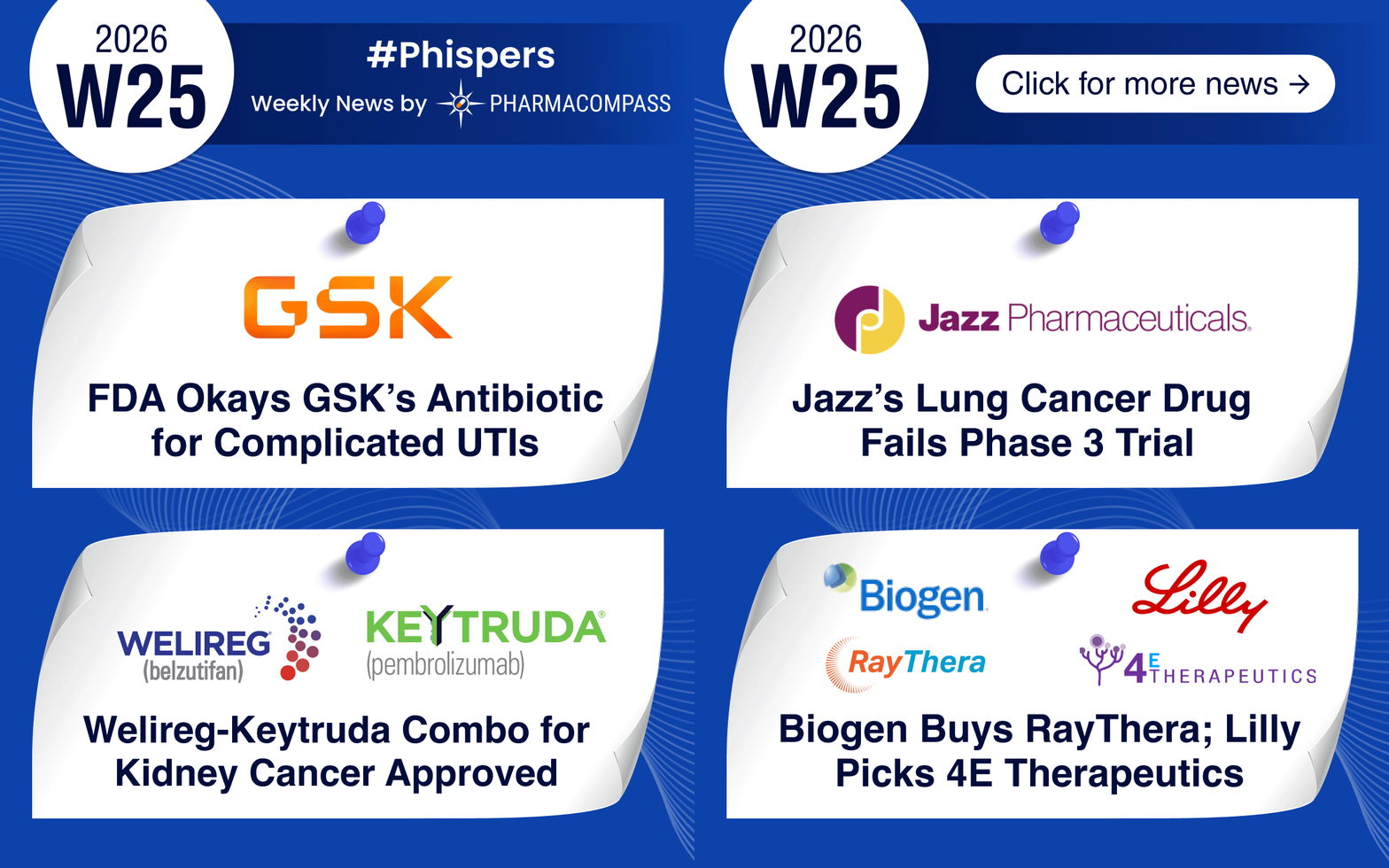
This week’s Phispers is loaded with news from the US Food and Drug Administration (FDA). The agency appears to be revisiting its earlier decisions. First, it gave a go-ahead to uniQure to pursue an accelerated approval for its gene therapy for Huntington’s disease. Earlier this year, FDA had asked for data from another trial for this therapy. Second, FDA’s Vaccines and Related Biological Products Advisory Committee will soon discuss Moderna’s seasonal flu vaccine, after raising concerns in February over its trial design.Meanwhile, the agency approved GSK and Spero Therapeutics’ first and only oral carbapenem antibiotic for complicated urinary tract infections (cUTIs). It also approved AstraZeneca’s Truqap (capivasertib) in combination with abiraterone and prednisone as the first and only targeted treatment for adults with a type of prostate cancer.FDA expanded the label of Sanofi’s Tzield (teplizumab-mzwv). It has now received accelerated approval for use in children aged eight to 17 years who were recently diagnosed with stage 3 type 1 diabetes. FDA also approved Merck’s Keytruda (pembrolizumab) and Keytruda Qlex (pembrolizumab and berahyaluronidase alfa-pmph), each in combination with Merck’s Welireg (belzutifan), for adjuvant treatment of adult patients with a type of kidney cancer.In deals, Biogen acquired private biotechnology company RayThera for ‌up to US$ 1 billion in a bid to expand its immunology pipeline. And Eli Lilly acquired an Austin-based neuroscience company — 4E Therapeutics — that has a pipeline of early-stage, oral, non-opioid therapies that address the underlying neurological mechanisms that cause pain. And Merck signed a collaboration and license agreement with AI drug design specialist Protillion Biosciences.In trials, Jazz Pharmaceuticals’ lung cancer drug — Zepzelca (lurbinectedin) — failed to meet the primary goal of improving overall survival in a phase 3 study.  The drugmaker also signed a partnership with AbCellera to discover and develop T-cell-engaging (TCE) antibodies for hard-to-treat cancers.FDA clears path for uniQure’s Huntington’s filing; panel to review Moderna’s flu shotThe FDA appears to be revisiting its earlier decisions. For instance, it has given a go-ahead to uniQure to pursue an accelerated approval for its gene therapy for Huntington’s disease. This marks a shift in its stance in March, when the agency had asked for data from another trial and called it a failed product.Separately, FDA’s Vaccines and Related Biological Products Advisory Committee will meet on June 18 to discuss Moderna’s seasonal flu vaccine — mFlusiva (mRNA-1010) — after raising concerns in February over its trial design. At that time, FDA had issued a refusal-to-file letter to Moderna for the flu shot.FDA approves GSK-Spero’s oral antibiotic for complicated UTIsFDA has approved Utebzi (tebipenem pivoxil) — developed by Spero Therapeutics and licensed to GSK — as the first and only oral carbapenem antibiotic for adults with complicated urinary tract infections (cUTIs), including pyelonephritis (a type of kidney inflammation). Carbapenem is a class of antibiotics which is widely used for the treatment of drug-resistant bacterial infections.Okays Astra’s drug combo for prostate cancer: FDA has approved AstraZeneca’s Truqap (capivasertib), in combination with abiraterone and prednisone, as the first and only targeted treatment for adults with PTEN-deficient metastatic androgen pathway modulation-naïve or sensitive (mAPMN/S) prostate cancer, a genetically distinct, highly aggressive form of the disease, as detected by an FDA-authorized test. The approval was based on positive results from a phase 3 trial.Approves Merck’s Welireg-Keytruda combo: FDA has approved Merck’s Keytruda (pembrolizumab) and Keytruda Qlex (pembrolizumab and berahyaluronidase alfa-pmph), each in combination with Merck’s Welireg (belzutifan) for adjuvant treatment  of a type of kidney cancer in adults, known as renal cell carcinoma with a clear cell component (ccRCC) at intermediate-high or high risk of recurrence following nephrectomy, or following nephrectomy and resection of metastatic lesions.FDA grants accelerated approval to Sanofi’s Tzield in kids with type 1 diabetesFDA has granted accelerated approval to Tzield (teplizumab-mzwv) to delay the decline in endogenous insulin production in children aged eight to 17 years who were recently diagnosed with stage 3 type 1 diabetes. The accelerated approval expands the label of Tzield.Tzield is a monoclonal antibody that was first approved in November 2022 by FDA to delay the onset of stage 3 type 1 diabetes in those with stage 2 disease.Biogen expands immunology pipeline through up to US$ 1 bn RayThera acquisitionBiogen has announced the acquisition of private biotechnology company RayThera for ‌up to US$ 1 billion in a bid to expand its immunology pipeline. RayThera’s portfolio includes multiple anti-inflammatory assets that could treat immune-mediated conditions across a range of indications. Its lead candidate is expected to enter phase 1 development in the third quarter of 2026.Lilly buys 4E Therapeutics: Eli Lilly has acquired 4E Therapeutics, an Austin-based neuroscience company that develops next-generation treatments for chronic pain. The company has a pipeline of early-stage, oral, non-opioid therapies that address the underlying neurological mechanisms that cause pain.Merck ties up with AI firm: Merck has signed a collaboration and license agreement worth up to US$ 510 million with AI drug design specialist Protillion Biosciences. Protillion will receive an undisclosed upfront payment, with the potential to earn more through research, development and commercial milestones. The deal centers around Protillion’s Prot-MaP technology.Jazz Pharma’s small cell lung cancer drug fails phase 3 trialJazz Pharmaceuticals’ lung cancer drug — Zepzelca (lurbinectedin) — has failed to meet the primary goal of improving overall survival in a phase 3 study.  Zepzelca was being evaluated in patients with relapsed (second-line) metastatic small cell lung cancer (SCLC). It had been granted accelerated approval by the FDA. The trial was testing Zepzelca as a monotherapy or in combination with irinotecan. Zepzelca is an approved FDA drug that is used in combination with atezolizumab as first-line maintenance treatment for patients with extensive-stage SCLC.Signs oncology deal with AbCellera: Jazz Pharma has signed a partnership with AbCellera to discover and develop T-cell-engaging (TCE) antibodies for hard-to-treat cancers. The deal involves an upfront payment of US$ 56 million, and US$ 792 million in other potential payments.Neumora to cut 35 percent staff: Neumora Therapeutics is abandoning the development of its experimental depression drug — navacaprant — after multiple trial failures. The company also plans to cut 35 percent of its workforce. This will help Neumora save approximately US$ 10 million annually. Navacaprant recently failed two late-stage trials. It had failed another late-stage trial (for major depressive disorder) roughly 18 months ago. 

Impressions: 1621

https://dev1.pharmacompass.com/radio-compass-phisper/fda-clears-path-for-uniqure-s-huntington-s-filing-approves-gsk-spero-s-oral-antibiotic-for-complicated-utis

#Phispers by PHARMACOMPASS
18 Jun 2026

NEWS LIBRARY

26read-more
read-more

https://www.prnewswire.com/news-releases/labcorp-launches-fda-approved-pten-companion-diagnostic-for-prostate-cancer-302841950.html

PR NEWSWIRE
04 Aug 2026

https://www.astrazeneca.com/media-centre/press-releases/2026/truqap-approved-in-us-for-prostate-cancer.html

PRESS RELEASE
17 Jun 2026

https://www.astrazeneca.com/media-centre/press-releases/2026/truqap-approved-in-us-for-prostate-cancer.html

PRESS RELEASE
12 Jun 2026

https://www.globenewswire.com/news-release/2026/05/28/3302984/21662/en/menarini-group-presents-new-data-from-the-phase-1b-2-elevate-study-of-elacestrant-orserdu-in-combination-with-capivasertib-in-patients-with-er-her2-metastatic-breast-cancer-mbc-at-.html

GLOBENEWSWIRE
28 May 2026

https://www.prnewswire.com/news-releases/menarini-group-presents-new-data-from-the-phase-1b-2-elevate-study-of-elacestrant-in-combination-with-capivasertib-in-patients-with-er-her2-metastatic-breast-cancer-mbc-at-the-2026-american-society-of-clinical-oncology-asco-annual-meeting-805229255.html

PR NEWSWIRE
28 May 2026

https://www.prnewswire.com/news-releases/menarini-group-announces-new-data-at-the-american-society-of-clinical-oncology-asco-2026-annual-meeting-302781074.html

PR NEWSWIRE
26 May 2026
digital-content25227436##p