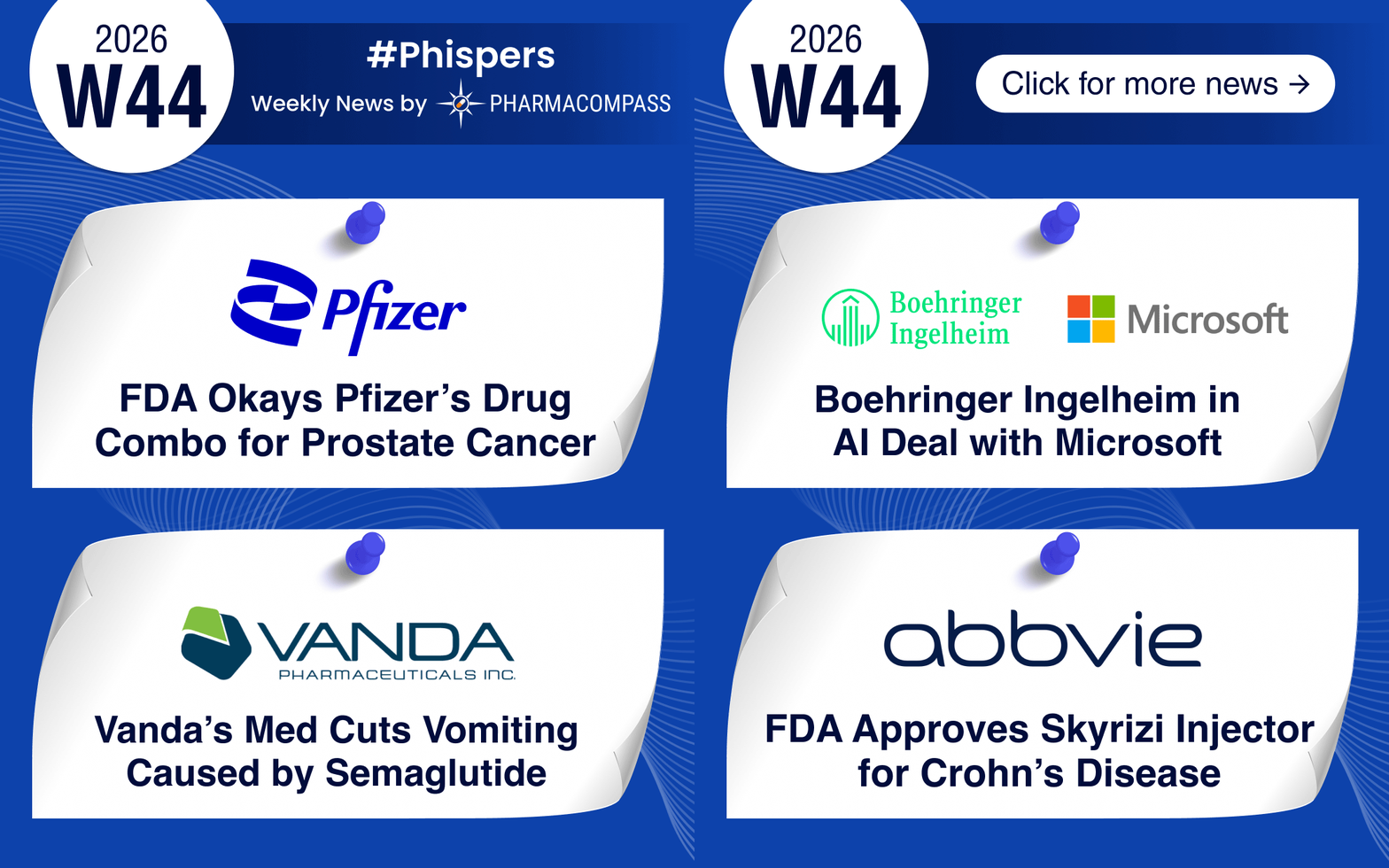
In news this week, the US Food and Drug Administration (FDA) approved Pfizer’s Talzenna (talazoparib), in combination with Xtandi (enzalutamide), for a type of metastatic prostate cancer. The agency approved a subcutaneous regimen of AbbVie’s Skyrizi (risankizumab) to treat Crohn’s
disease, and granted accelerated approval to AstraZeneca’s
Ultomiris (ravulizumab) to reduce protein in the urine of adults with primary
immunoglobulin A nephropathy (IgAN), a rare autoimmune kidney disease. It also
cleared Novo Nordisk’s insulin Awiqli for children with type 2
diabetes.
In clinical trials, Vanda Pharmaceuticals’ Nereus (tradipitant) reduced vomiting caused by semaglutide, a GLP-1 weight-loss drug. Pfizer’s Elrexfio (elranatamab) met the main goal of a phase 3 trial in patients with multiple myeloma whose cancer had returned after earlier treatment.
Meanwhile, Artiva
Biotherapeutics had to scrap its experimental cell therapy AlloNK after two
patient deaths in a mid-stage trial. A patient with highly active relapsing
multiple sclerosis died in an early-stage trial of an experimental CAR-T
therapy from Bristol Myers Squibb, known as zolacabtagene autoleucel
(zola-cel).
In deals, Gilead
Sciences said it will acquire PepStar Therapeutics’ experimental oral drug for inflammatory bowel disease — HCXT-2001 — for US$ 1.275 billion in cash upfront. Stemline Therapeutics secured exclusive worldwide rights to Georgiamune’s GIM-621, a preclinical pill designed to boost
the immune system against cancer. And Boehringer Ingelheim signed an AI deal
with Microsoft to speed up clinical development.
Additionally, FDA issued Form 483 to two Indian companies — Gland Pharma and Gufic Biosciences. The agency also issued a warning letter to Baxter International over cGMP violations at its Illinois plant, which makes sterile injectable drugs.
FDA approves Pfizer’s Talzenna combo for earlier-stage prostate cancer
FDA has approved Pfizer’s Talzenna (talazoparib), in combination with Xtandi (enzalutamide), for metastatic hormone-sensitive prostate cancer in patients whose tumors carry mutations in DNA-repair genes, known as homologous
recombination repair (HRR) genes. Hormone-sensitive cancer still responds to
hormone-blocking therapy, so this approval moves Talzenna to an earlier stage
of disease. The combination was approved in 2023 for prostate cancer that no
longer responds to hormone therapy.
Okays AbbVie’s Skyrizi injector for Crohn’s disease: FDA has approved a subcutaneous (under-the-skin) regimen for AbbVie’s Skyrizi (risankizumab) in adults with
moderately to severely active Crohn’s disease, an inflammatory bowel disease. Patients can now begin treatment at home with a wearable on-body injector, instead of relying only on intravenous infusions.
Vanda’s Nereus reduces
vomiting caused by obesity drug semaglutide in phase 3 trial
Vanda Pharmaceuticals said its drug Nereus (tradipitant) reduced vomiting caused by the GLP-1 weight-loss drug semaglutide in a phase 3 trial. Nereus was approved in December 2025 for vomiting caused by motion sickness. Vanda plans to file for approval
in this new use.
Pfizer’s Elrexfio scores phase 3 win: Pfizer said its drug Elrexfio (elranatamab) met the main goal of a phase 3 trial in patients with multiple myeloma (a blood cancer) whose disease had returned after earlier treatment. Given alone, it delayed cancer progression
or death compared with standard drug combinations. Pfizer plans to file for
approval worldwide.
Artiva drops cell
therapy after two deaths, cuts 94 percent of staff
Artiva Biotherapeutics has scrapped its experimental cell therapy AlloNK after two patient deaths in a mid-stage trial. The company will cut about 94 percent of its workforce. The cell therapy was being tested
as a potential treatment for autoimmune conditions such as rheumatoid
arthritis.
BMS discloses
patient death in CAR-T trial: Bristol Myers Squibb has disclosed that a patient with highly active relapsing multiple sclerosis died of septic pneumonia in an early-stage trial of zolacabtagene autoleucel (zola-cel), an experimental CAR-T
cell therapy. CAR-T therapies are made by reengineering a patient’s own immune
cells.
Gilead to buy
PepStar’s inflammation drug program for US$ 1.3 billion upfront
Gilead Sciences will acquire PepStar Therapeutics’ experimental oral IL-23 receptor blocker, HCXT-2001, along with worldwide rights to the program, for US$ 1.275 billion in cash upfront. IL-23 is a protein that drives inflammation
in inflammatory bowel disease (IBD) and psoriasis. Current IL-23 drugs, such as
AbbVie’s Skyrizi, are injected. HCXT-2001 is a pill that
is in phase 1 trials. Gilead plans to develop it for IBD.
Stemline licenses
Georgiamune’s immunotherapy: Stemline Therapeutics, part of Italy’s Menarini Group, has secured exclusive worldwide rights to Georgiamune’s GIM-621, a preclinical pill designed to boost the immune system against cancer. Georgiamune will receive US$ 45 million in
upfront and near-term payments, with milestone payments taking the deal value
up to US$ 1.1 billion, plus royalties.
Boehringer Ingelheim in AI deal with Microsoft: Boehringer Ingelheim has partnered with Microsoft to use AI to speed up clinical development. The companies will research digital patient twins, or
computer models of individual patients that predict how a disease will
progress. The initial focus is lung disease. The companies have not disclosed any financial
terms.
FDA grants
accelerated approval to Astra’s Ultomiris for treating rare kidney disease
FDA has granted accelerated approval to AstraZeneca’s Ultomiris (ravulizumab) to reduce protein in the urine of adults with primary immunoglobulin A nephropathy (IgAN) who are at
risk of disease progression. IgAN is a rare autoimmune kidney disease in which
antibody deposits damage the kidney’s filters, causing protein to leak into the
urine.
Novo’s insulin okayed for diabetic children: FDA has approved Novo Nordisk’s Awiqli (insulin icodec) for children aged 10 and older with type 2 diabetes. FDA says it is the first
once-weekly insulin approved for children with the condition.
FDA issues
warning letter to Baxter over cGMP violations at its Illinois plant
FDA has issued a warning letter to Baxter International over cGMP violations at its Illinois plant, which makes sterile injectable drugs. An inspection in March and April found that Baxter
failed to stop cephalosporin antibiotics from contaminating other drug products made in the same
building. Cephalosporins can trigger life-threatening allergic reactions in
sensitive patients.
Form 483 issued
to Gland Pharma’s Hyderabad plant: FDA has issued a
Form 483 with four observations to Gland Pharma’s formulation facility in Dundigal, Hyderabad
(India), after an unannounced inspection from October 12 to 23.
Gufic Biosciences’ Form 483: FDA issued a Form 483 with three
observations to Gufic Biosciences after a pre-approval
inspection of its plant in Pithampur, Indore (India), from October 15 to 23. The company did not disclose the nature of the observations and said it would address them within the stipulated time.














 Share