Please Wait
Applying Filters...
Menu

Digital Content read-more

Create Content with PharmaCompass, ask us

PHARMA & BIOTECH INSIGHTS

3read-more
read-more

A PHP Error was encountered

Severity: 8192

Message: mb_convert_encoding(): Handling HTML entities via mbstring is deprecated; use htmlspecialchars, htmlentities, or mb_encode_numericentity/mb_decode_numericentity instead

Filename: blog/grid.php

Line Number: 52

Backtrace:

File: /var/www/html/application/views/include/media/blog/grid.php
Line: 52
Function: mb_convert_encoding

File: /var/www/html/application/models/Cmn.php
Line: 3595
Function: view

File: /var/www/html/application/views/include/product/digitalContent/grid.php
Line: 17
Function: common

File: /var/www/html/application/views/include/desc/inner.php
Line: 13
Function: view

File: /var/www/html/application/views/include/desc/indexNew.php
Line: 2433
Function: include

File: /var/www/html/application/controllers/Common.php
Line: 11303
Function: view

File: /var/www/html/index.php
Line: 231
Function: require_once

DMF filings rise 11.7% in Q1 2026; India leads with 184 filings, China at 149; MSN group tops company list
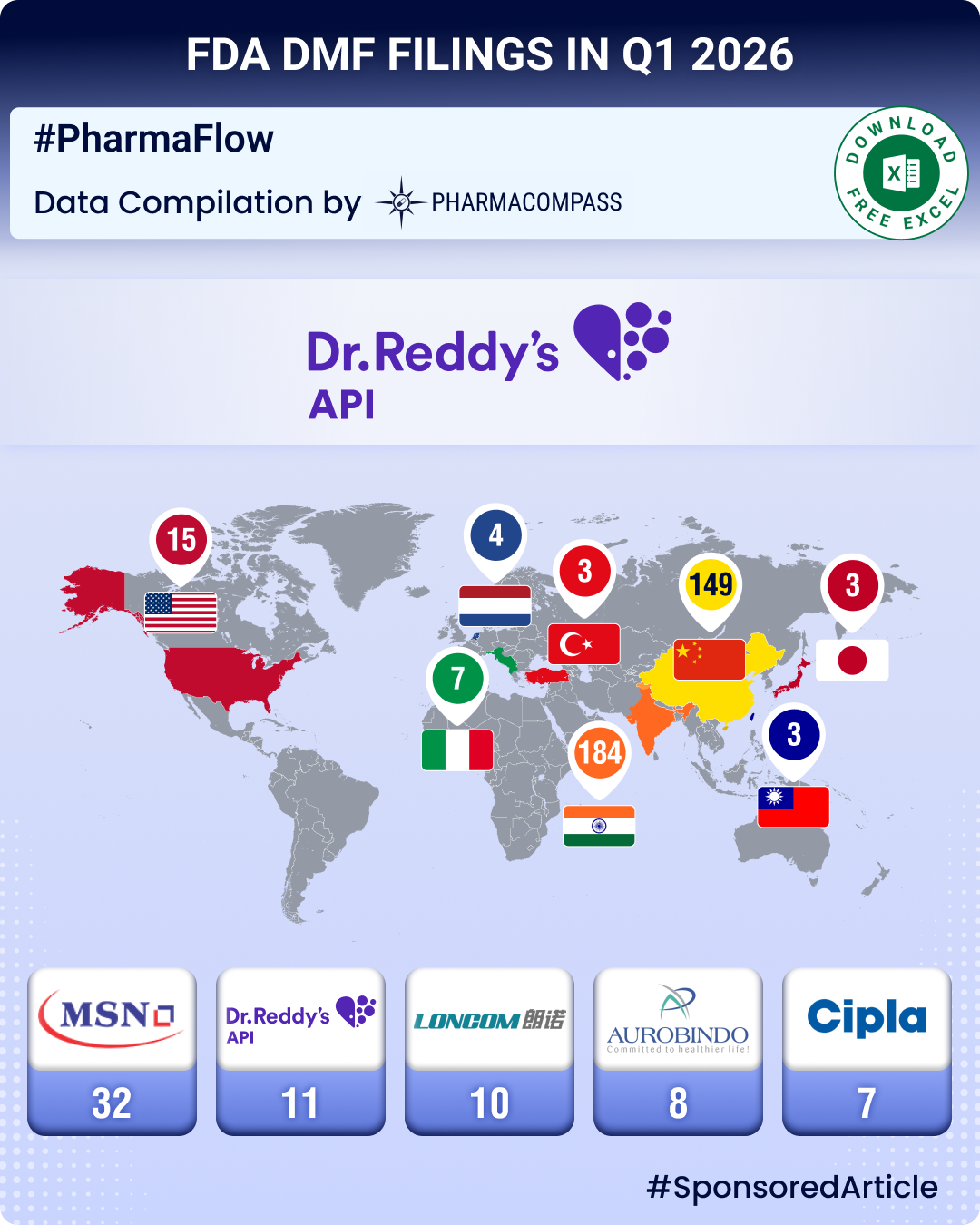
The first quarter (Q1) of 2026 witnessed a steady rise in Drug Master File (DMF) submissions to the US Food and Drug Administration (FDA). DMFs are used to provide confidential, detailed information about facilities, processes, or articles used in the manufacturing, processing, packaging, and storing of human drug products. Overall, 462 DMFs were filed across all types (II, III, IV, and V) in Q1 2026, against 440 in Q1 2025, representing a 5 percent increase. Of the four types, Type II DMFs involve active pharmaceutical ingredients (APIs) for both branded and generic drugs. A total of 379 Type II DMFs were filed in Q1 2026, compared to 339 in Q1 2025, marking an 11.7 percent increase — the highest level recorded since 2018. Out of the 379 Type II DMFs, only 31 had completed their review by the end of Q1, reflecting a processing lag between submission and review completion.   View FDA DMF Filings in Q1 2026 (Power BI Dashboard, Free Excel Available) India leads with 184 DMF submissions; MSN Group, Dr Reddy’s among top filers  As expected, DMFs filed from India and China were significantly higher than those filed by other countries. In an interesting turn of events, India regained its top position in DMF submissions after briefly losing it to China in some quarters of 2025 and 2024. During Q1 2026, DMF submissions from India reached 184, up from 162 recorded in Q1 2025, a growth of 13.6 percent.  DMF submissions from China stood at 149, up from 136 in Q1 2025, reflecting a growth of 9.5 percent over Q1 2025. The United States ranked a distant third with 15 DMF submissions (as opposed to 11 in Q1 2025), followed by Italy with seven submissions (five in Q1 2025) and the Netherlands with four submissions (four in Q1 2025). India’s MSN Group led the company-wise tally for DMF submissions, with 32 filings compared to 23 in Q1 2025, representing a growth of 39.1 percent. MSN Group was also the top filer of DMFs in Q1 2025. India’s Dr Reddy’s Laboratories ranked second, having filed 11 DMFs compared to seven in the corresponding period last year, an increase of 57.1 percent.  Other leading companies among the top filers were China’s Shandong Loncom Pharmaceutical (with 10 submissions), followed by Indian firms Aurobindo Pharma (eight), Cipla (seven), and Alembic Pharmaceuticals (six). GLP-1 drugs see maximum filings; semaglutide, retatrutide, tirzepatide lead pack Drugs targeting GLP-1, GIP, and glucagon receptors — widely used for treating obesity and weight loss — saw the maximum number of DMF filings. Among these, semaglutide, developed by Novo Nordisk, saw five filings. Semaglutide is a GLP-1 receptor agonist marketed as Ozempic for treating type 2 diabetes and as Wegovy for chronic weight management. The molecule continues to generate strong industry interest, supported by expanding indications and ongoing lifecycle management strategies. FDA and the UK Medicines and Healthcare products Regulatory Agency (MHRA) recently approved oral semaglutide (Wegovy tablet), improving patient convenience and broadening market reach. Additionally, the expiry of Novo Nordisk’s semaglutide patent in India in March 2026 has triggered a wave of generic competition. More than 40 manufacturers are expected to launch low-cost versions of semaglutide in India, with Dr Reddy’s Laboratories, Eris Lifesciences, Sun Pharma, and Zydus having already launched their products. This will significantly improve accessibility while intensifying market competition. In terms of molecules, the maximum number of DMF filings were for semaglutide (five), retatrutide (five), tirzepatide (four), vonoprazan fumarate (three) and trofinetide (three). Eli Lilly’s experimental drug retatrutide is a novel triple agonist targeting GLP-1, GIP, and glucagon receptors. It is currently in phase 3 trials and is being evaluated for obesity and type 2 diabetes. Eli Lilly’s tirzepatide is a dual GIP/GLP-1 agonist marketed as Mounjaro for treating type 2 diabetes and as Zepbound for obesity. There were 19 molecules for which DMFs were filed for the first time. This includes several oncology APIs, such as fruquintinib, pirtobrutinib, trofinetide and capivasertib. Out of these 19 molecules, three completed their GDUFA (Generic Drug User Fee Amendments) review. These include lorlatinib (DMF filed by Sun Pharmaceuticals), ganaxolone (Curia) and, vutrisiran sodium (Aurisco Pharmaceutical). Dr Reddy’s Laboratories filed 11 DMFs, of which one has completed its GDUFA DMF review. Filings by Dr Reddy’s Laboratories have expanded across multiple therapeutic areas, including oncology (adagrasib, alectinib hydrochloride, pirtobrutinib), metabolic disorders (empagliflozin, dapagliflozin propanediol, tirzepatide), urology (pentosan polysulfate sodium, finasteride), ocular care (perfluorohexyloctane), and autoimmune and rare diseases (deucravacitinib and tafamidis). Our view The DMF filings for Q1 2026 indicate that the global pharmaceutical industry is placing its bets on GLP-1 and other related drugs. What stands out is that retatrutide, still in phase 3 trials, is already drawing generic interest. The GLP-1 wave is no longer just a branded drug story. It is fast becoming an API story, one that could make weight loss and diabetes management more affordable for patients across the world.

Impressions: 3246

https://dev1.pharmacompass.com/radio-compass-blog/dmf-filings-rise-11-7-in-q1-2026-india-leads-with-184-filings-china-at-149-msn-group-tops-company-list

#PharmaFlow by PHARMACOMPASS
25 Jun 2026

MARKET PERFORMANCE RECAP

1read-more
read-more
Pipeline Prospector March 2026 highlights: Lilly to acquire Centessa for US$ 7.8 bn; Merck buys Terns Pharma for US$ 6.7 bn
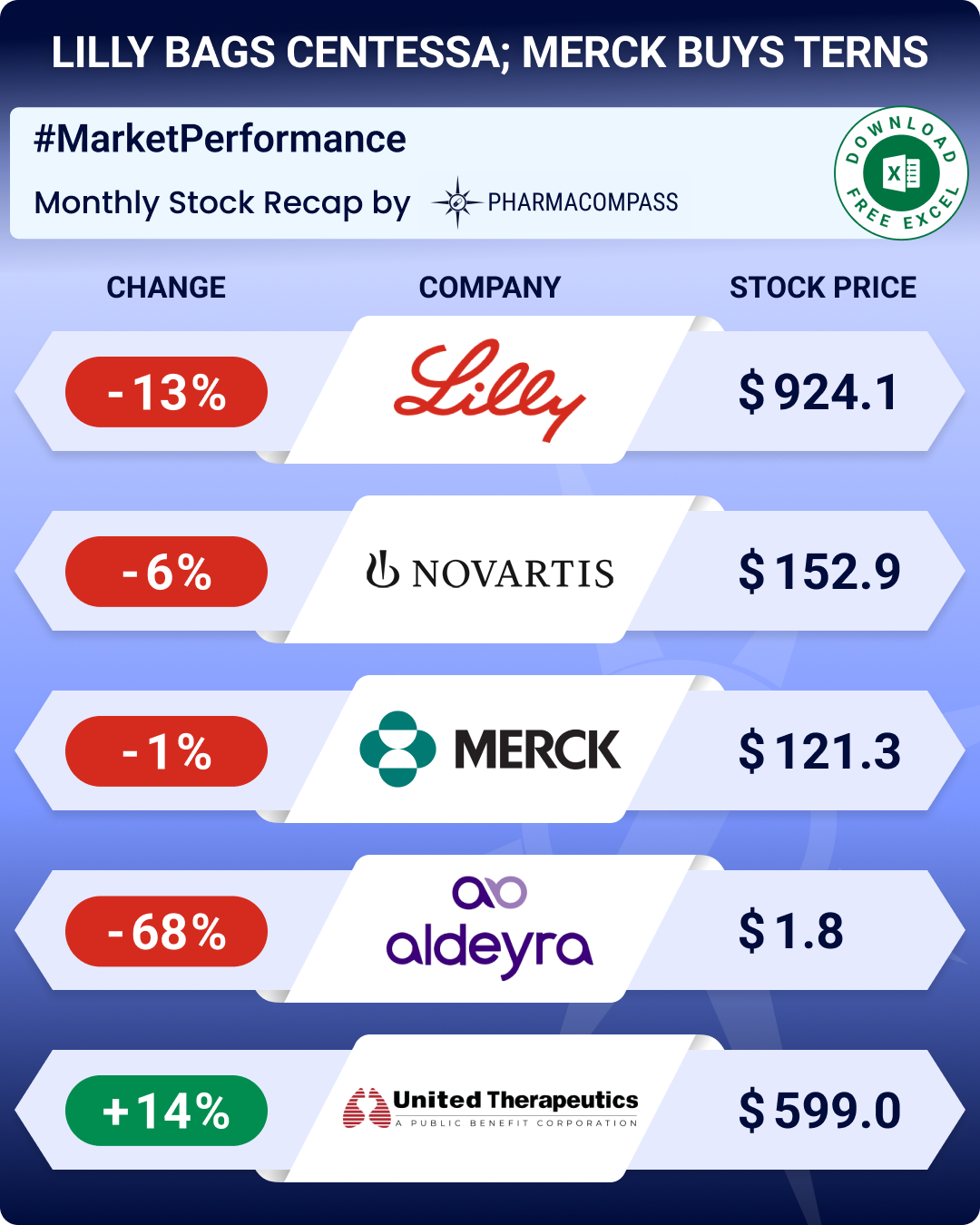
The raging war in the Middle East has disrupted global pharmaceutical supply chains, which are dependent on both sea and air routes. Major airports, such as Dubai, Abu Dhabi and Doha, are operating far below capacity due to strikes by Iran in response to attacks by the US and Israel. This has impacted the flow of critical medicines to the region. The closure of the Strait of Hormuz is pushing up crude oil prices. Given the geopolitical turbulence, the industry displayed grit, with March witnessing a flurry of high-value acquisitions. However, the war impacted pharma indices, which had been rising steadily since June 2025. The Nasdaq Biotechnology Index (NBI) fell by 2.12 percent in March, moving from 5,965.89 to 5,839.40. The SPDR S&P Biotech ETF (XBI) rose by 2.49 percent, from 124.63 to 127.73, and the S&P Biotechnology Select Industry Index (SPSIBI) inched up by 0.23 percent — from 9,954.55 to 9,977.73. In comparison, the S&P 500 fell by 4.34 percent — from 6,824.36 to 6,528.52.  Access the Pipeline Prospector Dashboard for March 2026 Newsmakers (Free Excel) Lilly acquires Centessa for its sleep disorder treatments; Merck buys Terns Pharma to strengthen oncology pipeline  On the last day of the month, Eli Lilly announced the acquisition of British drugmaker Centessa Pharmaceuticals in a deal worth up to US$ 7.8 billion. Centessa is developing a new class of treatments designed to target orexin, a molecule in the brain that regulates the sleep-wake cycle. On the same day, Biogen announced the acquisition of Apellis Pharmaceuticals for about US$ 5.6 billion in cash, adding approved immunology medicines Empaveli and Syfovre (both pegcetacoplan) to its portfolio. Meanwhile, Merck announced a US$ 6.7 billion acquisition of American biotech Terns Pharmaceuticals. The biotech is developing treatments for rare blood and bone cancers, and is expected to strengthen Merck’s oncology pipeline, as its blockbuster Keytruda (pembrolizumab) faces a patent cliff. Novartis made a significant move by acquiring Pikavation Therapeutics, a subsidiary of US biotech firm Synnovation Therapeutics, and its portfolio, which includes an experimental breast cancer drug candidate — SNV4818 — for up ‌to US$ 3 billion. Novartis also deepened its focus on immunology through the up to US$ 2 billion acquisition of Excellergy, a private biotech company developing next-generation anti-IgE therapies. French pharmaceutical group Servier announced the acquisition of Day One Biopharmaceuticals for ‌about US$ 2.5 billion. This buyout gives Servier access to FDA-approved Ojemda (tovorafenib), a monotherapy for pediatric low-grade glioma, the most common form of brain tumor in children. Gilead Sciences is acquiring Ouro Medicines for up to US$ 2.18 billion to expand its presence in autoimmune diseases. Luxembourg-based CVC Capital Partners made a €10.9 billion (US$ 12.6 billion) offer to acquire Italian drugmaker Recordati, where it already holds a 47 percent stake. In other deals, Insilico Medicine entered into a US$ 2.75 billion global licensing and research collaboration with Eli Lilly to leverage generative AI to accelerate R&D and improve pipeline efficiency. And Tenaya Therapeutics tied up with Alnylam Pharmaceuticals to work on disease-modifying treatments for cardiovascular diseases in a deal worth up to US$ 1.14 billion. Biogen’s Spinraza approved for spinal muscular atrophy; J&J’s pill okayed for plaque psoriasis The month witnessed multiple FDA approvals and label expansions. Biogen secured FDA approval for a higher-dose regimen of Spinraza (nusinersen) for spinal muscular atrophy (SMA), a genetic disorder that causes muscle weakness. The agency also approved Johnson & Johnson’s oral pill Icotyde (icotrokinra) for the treatment of moderate-to-severe plaque psoriasis in adults and pediatric patients 12 years of age and older. Besides these, FDA granted accelerated approval to Denali Therapeutics’ Avlayah (tividenofusp alfa), which was approved for the treatment of children with Hunter syndrome, ‌a rare genetic disorder. And it expanded the labels of Bristol Myers Squibb’s Sotyktu (deucravacitinib), Novo Nordisk’s Sogroya and GSK’s RSV vaccine Arexvy. Merck’s drug cuts LDL cholesterol by 64.6%; Xenon’s epilepsy med meets main goal in late-stage trial Merck reported that its oral cholesterol drug enlicitide decanoate reduced low-density lipoprotein (LDL) cholesterol by approximately 64.6 percent in a head-to-head late-stage trial, outperforming non-statin therapies. Xenon Pharmaceuticals’ experimental epilepsy drug azetukalner met its main goal by significantly reducing seizure frequency, while United Therapeutics’ ralinepag reduced disease progression risk by 55 percent in pulmonary arterial hypertension. Bristol Myers Squibb’s mezigdomide demonstrated improved survival outcomes in relapsed or refractory multiple myeloma when used in combination with Amgen’s Kyprolis (carfilzomib) and dexamethasone. Another therapy that posted a trial win was Pfizer and Astellas’ Padcev (enfortumab vedotin) when used in combination with Keytruda. In a phase 3 trial, it significantly improved outcomes in patients with muscle-invasive bladder cancer eligible for cisplatin-based chemotherapy. Roche reported positive phase 3 data for its multiple sclerosis drug fenebrutinib, though safety concerns (including patient deaths during trials) could complicate regulatory review. Eli Lilly’s atopic dermatitis drug Ebglyss (lebrikizumab) achieved both primary and secondary endpoints in a phase 3 trial in children aged six months to 18 years. The drug is already approved for people over 12 years with eczema who weigh over 40 kg. FDA lifts hold on Intellia’s gene therapy, hands Aldeyra’s dry eye disease med its third rejection FDA lifted the clinical hold placed on Intellia Therapeutics’ gene therapy for transthyretin amyloidosis with cardiomyopathy, a fatal heart condition. The clinical holds on two trials of the therapy were imposed in October after a patient developed severe liver complications. Some drugmakers faced setbacks. For instance, FDA asked for additional data for uniQure’s Huntington’s disease gene therapy (a fatal, inherited neurodegenerative disorder). Similarly, the agency handed Aldeyra’s reproxalap a third rejection. The drug was being developed to treat dry eye disease, a chronic condition characterized by insufficient tear production. Australian biotech Immutep discontinued a crucial phase 3 trial for Efti (eftilagimod alfa), which is administered along with Keytruda and was being developed as a first-line treatment for advanced non-small cell lung cancer (NSCLC). And Roche said its breast ‌cancer pill, giredestrant, failed to meaningfully help newly diagnosed patients with breast cancer in a phase 3 trial. Our view While geopolitical disruptions have exposed vulnerabilities in global supply chains, they have not dented the industry’s appetite for growth and innovation. That said, a prolonged conflict could alter this trajectory, forcing pharma leaders to reassess strategic priorities.

Impressions: 2638

https://dev1.pharmacompass.com/pipeline-prospector-blog/pipeline-prospector-march-2026-highlights-lilly-to-acquire-centessa-for-us-7-8-bn-merck-buys-terns-pharma-for-us-6-7-bn

#PharmaFlow by PHARMACOMPASS
02 Apr 2026

WEEKLY INDUSTRY NEWS

3read-more
read-more
FDA approves J&J’s plaque psoriasis pill; federal judge blocks key parts of RFK Jr’s childhood vaccine policy overhaul
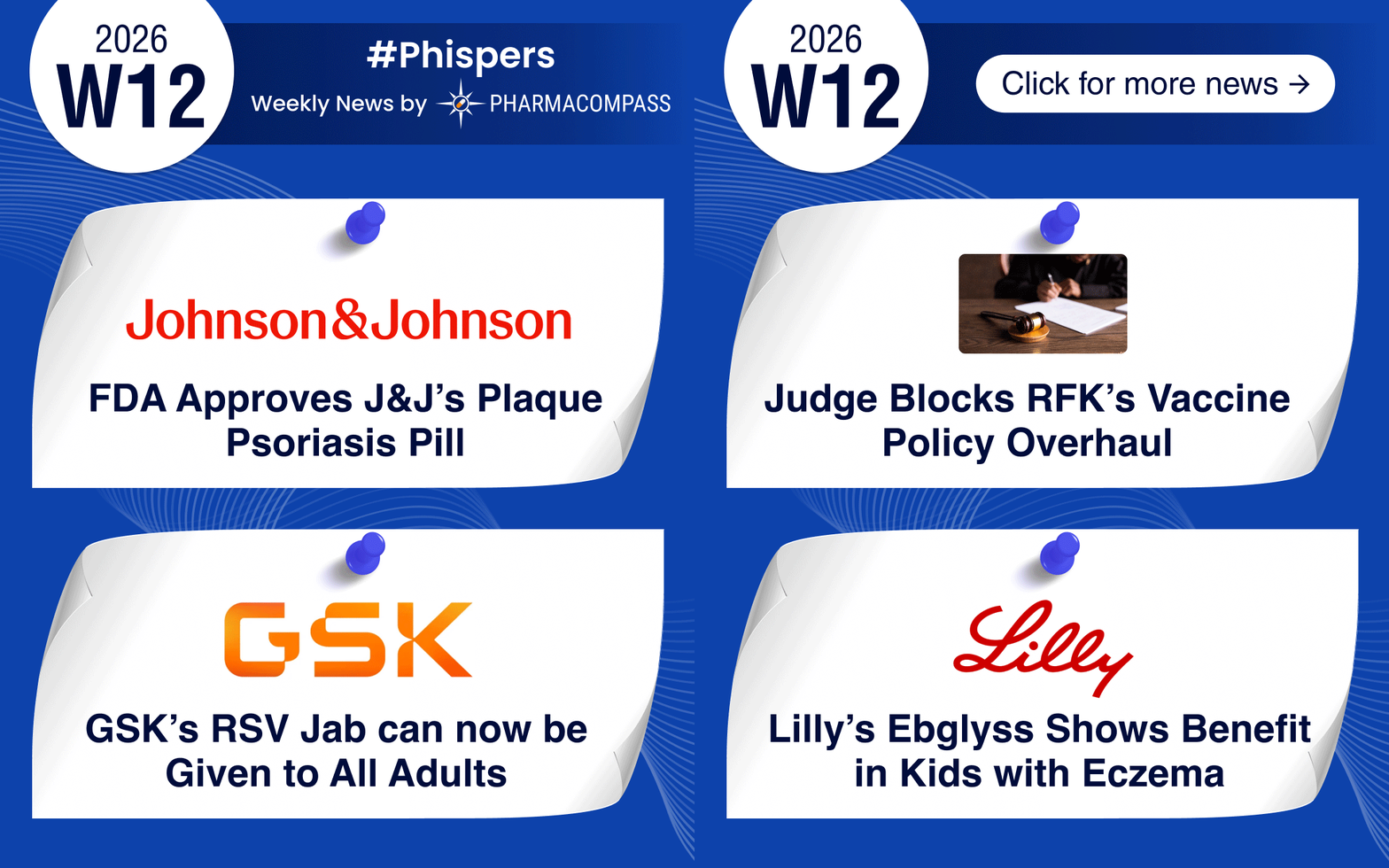
As the war in the Middle East intensifies, the world is facing disruption of major air and sea routes. The war is already disrupting the flow of critical medicines to the Gulf. Drugmakers are choosing to wait and watch, as no major deal has been signed over the last week.In news this week, the US Food and Drug Administration (FDA) approved Johnson & Johnson’s first-of-its-kind oral pill Icotyde (icotrokinra) for the treatment of moderate-to-severe plaque psoriasis. The agency also expanded the approval of GSK’s respiratory syncytial virus (RSV) vaccine, Arexvy. It can now be administered to all adults.Aldeyra’s eye drug reproxalap was rejected by the agency for a third time. The drug was being developed to treat dry eye disease (DED), a chronic condition characterized by insufficient tear production.Meanwhile, German drugmaker Bayer is eyeing a label expansion for the use of its non-steroidal chronic kidney disease (CKD) drug, Kerendia (finerenone), to include non-diabetic patients. Kerendia is approved to treat CKD in patients with type 2 diabetes.Roche expanded its artificial intelligence computing capacity by deploying 2,176 Nvidia Blackwell graphics processing units (GPUs) across sites in the US and Europe. This deployment will speed up work across its research and development operations.In clinical trials, Ultragenyx’s gene therapy — DTX301 — significantly reduced levels of ammonia in patients’ bloodstreams. The therapy is used for the treatment of ornithine transcarbamylase (OTC) deficiency, a rare genetic disorder that prevents urea cycle function.And a federal judge blocked key measures taken by the US Health Secretary Robert F Kennedy Jr (RFK Jr) to reshape America’s vaccine policy.FDA approves J&J’s first-of-its-kind plaque psoriasis pillFDA has approved Johnson & Johnson’s oral pill Icotyde (icotrokinra) for the treatment of moderate-to-severe plaque psoriasis in adults and pediatric patients 12 years of age and older who weigh at least 40 kg. This first-of-its-kind drug offers a more ‌convenient treatment option for patients with the chronic autoimmune condition that causes itchy, scaly, and inflamed patches of skin. J&J will be competing with other treatments for psoriasis in the market, such as Bristol Myers Squibb’s Sotyktu (deucravacitinib) and AbbVie’s Skyrizi (risankizumab). Expands approval for GSK’s RSV vaccine: FDA has expanded the approval of GSK’s respiratory syncytial virus (RSV) vaccine, Arexvy, to include all adults. Arexvy was approved in 2023 as the first RSV vaccine for adults aged 60 and above, and for at-risk adults aged 50 to 59.Aldeyra’s dry eye drug rejected again: FDA has handed Aldeyra’s reproxalap a third rejection. The drug was being developed to treat dry eye disease (DED), a chronic condition characterized by insufficient tear production.Middle East war hits pharma industry as major supply routes get disruptedThe war in the Middle East is beginning to impact the pharmaceutical industry. It is disrupting the flow of critical medicines to the region, including cancer drugs and other treatments that require refrigeration. Major airports in the region have been closed or are operating below capacity due to strikes by Iran in response to US and Israeli attacks. While the conflict has not yet led to any major shortages, companies have started using alternative routes to avoid Middle Eastern airspace. Lilly’s Ebglyss scores phase 3 win in children with atopic dermatitisEli Lilly’s atopic dermatitis (AD) drug Ebglyss (lebrikizumab-lbkz) achieved both primary and secondary endpoints in a phase 3 trial in children aged six months to 18 years. Ebglyss was approved by the FDA in September 2024 for children over 12 and adults with AD (also known as eczema) who weigh at least 40 kg. Lilly had acquired the drug through its US$ 1.1 billion acquisition of Dermira in 2020. In the trial, Ebglyss alleviated symptoms, while providing skin clearance and itch relief. Lilly now plans to seek a label update for Ebglyss.Bayer eyes Kerendia label expansion: Bayer is eyeing a label expansion for the use of its non-steroidal chronic kidney disease (CKD) drug, Kerendia (finerenone), to include non-diabetic patients. Kerendia is already approved to treat CKD in patients with type 2 diabetes.Ultragenyx’s gene therapy for rare disorder scores phase 3 winAmerican biopharma Ultragenyx's innovative gene therapy  — DTX301 — scored a late-stage win by significantly reducing toxic levels of ammonia in patients’ bloodstreams. The therapy is used for the treatment of ornithine transcarbamylase (OTC) deficiency, a rare genetic disorder that prevents urea cycle function. This causes the build up of toxic ammonia in the blood, thereby affecting the brain. The therapy inserts a healthy copy of a gene into a patient’s cells.Immutep’s Efti fails crucial phase 3 trial: Australian biotech Immutep has discontinued a crucial phase 3 trial for Efti (eftilagimod alfa) which is administered along with Keytruda (pembrolizumab) and was being developed as a first-line treatment for advanced non-small cell lung cancer (NSCLC). An interim analysis concluded the study was unlikely to meet its primary endpoints.Federal judge blocks key measures in RFK Jr’s childhood vaccine policyIn the US, a federal judge blocked key measures taken by Health Secretary Robert F Kennedy Jr (RFK Jr) to reshape America’s vaccine policy, including steps such as reducing the number of shots routinely recommended for children, and revamping a federal advisory committee on inoculations. District Court Judge Brian Murphy ruled that Kennedy “disregarded” scientific methods for developing vaccine policies.Roche deploys 2,176 Nvidia GPUs to speed up drug developmentRoche has expanded its artificial intelligence computing capacity by deploying 2,176 Nvidia Blackwell graphics processing units (GPUs) across sites in the US and Europe. This deployment gives Roche the largest GPU footprint in the industry. Roche plans to build a hybrid-cloud AI factory designed to accelerate development of new therapeutics and diagnostics. These GPUs will help Roche compete with Eli Lilly, which announced a US$ 1 billion deal with Nvidia in January this year. Genentech CEO pushes for affordable obesity drugs: Roche’s Genentech division is aiming to build a portfolio of obesity drugs that are more tolerable and affordable, its CEO Ashley Margaree has said. Roche had signed a deal with Denmark’s Zealand Pharma to acquire the rights to petrelintide, an experimental obesity treatment, for up to US$ 5.3 billion last year.

Impressions: 1398

https://dev1.pharmacompass.com/radio-compass-phisper/fda-approves-j-j-s-plaque-psoriasis-pill-federal-judge-blocks-key-parts-of-rfk-jr-s-childhood-vaccine-policy-overhaul

#Phispers by PHARMACOMPASS
19 Mar 2026

NEWS LIBRARY

49read-more
read-more

https://www.pharmiweb.com/press-release/2026-05-08/bristol-myers-squibb-receives-european-commission-approval-of-sotyktu-deucravacitinib-for-the-trea

PHARMIWEB
09 May 2026

https://www.businesswire.com/news/home/20260507663929/en/Bristol-Myers-Squibb-Receives-European-Commission-Approval-of-Sotyktu-deucravacitinib-for-the-Treatment-of-Active-Psoriatic-Arthritis-in-Adults

BUSINESSWIRE
08 May 2026

https://www.fiercepharma.com/pharma/bms-gets-boost-sotyktu-fda-expansion-treat-psoriatic-arthritis

FIERCE PHARMA
10 Mar 2026

https://www.businesswire.com/news/home/20251024707639/en/Bristol-Myers-Squibb-Presents-Two-Late-Breaking-Presentations-Demonstrating-Sotyktu-deucravacitinib-Efficacy-in-Psoriatic-Arthritis-and-Systemic-Lupus-Erythematosus

BUSINESS WIRE
27 Oct 2025

https://www.indianpharmapost.com/news/bms-launches-bms-patient-connect-expands-direct-to-patient-access-with-sotyktu-17906

INDPHARMAPOST
30 Sep 2025

https://www.pharmiweb.com/press-release/2025-09-29/icotrokinra-shows-superiority-to-deucravacitinib-in-first-reported-head-to-head-trials-reinforcing-promise-of-investigational-targeted-oral-peptide-fo

PHARMAWEB
29 Sep 2025
digital-content134821691##p