Please Wait
Applying Filters...
Menu

Digital Content read-more

Create Content with PharmaCompass, ask us

PHARMA & BIOTECH INSIGHTS

3read-more
read-more
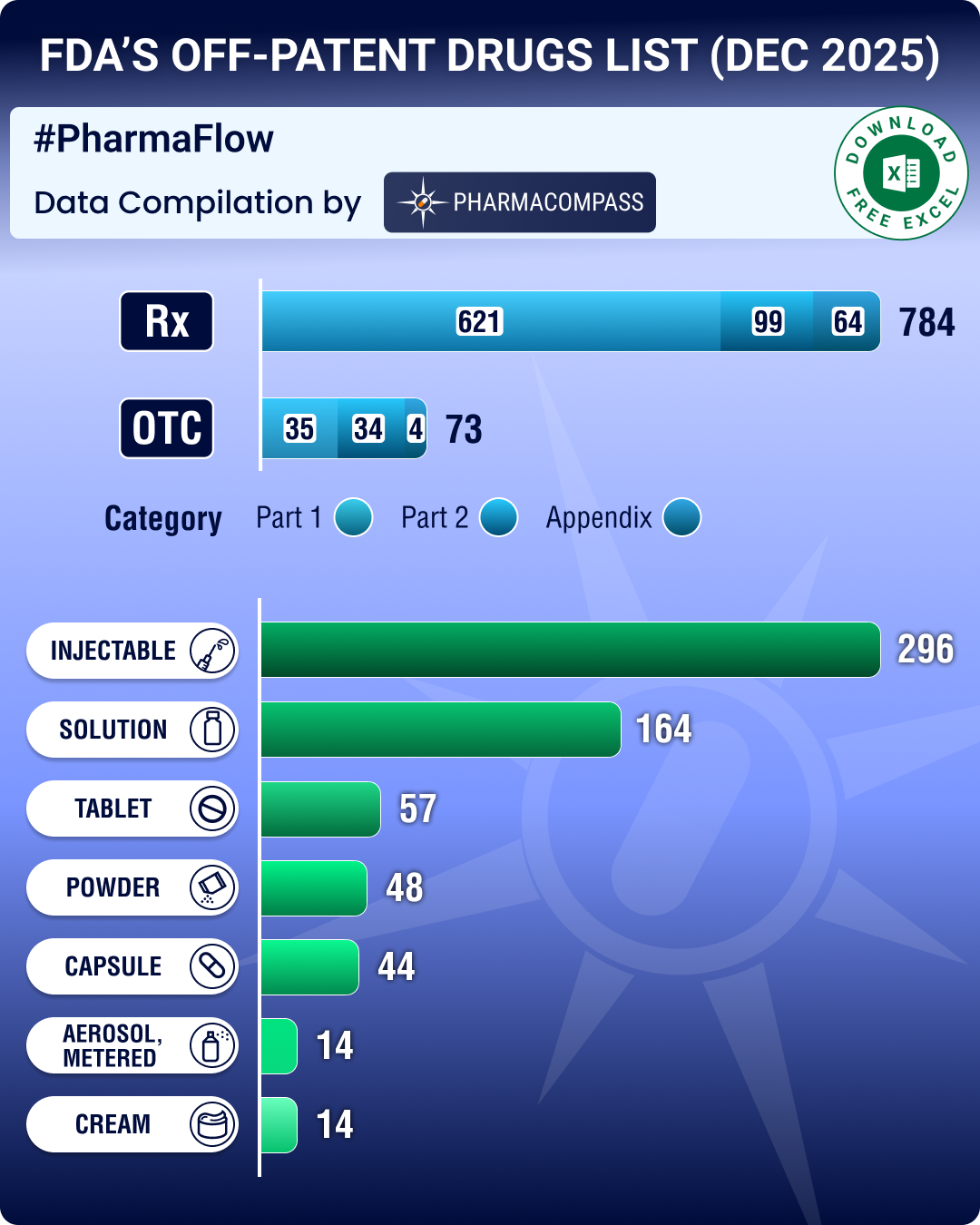
FDA’s December 2025 OPOE list features 784 prescription drugs, 73 OTC drugs
This week, PharmaCompass brings you key highlights of the US Food and Drug Administration’s December 2025 list of Off-Patent, Off-Exclusivity Drugs (OPOE) without an approved generic. The OPOE list gets updated every six months. This list highlights drug products that have lost patent protection and regulatory exclusivity, but remain without approved generic competition in the US market. With this list, the FDA hopes to bolster competitiveness in the generics market, improve transparency and encourage the development and submission of abbreviated new drug applications (ANDAs) in markets with little competition. Since December 2021, FDA has been publishing two versions of the OPOE list — one for prescription (Rx) drug products and the other for over-the-counter (OTC) drug products that are approved and marketed under a new drug approval (NDA).   Access the Interactive Dashboard on FDA's December 2025 List of OPOE Drugs (Free Excel) Injectables continue to dominate FDA’s OPOE Rx list; 73 OTC drugs figure in Dec list  FDA’s December 2025 OPOE Rx list includes 784 drug products that currently have no approved generics. Out of these, 296 are injectables and 126 are oral solid dosage forms (such as tablets, capsules and modified release forms). In June 2025, the OPOE Rx list had 765 drug products without an approved generic, out of which 304 were injectables, while 109 were oral solid drug forms.  The increase in drug products from 765 to 784 from June 2025 to December 2025 was due to the inclusion of additional dosage strengths in the OPOE Rx list. Otherwise, no new drugs were added to the December 2025 OPOE Rx list. The December 2025 OPOE list has 73 OTC drugs, slightly higher than the 69 drugs in the June 2025 list. Among the 73, 21 are oral solid dosage forms. Among the OTC drugs on the December 2025 OPOE list are ibuprofen and ibuprofen sodium (for pain and inflammation), pseudoephedrine hydrochloride and phenylephrine hydrochloride (nasal decongestants), nizatidine and famotidine (for gastroesophageal reflux disease), loratadine, cetirizine hydrochloride and chlorpheniramine maleate (for allergy relief), loperamide hydrochloride (anti-diarrheal), and orlistat (for weight management). FDA fast-tracks initiatives to accelerate market entry of generics, biosimilars FDA has launched several regulatory initiatives designed to accelerate the market entry of generics and biosimilars. In October 2025, the agency announced a new pilot prioritization program for the review of ANDAs that aims to encourage and reward investment in drug manufacturing, research and development and strengthen the pharmaceutical supply chain in the United States. Separately, FDA has also come out with a new draft guidance that seeks to simplify biosimilarity studies and reduce unnecessary clinical testing. Through a separate initiative, the agency also plans to make it easier for biosimilars to be developed as interchangeable with brand-name biologics, thereby helping patients and pharmacists choose lower-cost options. Our view The global generic drugs market was valued at US$ 445.62 billion in 2024 and is projected to reach US$ 728.64 billion by 2034, growing at a compound annual growth rate of 5.04 percent from 2025 to 2034. With several diabetes, immunology, oncology and cardiology drugs slated to face patent expirations this year, and continued pressure on drugmakers to improve affordability, we believe the generic market could grow at an even faster rate in the near term.

Impressions: 3673

https://dev1.pharmacompass.com/radio-compass-blog/fda-s-december-2025-opoe-list-features-784-prescription-drugs-73-otc-drugs

#PharmaFlow by PHARMACOMPASS
22 Jan 2026

MARKET PERFORMANCE RECAP

3read-more
read-more
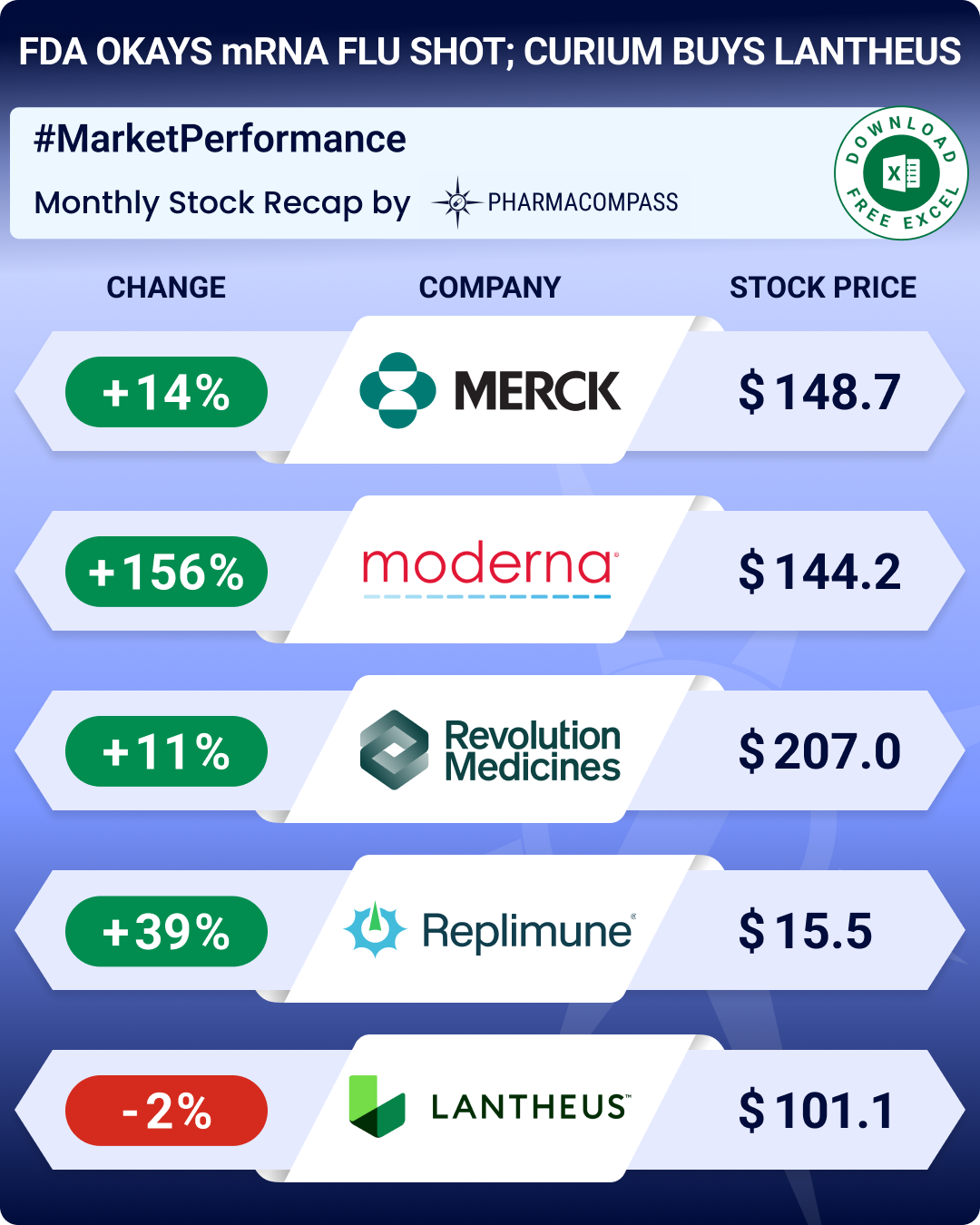
Market Performance Recap August 2026 highlights: FDA okays first mRNA flu shot; Curium agrees to buy Lantheus for up to US$ 8 bn
August was an important month for drug approvals, with the US Food and Drug Administration (FDA) approving Moderna’s mRNA-based seasonal influenza vaccine and Revolution Medicines’ drug to treat stage 4 pancreatic cancer. In clinical trials, Merck and Moderna’s personalized mRNA-based cancer vaccine significantly delayed melanoma from returning in patients whose tumors had been surgically removed. And Definium Therapeutics’ oral LSD candidate significantly reduced symptoms of generalized anxiety disorder, after showing benefit in depression earlier this year. As compared to July, the pharma indices rose at a faster clip. The Nasdaq Biotechnology Index (NBI) increased by 10.35 percent, from 6,456.75 in July-end to 7,125.06 at the end of August. The SPDR S&P Biotech ETF (XBI) increased by 10.56 percent, from 146.98 to 162.50. The S&P Biotechnology Select Industry Index (SPSIBI) increased by 10.57 percent, from 11,508.60 to 12,725.46.   Access the Market Performance Dashboard for August 2026 Newsmakers (Free Excel) FDA approves Moderna’s mRNA flu shot, Revolution’s therapy for pancreatic cancer  Amongst the month’s most notable drug approvals was Moderna's mFlusiva (mRNA-1010) — FDA cleared it for preventing seasonal influenza in all adults aged 50 and older. This is Moderna’s fourth approved product, and the first mRNA-based flu shot cleared in the US. Moderna’s stock rose 156 percent in August. Another first was FDA’s approval of Revolution Medicines’ Rasonque (daraxonrasib) for the treatment of adults with metastatic pancreatic ductal adenocarcinoma (PDAC), or stage 4 pancreatic cancer. Rasonque is the first targeted cancer medicine to be approved from a groundbreaking new class of targeted therapy known as RAS(ON) multi-selective and mutant-selective inhibitors. FDA also approved Takeda’s Orzeyful (oveporexton) for a lifelong neuropsychiatric sleep disorder, known as narcolepsy type 1. This is the first medicine approved for addressing the underlying cause of the disease in adults. The agency approved Gilead Sciences’ Bixlenvo (bictegravir/lenacapavir), the smallest once-daily single tablet regimen, for the treatment of HIV in adults who are virologically suppressed. The UK’s Medicines and Healthcare products Regulatory Agency (MHRA) authorized Eli Lilly's Foundayo (orforglipron), making Britain the first country in Europe to clear the GLP-1 tablet. Meanwhile, Japan’s health ministry approved GSK’s Hibsago (bepirovirsen) as a functional cure for chronic hepatitis B in adults who have taken antiviral pills for at least six months. This is the drug’s first approval anywhere in the world. A functional cure means the virus stays undetectable for at least 24 weeks after all treatment is stopped. Curium to acquire Lantheus for up to US$ 8 bn to create global radiopharma player August didn’t see many large M&A deals. The biggest acquisition was announced by Curium — it agreed to buy Lantheus Holdings for up to US$ 8 billion. Both companies are into radiopharmaceuticals, or radioactive isotopes used to diagnose and treat diseases, including cancers. Eli Lilly agreed to acquire Merida Biosciences for up to US$ 2.875 billion in cash. The acquisition gives Lilly access to Merida’s antibody-engineering platform and its lead phase 1 candidate MER511, being developed for Graves’ disease and thyroid eye disease, along with preclinical programs targeting food allergy, asthma and chronic spontaneous urticaria. Jazz Pharmaceuticals agreed to acquire San Diego-based Actio Biosciences for up to US$ 1.32 billion. The deal adds an experimental treatment for a rare inherited form of epilepsy to Jazz’s portfolio. In deals, Roche’s Genentech is partnering with South Korea’s Hanmi Pharm to advance a novel therapy (HM17321) that could improve the quality of weight loss by preserving lean mass in a deal worth up to US$ 2.3 billion. Unlike GLP-1 drugs, which cause muscle loss, HM17321 is designed to cut fat while increasing lean mass. The drug is still in phase 1 trials. FDA approves two drugs for blood cancer — Takeda’s Mimrylo, BMS’s Zenbexus In oncology, FDA approved Takeda’s Mimrylo (rusfertide) for the treatment of erythrocytosis (a condition where the body has a higher-than-normal number of red blood cells) in adults with polycythemia vera, a type of blood cancer. The agency granted accelerated approval to Bristol Myers Squibb’s Zenbexus (iberdomide), combined with subcutaneous daratumumab and hyaluronidase-fihj and dexamethasone, for adults with multiple myeloma (a type of blood cancer) who have had at least one prior line of therapy. FDA also granted accelerated approval to Replimune’s Tudriqev (vusolimogene oderparepvec-wtpg), in combination with BMS’ Opdivo (nivolumab), for treating adults with a difficult form of skin cancer, known as unresectable advanced cutaneous melanoma. The approval follows two rejections, in July 2025 and April 2026. Replimune’s stock was up 39 percent in August. In rare diseases, FDA approved Regeneron Pharmaceuticals’ Pasatru (garetosmab-grts) for a rare genetic disorder known as fibrodysplasia ossificans progressiva (FOP). In this condition, muscle, tendon and ligament tissue gradually turn into bone. FDA also granted accelerated approval to Ultragenyx’s Genglycos (pariglasgene brecaparvovec-opnr), the first treatment for glycogen storage disease type Ia (GSD1a) in patients aged eight and above. Children and adults with the rare disorder lack an enzyme needed to release stored sugar from the liver. As a result, their blood sugar crashes whenever they go too long without eating. Merck-Moderna’s mRNA cancer vaccine notches first phase 3 win; Definium’s LSD drug shows benefit in anxiety In clinical trials, the biggest readout came from Merck and Moderna — in a phase 3 trial, their personalized mRNA cancer vaccine, intismeran autogene, given in combination with Keytruda (pembrolizumab), significantly delayed melanoma recurrence in patients whose tumors had been surgically removed. Otsuka’s Voyxact (sibeprenlimab) became the first drug to stabilize kidney function in IgA nephropathy to the rate seen in healthy adults, according to two-year results from a phase 3 trial. IgA nephropathy is a disease in which faulty antibodies lodge in the kidney’s filters. Psychedelics saw another late-stage success. Definium Therapeutics’ oral LSD candidate DT120 (lysergide) significantly reduced symptoms of generalized anxiety disorder in a phase 3 trial. DT120 is an orally disintegrating tablet. AstraZeneca posted two lung cancer wins on the same day. In one phase 3 trial, Tagrisso (osimertinib) plus Orpathys (savolitinib) showed benefit in a type of lung cancer, known as EGFR-mutated NSCLC driven by MET resistance. In another phase 3 trial, Enhertu (trastuzumab deruxtecan) showed benefit as a first-line treatment of patients with unresectable, locally advanced or metastatic HER2-mutant NSCLC. Our view All three pharma indices rose over 10 percent in August, against the S&P 500’s modest increase of 2.42 percent. As geopolitical uncertainties continue to rock industries across the world, it’s clear that the pharmaceutical industry is building resilience through its laboratories and clinical trials.

Impressions: 1229

https://dev1.pharmacompass.com/pipeline-prospector-blog/market-performance-recap-august-2026-highlights-fda-okays-first-mrna-flu-shot-curium-agrees-to-buy-lantheus-for-up-to-us-8-bn

#PharmaFlow by PHARMACOMPASS
03 Sep 2026

WEEKLY INDUSTRY NEWS

7read-more
read-more
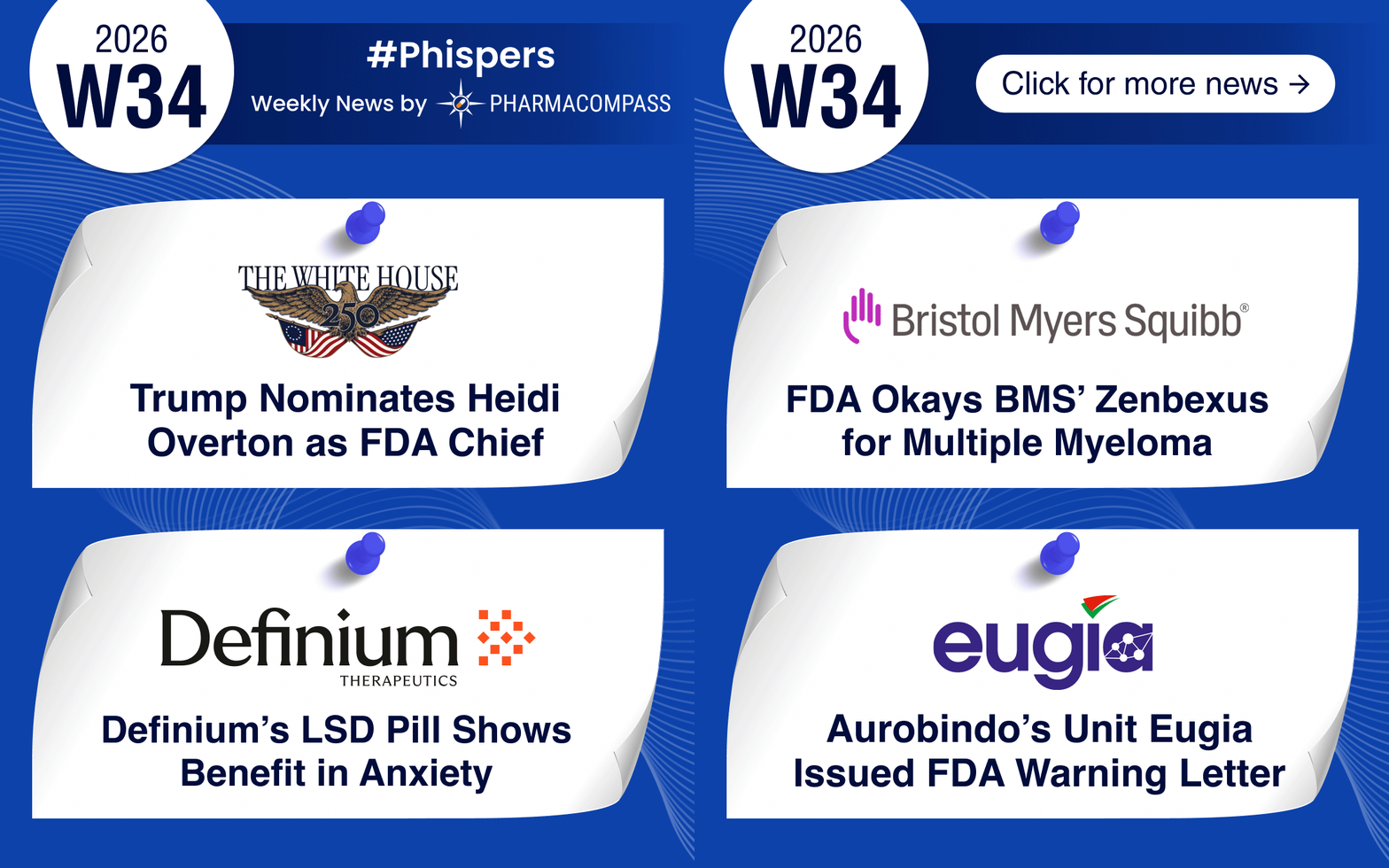
After depression, Definium’s LSD pill shows benefit in anxiety; Trump picks Heidi Overton as FDA chief
In Phispers this week, there is news that the US President Donald Trump has chosen White House domestic policy officer, Heidi Overton, as the commissioner of the US Food and Drug Administration (FDA).The agency granted accelerated approval to Bristol Myers Squibb’s Zenbexus (iberdomide), in combination with daratumumab and dexamethasone, for adults with multiple myeloma. FDA approved the use of Lantheus’ Tauklarify, a radiodiagnostic agent for PET imaging, in adults with cognitive impairment being evaluated for Alzheimer’s disease. It also approved Lib Therapeutics’ autoinjector Lerochol (lerodalcibep-liga) to lower LDL cholesterol.China’s National Medical Products Administration (NMPA) approved two cancer drugs. First, it cleared TJ Biopharma and US-based Biogen’s felzartamab in combination with lenalidomide and dexamethasone for adults with multiple myeloma. Second, it okayed Akeso’s ivonescimab in combination with chemotherapy as a first-line treatment for advanced squamous non-small cell lung cancer (NSCLC).In news from late-stage trials, after showing gains in major depressive disorder, Definium Therapeutics’ oral LSD candidate DT120 (lysergide) significantly reduced symptoms of generalized anxiety disorder.AstraZeneca reported two positive phase 3 readouts in lung cancer. However, it had to halt another phase 3 trial in patients with metastatic NSCLC on recommendations of an independent panel. Japanese drugmaker Taiho Pharmaceutical and Cambridge-based Cullinan Therapeutics announced positive results for their medicine zipalertinib in combination with chemotherapy in a phase 3 lung cancer trial.Meanwhile, FDA issued a warning letter to the formulation manufacturing facility of Eugia Pharma Specialities, a subsidiary of Aurobindo Pharma. Trump names domestic policy official Heidi Overton as FDA chief US President Donald Trump has nominated White House domestic policy official Heidi Overton as commissioner of the FDA. Overton is a doctor by training. She has worked at the think tank America First Policy Institute and also holds a doctorate in clinical investigation from Johns Hopkins University. While there has been no official confirmation, several news websites have attributed the news to senior officials of the Trump administration. After showing gains in depression, Definium’s LSD pill posts phase 3 win in anxietyDefinium Therapeutics’ oral LSD candidate DT120 (lysergide) significantly reduced symptoms of generalized anxiety disorder in a phase 3 trial. DT120 is an orally disintegrating tablet. This is a second late-stage success for the drug this summer, following positive results in major depressive disorder (MDD) announced in June.FDA grants accelerated approval to BMS’ Zenbexus for multiple myelomaFDA has granted accelerated approval to Bristol Myers Squibb’s Zenbexus (iberdomide), combined with subcutaneous daratumumab and dexamethasone, for adults with multiple myeloma (a type of blood cancer) who have had at least one prior line of therapy. The label carries a boxed warning for embryo-fetal toxicity and blood clots. The agency will grant the drug a full approval for this condition on the verification of clinical benefit in the confirmatory trials, the company said.Approves Lantheus’ brain-imaging agent: FDA has approved Massachusetts-based Lantheus’ Tauklarify (florquinitau F 18), a radiodiagnostic agent for PET imaging in adults with cognitive impairment being evaluated for Alzheimer’s disease. Tauklarify is injected before a PET scan. It makes abnormal deposits of tau proteins in the brain visible in images. These are linked to Alzheimer’s disease. Lantheus is being acquired by Curium in a deal worth up to US$ 8 billion.Okays auto-injector for cholesterol drug: FDA has approved Lib Therapeutics’ auto-injector Lerochol (lerodalcibep-liga) to lower LDL cholesterol. Lerochol can be stored at room temperature for up to 90 days and can cut LDL cholesterol by at least 60 percent.Biogen’s felzartamab, Akeso’s ivonescimab win approvals in ChinaChina’s NMPA has approved TJ Biopharma and US-based Biogen’s felzartamab, sold as Jingfei, in combination with lenalidomide and dexamethasone for adults with multiple myeloma who have had at least one prior line of therapy.Akeso’s drug okayed for squamous NSCLC: NMPA has approved Akeso’s ivonescimab in combination with chemotherapy as a first-line treatment for advanced squamous non-small cell lung cancer (NSCLC). This is the bispecific antibody’s third lung cancer indication in China since its first approval in May 2024. This announcement was also made by Akeso’s American partner Summit Therapeutics. Ivonescimab remains unapproved in the US and Europe.FDA issues warning letter to Aurobindo’s subsidiary Eugia PharmaFDA has issued a warning letter to the formulation manufacturing facility of Eugia Pharma Specialities, a subsidiary of Aurobindo Pharma. The action against Eugia Pharma follows four observations made in February post an FDA inspection. In May, FDA had classified the site (situated in Telangana) as official action indicated (OAI). Investigators found the aseptic processing lines lacking adequate barrier design and documented poor aseptic techniques being used by Eugia. Aurobindo Pharma has said it did not anticipate any impact on the existing supplies to the US markets.Astra posts two lung cancer trial wins, drops med being tried against KeytrudaAstraZeneca reported two positive phase 3 lung cancer readouts and one failure on the same day. In one phase 3 trial (named Saffron), Tagrisso (osimertinib) plus Orpathys (savolitinib) significantly improved both progression-free and overall survival against chemotherapy in a type of lung cancer, known as EGFR-mutated NSCLC driven by MET resistance.In another phase 3 trial — Destiny-Lung04 — Enhertu (trastuzumab deruxtecan) demonstrated a statistically significant and clinically meaningful improvement in progression-free survival versus global standard of care (chemotherapy plus pembrolizumab) as first-line treatment of patients with unresectable, locally advanced or metastatic HER2-mutant NSCLC.Meanwhile AstraZeneca halted Evolve-Lung02 trial of volrustomig in combination with chemotherapy as a first-line therapy compared to Merck’s Keytruda (pembrolizumab) and chemotherapy in patients with metastatic NSCLC. The decision was based on the recommendations of an independent committee.Taiho, Cullinan’s lung cancer drug: Japanese drugmaker Taiho Pharmaceutical and US-based Cullinan Therapeutics have announced that their experimental drug zipalertinib combined with platinum-based chemotherapy delayed disease progression better than chemotherapy alone in previously untreated locally advanced or metastatic NSCLC harboring epidermal growth factor receptor (EGFR) exon 20 insertion mutations. Amylyx drug halves low blood sugar episodes in bariatric surgery patients Amylyx Pharmaceuticals’ investigational drug avexitide cut low blood sugar episodes by 55 percent against placebo in a phase 3 trial. The 78-patient trial enrolled adults with post-bariatric hypoglycemia (experienced after a weight loss surgery known as Roux-en-Y gastric bypass). Post-bariatric hypoglycemia is a rare but chronic condition marked by an exaggerated insulin response after meals as the blood sugar drops to dangerously low levels.

Impressions: 2076

https://dev1.pharmacompass.com/radio-compass-phisper/after-depression-definium-s-lsd-pill-shows-benefit-in-anxiety-trump-picks-heidi-overton-as-fda-chief

#Phispers by PHARMACOMPASS
20 Aug 2026

NEWS LIBRARY

302read-more
read-more

https://www.businesswire.com/news/home/20261020891101/en/101-Therapeutics-to-Present-Phase-23-Data-on-Macrophage-Targeted-Steroid-Sparing-Glucocorticoid-101-PGC-005-at-ACR-Convergence-2026

BUSINESSWIRE
20 Oct 2026

https://www.expresspharma.in/alembic-pharma-gets-usfda-nod-for-ciprofloxacin-and-dexamethasone-otic-suspension-usp-0-3-0-1/

EXPRESSPHARMA
19 Oct 2026

https://www.indianpharmapost.com/regulatory/alembic-pharma-secures-usfda-approval-for-ear-infection-suspension-22178

INDPHARMAPOST
17 Oct 2026

https://www.globenewswire.com/news-release/2026/09/21/3365888/0/en/onco360-is-a-participating-specialty-pharmacy-in-the-zenbexus-iberdomide-limited-dispense-network.html

GLOBENEWSWIRE
21 Sep 2026

https://news.cision.com/acucort-ab/r/acucort-s-product-zeqmelit--registered-as-a-trade-mark-in-ukraine,c4392771

NEWS CISION
07 Sep 2026

https://www.globenewswire.com/news-release/2026/09/03/3355765/0/en/c4-therapeutics-to-present-new-biomarker-data-on-the-immunomodulatory-effects-of-cemsidomide-in-combination-with-dexamethasone-from-its-phase-1-relapsed-refractory-multiple-myeloma.html

GLOBENEWSWIRE
03 Sep 2026
digital-content5743##p