Please Wait
Applying Filters...
Menu

Digital Content read-more

Create Content with PharmaCompass, ask us

PHARMA & BIOTECH INSIGHTS

4read-more
read-more

A PHP Error was encountered

Severity: 8192

Message: mb_convert_encoding(): Handling HTML entities via mbstring is deprecated; use htmlspecialchars, htmlentities, or mb_encode_numericentity/mb_decode_numericentity instead

Filename: blog/grid.php

Line Number: 52

Backtrace:

File: /var/www/html/application/views/include/media/blog/grid.php
Line: 52
Function: mb_convert_encoding

File: /var/www/html/application/models/Cmn.php
Line: 3595
Function: view

File: /var/www/html/application/views/include/product/digitalContent/grid.php
Line: 17
Function: common

File: /var/www/html/application/views/include/desc/inner.php
Line: 13
Function: view

File: /var/www/html/application/views/include/desc/indexNew.php
Line: 2433
Function: include

File: /var/www/html/application/controllers/Common.php
Line: 11303
Function: view

File: /var/www/html/index.php
Line: 231
Function: require_once

Top Pharma Companies & Drugs in 2025: Lilly vaults eight spots to emerge at the top; GLP-1 drugs dominate list
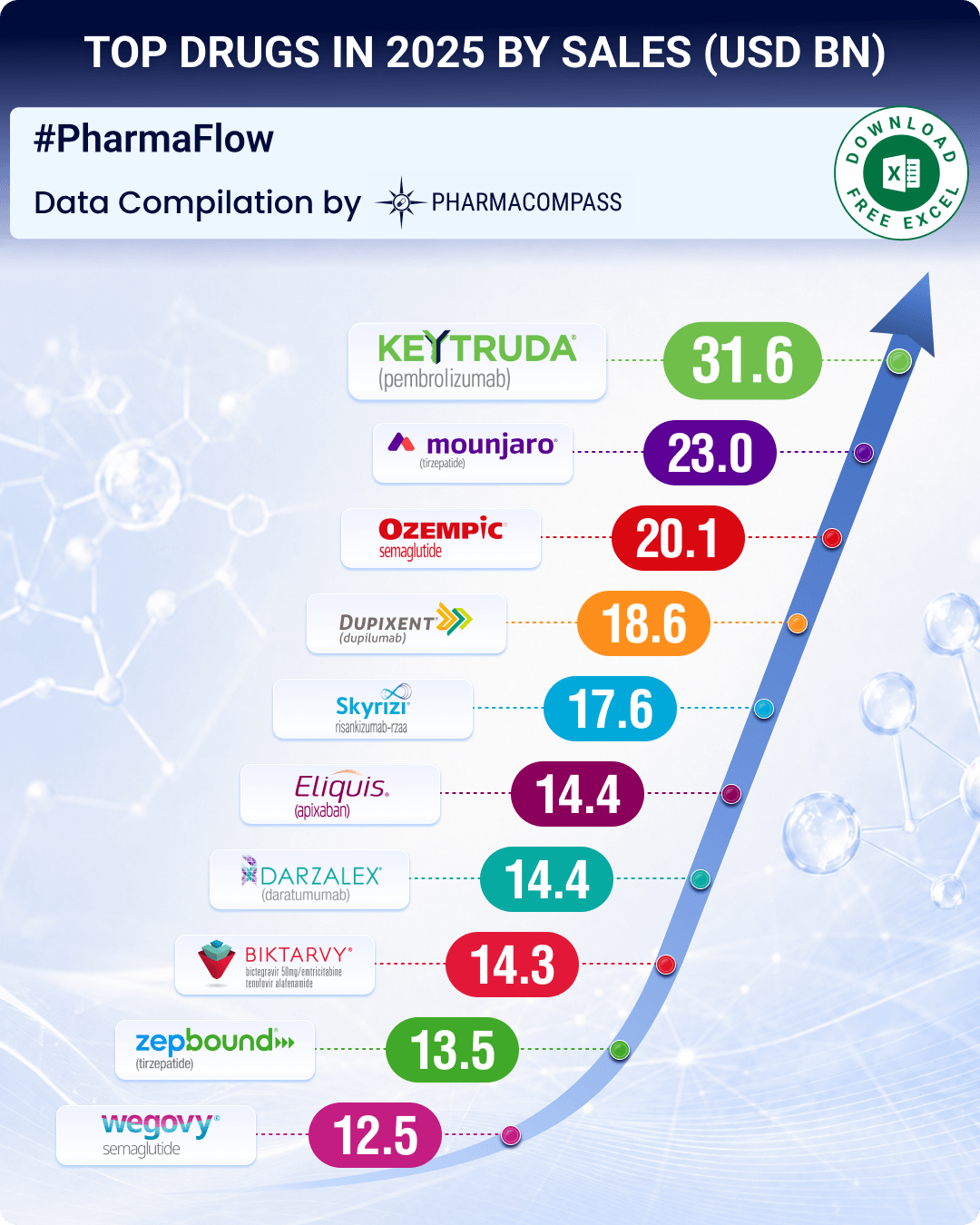
For the pharmaceutical industry, 2025 was a watershed year when obesity drugs settled firmly in the mainstream market. Glucagon-like peptide-1 (GLP-1) receptor agonists that treat diabetes and help in weight loss, dominated our top 10 list of drugs with four entries — Mounjaro (tirzepatide), Ozempic (semaglutide), Zepbound (tirzepatide) and Wegovy (semaglutide). In 2024, the top 10 drugs generated a total revenue of US$ 142 billion. This figure rose significantly in 2025, climbing to US$ 180.02 billion, reflecting strong growth. The year unequivocally belonged to Eli Lilly. The Indiana-headquartered drugmaker made a dramatic ascent, leaping from the ninth spot in 2024 to the numero uno position in our top drugmakers’ list for 2025. It posted 45 percent growth in sales, which rose to US$ 65.18 billion in 2025. In terms of therapeutic areas, oncology saw the maximum sales (at US$ 229.1 billion), followed by immunology (US$ 126.8 billion), infectious diseases (US$ 99.2 billion), diabetes (US$ 95.8 billion), neurology (US$ 70.4 billion), cardiology (US$ 67.6 billion) and hematology (US$ 29.3 billion).  View Our Interactive Dashboard on Top Drugs in 2025 by Sales (Free Excel Available) Lilly zooms past Pfizer on back of tirzepatide franchise; Roche, AbbVie, J&J make it to top five  Eli Lilly’s spectacular climb to the number one spot was driven by Mounjaro and Zepbound. Mounjaro leapt from the eighth spot in 2024 (when its sales stood at US$ 11.5 billion) to the number two position in 2025, raking in US$ 23 billion. Lilly’s other GLP-1 drug, Zepbound, also broke into the top 10, debuting at number nine with sales of US$ 13.5 billion. Taken together, Lilly’s tirzepatide franchise hit US$ 36.50 billion in 2025, surpassing Merck's Keytruda (pembrolizumab). At the number two position was Pfizer, with sales of US$ 62.58 billion. Notably, not a single Pfizer drug made it to the top 10 list. Pfizer’s sales fell by 1.63 percent in 2025, from US$ 63.63 billion in 2024. The decline was attributed to lower Covid‑19 revenues due to reduced infection rates, which impacted Paxlovid (nirmatrelvir/ritonavir) sales, and a narrower US vaccine recommendation, which affected Comirnaty (tozinameran) sales. Roche came third, reporting sales of CHF 47.7 billion  (US$ 62.10 billion) in 2025, compared to CHF 46.2 billion (US$ 50.86 billion) in 2024. At number four was AbbVie — it reported full-year net revenues of US$ 61.16 billion in 2025, compared to US$ 56.33 billion in 2024. The company’s immunology portfolio remained a key driver, bringing in US$ 30.41 billion in sales. Skyrizi (risankizumab) — approved for plaque psoriasis, psoriatic arthritis, Crohn’s disease, and ulcerative colitis — emerged as a major growth engine, with sales of US$ 17.56 billion. Rounding out the top five was Johnson & Johnson, whose innovative medicine division reported sales of US$ 60.4 billion, up from US$ 56.9 billion in 2024. Merck’s Keytruda retains top-selling drug status, followed by Lilly’s Mounjaro, Novo’s Ozempic Merck’s Keytruda retained its position as the world’s best-selling drug for the third consecutive year, generating approximately US$ 31.6 billion in sales, up from US$ 29.5 billion in 2024 and US$ 25 billion in 2023. Keytruda has become the pillar of cancer immunotherapy, with over 40 indications. The launch of Keytruda Qlex, a subcutaneous formulation co-administered with berahyaluronidase alfa, has further strengthens its lifecycle. Amongst other oncology drugs, J&J’s Darzalex (daratumumab) generated US$ 14.4 billion in sales, taking it to the number seven spot. Its strong performance has been supported by Darzalex Faspro, a subcutaneous formulation launched in 2020 that significantly reduces administration time. Growth from Darzalex and other brands helped offset the decline in Stelara (ustekinumab), whose sales fell 41 percent to US$ 6.1 billion, from US$ 10.4 billion in 2024. Among diabetes, obesity and metabolic drugs, Lilly’s Mounjaro was at the number two spot,  followed by Novo Nordisk’s Ozempic at number three. Ozempic posted sales of US$ 20.09 billion. Lilly’s Zepbound was at the ninth spot, with sales of US$ 13.54 billion. Novo’s Wegovy was tenth, with sales of US$ 12.5 billion. Together with Rybelsus, Novo’s semaglutide franchise generated approximately US$ 36.1 billion in 2025 sales. In immunology, Sanofi and Regeneron’s Dupixent (dupilumab) stood fourth and maintained its leadership with sales of US$ 18.6 billion. Dupixent is now approved across nine indications. At fifth position was another immunology drug — AbbVie’s Skyrizi (risankizumab). It has emerged as AbbVie’s key growth engine post‑Humira (adalimumab), delivering 49.87 percent growth and generating US$ 17.56 billion in 2025 sales. First approved in April 2019 for plaque psoriasis, it is now approved across four indications. The other drugs in our top 10 list were Eliquis (apixaban) and Biktarvy (bictegravir/emtricitabine/tenofovir alafenamide). Eliquis, co-developed and commercialized by Bristol Myers Squibb and Pfizer, stood sixth with sales of US$ 14.4 billion. Gilead’s Biktarvy (bictegravir/emtricitabine/tenofovir alafenamide) held the number eight position, with sales of US$ 14.3 billion in 2025. The drug commands over 52 percent of the US market for HIV treatments. Astra’s revenue rises by 8.6 percent; Merck, Novartis, Sanofi, Novo make it to top 10  AstraZeneca’s revenues increased 8.6 percent to US$ 58.73 billion, compared to US$ 54.10 billion in 2024, though its ranking fell from fifth to sixth position in 2025. Astra’s revenue growth was driven by strong performance across oncology, cardiovascular, renal and metabolism, respiratory and immunology, and rare disease portfolios. Farxiga (dapagliflozin), a drug used to manage blood sugar, was a key driver, generating US$ 8.4 billion in revenue in 2025. At number seven was Merck, with sales of US$ 58.1 billion, reflecting a modest growth of 1.3 percent, which was driven by Keytruda. Novartis stood eighth on our 2025 list (against seventh in 2024), with net sales of US$ 54.5 billion in 2025, up from US$ 50.3 billion in 2024. Sanofi landed at the ninth position, with sales of US$ 51.7 billion, against US$ 42.6 billion in 2024. Novo Nordisk rounded out the top ten, posting revenues of DKK 309.06 bn (US$ 48.7 billion) in 2025 — a growth of 21.37 percent compared to DKK 290.40 billion (US$ 40.2 billion) in 2024 — driven primarily by its obesity and diabetes care portfolio. Our view The 2025 rankings confirm what analysts have been expecting for some time — that the market for anti-obesity drugs could reach US$ 100 billion by 2030. The four GLP-1 drugs in our 2025 list together generated combined revenue of approximately US$ 70 billion. At this pace, the US$ 100 billion market size may arrive sooner than projected, perhaps as early as 2026 or 2027.

Impressions: 4559

https://dev1.pharmacompass.com/radio-compass-blog/top-pharma-companies-drugs-in-2025-lilly-vaults-eight-spots-to-emerge-at-the-top-glp-1-drugs-dominate-list

#PharmaFlow by PHARMACOMPASS
11 Jun 2026

MARKET PERFORMANCE RECAP

4read-more
read-more
Pipeline Prospector February 2026 highlights: Gilead buys Arcellx for US$ 7.8 bn; FDA okays Vanda’s psychotic pill
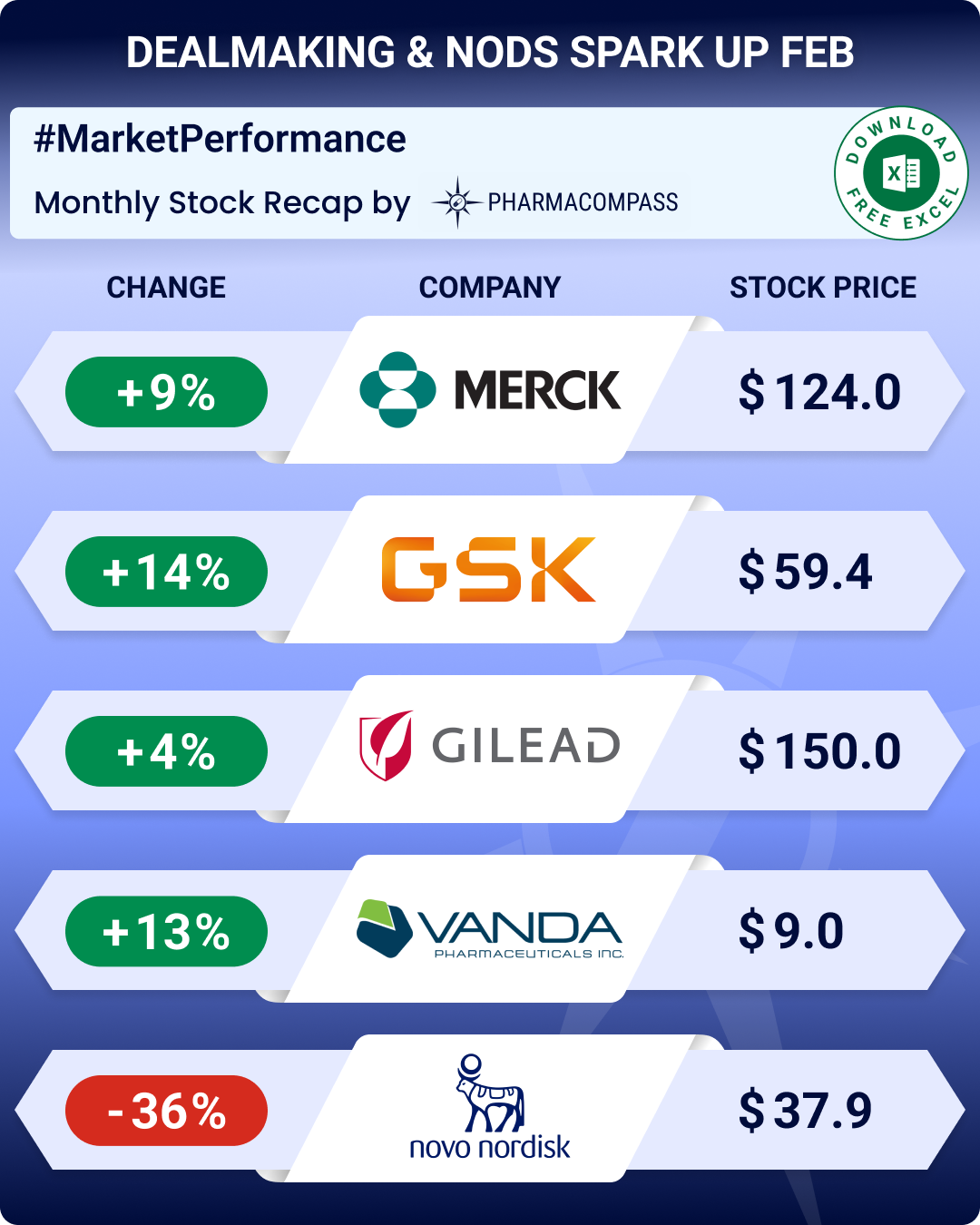
February was a month of upheavals. In the US, the Supreme Court ruled that President Donald Trump exceeded his authority by imposing broad tariffs. Soon after the ruling, Trump imposed a temporary 15 percent global tariff under a separate trade law. The month ended with the US and Israel launching a major military operation against Iran, and the region now appears headed for a prolonged conflict. Despite the turbulent geopolitical environment, the biotech indices continued to grow steadily. The Nasdaq Biotechnology Index (NBI) rose 3.68 percent, moving from 5,852.67 to 6,041.31. The SPDR S&P Biotech ETF (XBI) gained 2.4 percent, rising from 124.75 to 127.27, and the S&P Biotechnology Select Industry Index (SPSIBI) increased 2.4 percent, rising from 9,746.25 to 9,954.51. In comparison, the S&P 500 fell by 0.55 percent — from 6,916.64 to 6,878.88.   Access the Pipeline Prospector Dashboard for February 2026 Newsmakers (Free Excel) Gilead buys Arcellx for US$ 7.8 billion; Lilly acquires Orna for its circular RNA therapeutics  The month’s biggest acquisition was made by Gilead Sciences, which acquired its cancer therapy partner Arcellx for US$ 7.8 billion. The two companies have been collaborating on cell therapy development since 2022 through Kite Pharma, Gilead’s subsidiary. The centerpiece of the deal is Arcellx’s investigational CAR-T therapy for multiple myeloma — anitocabtagene autoleucel. Eli Lilly announced the acquisition of Orna Therapeutics for up to US$ 2.4 billion in cash. The deal will give Lilly access to a new class of therapeutics, known as circular RNA, that allows patients’ own cells to generate therapies (to treat underlying diseases) inside the body, doing away with the need for cell extraction. Among other deals, GSK acquired Canadian biotech 35Pharma for US$ 950 million in cash. The acquisition includes HS235, an investigational therapy being studied for pulmonary arterial hypertension (PAH) and pulmonary hypertension associated with heart failure with preserved ejection fraction. GSK’s stock was up 14 percent in February. FDA approves Vanda’s antipsychotic pill Bysanti; Dupixent okayed for allergic fungal rhinosinusitis The month saw several key approvals. The US Food and Drug Administration (FDA) approved Vanda Pharmaceuticals’ Bysanti (milsaperidone) tablets, a first-line therapy for acute bipolar I disorder and schizophrenia. This marks the company’s third FDA approval in recent months. The agency also approved Sanofi and Regeneron’s Dupixent (dupilumab) for the treatment of adults and pediatric patients with allergic fungal rhinosinusitis (AFRS) who have a history of sino-nasal surgery. AFRS is a chronic inflammatory condition that can cause nasal polyps, persistent congestion, and loss of smell. This is Dupixent’s ninth FDA approval. Merck’s Keytruda (pembrolizumab) and Keytruda Qlex (pembrolizumab and berahyaluronidase alfa-pmph) in combination with paclitaxel, with or without bevacizumab, were approved for treating a form of ovarian cancer. This marks Keytruda’s first FDA approval in ovarian cancer. Pfizer’s Braftovi (encorafenib) was granted full approval when used in combination with Erbitux (cetuximab) and fluorouracil-based chemotherapy to treat adults with a type of metastatic colorectal cancer. The combo therapy had received accelerated approval in 2024. FDA also approved AbbVie’s supplemental new drug application for the combination regimen of Venclexta (venetoclax) and AstraZeneca’s Calquence (acalabrutinib) for the treatment of previously untreated adult patients with chronic lymphocytic leukemia (CLL). Venclexta is manufactured by AbbVie and Genentech. Lilly in another oncology deal with Innovent worth up to US$ 8.85 bn; Novo inks obesity deal with Vivtex Lilly entered into a strategic collaboration with Chinese drugmaker Innovent Biologics to advance novel medicines in oncology and immunology. This is the seventh collaboration between the two drugmakers. Lilly will pay US$ 350 million upfront and as much as US$ 8.5 billion in milestone payments. Madrigal Pharmaceuticals entered into a global license agreement with Suzhou Ribo Life Science and its subsidiary Ribocure Pharmaceuticals for six preclinical small interfering RNA programs targeting metabolic dysfunction-associated steatohepatitis (MASH). Madrigal will pay US$ 60 million upfront and US$ 4.4 billion in milestone payments. Novo Nordisk has inked a deal worth up to US$ 2.1 billion with privately-held American company Vivtex Corp to develop next-generation oral drugs for obesity and diabetes. Astellas Pharma (stock up 16 percent) has entered into a global strategic collaboration with Vir Biotechnology to advance a T-cell engager targeting prostate-specific membrane antigen and CD3 proteins for the treatment of prostate cancer. The deal involves an upfront payment, milestone payments and royalties that could together add up to US$ 1.7 billion. There were also a few AI deals. Takeda Pharmaceutical has entered into a multi-year partnership that could be worth over US$ 1.7 billion with San Diego-headquartered Iambic to use AI to design small-molecule drugs for cancer and gastrointestinal diseases. And, Novartis (stock up 13 percent in February) signed a research collaboration and licensing deal worth up to US$ 1.8 billion with American biotech Unnatural Products (UNP) to develop therapeutics with potential applications in cardiovascular diseases. Novartis will license UNP’s AI-enhanced macrocycle platform. Roche’s Gazyva scores phase 3 win in rare autoimmune kidney disorder; Novo’s CagriSema beats Wegovy In a phase 3 trial, Roche’s Gazyva (obinutuzumab) met its primary endpoint, holding the potential to become the first approved therapy for primary membranous nephropathy, a rare autoimmune kidney disorder. According to top-line results, significantly more patients achieved complete remission at two years with Gazyva, compared to immunosuppressant tacrolimus.  Novo Nordisk said its experimental next-generation weight-loss drug CagriSema (cagrilintide and semaglutide) delivered greater reductions in body weight and blood sugar than its blockbuster Wegovy (semaglutide) in a late-stage trial in patients with type 2 diabetes. Novo has positioned CagriSema as a successor to Wegovy and a potential rival to Eli Lilly’s Zepbound (tirzepatide). Eli Lilly’s Retevmo (selpercatinib), an FDA-approved drug for lung and thyroid cancers that have RET gene alterations, has demonstrated statistically significant improvement in event-free survival in patients with early-stage (2-3A) RET fusion-positive non-small cell lung cancer. In a phase 3 trial, Bayer’s experimental blood thinner — asundexian — reduced the risk of recurrence of stroke by 26 percent. And Compass Pathways’ psilocybin-based therapy — COMP360 — eased symptoms in treatment-resistant depression. This is the second such late-stage trial win for the therapy. Our view The rapidly shifting geopolitical landscape, particularly the conflict in the Middle East and rising trade tensions, is adding a fresh layer of uncertainty for the industry. If the deal-making momentum and progress in clinical trials are maintained, we can safely assume that the innovation pipeline is resilient, the geopolitical turbulence notwithstanding.

Impressions: 2471

https://dev1.pharmacompass.com/pipeline-prospector-blog/pipeline-prospector-february-2026-highlights-gilead-buys-arcellx-for-us-7-8-bn-fda-okays-vanda-s-psychotic-pill

#PharmaFlow by PHARMACOMPASS
05 Mar 2026

WEEKLY INDUSTRY NEWS

11read-more
read-more
AbbVie acquires Apogee in US$ 10.9 bn deal; FDA to recruit about 2,200 after firing 3,000 staffers last year
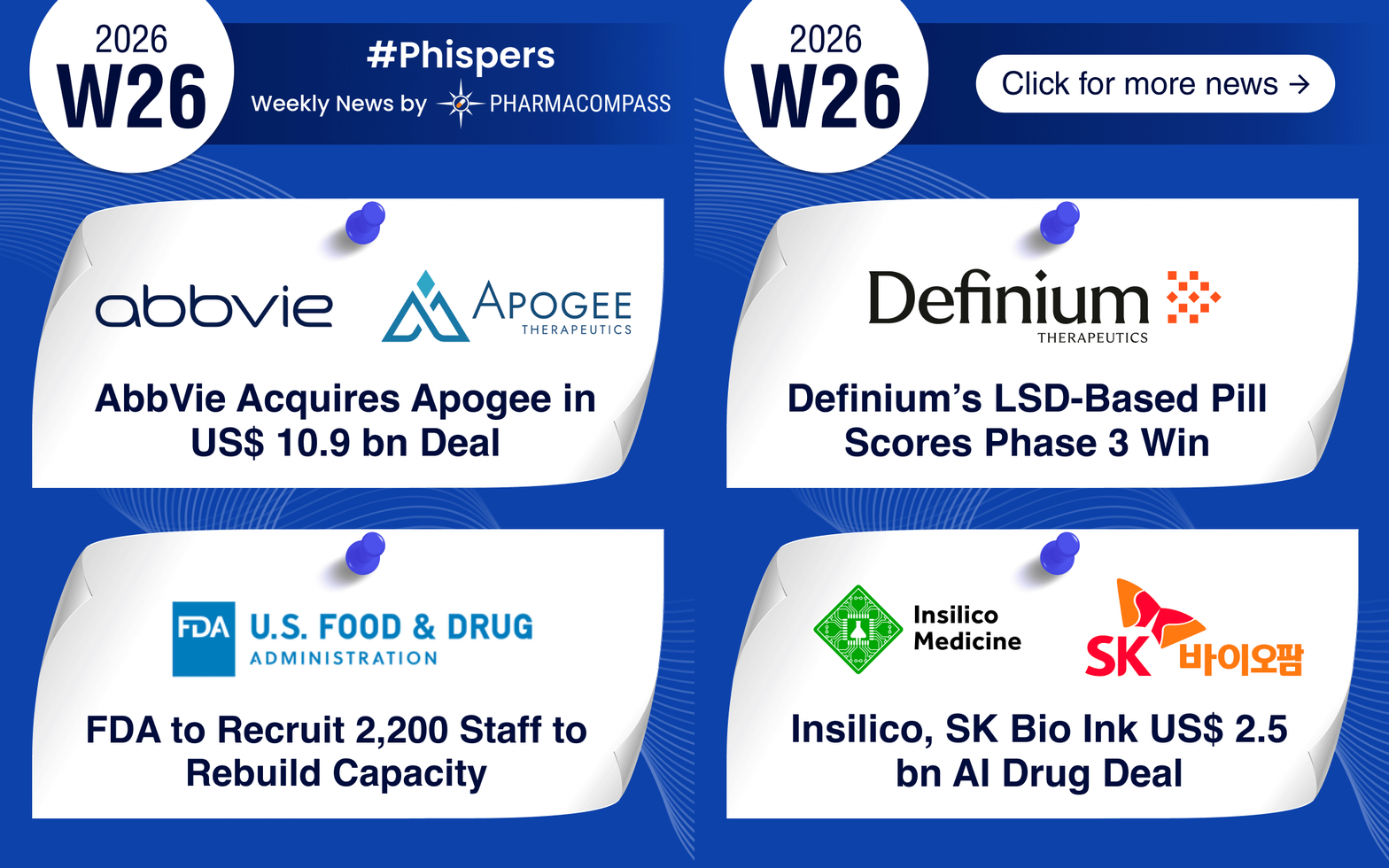
In Phispers this week, we bring you news about AbbVie’s US$ 10.9 billion all-cash takeover of Apogee Therapeutics, a biotech that recently posted favorable results from a mid-stage trial of its experimental eczema drug.The US Food and Drug Administration (FDA) is reversing more decisions. After firing 3,000 staff last year, the agency is in the process of recruiting about 2,200 employees to rebuild capacity. Moreover, after reversing its course on uniQure’s gene therapy for Huntington disease last week, there is news that the agency has taken yet another U-turn — this time on Regenxbio’s gene therapy for Hunter syndrome.In other deals, Insilico Medicine has signed an up to US$ 2.5 billion collaboration with Korean drugmaker SK Biopharmaceuticals to develop treatments for neuroimmune disorders.  Novartis has entered into a research collaboration with Antares Therapeutics worth up to US$ 1.9 billion to develop therapies for “undruggable” oncology targets. Nuvectis Pharma has signed a licensing agreement with China’s Haisco Pharmaceutical Group worth up to US$ 1.4 billion to develop therapies for difficult-to-treat cancerous tumors. And Shanghai-based biotech Abbisko Therapeutics has expanded its research collaboration with Eli Lilly in a deal worth up to US$ 1.9 billion.In news from clinical trials, Merck’s experimental drug tulisokibart met its main goals in a phase 3 trial for ulcerative colitis. Definium Therapeutics reported positive phase 3 results for DT120, an oral drug based on a psychedelic, in patients with major depressive disorder. And Pfizer’s antibody-drug conjugate (ADC) — sigvotatug vedotin — failed to meet its main goal in a phase 3 trial in non-small cell lung cancer (NSCLC).AbbVie acquires Apogee in US$ 10.9 bn deal; gains experimental eczema drugLast month, there was news that Apogee Therapeutics posted favorable results from a mid-stage trial of zumilokibart and secured a financing deal worth up to US$ 1.3 billion with Blackstone Life Sciences. Zumilokibart is being developed to treat moderate-to-severe atopic dermatitis (AD), a chronic skin disease.This week, there is an update that AbbVie is acquiring Apogee Therapeutics in a US$ 10.9 billion all-cash deal. The acquisition, centered around zumilokibart, is one of the largest biotech deals of the year. Zumilokibart needs to be injected every three to six months — a significant advantage over Regeneron and Sanofi’s blockbuster eczema drug Dupixent (dupilumab), which requires fortnightly injections. The deal is expected to close in the third quarter of 2026.After firing 3,000 staffers last year, FDA ramps up hiring to rebuild capacityFDA is hiring about 2,200 employees to rebuild capacity after cutting more than 3,000 jobs last year, Lowell Zeta, acting chief of staff of the agency, said this week. Around 600 new employees are already in the process of being onboarded.The job cuts implemented last year were part of efforts by US Health Secretary Robert F. Kennedy Jr to overhaul the country’s public health agencies. The layoffs had strained regulatory work, disrupting the agency’s capacity to review applications for new drugs.Reverses course on Regenxbio’s gene therapy: After declining to approve Regenxbio’s gene therapy for Hunter syndrome (an ultra-rare genetic condition) in February, citing uncertainty regarding the trial design, FDA has now come out in support of the drug. FDA has said existing data for Navsunli (clemidsogene lanparvovec-sngl, RGX-121) could support an accelerated approval application.The agency has acknowledged that the company “does not need to enroll additional patients or conduct additional studies.” Regenxbio plans to resubmit its biologics license application for Navsunli in the third quarter of 2026. This reversal in FDA’s position comes a week after a similar reversal on uniQure’s Huntington’s disease gene therapy.Definium’s LSD-based pill for major depressive disorder scores phase 3 winDefinium Therapeutics has reported positive phase 3 results for DT120, an oral drug based on lysergic acid diethylamide (LSD), in patients with major depressive disorder. LSD is a semi-synthetic psychedelic derived from ergot fungi. The study showed that after six weeks, a single dose of the pill significantly reduced symptoms, as measured on a standard depression scale, compared to placebo. The US President Donald Trump had signed an executive order in April to speed up access to psychedelic-based treatments.Merck’s ulcerative colitis drug meets main goals: Merck’s experimental drug tulisokibart met its main goals in a phase 3 trial for ulcerative colitis, a chronic inflammatory bowel disease affecting the large intestine. Merck had acquired tulisokibart through its US$ 11 billion acquisition of Prometheus Biosciences in 2023.Insilico, SK Biopharmaceuticals strike US$ 2.5 bn AI drug discovery dealDrug discovery company Insilico Medicine has signed a collaboration with Korean drugmaker SK Biopharmaceuticals worth up to US$ 2.5 billion to develop treatments for neuroimmune disorders using artificial intelligence. Neuroimmune disorders, including neuroinflammatory, neurodegenerative, and rare neurological disorders, remain among the most challenging therapeutic areas in modern medicine.Insilico will be eligible to receive US$ 18 million in upfront and near-term milestone payments. SK Bio will use Insilico’s Pharma.AI platform, an end-to-end suite that uses generative AI models and automation programs to improve the quality and productivity of drug development.Abbisko, Lilly expand collaboration: Shanghai-based oncology biotech Abbisko Therapeutics has expanded its research collaboration with Eli Lilly in a deal worth up to US$ 1.9 billion, including upfront and milestone payments. Under the agreement, which deepens an existing relationship that began in 2022, the two companies will collaborate on the discovery and development of innovative medicines across multiple targets.Novartis, Antares sign US$ 1.9 bn oncology deal for “undruggable” targetsNovartis has entered into a research collaboration with Antares Therapeutics worth up to US$ 1.9 billion to apply Antares' drug discovery platform to a limited number of historically undruggable oncology targets. The deal includes an upfront payment of about US$ 105 million, and additional milestone-linked payments of up to US$ 1.8 billion. Antares was launched about a year ago, as a spin‑out of Scorpion Therapeutics.Nuvectis, Haisco ink up to US$ 1.4 bn licensing deal: Nuvectis Pharma has signed a licensing agreement with China’s Haisco Pharmaceutical Group worth up to US$ 1.4 billion for ex-China rights to two clinical-stage compounds that target difficult-to-treat tumors, currently in advanced clinical trials.Pfizer’s ADC acquired through Seagen buyout fails phase 3 NSCLC trialPfizer announced that sigvotatug vedotin, an antibody-drug conjugate (ADC), failed to meet its main goal in a phase 3 trial in non-small cell lung cancer (NSCLC). The drug was acquired through Pfizer’s US$ 43 billion acquisition of Seagen in 2023. ADCs are targeted cancer therapies. 

Impressions: 1152

https://dev1.pharmacompass.com/radio-compass-phisper/abbvie-acquires-apogee-in-us-10-9-bn-deal-fda-to-recruit-about-2-200-after-firing-3-000-staffers-last-year

#Phispers by PHARMACOMPASS
25 Jun 2026

NEWS LIBRARY

350read-more
read-more

https://www.biospace.com/business/sanofi-targets-late-phase-and-commercial-m-a-to-offset-looming-dupixent-decline

BIOSPACE
30 Oct 2026

https://www.biospace.com/business/sanofi-pays-regeneron-1b-upfront-to-continue-search-for-dupixent-successor

BIOSPACE
01 Oct 2026

https://www.biospace.com/business/astrazeneca-amgen-poised-to-challenge-dupixents-reign-with-esophagitis-win

BIOSPACE
28 Aug 2026

https://www.fiercebiotech.com/biotech/attovia-aims-scratch-itch-opportunity-and-challenge-dupixent-289m-ipo

FIERCE BIOTECH
05 Aug 2026

https://www.prnewswire.com/news-releases/dupilumab-improves-outcomes-for-eog-in-phase-2-clinical-trial-302813304.html

PR NEWSWIRE
29 Jun 2026

https://firstwordpharma.com/story/7534337

FIRSTWORD PHARMA
07 Jun 2026
digital-contentPB000219##p