Please Wait
Applying Filters...
Menu

Digital Content read-more

Create Content with PharmaCompass, ask us

PHARMA & BIOTECH INSIGHTS

1read-more
read-more

A PHP Error was encountered

Severity: 8192

Message: mb_convert_encoding(): Handling HTML entities via mbstring is deprecated; use htmlspecialchars, htmlentities, or mb_encode_numericentity/mb_decode_numericentity instead

Filename: blog/grid.php

Line Number: 52

Backtrace:

File: /var/www/html/application/views/include/media/blog/grid.php
Line: 52
Function: mb_convert_encoding

File: /var/www/html/application/models/Cmn.php
Line: 3595
Function: view

File: /var/www/html/application/views/include/product/digitalContent/grid.php
Line: 17
Function: common

File: /var/www/html/application/views/include/desc/inner.php
Line: 13
Function: view

File: /var/www/html/application/views/include/desc/indexNew.php
Line: 2433
Function: include

File: /var/www/html/application/controllers/Common.php
Line: 11303
Function: view

File: /var/www/html/index.php
Line: 231
Function: require_once

FDA approvals drop 8% in 2025, with fewer blockbusters; Brinsupri, Rhapsido make it to first-in-class list
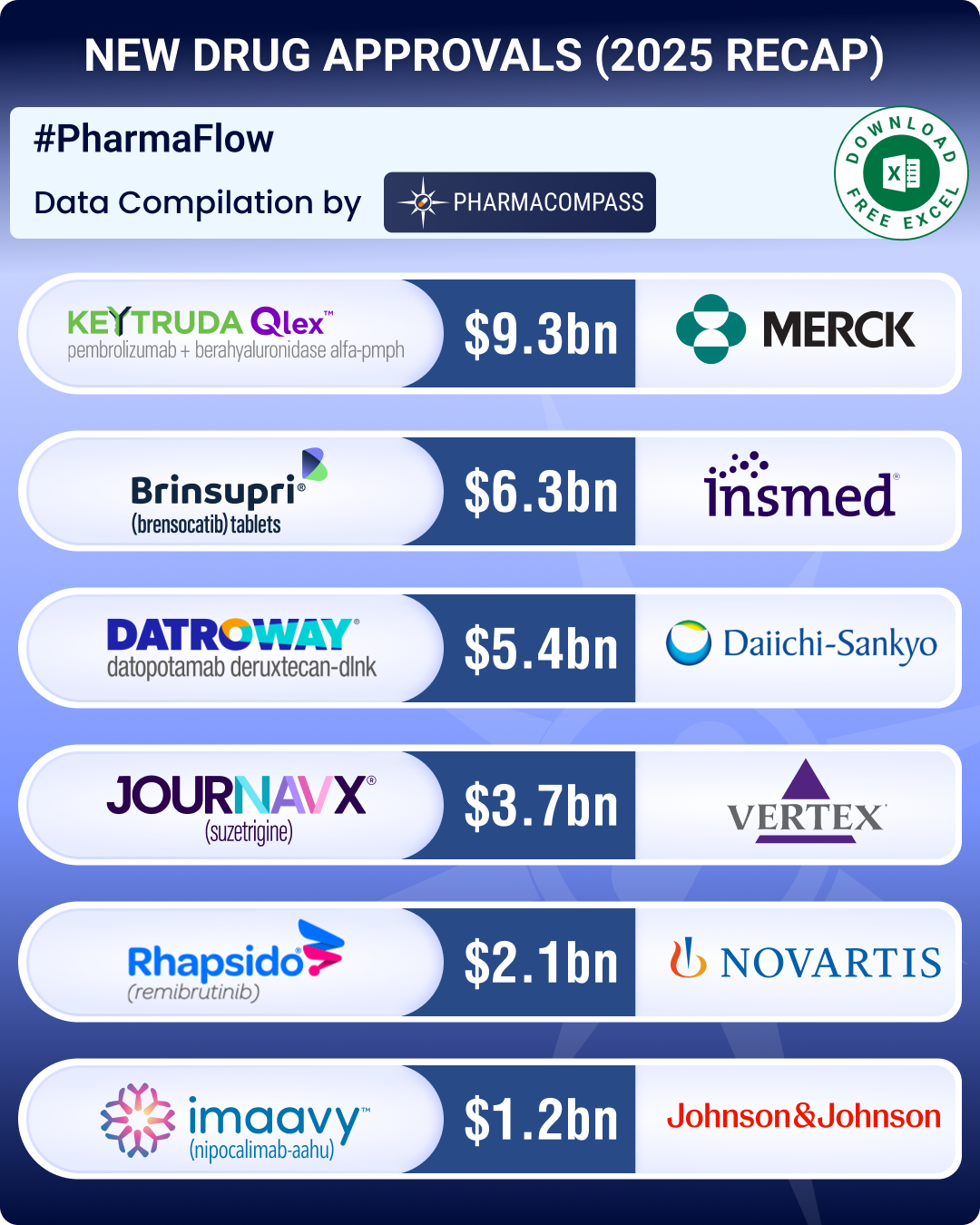
Our update for new drug approvals by the US Food and Drug Administration (FDA) in the first half (H1) of 2025 had pointed out how upheavals at the agency had impacted its functioning, with drug approvals dropping by 24 percent. While the turbulence didn’t subside, approvals picked up considerably in the second half (H2) of 2025. FDA’s Center for Drug Evaluation and Research (CDER) approved 30 new drugs in H2 (as against 16 in H1), taking the total number of approvals for 2025 up to 46. This is an 8 percent drop compared with 50 approvals CDER had granted in 2024. During the year, CDER saw four new chiefs come and go — Jacqueline Corrigan-Curay (Jan-July 2025), George Tidmarsh (July-Nov 2025), Richard Pazdur (Nov-December 2025) and Tracy Beth Høeg (December 2025-present). In addition, the agency endured thousands of retrenchments. The US Department of Health and Human Services (HHS), under Health Secretary Robert F. Kennedy Jr., enforced funding cuts and changes in approval processes, especially for vaccines. Overall, we have been witnessing a steady drop in drug approvals by CDER — it approved 55 new drugs in 2023, 50 in 2024 and, 46 in 2025. Of the 46 new approvals in 2025, 20 were classified as first-in-class (therapies that use a new and unique mechanism of action), out of which 13 were approved in H2 2025. Overall, CDER approved 32 chemical entities and 14 biologics in 2025. In comparison, approvals by Health Canada and authorizations by the European Medicines Agency (EMA) rose in 2025. The EMA authorized 69 new therapies, up from 64 in 2024. Health Canada approved 46 new therapies in 2025, as compared with 28 in 2024. FDA’s Center for Biologics Evaluation and Research (CBER) approved 21 biologics in 2025, compared with 13 in 2024, of which eight were notable new drugs. Interestingly, both CDER and CBER rejected more drugs last year — 43 applications were rejected, including those for new drugs, supplemental filings, generics and biosimilars, as opposed to 29 in 2024.  View New Drug Approvals in 2025 with Estimated Sales (Free Excel Available) Blockbuster drug approvals drop by 60%, European drugmakers score more FDA nods  It wasn’t a year of blockbuster drug approvals — the agency approved a lower number of drugs that are expected to deliver sales of at least US$ 1 billion by 2030. While there were nearly 20 such drugs approved in 2024, the number dropped to just eight in 2025. Interestingly, European companies won many more approvals for new products than their counterparts in the US. GSK and Novartis achieved three approvals each, while Merck, Boehringer Ingelheim and Bayer AG won two approvals each. The first-in-class drugs approved in H2 are: Insmed's Brinsupri (brensocatib), Ionis's Dawnzera (donidalorsen), Stealth Bio's Forzinity (elamipretide), Boehringer's Jascayd (nerandomilast), UCB's Kygevvi (doxecitine and doxribtimine), Bayer's Lynkuet (elinzanetant), Chimerix's Modeyso (dordaviprone), Innoviva's Nuzolvence (zoliflodacin), Arrowhead's Redemplo (plozasiran), Novartis' Rhapsido (remibrutinib), Otsuka's Voyxact (sibeprenlimab-szsi), Sanofi's Wayrilz (rilzabrutinib) and Omeros' Yartemlea (narsoplimab-wuug). Insmed’s Brinsupri approved for chronic lung disease; Novartis’ Rhapsido okayed for urticaria As has been the trend, the field of oncology saw the maximum drug approvals (15), followed by rare diseases and disorders (7) and immunology (4). Three categories — infections and infectious diseases, respiratory diseases and cardiology/vascular diseases — saw three drug approvals each. Among the first-in-class approvals was Insmed’s Brinsupri (brensocatib), the first treatment for non-cystic fibrosis bronchiectasis, a chronic lung disease. Nature has estimated peak sales of US$ 6.3 billion for this treatment. Brinsupri was approved by the EMA in November. Another notable approval was granted to Novartis’ Rhapsido (remibrutinib), approved to treat the skin condition chronic spontaneous urticaria in adults who remain symptomatic despite treatment with antihistamines. Rhapsido is the first oral alternative to injectable treatments and has 2030 sales forecasts of US$ 2.1 billion. Novartis is also testing the drug for other immune conditions. A new drug that is estimated to bring in the maximum sales is Merck’s Keytruda Qlex, a subcutaneous formulation of pembrolizumab plus berahyaluronidase alfa approved for various solid tumors. While top-selling cancer drug Keytruda (pembrolizumab) was first approved in 2014, this is the first approval for an engineered variant of the hyaluronidase enzyme (berahyaluronidase alfa). Therefore, this combination counts as a novel approval. Fondazion’s CGT okayed for Wiskott-Aldrich syndrome; three drugs approved for hereditary angioedema  After a record nine new cell and gene therapy (CGT) approvals in 2024, only five CGTs were approved in 2025 (the lowest since 2022). With the exception of Novartis’ Itvisma (onasemnogene abeparvovec-brve), all other CGT approvals went to relatively lesser known companies such as Abeona, Precigen, Neurotech and Fondazione Telethon (an Italian firm that became the first nonprofit to get a CGT approval from the FDA). Fondazione Telethon’s Waskyra (etuvetidigene autotemcel) became the first gene therapy for Wiskott-Aldrich syndrome (WAS), a rare immune disorder that causes frequent infections, bleeding issues, and eczema. The one-time treatment uses patients’ own blood stem cells that are modified to restore the faulty WAS gene. Abeona’s Zevaskyntm (prademagene zamikeracel) became the first and only autologous cell sheet-based gene therapy indicated for the treatment of wounds in adult and pediatric patients with recessive dystrophic epidermolysis bullosa (a rare, genetic skin disorder). Patients with hereditary angioedema (or HAE, a genetic disorder characterized by recurrent episodes of severe swelling) gained access to three new drugs, including two first-in-class drugs — CSL Behring’s Andembry (garadacimab) and Ionis Pharma’s Dawnzera (donidalorsen). The third drug approved to treat HAE is KalVista Pharma’s Ekterly (sebetralstat). Our view The FDA has been bringing about considerable changes to its processes. In June, it launched the Commissioner’s National Priority Vouchers (CNPV) program to cut review timelines from the usual 10 to 12 months to two months. But the recent rejection of Disc Medicine’s application for bitopertin as a treatment for a rare blood disorder under the program took four months to materialize. Not only did the rejection come in late, it was based on information already known to the FDA at the time of granting the coveted voucher, raising controversy around the program. The agency is going to bring about more changes soon. It has proposed a plausible mechanism pathway for rare and ultra-rare diseases where randomized controlled trials are not feasible. And in April, it announced plans to phase out animal toxicity testing in the development of monoclonal antibody therapies and other drugs. The agency is increasingly relying on AI, and recently  announced the deployment of agentic AI capabilities for all employees. It will be interesting to see how these changes impact drug approvals in 2026.

Impressions: 2647

https://dev1.pharmacompass.com/radio-compass-blog/fda-approvals-drop-8-in-2025-with-fewer-blockbusters-brinsupri-rhapsido-make-it-to-first-in-class-list

#PharmaFlow by PHARMACOMPASS
26 Feb 2026

WEEKLY INDUSTRY NEWS

2read-more
read-more
Pfizer buys Metsera for up to US$ 7.3 bn, Roche acquires 89bio; FDA okays injectable version of Merck’s Keytruda
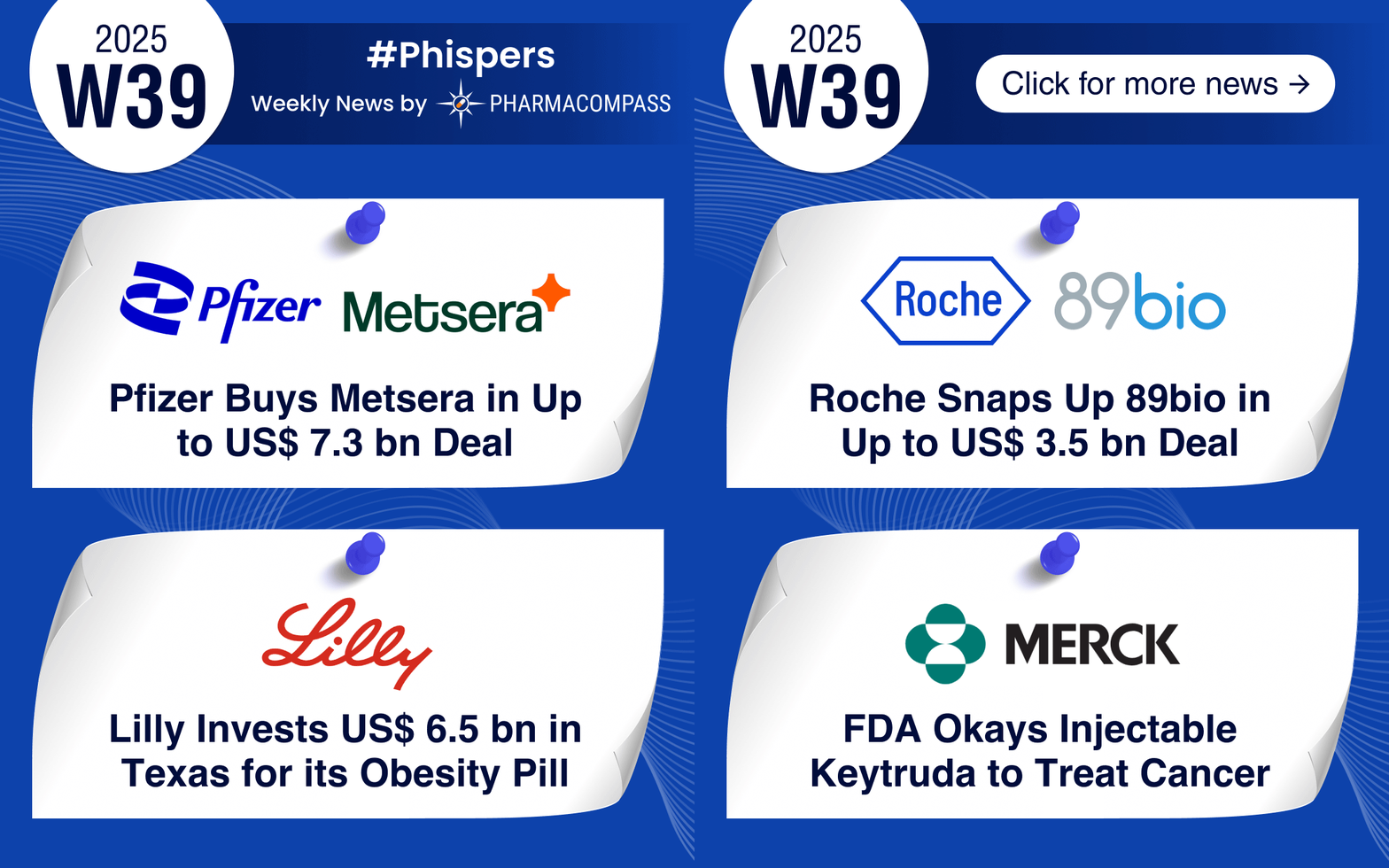
In this week’s Phispers, Pfizer announced the acquisition of New York-based biotech Metsera for up to US$ 7.3 billion, marking its biggest push into the fast-growing obesity market. Roche is acquiring San Francisco-based 89bio for up to US$ 3.5 billion to strengthen its metabolic diseases portfolio. And Amsterdam-based VectorY Therapeutics struck a US$ 1.2 billion deal with Shape Therapeutics to explore brain-targeted gene therapies for neurodegenerative diseases.Meanwhile, Eli Lilly said it will invest US$ 6.5 billion in a Texas plant to manufacture its next-generation, investigational weight-loss pill orforglipron. Moderna opened a vaccine plant in the UK, just when other drugmakers such as Merck, Eli Lilly, Sanofi and AstraZeneca said they are pausing or scrapping major UK investments due to tougher drug pricing rules.In drug approvals, the US Food and Drug Administration (FDA) approved Merck’s Keytruda Qlex, an injectable version of the blockbuster drug, to speed up cancer treatment. The agency also expanded the approval Incyte’s Opzelura cream to treat eczema in children. And Stealth Biotherapeutics’ Forzinity was approved by the FDA as the first therapy for a rare, life-threatening genetic disorder known as Barth syndrome.FDA issued a warning letter to a Janssen Vaccines’ plant in South Korea. The agency rejected Biogen’s application for a higher-dose version of Spinraza (nusinersen), its treatment for spinal muscular atrophy (SMA), a rare genetic disorder that causes progressive muscle weakness, and Scholar Rock’s experimental drug apitegromab, aimed at treating SMA and preserving muscle.In news from trials, Ionis Pharmaceutical’s experimental drug Zilganersen helped patients with the rare Alexander disease improve their ability to walk in an early-to-late-stage study.Pfizer bets on obesity drugs with up to US$ 7.3 bn Metsera buy; Roche acquires 89bioPfizer said it will acquire Metsera in a deal worth up to US$ 7.3 billion, marking its biggest push yet into the fast-growing obesity market. The deal comes after Pfizer scrapped its own obesity pill, danuglipron, due to safety issues. New York-based Metsera brings a pipeline of experimental obesity drugs, including GLP-1 and amylin-based injectables designed for monthly dosing.Roche to buy 89bio: Roche has agreed to acquire San Francisco-based 89bio for up to US$ 3.5 billion, expanding its presence in liver and metabolic diseases linked to obesity. At the center of the buyout is pegozafermin, 89bio’s late-stage experimental therapy for metabolic dysfunction-associated steatohepatitis (MASH), a severe form of fatty liver disease often seen in obese patients.VectorY inks deal with Shape Therapeutics: Amsterdam-based VectorY Therapeutics has entered into an option-and-license agreement with Seattle-based Shape Therapeutics that could be worth up to US$ 1.2 billion. Under the deal, VectorY will test Shape’s engineered SHP-DB1 capsid (protein shell of a virus), designed to carry gene therapies deep into the brain.Eli Lilly to manufacture next-gen weight-loss pill at its US$ 6.5 bn Texas facilityEli Lilly will invest US$ 6.5 billion in a new plant in Houston, Texas, to produce orforglipron, its investigational, once-daily weight-loss pill being studied for the treatment of type 2 diabetes and obesity. Lilly plans to file for regulatory review of orforglipron later this year. The site will also make ingredients for cancer and autoimmune drugs.Moderna opens vaccine plant in UK: Just when drugmakers like Merck, Eli Lilly, Sanofi and AstraZeneca are pausing or scrapping major UK investments, citing tougher drug pricing rules, Moderna has opened a new £150 million (approximately US$ 190 million) manufacturing and research facility at the Harwell science campus in Oxfordshire. This is Moderna’s first UK site to produce mRNA vaccines.FDA approves injectable version of Merck’s Keytruda to speed up cancer treatmentFDA has approved Merck’s Keytruda Qlex (pembrolizumab/berahyaluronidase alfa-pmph), a new formulation of its blockbuster immunotherapy Keytruda that can be given as a quick under-the-skin injection. Unlike the intravenous version, which takes about 30 minutes, the new shot can be administered in just one to two minutes, depending on the dose.Expands label of Incyte’s eczema cream: FDA has expanded the label for Incyte’s Opzelura (ruxolitinib) cream to treat mild-to-moderate atopic dermatitis, commonly known as eczema, in children aged two and older. This makes it the first topical JAK inhibitor approved in the US for pediatric eczema.Approves Stealth’s med for Barth syndrome: FDA has approved Stealth Biotherapeutics’ Forzinity (elamipretide) injection as the first therapy for Barth syndrome, a rare genetic disease that primarily affects males. Patients often face severe heart failure in infancy, and those who survive into adolescence can experience fatigue, poor stamina, and difficulty exercising. Forzinity, given once daily under the skin, works by improving the structure and function of the mitochondria, cell organelles responsible for producing energy.FDA issues warning letter to Janssen plant in South Korea over quality lapsesFDA has issued a warning letter to Janssen Vaccines, a subsidiary of Johnson & Johnson, after inspectors flagged serious quality issues at its plant in Incheon, South Korea. The inspection took place between November 11 and 19, 2024. According to the letter, dated July 18, Janssen failed to properly investigate product complaints and did not consistently follow required quality-control procedures. A key problem was with vial stoppers, which could potentially affect product quality. FDA has now asked Janssen to conduct a three-year review of past complaints, strengthen its quality systems, and provide a corrective action plan.FDA rejects Biogen’s application for high-dose Spinraza to treat SMAFDA has rejected Biogen’s application for a higher-dose version of Spinraza (nusinersen), its treatment for spinal muscular atrophy (SMA), a rare genetic disorder that causes progressive muscle weakness. The agency issued a complete response letter asking for updated manufacturing and technical information, but did not raise concerns about the clinical data supporting the regimen. The higher-dose version has already been cleared in Japan and is under review in Europe.Rejects Scholar Rock’s SMA drug: Scholar Rock’s experimental drug apitegromab, aimed at treating SMA and preserving muscle, hit a roadblock as the FDA cited issues at a third-party manufacturing facility in Indiana.Ionis’ zilganersen improves mobility in patients with rare Alexander diseaseIonis Pharmaceutical’s experimental drug zilganersen helped patients with the Alexander disease (a rare and often fatal neurological disorder) improve their ability to walk in an early-to-late-stage study.  The therapy works by stopping the buildup of a harmful protein in the brain that causes the disease. Ionis plans to apply for FDA approval in early 2026. 

Impressions: 1912

https://dev1.pharmacompass.com/radio-compass-phisper/pfizer-buys-metsera-for-up-to-us-7-3-bn-roche-acquires-89bio-fda-okays-injectable-version-of-merck-s-keytruda

#Phispers by PHARMACOMPASS
25 Sep 2025

NEWS LIBRARY

35read-more
read-more

https://www.prnewswire.com/news-releases/mighty-therapeutics-and-university-of-washington-team-named-milestone-2-awardee-in-101m-xprize-healthspan-competition-302848380.html

PR NEWSWIRE
11 Aug 2026

https://www.prnewswire.com/news-releases/mighty-therapeutics-announces-first-patient-dosed-in-phase-4-confirmatory-study-of-elamipretide-in-barth-syndrome-302820220.html

PR NEWSWIRE
08 Jul 2026

https://www.prnewswire.com/news-releases/stealth-biotherapeutics-to-present-updates-on-elamipretide-in-barth-syndrome-and-polg-disease-at-euromit-2026-302779660.html

PR NEWSWIRE
26 May 2026

https://www.prnewswire.com/news-releases/stealth-biotherapeutics-provides-commercial-launch-update-and-pipeline-progress-across-mitochondrial-disease-portfolio-302758171.html

PR NEWSWIRE
30 Apr 2026

https://www.prnewswire.com/news-releases/stealth-biotherapeutics-announces-mito-assist-patient-support-program-and-specialty-pharmacy-partnership-with-anovorx-to-distribute-forzinityelamipretide-injection-302579785.html

PR NEWSWIRE
09 Oct 2025

https://www.reuters.com/business/healthcare-pharmaceuticals/us-fda-approves-first-treatment-rare-life-threatening-disease-males-2025-09-19/

REUTERS
20 Sep 2025
digital-content11764719##p