Please Wait
Applying Filters...
Menu

Digital Content read-more

Create Content with PharmaCompass, ask us

PHARMA & BIOTECH INSIGHTS

1read-more
read-more

A PHP Error was encountered

Severity: 8192

Message: mb_convert_encoding(): Handling HTML entities via mbstring is deprecated; use htmlspecialchars, htmlentities, or mb_encode_numericentity/mb_decode_numericentity instead

Filename: blog/grid.php

Line Number: 52

Backtrace:

File: /var/www/html/application/views/include/media/blog/grid.php
Line: 52
Function: mb_convert_encoding

File: /var/www/html/application/models/Cmn.php
Line: 3595
Function: view

File: /var/www/html/application/views/include/product/digitalContent/grid.php
Line: 17
Function: common

File: /var/www/html/application/views/include/desc/inner.php
Line: 13
Function: view

File: /var/www/html/application/views/include/desc/indexNew.php
Line: 2433
Function: include

File: /var/www/html/application/controllers/Common.php
Line: 11303
Function: view

File: /var/www/html/index.php
Line: 231
Function: require_once

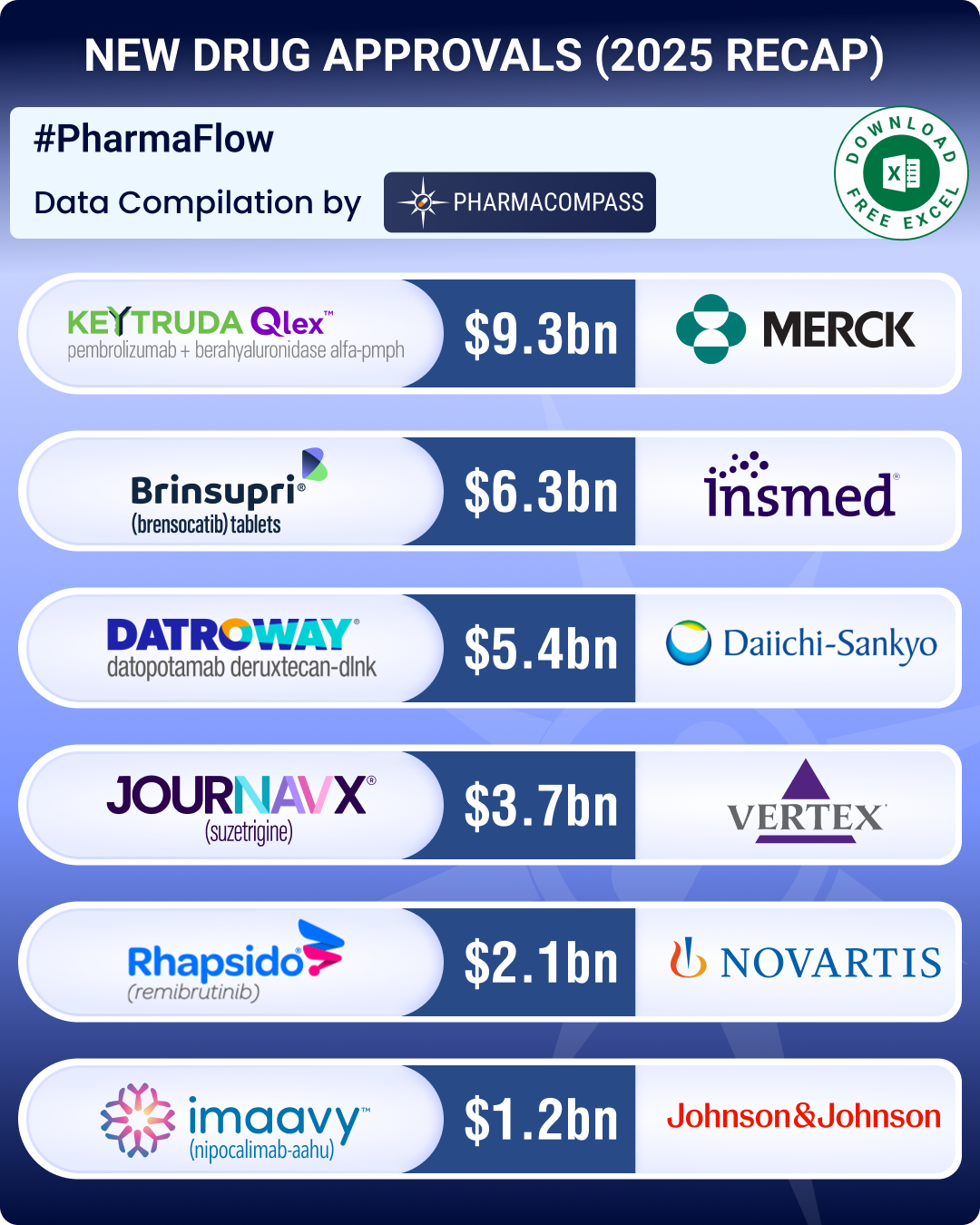
FDA approvals drop 8% in 2025, with fewer blockbusters; Brinsupri, Rhapsido make it to first-in-class list
Our update for new drug approvals by the US Food and Drug Administration (FDA) in the first half (H1) of 2025 had pointed out how upheavals at the agency had impacted its functioning, with drug approvals dropping by 24 percent. While the turbulence didn’t subside, approvals picked up considerably in the second half (H2) of 2025. FDA’s Center for Drug Evaluation and Research (CDER) approved 30 new drugs in H2 (as against 16 in H1), taking the total number of approvals for 2025 up to 46. This is an 8 percent drop compared with 50 approvals CDER had granted in 2024. During the year, CDER saw four new chiefs come and go — Jacqueline Corrigan-Curay (Jan-July 2025), George Tidmarsh (July-Nov 2025), Richard Pazdur (Nov-December 2025) and Tracy Beth Høeg (December 2025-present). In addition, the agency endured thousands of retrenchments. The US Department of Health and Human Services (HHS), under Health Secretary Robert F. Kennedy Jr., enforced funding cuts and changes in approval processes, especially for vaccines. Overall, we have been witnessing a steady drop in drug approvals by CDER — it approved 55 new drugs in 2023, 50 in 2024 and, 46 in 2025. Of the 46 new approvals in 2025, 20 were classified as first-in-class (therapies that use a new and unique mechanism of action), out of which 13 were approved in H2 2025. Overall, CDER approved 32 chemical entities and 14 biologics in 2025. In comparison, approvals by Health Canada and authorizations by the European Medicines Agency (EMA) rose in 2025. The EMA authorized 69 new therapies, up from 64 in 2024. Health Canada approved 46 new therapies in 2025, as compared with 28 in 2024. FDA’s Center for Biologics Evaluation and Research (CBER) approved 21 biologics in 2025, compared with 13 in 2024, of which eight were notable new drugs. Interestingly, both CDER and CBER rejected more drugs last year — 43 applications were rejected, including those for new drugs, supplemental filings, generics and biosimilars, as opposed to 29 in 2024.  View New Drug Approvals in 2025 with Estimated Sales (Free Excel Available) Blockbuster drug approvals drop by 60%, European drugmakers score more FDA nods  It wasn’t a year of blockbuster drug approvals — the agency approved a lower number of drugs that are expected to deliver sales of at least US$ 1 billion by 2030. While there were nearly 20 such drugs approved in 2024, the number dropped to just eight in 2025. Interestingly, European companies won many more approvals for new products than their counterparts in the US. GSK and Novartis achieved three approvals each, while Merck, Boehringer Ingelheim and Bayer AG won two approvals each. The first-in-class drugs approved in H2 are: Insmed's Brinsupri (brensocatib), Ionis's Dawnzera (donidalorsen), Stealth Bio's Forzinity (elamipretide), Boehringer's Jascayd (nerandomilast), UCB's Kygevvi (doxecitine and doxribtimine), Bayer's Lynkuet (elinzanetant), Chimerix's Modeyso (dordaviprone), Innoviva's Nuzolvence (zoliflodacin), Arrowhead's Redemplo (plozasiran), Novartis' Rhapsido (remibrutinib), Otsuka's Voyxact (sibeprenlimab-szsi), Sanofi's Wayrilz (rilzabrutinib) and Omeros' Yartemlea (narsoplimab-wuug). Insmed’s Brinsupri approved for chronic lung disease; Novartis’ Rhapsido okayed for urticaria As has been the trend, the field of oncology saw the maximum drug approvals (15), followed by rare diseases and disorders (7) and immunology (4). Three categories — infections and infectious diseases, respiratory diseases and cardiology/vascular diseases — saw three drug approvals each. Among the first-in-class approvals was Insmed’s Brinsupri (brensocatib), the first treatment for non-cystic fibrosis bronchiectasis, a chronic lung disease. Nature has estimated peak sales of US$ 6.3 billion for this treatment. Brinsupri was approved by the EMA in November. Another notable approval was granted to Novartis’ Rhapsido (remibrutinib), approved to treat the skin condition chronic spontaneous urticaria in adults who remain symptomatic despite treatment with antihistamines. Rhapsido is the first oral alternative to injectable treatments and has 2030 sales forecasts of US$ 2.1 billion. Novartis is also testing the drug for other immune conditions. A new drug that is estimated to bring in the maximum sales is Merck’s Keytruda Qlex, a subcutaneous formulation of pembrolizumab plus berahyaluronidase alfa approved for various solid tumors. While top-selling cancer drug Keytruda (pembrolizumab) was first approved in 2014, this is the first approval for an engineered variant of the hyaluronidase enzyme (berahyaluronidase alfa). Therefore, this combination counts as a novel approval. Fondazion’s CGT okayed for Wiskott-Aldrich syndrome; three drugs approved for hereditary angioedema  After a record nine new cell and gene therapy (CGT) approvals in 2024, only five CGTs were approved in 2025 (the lowest since 2022). With the exception of Novartis’ Itvisma (onasemnogene abeparvovec-brve), all other CGT approvals went to relatively lesser known companies such as Abeona, Precigen, Neurotech and Fondazione Telethon (an Italian firm that became the first nonprofit to get a CGT approval from the FDA). Fondazione Telethon’s Waskyra (etuvetidigene autotemcel) became the first gene therapy for Wiskott-Aldrich syndrome (WAS), a rare immune disorder that causes frequent infections, bleeding issues, and eczema. The one-time treatment uses patients’ own blood stem cells that are modified to restore the faulty WAS gene. Abeona’s Zevaskyntm (prademagene zamikeracel) became the first and only autologous cell sheet-based gene therapy indicated for the treatment of wounds in adult and pediatric patients with recessive dystrophic epidermolysis bullosa (a rare, genetic skin disorder). Patients with hereditary angioedema (or HAE, a genetic disorder characterized by recurrent episodes of severe swelling) gained access to three new drugs, including two first-in-class drugs — CSL Behring’s Andembry (garadacimab) and Ionis Pharma’s Dawnzera (donidalorsen). The third drug approved to treat HAE is KalVista Pharma’s Ekterly (sebetralstat). Our view The FDA has been bringing about considerable changes to its processes. In June, it launched the Commissioner’s National Priority Vouchers (CNPV) program to cut review timelines from the usual 10 to 12 months to two months. But the recent rejection of Disc Medicine’s application for bitopertin as a treatment for a rare blood disorder under the program took four months to materialize. Not only did the rejection come in late, it was based on information already known to the FDA at the time of granting the coveted voucher, raising controversy around the program. The agency is going to bring about more changes soon. It has proposed a plausible mechanism pathway for rare and ultra-rare diseases where randomized controlled trials are not feasible. And in April, it announced plans to phase out animal toxicity testing in the development of monoclonal antibody therapies and other drugs. The agency is increasingly relying on AI, and recently  announced the deployment of agentic AI capabilities for all employees. It will be interesting to see how these changes impact drug approvals in 2026.

Impressions: 2646

https://dev1.pharmacompass.com/radio-compass-blog/fda-approvals-drop-8-in-2025-with-fewer-blockbusters-brinsupri-rhapsido-make-it-to-first-in-class-list

#PharmaFlow by PHARMACOMPASS
26 Feb 2026

MARKET PERFORMANCE RECAP

1read-more
read-more
Pipeline Prospector October 2025: Novartis to buy Avidity for US$ 12 bn; FDA approves Bayer’s med to treat hot flashes
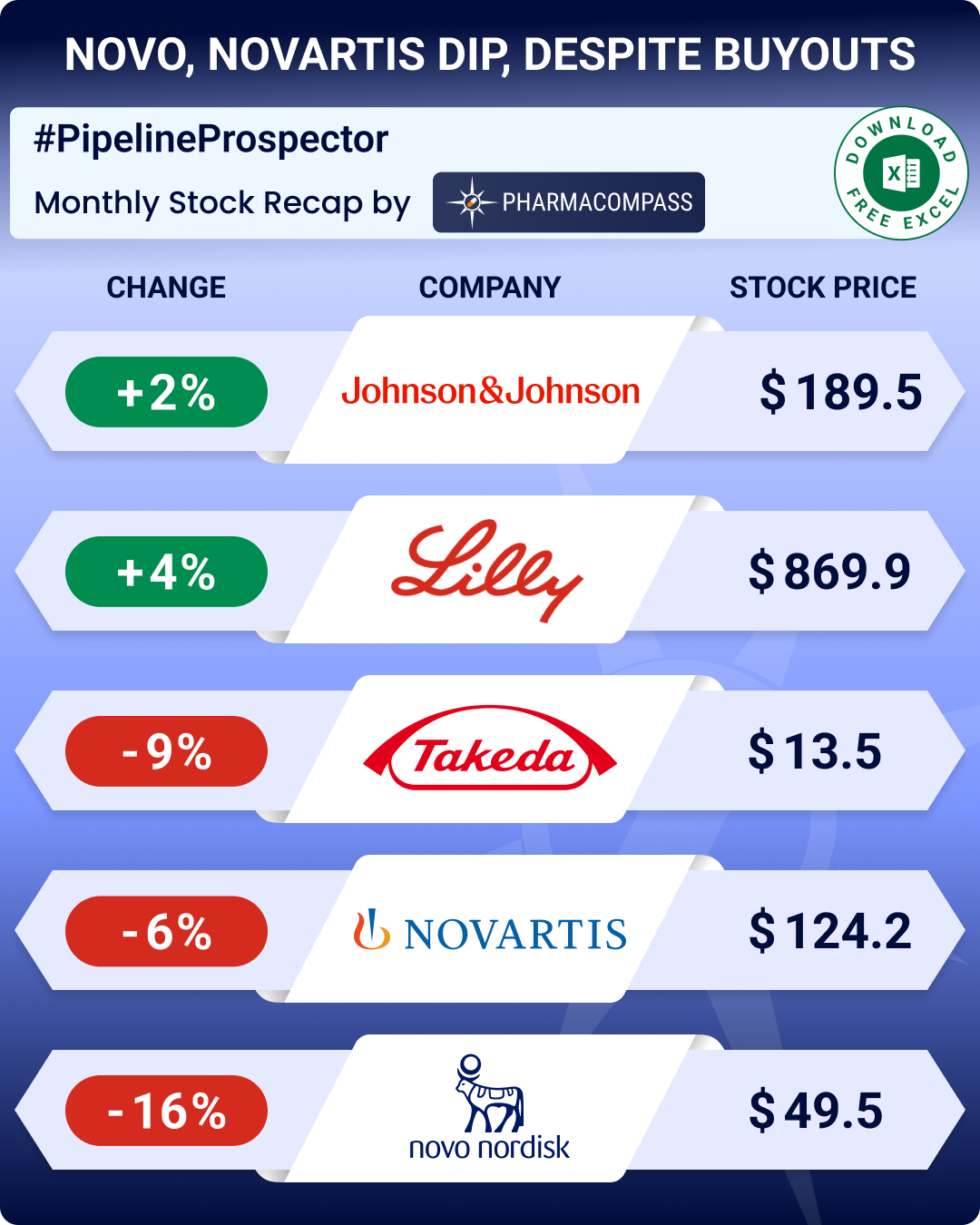
October was abuzz with dealmaking. Pharma majors such as Novartis, Novo Nordisk, and Bristol Myers Squibb (BMS) led the acquisition wave, targeting innovative platforms in rare muscle disorders, metabolic diseases, and next-generation cell therapy for autoimmune diseases. The US Food and Drug Administration (FDA) approved Bayer’s Lynkuet (elinzanetant) — the first-of-its-kind oral non-hormonal drug to treat moderate to severe hot flashes in menopausal women. The agency also expanded the indication for Teva Pharmaceuticals and Medincell’s schizophrenia drug received Uzedy (risperidone), allowing it to be used for the maintenance treatment of bipolar I disorder in adults. In clinical trials, companies such as Eli Lilly and AstraZeneca reported positive data, while Moderna and Alector announced late-stage trial setbacks. The pharma indices continued to march upwards. The Nasdaq Biotechnology Index (NBI) rose nine percent, climbing from 4,916.11 at the end of September to 5,366.46 in October, while the SPDR S&P Biotech ETF (XBI) gained 13 percent from 100.11 to 112.71. The S&P Biotechnology Select Industry Index (SPSIBI) also advanced 13 percent from 7,805.59 to 8,789.9.  Access the Pipeline Prospector Dashboard for October 2025 Newsmakers (Free Excel)  Novartis to acquire Avidity for US$ 12 bn; Novo in up to US$ 5.2 bn deal to buy Akero  The month saw several big M&A deals. Novartis entered into an agreement to acquire Avidity Biosciences for about US$ 12 billion in cash, in a bid to bolster its portfolio of treatments for rare muscle disorders. In September too, Novartis had struck four deals valued at over US$ 14 billion. Novo Nordisk announced it will acquire Akero Therapeutics, a San Francisco-based clinical-stage biotech, in a deal valued at up to US$ 5.2 billion. The agreement includes an upfront payment of US$ 4.7 billion, with additional milestone payments contingent on FDA approval of Akero’s lead candidate, efruxifermin, by mid-2031. Efruxifermin is being developed as a treatment for metabolic dysfunction-associated steatohepatitis (MASH), a serious liver disease. Bristol Myers Squibb announced the acquisition of privately-held biotech Orbital Therapeutics in a US$ 1.5 billion all-cash deal. Orbital is developing new generation, RNA-based medicines. France’s Ipsen announced the acquisition of ImCheck Therapeutics for up to €1 billion (approximately US$ 1.16 billion) to enhance its oncology pipeline. FDA approves Bayer’s non-hormonal drug to treat hot flashes in menopausal women; okays Teva’s Uzedy for bipolar I disorder October brought good news for menopausal women dealing with hot flashes. FDA approved Bayer’s Lynkuet (elinzanetant) — the first-of-its-kind oral non-hormonal drug to treat moderate to severe hot flashes in menopausal women. Teva Pharmaceuticals and Medincell received FDA’s approval for expanding the indication of Uzedy (risperidone). An injection of Uzedy can be administered once a month as a maintenance treatment of bipolar I disorder in adults. Uzedy was approved in 2023 for schizophrenia. FDA also expanded the approval of Novo Nordisk’s Rybelsus (semaglutide) for use in adults with type 2 diabetes to reduce the risk of major adverse cardiovascular events. Rybelsus, the first and only FDA-approved GLP-1 drug, was first approved in 2019. Meanwhile, Glaukos’ Epioxa (riboflavin 5'-phosphate) was cleared by the FDA for treating keratoconus, a rare, progressive eye disorder that thins and bulges the cornea. The non-surgical therapy offers an incision-free option for patients at risk of vision loss. FDA also approved Regeneron’s immunotherapy Libtayo (cemiplimab) to help prevent relapse in adults with high-risk cutaneous squamous cell carcinoma after surgery and radiation. Innovent, Takeda sign up to US$ 11.4 bn oncology deal; J&J to spin off its orthopedics business Innovent Biologics has signed a deal worth up to US$ 11.4 billion with Takeda Pharmaceutical to co-develop two next-generation cancer therapies. The collaboration covers an antibody-drug conjugate (ADC) and a fusion protein, targeting a range of solid tumors, including lung, colorectal, gastric, and pancreatic cancers. Takeda will hold commercialization rights for both therapies outside the US and Greater China, while the companies will jointly develop and commercialize one of the drugs, IBI363, in the US. Novo Nordisk has signed a deal worth up to US$ 2.1 billion with Omeros Corporation for rights to develop and commercialize zaltenibart (OMS906), Omeros’ experimental drug for rare blood and kidney disorders. The deal strengthens Novo Nordisk’s rare disease portfolio. Massachusetts-based Zenas BioPharma entered into a licensing agreement worth over US$ 2 billion with China’s InnoCare Pharma for orelabrutinib, an oral treatment for multiple sclerosis (a chronic disease in which the immune system attacks the brain and spinal cord).  And Johnson & Johnson announced it will spin off its orthopedics business, DePuy Synthes, into a separate company within 18 to 24 months. Besides these deals, the month saw several capacity expansions. Merck broke ground on a US$ 3 billion plant at its Elkton, Virginia campus, as part of a wider US$ 70 billion commitment to expand manufacturing, R&D, and capital projects in the US. Similarly, AstraZeneca announced a US$ 4.5 billion investment to build a state-of-the-art manufacturing facility in Virginia, as part of its US$ 50 billion investment plan for the US. Eli Lilly said it plans to invest over US$ 1 billion in India over the next few years to boost drug manufacturing and supply through partnerships with local producers. Lilly will also invest over US$ 1.2 billion to expand its manufacturing site in Puerto Rico. Lilly’s orforglipron scores trial wins in diabetes; Astra-Daiichi breast cancer med shows promise Eli Lilly’s oral GLP-1 drug orforglipron scored two major phase 3 wins in diabetes, outperforming AstraZeneca’s Farxiga (dapagliflozin) and a placebo in separate studies. In a phase 3 trial, AstraZeneca’s experimental drug baxdrostat significantly lowered blood pressure in patients with treatment-resistant hypertension. AstraZeneca and Daiichi Sankyo’s Datroway (datopotamab deruxtecan), an antibody-drug conjugate, significantly improved survival in patients with metastatic triple-negative breast cancer compared to chemotherapy in a phase 3 clinical trial. In trial failures, Moderna said it will stop developing its experimental vaccine, mRNA-1647, designed to prevent cytomegalovirus (CMV), a virus that can cause birth defects, after it failed to meet the main goal in a phase 3 trial. Similarly, Alector stopped developing its GSK-partnered experimental dementia drug, latozinemab, after it failed to help patients in a major phase 3 trial. Our view With drugs like Bayer’s Lynkuet bagging approval, we see both innovation and competition steering the pharma industry into 2026. Novo Nordisk’s US$ 8.5 billion bid to acquire US-based obesity biotech Metsera, surpassing Pfizer’s US$ 7.3 billion offer, underscores where much of the excitement lies — the rapidly expanding US$150 billion weight loss drugs market. The pharmaceutical industry seems to be on a high-speed treadmill, with no scope for sluggishness.

Impressions: 5892

https://dev1.pharmacompass.com/pipeline-prospector-blog/pipeline-prospector-october-2025-novartis-to-buy-avidity-for-us-12-bn-fda-approves-bayer-s-med-to-treat-hot-flashes

#PharmaFlow by PHARMACOMPASS
06 Nov 2025

WEEKLY INDUSTRY NEWS

2read-more
read-more
Pfizer, Novo escalate bidding war for obesity-drug developer Metsera; Kimberly-Clark to buy Kenvue for US$ 48.7 bn
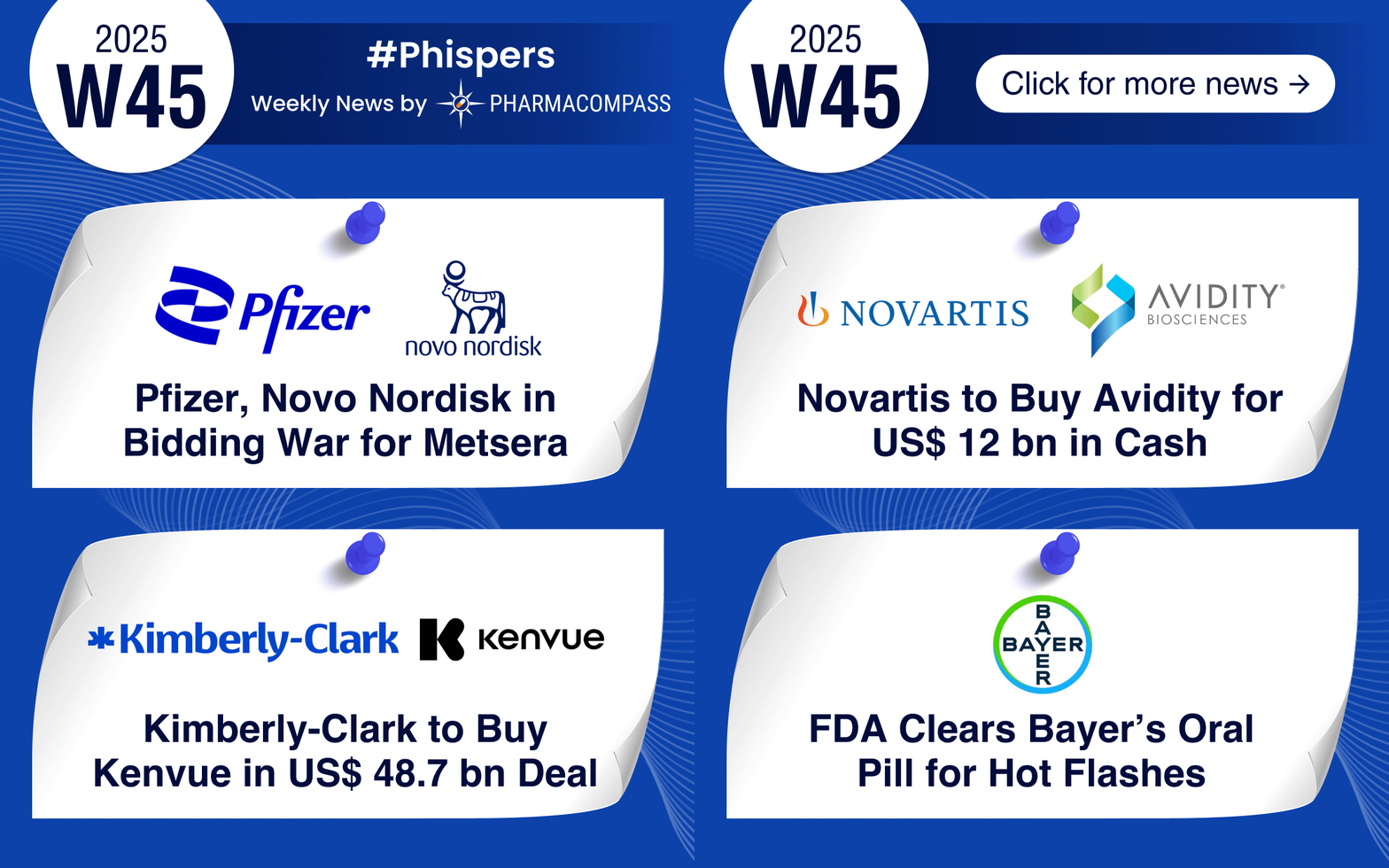
As we return from our one-week break due to the CPhI Worldwide, we find our double-dose Phispers edition to be filled with several large deals and key approvals by the US Food and Drug Administration (FDA).Pfizer and Novo Nordisk intensified their multi-billion-dollar bidding war for American biotech Metsera, the developer of next-generation obesity drugs. Kimberly-Clark announced one of the largest consumer health mergers in history with a US$ 48.7 billion acquisition of Kenvue, Johnson & Johnson’s former consumer health unit. In other deals, Novartis agreed to buy RNA-drug developer Avidity Biosciences for US$ 12 billion, and Roche signed two licensing agreements worth more than US$ 3 billion for brain and respiratory therapies.Eli Lilly pledged over US$ 4 billion to expand manufacturing capacity in Europe and Puerto Rico. FDA approved Lynkuet, Bayer’s non-hormonal therapy for menopause-related hot flashes. It also approved UCB’s first treatment for an ultra-rare mitochondrial disorder. However, the agency rejected Biohaven’s drug for a rare neurodegenerative disorder.Clinical setbacks continued to hit the gene therapy space as Sarepta and Intellia reported major trial failures. And Harmony Biosciences paused the development of its cannabidiol gel for a genetic condition after the drug failed a late-stage trial.Meanwhile, George Tidmarsh, FDA’s drug center chief, resigned amid a misconduct probe, adding to the existing leadership turmoil at the agency.Pfizer, Novo Nordisk escalate bidding war for obesity drug developer MetseraPfizer and Novo Nordisk have intensified their battle to acquire American biotech Metsera, a developer of obesity drugs. The fight escalated as both companies submitted higher bids, with Novo raising its offer to US$ 10 billion, which Metsera has deemed superior, and Pfizer increasing its own bid to US$ 8.1 billion from the original offer of US$ 7.3 billion. Pfizer has filed lawsuits against Metsera, its board, and Novo Nordisk, alleging that Metsera breached its earlier merger agreement and accused Novo of structuring its bid to block Pfizer’s entry into the fast-growing obesity market. A Delaware judge has, so far, declined to intervene but scheduled another hearing to review the bidding process.Kimberly-Clark to buy Kenvue in US$ 48.7 bn deal; Novartis to acquire Avidity for about US$ 12 bnKimberly-Clark has said it is acquiring Johnson & Johnson’s former consumer health unit, Kenvue, in a cash-and-stock deal valued at US$ 48.7 billion. The merger will create a global consumer health giant with expected annual revenue of about US$ 32 billion and a portfolio of 10 billion-dollar brands, including Tylenol (acetaminophen), Neutrogena, Aveeno and Listerine.Novartis to acquire Avidity: Swiss drugmaker Novartis has announced the acquisition of US-based Avidity Biosciences for about US$ 12 billion in cash to expand its treatments for rare muscle disorders. Avidity, based in San Diego, is developing RNA-based drugs that target the root cause of severe muscle diseases such as Duchenne muscular dystrophy. As part of the deal, Avidity will spin off its early-stage cardiology drug programs into a new publicly-traded company called SpinCo.Roche pledges over US$ 3 bn in two licensing deals for brain, respiratory drugsRoche has announced two major licensing agreements worth a total of over US$ 3 billion. First, the Swiss drugmaker signed a research and licensing deal with US biotech Manifold Bio worth over US$ 2 billion to develop new methods for delivering drugs to the brain, building on its 15 years of work in brain drug delivery. Second, Roche entered a deal worth more than US$ 1 billion with Shanghai-based Qyuns Therapeutics for global rights to QX031N, a bispecific antibody in development to treat asthma and chronic obstructive pulmonary disease (COPD).Eli Lilly to invest US$ 4.2 bn in Europe, Puerto Rico to expand manufacturingEli Lilly will invest US$ 3 billion to build an oral medicines manufacturing site in Katwijk, the Netherlands, thereby boosting capacity for its experimental GLP-1 pill, orforglipron, and creating 500 jobs. The company will also spend over US$ 1.2 billion to expand its Puerto Rico facility, supporting production of heart disease, diabetes, cancer and immune disorder drugs.FDA drug center chief resigns: George Tidmarsh stepped down from the post of head, FDA drug center, after federal officials began reviewing serious concerns about his personal conduct. The move followed a lawsuit by Aurinia Pharmaceuticals, which accused Tidmarsh of using his FDA role to pursue a personal vendetta against its board chair, Kevin Tang.FDA approves Bayer’s non-hormonal med to treat menopause-related hot flashesFDA has approved Bayer’s Lynkuet (elinzanetant), the first-of-its-kind oral non-hormonal drug to treat moderate to severe hot flashes and night sweats experienced by menopausal women. The approval is based on late-stage studies showing a rapid and sustained reduction in these symptoms.Okays UCB’s treatment for rare disorder: FDA has approved UCB’s Kygevvi (doxecitine and doxribtimine), marking the first treatment for thymidine kinase 2 deficiency (TK2d), one of the world’s rarest mitochondrial diseases. TK2d is caused by a genetic defect that prevents cells from repairing mitochondrial DNA, leading to progressive muscle weakness and, in many cases, respiratory failure.Sarepta’s muscular dystrophy drug fails late-stage trial; FDA rejects Biohaven’s drugSarepta Therapeutics said its late-stage trial of two gene-targeted therapies, casimersen and golodirsen, for Duchenne muscular dystrophy failed to meet the main goal of improving patients’ ability to climb stairs. Following the announcement, Sarepta’s shares fell over 37 percent in extended trading.FDA rejects Biohaven’s rare disorder drug: FDA has rejected Biohaven’s application for Vyglxia (troriluzole), an oral small-molecule drug for spinocerebellar ataxia (SCA), citing bias and design flaws in the company’s real-world, evidence-based submission. SCA is a rare neurodegenerative disorder that impairs coordination and balance and currently has no approved treatments.Harmony pauses cannabidiol gel program: Harmony Biosciences has paused development of its cannabidiol gel, ZYN002, after the treatment failed a late-stage trial in fragile X syndrome, a genetic condition that causes developmental and intellectual disabilities. The company said it will review the full results of the study before deciding whether to continue testing the drug in another genetic disorder. Harmony picked up ZYN002 last year through its acquisition of US-based Zynerba Pharmaceuticals.FDA pauses Intellia’s late-stage trials: FDA has paused two phase 3 studies of Intellia Therapeutics’ experimental gene-editing therapy after a patient developed serious liver problems. The treatment, known as nexiguran ziclumeran, was being tested for transthyretin amyloidosis, a rare disease that damages the heart and nerves.

Impressions: 1558

https://dev1.pharmacompass.com/radio-compass-phisper/pfizer-novo-escalate-bidding-war-for-obesity-drug-developer-metsera-kimberly-clark-to-buy-kenvue-for-us-48-7-bn

#Phispers by PHARMACOMPASS
06 Nov 2025

NEWS LIBRARY

30read-more
read-more

https://www.businesswire.com/news/home/20261026682997/en/Bayer-Shares-New-Post-Hoc-Analysis-Of-Self-Reported-Sleep-Related-Outcomes-with-Lynkuet-elinzanetant-in-Women-with-Moderate-to-Severe-Vasomotor-Symptoms-at-the-Menopause-Society-Annual-Meeting

BUSINESSWIRE
26 Oct 2026

https://www.bayer.com/en/ca/lynkuet-receives-expanded-market-authorization-in-canada

PRESS RELEASE
17 Aug 2026

https://www.fiercepharma.com/marketing/bayer-taps-gabrielle-union-wade-face-menopause-med-lynkuet

FIERCE PHARMA
14 Jan 2026

https://www.businesswire.com/news/home/20260109371123/en/Actress-and-Menopause-Advocate-Gabrielle-Union-Wade-Partners-with-Bayer-in-the-Lynkuet-elinzanetant-Life-Doesnt-Stop-for-a-Hot-Flash-Campaign-for-Moderate-to-Severe-Hot-Flashes-Due-to-Menopause

BUSINESSWIRE
13 Jan 2026

https://www.ema.europa.eu/en/documents/overview/lynkuet-epar-medicine-overview_en.pdf

EMA
17 Nov 2025

https://www.businesswire.com/news/home/20251017138908/en/Bayers-Lynkuet-elinzanetant-the-First-and-Only-Neurokinin-1-and-Neurokinin-3-Receptor-Antagonist-Receives-FDA-Approval-for-Moderate-to-Severe-Hot-Flashes-Due-to-Menopause

BUSINESSWIRE
25 Oct 2025
digital-content16063568##p