Please Wait
Applying Filters...
Menu

Digital Content read-more

Create Content with PharmaCompass, ask us

PHARMA & BIOTECH INSIGHTS

4read-more
read-more

A PHP Error was encountered

Severity: 8192

Message: mb_convert_encoding(): Handling HTML entities via mbstring is deprecated; use htmlspecialchars, htmlentities, or mb_encode_numericentity/mb_decode_numericentity instead

Filename: blog/grid.php

Line Number: 52

Backtrace:

File: /var/www/html/application/views/include/media/blog/grid.php
Line: 52
Function: mb_convert_encoding

File: /var/www/html/application/models/Cmn.php
Line: 3595
Function: view

File: /var/www/html/application/views/include/product/digitalContent/grid.php
Line: 17
Function: common

File: /var/www/html/application/views/include/desc/inner.php
Line: 13
Function: view

File: /var/www/html/application/views/include/desc/indexNew.php
Line: 2433
Function: include

File: /var/www/html/application/controllers/Common.php
Line: 11303
Function: view

File: /var/www/html/index.php
Line: 231
Function: require_once

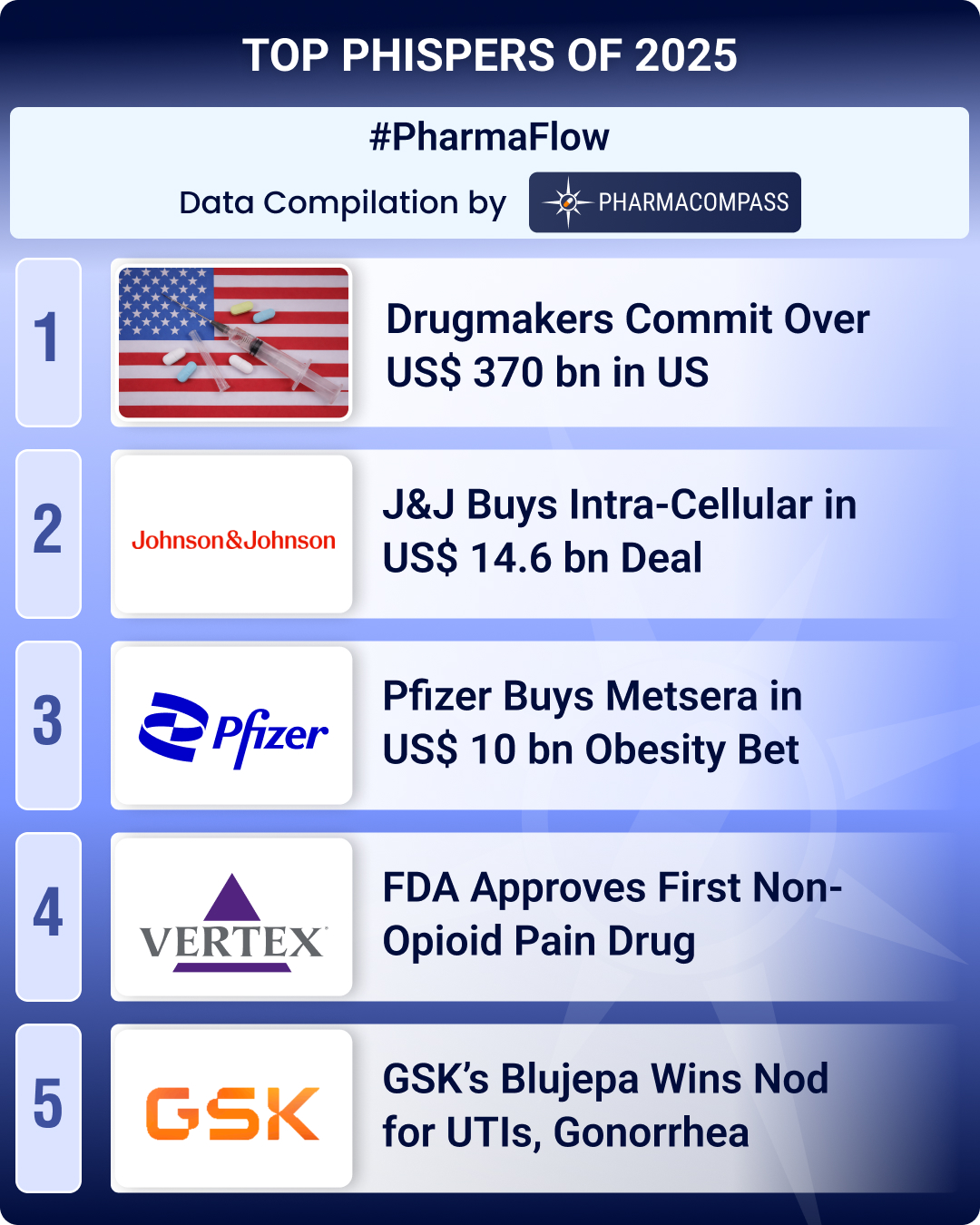
Top news of 2025: Drugmakers invest in US capacities, agree to lower Medicaid prices; Pfizer buys obesity-focused biotech Metsera
The year 2025 was an eventful one, marked by increased trade tensions, tariff threats, accelerated adoption of artificial intelligence (AI) in drug development, and an intensified race for next-gen obesity treatments. Major drugmakers pledged substantial investments in the US to mitigate potential tariffs. By the year-end, the Trump Administration announced deals with several drugmakers to lower prices for its Medicaid program and for cash payers. The year also saw significant changes at the US Food and Drug Administration (FDA), including high-profile leadership changes and workforce reductions. The agency rolled out advanced AI systems — known as agentic AI — to help its staff achieve specific goals. Several large mergers and acquisitions also shaped 2025. Pfizer bought obesity-focused biopharma Metsera for US$ 10 billion and Johnson & Johnson acquired Intra-Cellular for US$ 14.6 billion. Vertex Pharmaceuticals introduced a new, non-opioid painkiller, Journavx (suzetrigine), and GSK launched Blujepa (gepotidacin) which is now approved for treating uncomplicated urinary tract infections (uUTIs) and gonorrhea. Here are the top stories that made it to PharmaCompass’ top 10 Phispers of 2025. I. Drugmakers pledge over US$ 370 bn in building US capacities; lower Medicaid prices  From the outset, 2025 was defined by tariff threats and trade tensions as the US government signaled potential steep tariffs on imported branded drugs. To mitigate the impact of potential tariffs, multinational drugmakers announced sizable investments in the US Eli Lilly has announced a US$ 27 billion investment, followed by Johnson & Johnson (US$ 55 billion), Novartis (US$ 23 billion), Roche (US$ 50 billion), Bristol Myers Squibb (US$ 40 billion), AstraZeneca (US$ 50 billion), and GSK (US$ 30 billion). A Wall Street Journal report dated September 16 states that drugmakers have pledged more than US$ 370 billion in US investments due to tariff threats, while ThinkGlobalHealth estimates this number at over US$ 480 billion. On September 30, Pfizer struck a US$ 70 billion deal with the US government to lower Medicaid drug prices and expand domestic manufacturing. And in December, US President Donald Trump and nine major drugmakers announced agreements to lower medicine prices for the government’s Medicaid program and for cash payers. These prices will be in line with the lowest prices paid by other developed nations (known as the ‘most-favored-nation’ pricing). II.  Pfizer doubles down on obesity market, buys Metsera for US$ 10 bn, inks deal with YaoPharma Pfizer aggressively pursued the booming obesity market. In November, Pfizer completed the US$ 10 billion (approximately) acquisition of Metsera, a clinical-stage biopharma focused on drugs for obesity and cardiometabolic diseases, after winning a bidding war against Novo Nordisk. The following month, Pfizer signed a deal worth up to US$ 2.1 billion with China’s YaoPharma, a subsidiary of Shanghai Fosun Pharmaceutical, to develop and commercialize an experimental GLP-1 weight-loss drug — YP05002. III.  FDA approves Vertex’s non-opioid painkiller that blocks acute pain at source FDA approved Vertex Pharmaceuticals’ non-opioid painkiller, Journavx (suzetrigine), for the treatment of moderate-to-severe acute pain in adults. This represents the first new class of pain medication in over two decades, and offers an alternative to opioid analgesics. IV. GSK’s Blujepa approved for treating uncomplicated UTIs; also okayed for gonorrhea In March 2025, FDA approved GSK’s antibiotic, Blujepa (gepotidacin), for the treatment of uncomplicated urinary tract infections (uUTIs) in female patients aged 12 years and older who weigh at least 40 kg. This marked the first approval of a new class of        for uUTIs in nearly 30 years. In December, FDA expanded Blujepa’s label to include treatment for gonorrhea, a sexually transmitted disease. V. J&J acquires neuroscience biotech Intra-Cellular for US$ 14.6 billion Johnson & Johnson kicked off 2025 with the US$ 14.6 billion acquisition of Intra-Cellular Therapies, strengthening its neuroscience portfolio. Intra-Cellular’s Caplyta (lumateperone) is a once-daily oral therapy approved for treating adults with schizophrenia and depressive episodes associated with bipolar I or II disorder. VI. Changes at FDA: A year marked by high-profile resignations, rollout of agentic AI FDA experienced significant organizational changes in 2025, including senior leadership departures, amid the Trump administration’s policy shifts. Approximately 3,500 FDA staff were slated for layoffs beginning in April, raising concerns about the agency's review systems. Health and Human Services (HHS) secretary Robert F Kennedy Jr’s anti-vaccine stance led to internal tensions, controversies and departures of senior vaccine officials. The agency is transforming itself  — in December, it announced the deployment of agentic AI capabilities for all its employees. Agentic AI refers to advanced AI systems designed to achieve specific goals by planning, reasoning, and executing multi-step actions. VII. Sanofi-Alnylam’s Qfitlia becomes first approved RNAi med for hemophilia A, B FDA approved Qfitlia (fitusiran) — the first RNA interface (RNAi) therapeutic for treating rare bleeding disorders hemophilia A and B. Developed through a collaboration between Sanofi and Alnylam Pharmaceuticals, Qfitlia is indicated for routine prophylaxis to prevent or reduce bleeding episodes in hemophilia patients aged 12 and older. VIII. Astra-Daiichi Sankyo’s Datroway bags FDA nod for treating advanced lung, breast cancer AstraZeneca and Daiichi Sankyo’s precision drug Datroway (datopotamab deruxtecan) won two key approvals in 2025. In January, Datroway received FDA approval for the treatment of adult patients with unresectable or metastatic hormone receptor (HR)-positive, HER2-negative breast cancer. And in June, it bagged accelerated approval for the treatment of an advanced form of non-small cell lung cancer in adults who had received prior treatment. IX. Novartis continues to forge deals; inks US$ 12 bn deal with Avidity, US$ 2 bn deal with Arrowhead Following active deal-making in 2024, Novartis continued to make strategic acquisitions in 2025. It acquired US-based Avidity Biosciences for approximately US$ 12 billion to expand its rare muscle disorders portfolio. As part of the deal, Avidity will spin off its early-stage cardiology drug programs into a new publicly-traded company called SpinCo. Novartis also signed a licensing and options deal with China-based Argo Biopharmaceuticals worth up to US$ 5.2 billion for experimental cardiovascular drug candidates, and a US$ 2 billion licensing and collaboration agreement with Arrowhead Pharmaceuticals for its preclinical neurodegenerative disease candidate. Novartis also agreed to buy Anthos Therapeutics, a drug development company majority-owned by investment firm Blackstone, for up to US$ 3.1 billion. X. Merck acquires Verona for US$ 10 billion; inks US$ 9.2 billion deal to buy Cidara Merck acquired London‑based Verona Pharma for approximately US$ 10 billion as part of its strategy to diversify ahead of the 2028 patent expiration of its cancer blockbuster, Keytruda (pembrolizumab). Merck also agreed to acquire Cidara Therapeutics in a deal valued at approximately US$ 9.2 billion, strengthening its infectious disease portfolio.   

Impressions: 4716

https://dev1.pharmacompass.com/radio-compass-blog/top-news-of-2025-drugmakers-invest-in-us-capacities-agree-to-lower-medicaid-prices-pfizer-buys-obesity-focused-biotech-metsera

#Phispers by PHARMACOMPASS
01 Jan 2026

MARKET PERFORMANCE RECAP

1read-more
read-more
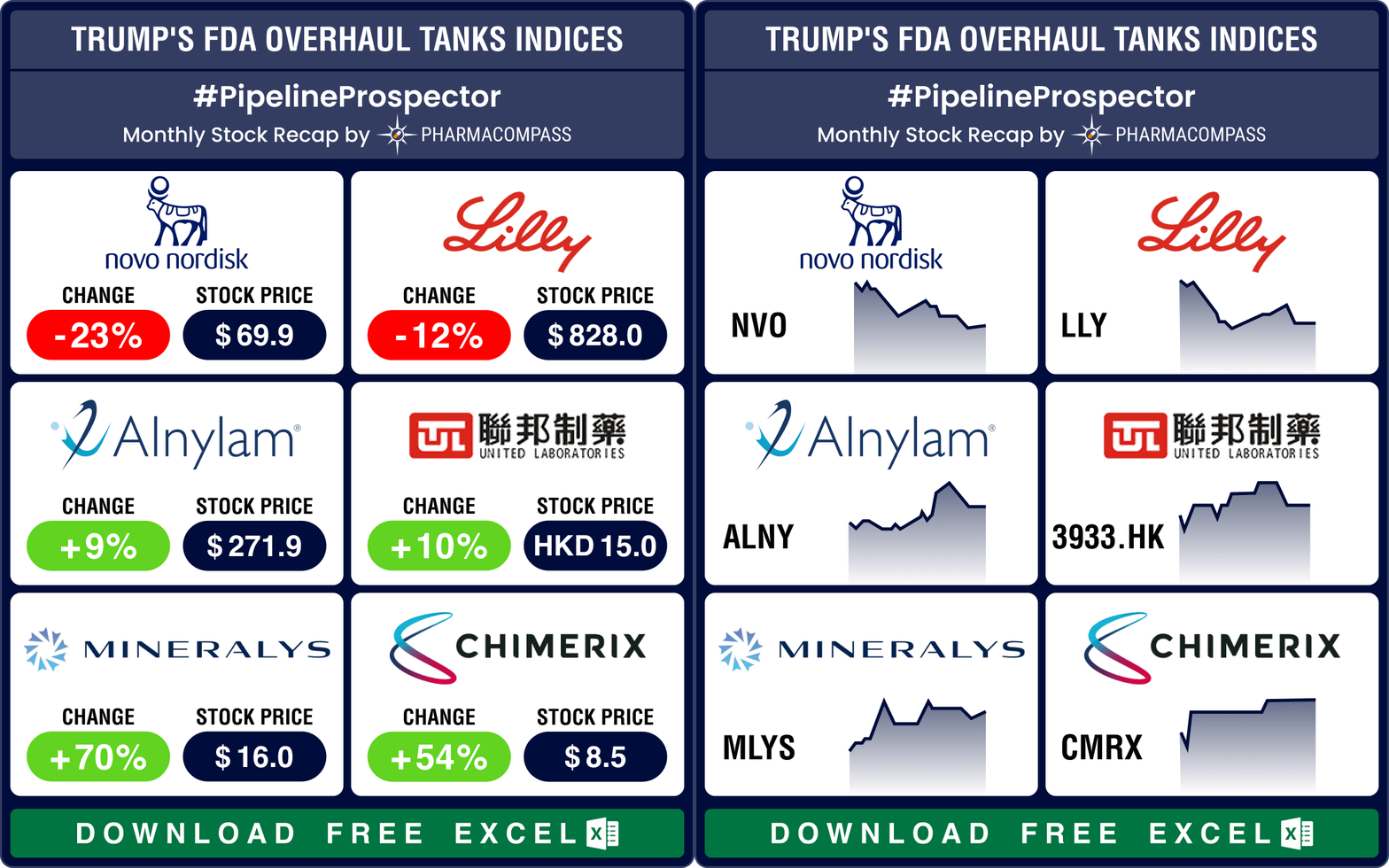
Pipeline Prospector March 2025: Trump’s FDA overhaul spooks biotech stocks; Roche, AbbVie, Novo ink obesity drug deals
March ended with news that the top vaccine regulator of the US Food and Drug Administration (FDA), Peter Marks, was forced to resign. This impacted pharma indices adversely. The Nasdaq Biotechnology Index (NBI) dropped 6.22 percent from 4,525.73 in February to 4,244.37 in March. The SPDR S&P Biotech ETF (XBI) fell 8.61 percent from 88.74 to 81.10, and the S&P Biotechnology Select Industry Index (SPSIBI) declined 8.61 percent from 6,914.8 to 6,319.5. The sector has been under pressure ever since US President Donald Trump announced plans to impose potential 25 percent tariffs on pharmaceutical imports. Just last week, Johnson & Johnson committed US$ 55 billion to set up four new manufacturing plants in the US. J&J’s announcement follows Eli Lilly’s US$ 27 billion US investment pledge announced in February. Merck too is deepening its domestic footprint with the inauguration of a new US$ 1 billion, 225,000-square-foot vaccine manufacturing facility in Durham, North Carolina, as part of its broader US $20 billion US investment strategy spanning 2018 to 2028. Trump’s trade policy is also driving corporate decisions. In an opportunistic maneuver, Mallinckrodt and Endo — both emerging from bankruptcy due to opioid litigation — decided to merge via a US$ 6.7 billion deal that strategically leverages their extensive US manufacturing capabilities. The new company will focus on branded drugs, and hopes to benefit from tariffs on imported goods.   Access the Pipeline Prospector Dashboard for March 2025 Newsmakers (Free Excel)   Roche, AbbVie ink US$ 5.3 bn, US$ 2.2 bn deals for amylin-based obesity treatments; AstraZeneca strikes multiple deals  March saw competition in the obesity treatment market intensify with multiple pharmaceutical giants making strategic moves. The month witnessed a rise in interest in amylin-based treatments. Amylin is a peptide hormone that plays a role in regulating blood sugar and appetite. The amylin pathway has the potential advantage of reducing fat rather than lean muscle. Roche signed a US$ 5.3 billion agreement with Zealand Pharma for petrelintide, a promising long-acting amylin analog administered weekly through a subcutaneous injection. Zealand will receive an upfront payment of US$ 1.65 billion from Roche.  AbbVie marked its entry into the lucrative obesity market through an up to US$ 2.23 billion licensing agreement with Danish biotech firm Gubra for GUB014295, another amylin-targeting drug. Towards the end of the month, Novo Nordisk announced a US$ 1 billion licensing deal with Lexicon Pharmaceuticals for the latter’s experimental obesity drug. Under the terms of the deal, Novo will get worldwide rights to develop, manufacture and commercialize the drug, LX9851, for obesity and associated metabolic disorders. Novo also secured ex-China rights to United Laboratories International Holdings’ UBT251 in a deal worth up to US$ 2 billion. This is a "triple-G" drug that targets three receptors — GLP-1, GIP, and glucagon — involved in regulating blood sugar and appetite. Similarly, Merck entered into a US$ 2 billion-worth agreement with Jiangsu Hengrui Pharmaceuticals for HRS-5346, an oral drug targeting lipoprotein(a) reduction to prevent cardiovascular diseases. In immunology, Sanofi’s US$ 1.9 billion acquisition of Dren Bio’s immunology unit centered around DR-0201, a novel treatment for autoimmune diseases that targets specific immune cells (B-cells) that mistakenly attack healthy cells. Early clinical studies suggest this approach could potentially reset the adaptive immune system, offering sustained remission for patients with refractory conditions like lupus. AstraZeneca has been particularly active this month. Astra announced a US$ 1 billion acquisition of Belgian cell therapy biotech EsoBiotec and a US$ 1.35 billion agreement with Alteogen to develop subcutaneous formulations of its oncology drugs. The acquisition brings AstraZeneca the innovative ENaBL platform, which could transform cell therapy by reducing treatment times from weeks to minutes while significantly lowering manufacturing costs. The British-Swedish drugmaker also announced collaborations with Chinese biotech firms, Harbour BioMed and Syneron Bio, as well as a joint venture with BioKangtai to develop, produce, and market vaccines for respiratory and other infectious diseases. Oncology-focused biopharma Chimerix got acquired by Jazz Pharmaceuticals for US$ 935 million. Its lead candidate dordaviprone is currently under FDA review for treating H3 K27M-mutant diffuse glioma, a rare brain tumor. GSK’s Blujepa, Roche’s TNKase mark first breakthroughs in 30 years for uUTI, acute ischemic stroke treatments The month saw two key FDA approvals — GSK’s Blujepa and Roche’s TNKase. GSK’s Blujepa (gepotidacin) is the first new class of oral antibiotics for uncomplicated urinary tract infections (uUTIs) in nearly three decades. The drug, approved for the treatment of uUTIs in female adults and patients aged 12 years and older who weigh at least 40 kg, has a novel mechanism of action that offers hope against certain antibiotic-resistant strains. Similarly, the US approval of Roche’s TNKase (tenecteplase) for acute ischemic stroke marks the first new treatment option for stroke patients in nearly 30 years. Its five-second administration offers a critical advantage in time-sensitive stroke management. Sanofi and Alnylam’s RNAi therapy Qfitlia (fitusiran) became the first approved treatment for both hemophilia A and B. And Novartis’ prostate cancer drug Pluvicto won an expanded approval to treat PSMA-positive metastatic castration-resistant prostate cancer (mCRPC) before taxane-based chemotherapy. Alnylam Pharmaceuticals (stock up 9 percent in March) secured FDA approval for Amvuttra (vutrisiran) to treat cardiomyopathy of wild-type or hereditary ATTR-CM, making it the first medication approved in the US to address both ATTR-CM and polyneuropathy of hereditary transthyretin-mediated amyloidosis. Novo’s CagriSema underwhelms in late-stage trial; J&J’s med fails, serving another blow to depression treatment March also saw several high-profile clinical disappointments. Novo Nordisk’s (stock down 23 percent) CagriSema (cagrilintide/semaglutide) delivered underwhelming results in its second late-stage obesity trial. While the drug demonstrated superior weight loss compared to Wegovy, showing 13.7 percent average weight reduction over 68 weeks, market expectations for a breakthrough superior to rival Eli Lilly’s Mounjaro (tirzepatide) were not met. The neurology segment continued to see disappointments, especially in the treatment of depression. J&J’s aticaprant failed in late-stage depression studies for major depressive disorder (MDD), forcing the company to abandon its development for this indication. The disappointing results come on the heels of similar setbacks within the same drug class, most notably with Neumora Therapeutics’ navacaprant. Our view The pharmaceutical landscape has been undergoing dramatic changes since Trump moved into the White House for a second term. The most significant change for the sector is FDA’s overhaul. For decades, FDA has been the gold standard for drug regulation. The overhaul has changed that.“The FDA as we’ve known it is finished,” former FDA Commissioner Robert Califf said in a social media post. Healthcare investment bankers are already talking about large deals getting stalled as executives grapple with the volatile policy scenario. Given these uncertainties, our sentiments are bearish, at least for the short term.

Impressions: 5769

https://dev1.pharmacompass.com/pipeline-prospector-blog/pipeline-prospector-march-2025-trump-s-fda-overhaul-spooks-biotech-stocks-roche-abbvie-novo-ink-obesity-drug-deals

#PharmaFlow by PHARMACOMPASS
03 Apr 2025

WEEKLY INDUSTRY NEWS

1read-more
read-more
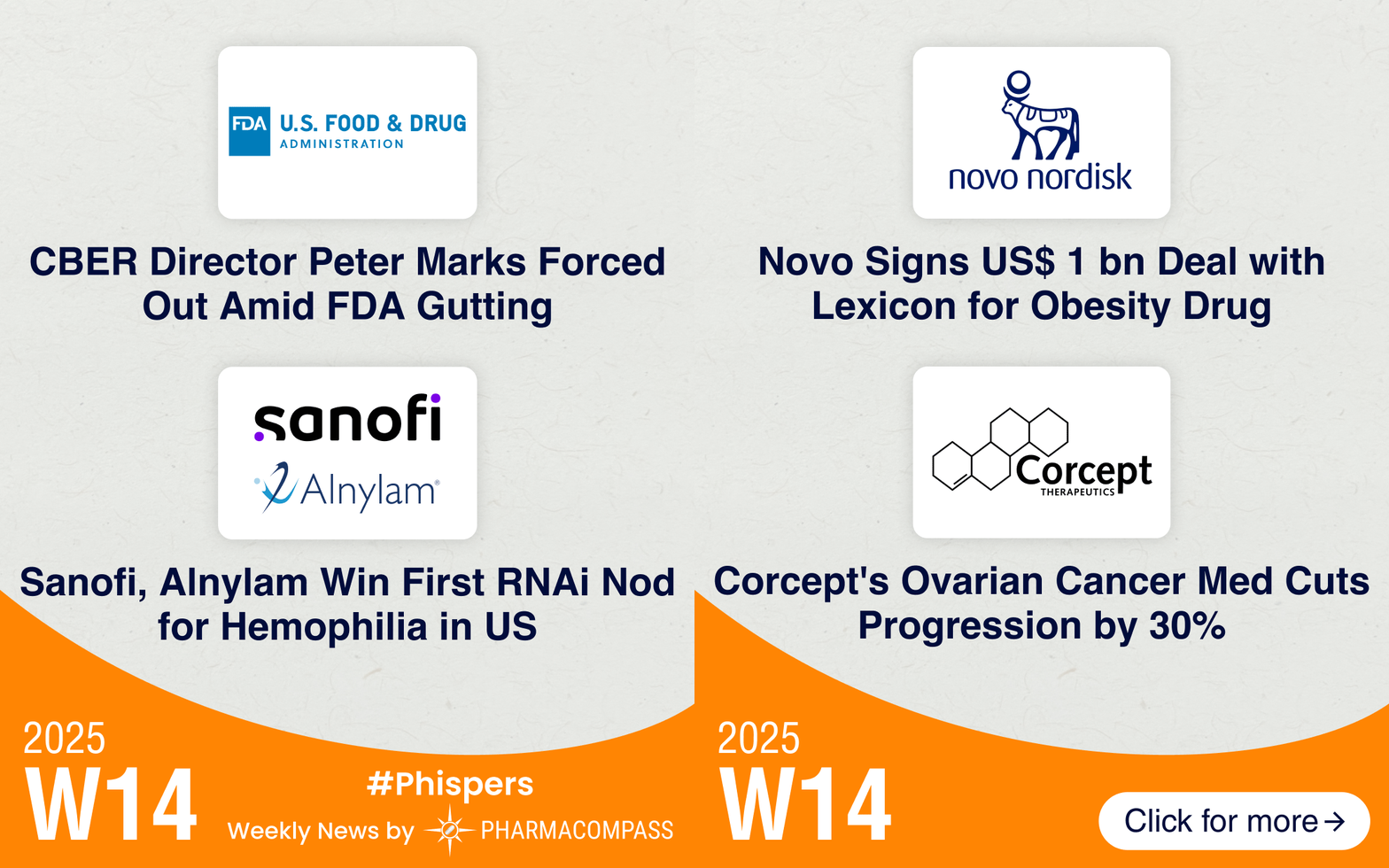
CBER director forced out in FDA gutting; Sanofi, Alnylam’s RNAi therapy Qfitlia wins US approval for hemophilia A, B
The pharma industry saw its most tumultuous week in the recent past with the US Food and Drug Administration (FDA) facing an unprecedented crisis. The Trump administration’s health agency purge has left the FDA in disarray, with the Center for Biologics Evaluation and Research (CBER) Director Peter Marks forced out and mass firings causing what former commissioner Robert Califf called the end of “FDA as we've known it.”Meanwhile, Sanofi and Alnylam celebrated a significant milestone with the FDA approving Qfitlia, the first RNA interference (RNAi) therapeutic for hemophilia A and B. While Qfitlia is the seventh hemophilia therapy to get US approval in the last three years, it is the only one indicated for both hemophilia A and B.Novo Nordisk inked a deal in the obesity space for the second week in a row. Novo secured a US$ 1 billion deal with Lexicon Pharmaceuticals for its experimental oral obesity drug LX9851, which has shown promising results when combined with Novo’s glucagon-like peptide-1 (GLP-1) agonist semaglutide.Novartis received expanded FDA approval for its prostate cancer therapy Pluvicto, now available for pre-chemotherapy use. In other regulatory news, Bavarian Nordic’s freeze-dried formulation of the Jynneos vaccine for smallpox and mpox received FDA approval, offering advantages in transportation and long-term stockpiling.There were mixed results from clinical trials. Corcept Therapeutics reported a 30 percent reduction in disease progression risk for platinum-resistant ovarian cancer with its investigational drug relacorilant, while Merck’s Winrevair demonstrated a remarkable 76 percent reduction in mortality and morbidity risks for pulmonary arterial hypertension patients. However, Axsome Therapeutics announced plans to narrow its late-stage trial of Sunosi for major depressive disorder after the drug failed to meet its primary endpoint.FDA leadership gutted: CBER chief forced to quit; officials find badges deactivated in mass firingIn a seismic shake-up at the FDA, Peter Marks, the director of the CBER, has been ousted from his position. This move comes amid escalating tensions between Marks and Health and Human Services (HHS) Secretary Robert F. Kennedy Jr.RFK Jr’s controversial stance on vaccines has roiled the public health community. Marks said in his resignation letter: “It has become clear that truth and transparency are not desired by the Secretary, but rather he wishes subservient confirmation of his misinformation and lies.” Another high-profile ouster at FDA is that of Hilary Marston, the agency’s chief medical officer.These exits are accompanied by mass layoffs across federal health agencies, with 10,000 planned job cuts underway. It turned out to be a no April Fools’ joke when FDA employees turned up to work on April 1, only to find their badges didn’t work because they no longer had a job. Former FDA Commissioner Robert Califf decried the move, saying, “FDA as we’ve known it is finished…”The resignations and layoffs are beginning to impact the working of the agency. On Wednesday, Novavax announced that FDA had missed its deadline for making a decision on the traditional approval for its Covid-19 vaccine. Moreover, these layoffs are happening at a time when the US is dealing with a measles outbreak. The World Health Organization has issued a travel advisory and has urged people to ensure their vaccinations are up to date before traveling to the US.Meanwhile, Tracy Beth Hoeg, a sports medicine physician who opposed key US health policies during the pandemic and questioned the use of some childhood vaccines, is now special assistant to FDA chief Martin Makary.Sanofi-Alnylam’s Ofitlia bags FDA nod; becomes first RNAi med for hemophilia A, BFDA has approved Qfitlia (fitusiran), marking the first RNAi therapeutic for the treatment of hemophilia A and B. Developed through a collaboration between Sanofi and Alnylam Pharmaceuticals, Qfitlia is indicated for routine prophylaxis to prevent or reduce bleeding episodes in hemophilia patients aged 12 and older.Qfitlia is a subcutaneous therapy administered every two months, offering a less frequent dosing schedule compared to existing treatments such as Pfizer’s weekly injection Hympavzi (marstacimab-hncq) and Novo Nordisk's daily Alhemo (concizumab-mtci).Novo inks US$ 1 bn deal with Lexicon for new type of oral obesity drugNovo Nordisk has entered into an exclusive licensing agreement with Lexicon Pharmaceuticals to develop, manufacture, and commercialize Lexicon’s experimental obesity drug, LX9851. The deal includes upfront and near-term milestone payments of up to US$ 75 million made by Novo to Lexicon, with the total potential value reaching approximately US$ 1 billion. LX9851 is an oral medication that targets the Acyl-CoA Synthetase 5 (ACSL5) protein, which plays a significant role in fat accumulation and energy balance.Novartis’ prostate cancer med Pluvicto wins expanded FDA nod for pre-chemo useFDA has expanded the approved use of Novartis’ radioligand therapy, Pluvicto (lutetium Lu 177 vipivotide tetraxetan), for the treatment of prostate-specific membrane antigen (PSMA)-positive metastatic castration-resistant prostate cancer (mCRPC). This approval allows Pluvicto to be used earlier in the treatment process, prior to taxane-based chemotherapy.Freeze-dried version of Bavarian’s Jynneos okayed: FDA has approved a freeze-dried formulation of Bavarian Nordic’s Jynneos vaccine for the prevention of smallpox and mpox (formerly known as monkeypox) in adults aged 18 and older. This new formulation offers advantages in transportation, storage conditions, and shelf life, making it more suitable for long-term stockpiling compared to the liquid-frozen version.Corcept’s ovarian cancer drug cuts disease progression by 30% in late-stage studyCorcept Therapeutics has reported that its investigational drug, relacorilant, combined with chemotherapy, achieved the primary endpoint in a late-stage trial for platinum-resistant ovarian cancer. The combination therapy demonstrated a 30 percent reduction in disease progression risk compared to chemotherapy alone, thereby improving progression-free survival for patients.Merck’s Winrevair slashes morbidity risks by 76%: Merck’s Winrevair (sotatercept-csrk) has demonstrated a 76 percent reduction (compared to placebo) in mortality and morbidity risks for patients with pulmonary arterial hypertension (PAH) in a phase 3 trial. The trial was halted early due to these compelling results, marking the first PAH clinical trial to be stopped for overwhelming efficacy.Axsome narrows trial focus of MDD med: Axsome Therapeutics is narrowing the focus of a late-stage trial of Sunosi (solriamfetol) as a treatment for major depressive disorder (MDD) after an initial run of the study showed improvement only in a small subgroup of patients. The drug showed promise in alleviating excessive daytime sleepiness (EDS) among MDD patients. 

Impressions: 1263

https://dev1.pharmacompass.com/radio-compass-phisper/cber-director-forced-out-in-fda-gutting-sanofi-alnylam-s-rnai-therapy-qfitlia-wins-us-approval-for-hemophilia-a-b

#Phispers by PHARMACOMPASS
03 Apr 2025

NEWS LIBRARY

28read-more
read-more

https://www.expresspharma.in/cdsco-approves-sanofis-qfitlia-for-haemophilia-a-and-b-in-india/

EXPRESSPHARMA
21 Oct 2026

https://www.prnewswire.com/news-releases/lux-infusion-expands-access-to-hemophilia-care-with-qfitlia-fitusiran-302903113.html

PR NEWSWIRE
09 Oct 2026

https://www.sanofi.com/en/media-room/press-releases/2025/2025-12-11-06-00-00-3203611

PRESS RELEASE
12 Dec 2025

https://www.sanofi.com/en/media-room/press-releases/2025/2025-03-28-20-07-38-3051637

PRESS RELEASE
29 Mar 2025
Two fitusiran Phase 3 studies published

04 Apr 2023

// GLOBENEWSWIRE

https://www.globenewswire.com/news-release/2023/04/04/2640246/0/en/Press-Release-Two-fitusiran-Phase-3-studies-published-in-The-Lancet-and-The-Lancet-Haematology-highlight-potential-to-address-unmet-needs-across-all-types-of-hemophilia.html

GLOBENEWSWIRE
04 Apr 2023

https://pharmaphorum.com/news/sanofi-trumpets-data-with-haemophilia-treatment-duo-at-isth/

Phil Taylor PHARMAPHORUM
11 Jul 2022
digital-content119058042##p