Please Wait
Applying Filters...
Menu

Digital Content read-more

Create Content with PharmaCompass, ask us

PHARMA & BIOTECH INSIGHTS

1read-more
read-more

A PHP Error was encountered

Severity: 8192

Message: mb_convert_encoding(): Handling HTML entities via mbstring is deprecated; use htmlspecialchars, htmlentities, or mb_encode_numericentity/mb_decode_numericentity instead

Filename: blog/grid.php

Line Number: 52

Backtrace:

File: /var/www/html/application/views/include/media/blog/grid.php
Line: 52
Function: mb_convert_encoding

File: /var/www/html/application/models/Cmn.php
Line: 3595
Function: view

File: /var/www/html/application/views/include/product/digitalContent/grid.php
Line: 17
Function: common

File: /var/www/html/application/views/include/desc/inner.php
Line: 13
Function: view

File: /var/www/html/application/views/include/desc/indexNew.php
Line: 2433
Function: include

File: /var/www/html/application/controllers/Common.php
Line: 11303
Function: view

File: /var/www/html/index.php
Line: 231
Function: require_once

DMF filings rise 4.5% in Q3 2025; China holds lead, India records 20% growth in submissions
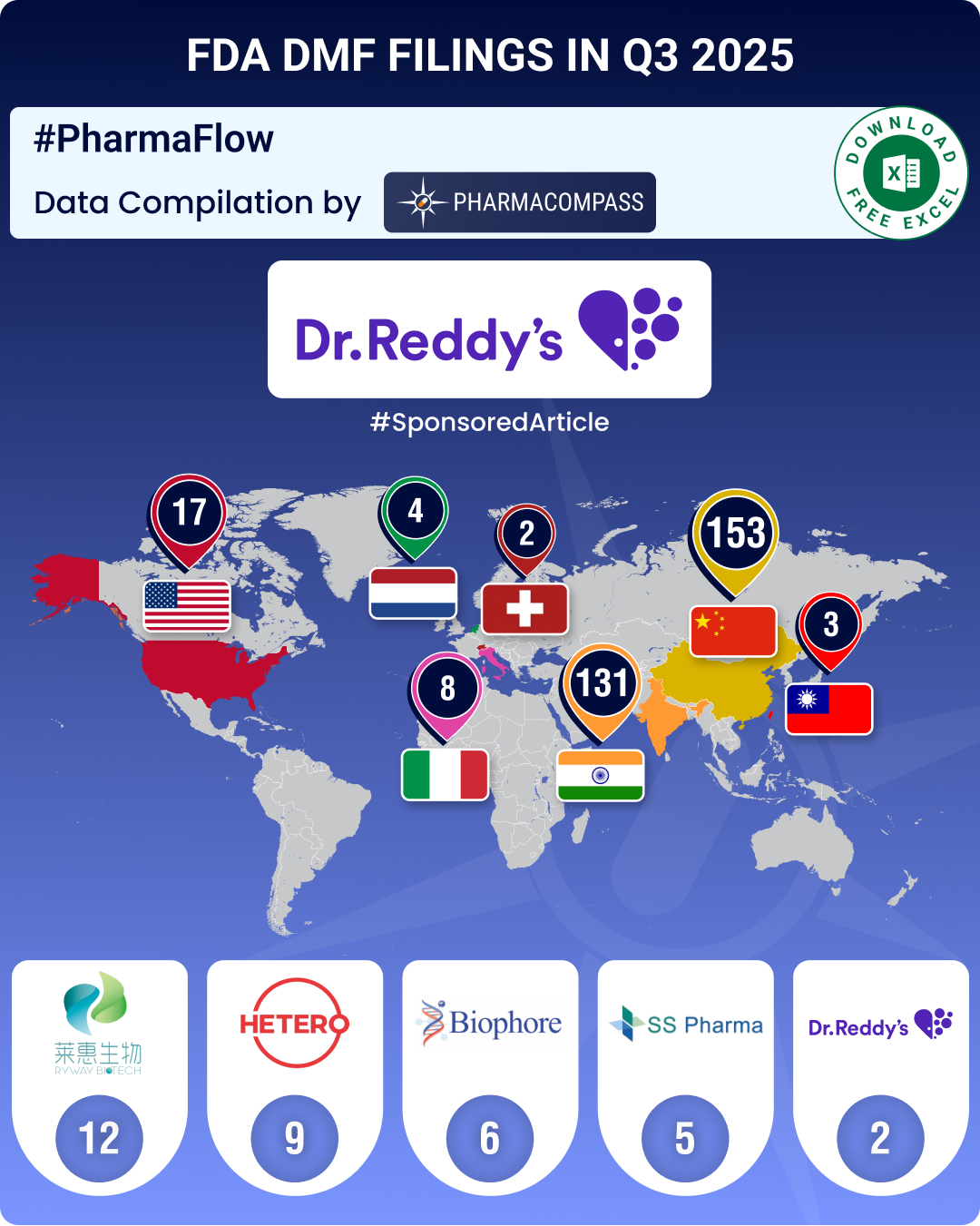
The third quarter (Q3) of 2025 witnessed a steady rise in Drug Master File (DMF) submissions to the US Food and Drug Administration (FDA). DMFs are used to provide confidential, detailed information about facilities, processes, or articles used in the manufacturing, processing, packaging, and storing of human drug products A total of 323 Type II DMFs were submitted during this period, as opposed to 309 submissions in Q3 2024, marking an increase of 4.53 percent. This is the second highest number since 2018. In Q1 2025, 339 Type II filings were recorded. Across all DMF types (II, III, IV, and V), 479 DMFs were filed in Q3 2025, compared to 394 in Q3 2024, representing a 21.57 percent increase. Out of the 323 Type II DMFs submitted in Q3 2025, 40 had completed their review by the end of Q3, reflecting a processing lag between submission and review completion.  View FDA DMF Filings in Q3 2025 (Power BI Dashboard, Free Excel Available) China maintains its lead while India posts double-digit growth in DMF submissions  China and India continued to dominate DMF submissions in Q3 2025. China retained the top spot with 153 Type II DMFs, matching its submission count from Q3 2024. India recorded 131 DMFs, marking a 20.18 percent increase over 109 filings during the corresponding period last year. The United States stood a distant third with 17 filings, compared to 13 in Q3 2024. Among European nations, Italy recorded eight DMFs, doubling its 2024 tally. The Netherlands filed four, up from three. Spain submitted only one DMF, as against seven submitted in Q3 2024. Taiwan made three filings, up from one submitted in Q3 2024. Together, India, China and Taiwan accounted for about 88.9 percent of all Type II DMFs filed during the quarter. China’s Suzhou Ryway Biotech tops corporate tally; India’s Hetero, Biophore follow China’s Suzhou Ryway Biotech led the company-wise tally with 12 DMF submissions in Q3 2025. The company had not filed any DMFs in Q3 2024. India’s Hetero Group followed with nine DMFs, maintaining the same number of filings as Q3 2024. Biophore India Pharmaceuticals ranked third with six DMFs, doubling its count from three last year. Other notable contributors include Sai Sreyas Pharmaceuticals (India) and Shanghai Haoyuan Chemexpress (China), with five DMFs each. Companies such as SNJ Group, Lunan Pharmaceutical, Allsino Pharmaceutical, Shankus Pharma, Jiangxi Xinganjiang Pharmaceutical, Sunpure Extracts, Lee Pharma, Umedica Laboratories, Linhai Tianyu Pharmaceutical and Maithri Drugs filed four DMFs each. Olaparib, semaglutide lead molecular filings; Dr. Reddy’s files DMF for edoxaban & tucatinib Dr. Reddy’s Laboratories also featured among key DMF filers in Q3 2025, submitting two DMFs — for edoxaban tosylate monohydrate and tucatinib copovidone. Edoxaban tosylate monohydrate (marketed as Savaysa by Daiichi Sankyo) is a prescription anticoagulant used to reduce the risk of stroke and to treat deep vein thrombosis and pulmonary embolism. Patent exclusivity for Savaysa extends until October 2026 in the United States, with no generic currently available. In terms of molecules, the highest number of DMFs were filed for olaparib, semaglutide, ruxolitinib phosphate, ferric carboxymaltose, and vismodegib, with three DMFs each in Q3 2025. Olaparib, sold by AstraZeneca under the brand name Lynparza, saw DMFs being filed by BDR Lifesciences and Intas Pharmaceuticals from India, and by ScinoPharm Taiwan during the quarter. Semaglutide, a glucagon-like peptide-1 (GLP-1) receptor agonist developed by Novo Nordisk, continued to draw strong interest from API manufacturers. DMFs for semaglutide were filed by three Chinese companies: Yangzhou Aurisco Pharmaceutical, Zhejiang Peptites Biotech, and Fujian Genohope Biotech. Ruxolitinib phosphate, marketed by Incyte as Jakafi, saw three DMFs. Three Indian companies — Alembic Pharmaceuticals, Valary Labs, and Devi Pharmatech — filed DMFs for this API in Q3 2025. Other molecules that received multiple DMF submissions include ferric carboxymaltose (used to treat iron-deficiency anemia) and vismodegib (an oral therapy for basal-cell carcinoma). First-time DMF filings span 17 companies; India leads with nine first-time DMF The quarter saw first-time DMF filings from 17 companies. India took a lead here with nine first-time DMF filings, followed by China (six), and the US (two). The DMF filings in this quarter included inclisiran sodium (filed by Aurisco Pharmaceutical of China), pacritinib citrate (by TAPI Nl B.V. of the Netherlands), and vosoritide (by Apicore LLC of the US). Out of the 19 first-time DMFs filed in Q3 2025, four completed their Generic Drug User Fee Amendments (GDUFA) review process during the quarter. GDUFA fee for FY 2026: The FDA Generic Drug User Fee Amendments (GDUFA) is a law designed to speed access to safe and effective generic drugs to the public and reduce costs to the industry. Fee rates for fiscal year 2026 were published on July 30, 2025. FDA has revised fees under GDUFA III across all categories. While there is a slight increase in the DMF fee from US$ 95,084 in 2025 to US$ 102,584 in 2026, the ANDA fee has seen a sharp rise: from US$ 321,920 in 2025 to US$ 358,247 in 2026. FY 2025 and FY 2026 User Fee Rates Generic drug fee category Fees rates for FY 2025 Fees rates for FY 2026 Applications:     Abbreviated New Drug Application (ANDA) US$ 3,21,920 US$ 3,58,247 Drug Master File (DMF) US$ 95,084 US$ 1,02,584 Facilities:     Active Pharmaceutical Ingredient (API)—Domestic US$ 41,580 US$ 43,549 API—Foreign US$ 56,580 US$ 58,549 Finished Dosage Form (FDF)—Domestic US$ 2,31,952 US$ 2,38,943 FDF—Foreign US$ 2,46,952 US$ 2,53,943 Contract Manufacturing Organization (CMO)—Domestic US$ 55,668 US$ 57,346 CMO—Foreign US$ 70,668 US$ 72,346 GDUFA Program:     Large size operation generic drug applicant US$ 18,91,664 US$ 19,18,377 Medium size operation generic drug applicant US$ 7,56,666 US$ 7,67,351 Small business generic drug applicant US$ 1,89,166 US$ 1,91,838 Our view For several years prior to the pandemic, India had a lead in Type II DMF submissions. In recent years, China has surpassed India in DMF filings. But Q3 2025 numbers indicate that Indian drugmakers are fast catching up. Since DMFs establish trust in APIs from across the world, we feel this healthy competition between drugmakers from the two countries is good for the global pharmaceutical industry.  

Impressions: 5446

https://dev1.pharmacompass.com/radio-compass-blog/dmf-filings-rise-4-5-in-q3-2025-china-holds-lead-india-records-20-growth-in-submissions

#PharmaFlow by PHARMACOMPASS
13 Nov 2025

MARKET PERFORMANCE RECAP

3read-more
read-more
Pipeline Prospector March 2026 highlights: Lilly to acquire Centessa for US$ 7.8 bn; Merck buys Terns Pharma for US$ 6.7 bn
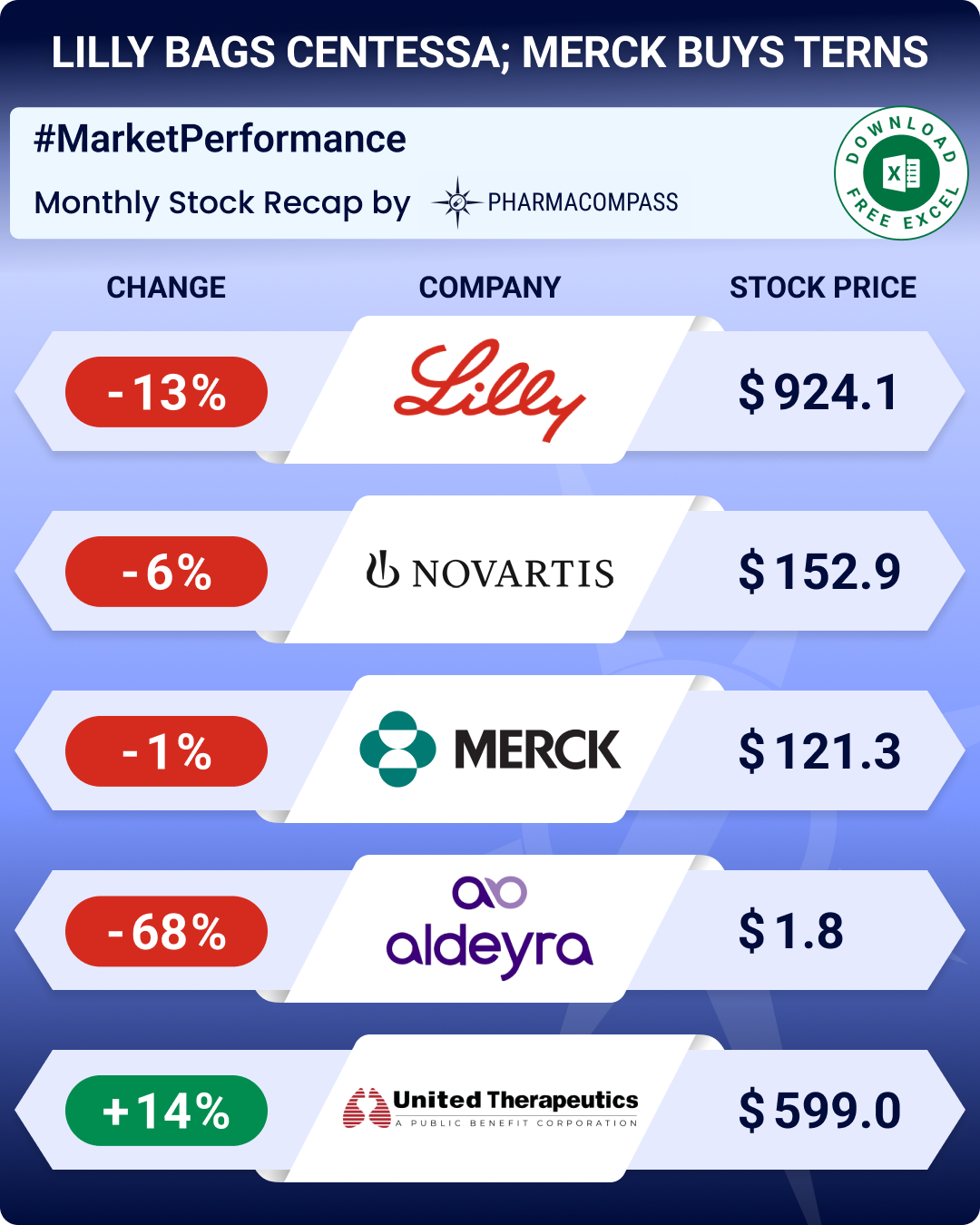
The raging war in the Middle East has disrupted global pharmaceutical supply chains, which are dependent on both sea and air routes. Major airports, such as Dubai, Abu Dhabi and Doha, are operating far below capacity due to strikes by Iran in response to attacks by the US and Israel. This has impacted the flow of critical medicines to the region. The closure of the Strait of Hormuz is pushing up crude oil prices. Given the geopolitical turbulence, the industry displayed grit, with March witnessing a flurry of high-value acquisitions. However, the war impacted pharma indices, which had been rising steadily since June 2025. The Nasdaq Biotechnology Index (NBI) fell by 2.12 percent in March, moving from 5,965.89 to 5,839.40. The SPDR S&P Biotech ETF (XBI) rose by 2.49 percent, from 124.63 to 127.73, and the S&P Biotechnology Select Industry Index (SPSIBI) inched up by 0.23 percent — from 9,954.55 to 9,977.73. In comparison, the S&P 500 fell by 4.34 percent — from 6,824.36 to 6,528.52.  Access the Pipeline Prospector Dashboard for March 2026 Newsmakers (Free Excel) Lilly acquires Centessa for its sleep disorder treatments; Merck buys Terns Pharma to strengthen oncology pipeline  On the last day of the month, Eli Lilly announced the acquisition of British drugmaker Centessa Pharmaceuticals in a deal worth up to US$ 7.8 billion. Centessa is developing a new class of treatments designed to target orexin, a molecule in the brain that regulates the sleep-wake cycle. On the same day, Biogen announced the acquisition of Apellis Pharmaceuticals for about US$ 5.6 billion in cash, adding approved immunology medicines Empaveli and Syfovre (both pegcetacoplan) to its portfolio. Meanwhile, Merck announced a US$ 6.7 billion acquisition of American biotech Terns Pharmaceuticals. The biotech is developing treatments for rare blood and bone cancers, and is expected to strengthen Merck’s oncology pipeline, as its blockbuster Keytruda (pembrolizumab) faces a patent cliff. Novartis made a significant move by acquiring Pikavation Therapeutics, a subsidiary of US biotech firm Synnovation Therapeutics, and its portfolio, which includes an experimental breast cancer drug candidate — SNV4818 — for up ‌to US$ 3 billion. Novartis also deepened its focus on immunology through the up to US$ 2 billion acquisition of Excellergy, a private biotech company developing next-generation anti-IgE therapies. French pharmaceutical group Servier announced the acquisition of Day One Biopharmaceuticals for ‌about US$ 2.5 billion. This buyout gives Servier access to FDA-approved Ojemda (tovorafenib), a monotherapy for pediatric low-grade glioma, the most common form of brain tumor in children. Gilead Sciences is acquiring Ouro Medicines for up to US$ 2.18 billion to expand its presence in autoimmune diseases. Luxembourg-based CVC Capital Partners made a €10.9 billion (US$ 12.6 billion) offer to acquire Italian drugmaker Recordati, where it already holds a 47 percent stake. In other deals, Insilico Medicine entered into a US$ 2.75 billion global licensing and research collaboration with Eli Lilly to leverage generative AI to accelerate R&D and improve pipeline efficiency. And Tenaya Therapeutics tied up with Alnylam Pharmaceuticals to work on disease-modifying treatments for cardiovascular diseases in a deal worth up to US$ 1.14 billion. Biogen’s Spinraza approved for spinal muscular atrophy; J&J’s pill okayed for plaque psoriasis The month witnessed multiple FDA approvals and label expansions. Biogen secured FDA approval for a higher-dose regimen of Spinraza (nusinersen) for spinal muscular atrophy (SMA), a genetic disorder that causes muscle weakness. The agency also approved Johnson & Johnson’s oral pill Icotyde (icotrokinra) for the treatment of moderate-to-severe plaque psoriasis in adults and pediatric patients 12 years of age and older. Besides these, FDA granted accelerated approval to Denali Therapeutics’ Avlayah (tividenofusp alfa), which was approved for the treatment of children with Hunter syndrome, ‌a rare genetic disorder. And it expanded the labels of Bristol Myers Squibb’s Sotyktu (deucravacitinib), Novo Nordisk’s Sogroya and GSK’s RSV vaccine Arexvy. Merck’s drug cuts LDL cholesterol by 64.6%; Xenon’s epilepsy med meets main goal in late-stage trial Merck reported that its oral cholesterol drug enlicitide decanoate reduced low-density lipoprotein (LDL) cholesterol by approximately 64.6 percent in a head-to-head late-stage trial, outperforming non-statin therapies. Xenon Pharmaceuticals’ experimental epilepsy drug azetukalner met its main goal by significantly reducing seizure frequency, while United Therapeutics’ ralinepag reduced disease progression risk by 55 percent in pulmonary arterial hypertension. Bristol Myers Squibb’s mezigdomide demonstrated improved survival outcomes in relapsed or refractory multiple myeloma when used in combination with Amgen’s Kyprolis (carfilzomib) and dexamethasone. Another therapy that posted a trial win was Pfizer and Astellas’ Padcev (enfortumab vedotin) when used in combination with Keytruda. In a phase 3 trial, it significantly improved outcomes in patients with muscle-invasive bladder cancer eligible for cisplatin-based chemotherapy. Roche reported positive phase 3 data for its multiple sclerosis drug fenebrutinib, though safety concerns (including patient deaths during trials) could complicate regulatory review. Eli Lilly’s atopic dermatitis drug Ebglyss (lebrikizumab) achieved both primary and secondary endpoints in a phase 3 trial in children aged six months to 18 years. The drug is already approved for people over 12 years with eczema who weigh over 40 kg. FDA lifts hold on Intellia’s gene therapy, hands Aldeyra’s dry eye disease med its third rejection FDA lifted the clinical hold placed on Intellia Therapeutics’ gene therapy for transthyretin amyloidosis with cardiomyopathy, a fatal heart condition. The clinical holds on two trials of the therapy were imposed in October after a patient developed severe liver complications. Some drugmakers faced setbacks. For instance, FDA asked for additional data for uniQure’s Huntington’s disease gene therapy (a fatal, inherited neurodegenerative disorder). Similarly, the agency handed Aldeyra’s reproxalap a third rejection. The drug was being developed to treat dry eye disease, a chronic condition characterized by insufficient tear production. Australian biotech Immutep discontinued a crucial phase 3 trial for Efti (eftilagimod alfa), which is administered along with Keytruda and was being developed as a first-line treatment for advanced non-small cell lung cancer (NSCLC). And Roche said its breast ‌cancer pill, giredestrant, failed to meaningfully help newly diagnosed patients with breast cancer in a phase 3 trial. Our view While geopolitical disruptions have exposed vulnerabilities in global supply chains, they have not dented the industry’s appetite for growth and innovation. That said, a prolonged conflict could alter this trajectory, forcing pharma leaders to reassess strategic priorities.

Impressions: 2639

https://dev1.pharmacompass.com/pipeline-prospector-blog/pipeline-prospector-march-2026-highlights-lilly-to-acquire-centessa-for-us-7-8-bn-merck-buys-terns-pharma-for-us-6-7-bn

#PharmaFlow by PHARMACOMPASS
02 Apr 2026

WEEKLY INDUSTRY NEWS

3read-more
read-more
FDA flags potential risk of serious eye condition linked with GLP-1 drugs; Astra in talks to buy Rhythm Pharma, says report
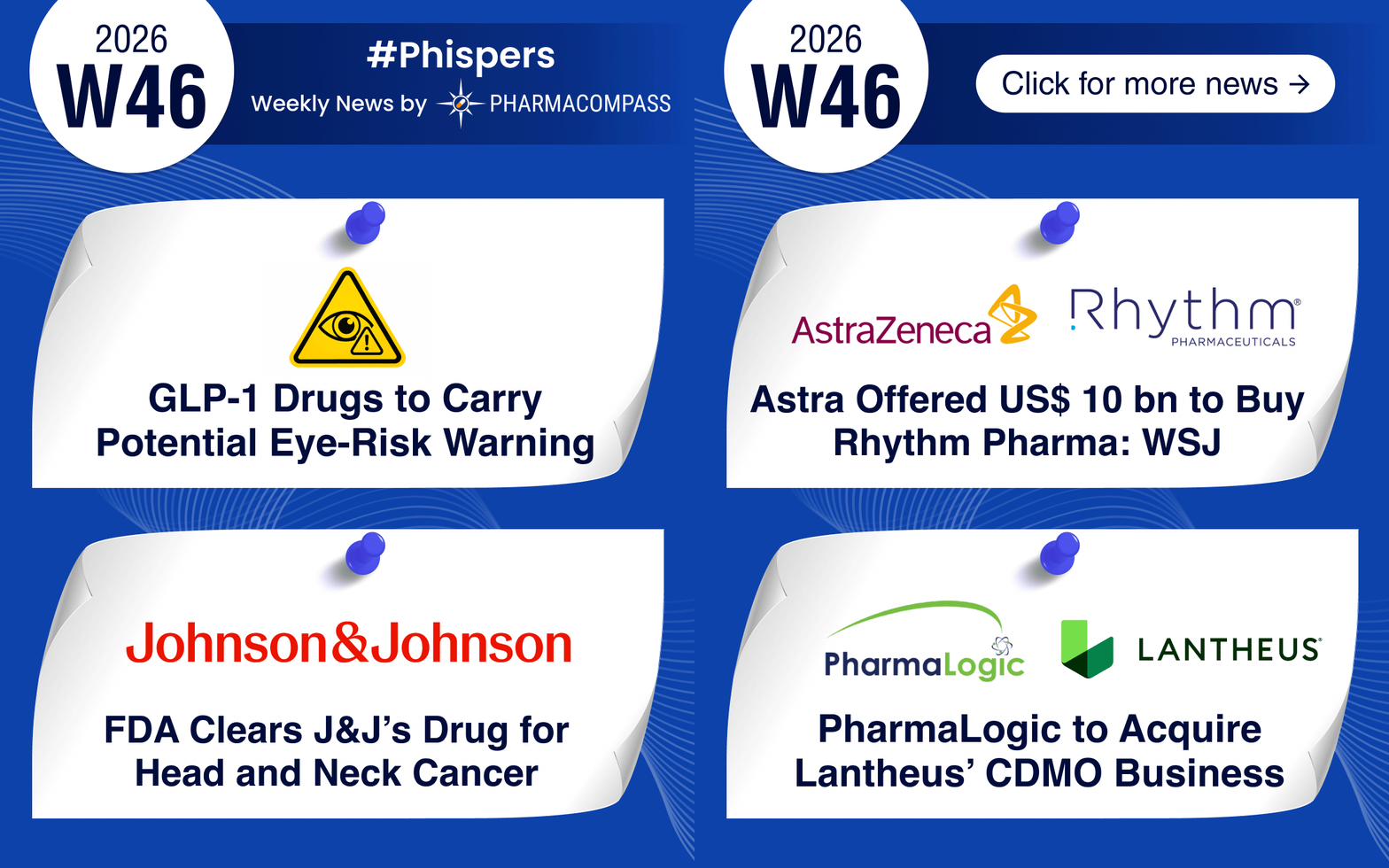
The US Food and Drug Administration (FDA) has announced a potential increased risk of a serious eye condition associated with GLP-1 drugs used for weight loss and diabetes. The agency approved Johnson & Johnson’s Rybrevant Faspro (amivantamab and hyaluronidase-lpuj) for adults with recurrent or metastatic head and neck squamous cell carcinoma, and Bayer’s Sunharbo (asundexian), a blood thinner that reduces the risk of stroke in adults with recent non-cardioembolic ischemic stroke or high-risk transient ischemic attack (TIA), so-called “mini-stroke”. It also cleared Merck’s drug for treating rare tumors in or around joints. In deals, there were reports that AstraZeneca is in talks to acquire Rhythm Pharma for about US$ 10 billion. Boehringer Ingelheim signed a deal with Sino Biopharmaceutical to develop six new cancer treatments. AbbVie bought rights to an experimental oral drug for inflammatory bowel disease from Nxera Pharma’s UK subsidiary. Mumbai-based contract development and manufacturing organization (CDMO) BDR Pharma is acquiring a controlling stake in the oral solid formulations business of Acme Formulation. And PharmaLogic, an American CDMO focused on radiopharmaceuticals, agreed to acquire Lantheus’ CDMO business and its manufacturing facility in Springfield, New Jersey. The US Department of Defense has removed biotech WuXi AppTec from its list of “Chinese military companies”. Meanwhile, FDA is probing the risk of developing tumors, including cancers, linked to Novartis’ Zolgensma (onasemnogene abeparvovec). The agency issued a Form 483 with three observations to Pinnacle Life Science, a subsidiary of India’s Aarti Drugs, after an inspection earlier this month. FDA announces ‘eye-risk’ warning for GLP-1 drugs, such as Ozempic, Mounjaro  FDA has announced a “potential increased risk” of a serious eye condition associated with GLP-1 drugs used for weight loss and diabetes. The condition, though rare, is known as non-arteritic anterior ischemic optic neuropathy (NAION) and can cause acute, painless, decreased vision in one eye, including vision loss. GLP-1 drugmakers need to add a warnings and precautions section on the label, informing about the potential risk. The requirement covers 12 drugs, including Novo’s Ozempic, Rybelsus and Wegovy (semaglutide), Eli Lilly’s Mounjaro and Zepbound (tirzepatide) and Foundayo (orforglipron). FDA grants accelerated approval to J&J’s Rybrevant Faspro in head and neck cancer FDA has granted accelerated approval to Johnson & Johnson’s Rybrevant Faspro (amivantamab and hyaluronidase-lpuj) for adults with recurrent or metastatic head and neck squamous cell carcinoma that has worsened after chemotherapy and immunotherapy. Rybrevant Faspro is already approved for lung cancer. The treatment can be administered as a subcutaneous injection. Clears Bayer’s blood thinner: FDA has approved Bayer’s Sunharbo (asundexian), a blood thinner that reduces the risk of stroke in adults with recent non-cardioembolic ischemic stroke or high-risk transient ischemic attack (TIA), so-called “mini-stroke”. Sunharbo needs to be taken in combination with an anti-platelet therapy. Okays Merck’s rare joint tumor drug: FDA has approved Merck KGaA’s Pimjetmi (pimicotinib), a once-daily oral drug for adults with symptomatic tenosynovial giant cell tumor (TGCT) when surgery could worsen function or cause severe morbidity. TGCT is a rare, locally aggressive tumor in or around the joints. Boehringer inks up to US$ 7.4 bn deal with Sino Biopharm for six cancer treatments Within weeks of opening its R&D facility in Shanghai, Boehringer Ingelheim has signed a deal with Sino Biopharmaceutical to potentially develop six new cancer treatments. The agreement seeks to advance potential next-generation cancer treatments based on antibody-drug conjugate (ADC) and T-cell engager (TcE) technologies. Sino, which recently adopted the global name SBP, will receive US$ 358 million in upfront and near-term payments and is eligible for up to US$ 7 billion in milestone payments. AbbVie licenses IBD drug from Nxera: AbbVie has bought exclusive worldwide rights to an experimental oral drug for inflammatory bowel disease from Nxera Pharma’s UK subsidiary. Nxera will receive US$ 100 million upfront and up to US$ 1.37 billion in milestone payments, plus royalties. Evommune-Hinova deal: Evommune has bought licensing rights to an experimental autoimmune drug from China’s Hinova Pharmaceuticals for all territories outside Greater China in a deal worth up to US$ 1.1 billion. AstraZeneca offered US$ 10 bn to acquire Rhythm Pharma, reports WSJ AstraZeneca has offered about US$ 10 billion to acquire Rhythm Pharmaceuticals, the Wall Street Journal has reported, citing sources. Rhythm specializes in drugs that treat metabolic conditions and severe obesity. The acquisition is being pursued by AstraZeneca’s rare-disease business Alexion, Reuters said. Argenx to buy Unnatural Products: Argenx has agreed to acquire Unnatural Products, an American biotech working on macrocyclic peptides (chains of amino acids), in a deal worth up to US$ 1.15 billion. FDA probes tumor risk tied to Novartis’ spinal muscular atrophy therapy Zolgensma FDA is investigating a risk of tumors, including cancers, linked to Novartis’ Zolgensma (onasemnogene abeparvovec), the one-time gene therapy for spinal muscular atrophy (SMA). The Swiss drugmaker has confirmed new ‌cases of tumors in children being treated with Zolgensma, taking the number of such cases to nine since the approval of the therapy in 2019. Aarti Drugs’ unit gets FDA’s Form 483: FDA has issued a Form 483 with three observations to Pinnacle Life Science, a subsidiary of India’s Aarti Drugs, after inspecting its formulations plant in Baddi, Himachal Pradesh, from November 2 to 6. WuXi AppTec removed from Pentagon’s Chinese military company list The US Department of Defense has removed biotech WuXi AppTec from its list of “Chinese military companies.” The Pentagon had added WuXi to the list in June 2026. The removal comes after a federal court order in August this year. Companies on the list risk being named ‘biotechnology companies of concern’ under the Biosecure Act. PharmaLogic to acquire Lantheus’ CDMO business, plant in New Jersey PharmaLogic, an American CDMO focused on radiopharmaceuticals, has agreed to acquire Lantheus’ CDMO business and its manufacturing facility in Springfield, New Jersey. The financial terms of the deal were not disclosed. Meanwhile, Indian CDMO BDR Pharma will acquire a controlling stake in the oral solid formulations business of Acme Formulation, another India-based CDMO, from shareholders led by private equity firm PAG. The terms of the deal were not disclosed. Vir Biotechnology’s chronic hepatitis delta combo clears phase 3 trial  Vir Biotechnology has said elebsiran plus tobevibart met the primary endpoint of a pivotal phase 3 trial in chronic hepatitis delta, the most severe form of viral hepatitis. The disease was recently classified as carcinogenic by the World Health Organization. Meanwhile, J&J has said its drug Icotyde (icotrokinra) eased symptoms in patients with active psoriatic arthritis as opposed to a placebo in a phase 3 trial.

Impressions: 3334

https://dev1.pharmacompass.com/radio-compass-phisper/fda-flags-potential-risk-of-serious-eye-condition-linked-with-glp-1-drugs-astra-in-talks-to-buy-rhythm-pharma-says-report

#Phispers by PHARMACOMPASS
12 Nov 2026

NEWS LIBRARY

24read-more
read-more

https://www.reuters.com/business/healthcare-pharmaceuticals/jjs-once-daily-pill-eases-psoriatic-arthritis-symptoms-late-stage-trial-2026-11-07/

REUTERS
07 Nov 2026

https://www.businesswire.com/news/home/20261026151553/en/Dong-A-ST-Demonstrates-Preclinical-Potential-of-Topical-Icotrokinra-Formulation-for-Psoriasis

BUSINESSWIRE
26 Oct 2026

https://www.prnewswire.com/news-releases/new-johnson--johnson-icotyde-icotrokinra-long-term-data-demonstrate-robust-2-year-results-in-the-treatment-of-adults-and-adolescents-with-plaque-psoriasis-302902715.html

PR NEWSWIRE
09 Oct 2026

https://www.globenewswire.com/news-release/2026/09/21/3365625/0/en/european-commission-approval-of-icotyde-icotrokinra-ushers-in-new-era-for-first-line-systemic-treatment-of-plaque-psoriasis-with-a-targeted-oral-peptide.html

GLOBENEWSWIRE
21 Sep 2026

https://www.reuters.com/business/healthcare-pharmaceuticals/china-approves-jjs-oral-psoriasis-pill-says-drugmaker-2026-08-27/

REUTERS
27 Aug 2026

https://www.ema.europa.eu/en/news/first-oral-medicine-targeting-interleukin-23-receptor-recommended-plaque-psoriasis

EMA
24 Jul 2026
digital-content162462321##p