Please Wait
Applying Filters...
Menu

Digital Content read-more

Create Content with PharmaCompass, ask us

PHARMA & BIOTECH INSIGHTS

2read-more
read-more

A PHP Error was encountered

Severity: 8192

Message: mb_convert_encoding(): Handling HTML entities via mbstring is deprecated; use htmlspecialchars, htmlentities, or mb_encode_numericentity/mb_decode_numericentity instead

Filename: blog/grid.php

Line Number: 52

Backtrace:

File: /var/www/html/application/views/include/media/blog/grid.php
Line: 52
Function: mb_convert_encoding

File: /var/www/html/application/models/Cmn.php
Line: 3595
Function: view

File: /var/www/html/application/views/include/product/digitalContent/grid.php
Line: 17
Function: common

File: /var/www/html/application/views/include/desc/inner.php
Line: 13
Function: view

File: /var/www/html/application/views/include/desc/indexNew.php
Line: 2433
Function: include

File: /var/www/html/application/controllers/Common.php
Line: 11303
Function: view

File: /var/www/html/index.php
Line: 231
Function: require_once

FDA approvals drop 24% in H1 2025; GSK’s UTI med, Vertex’s non-opioid painkiller lead pack of first-in-class meds
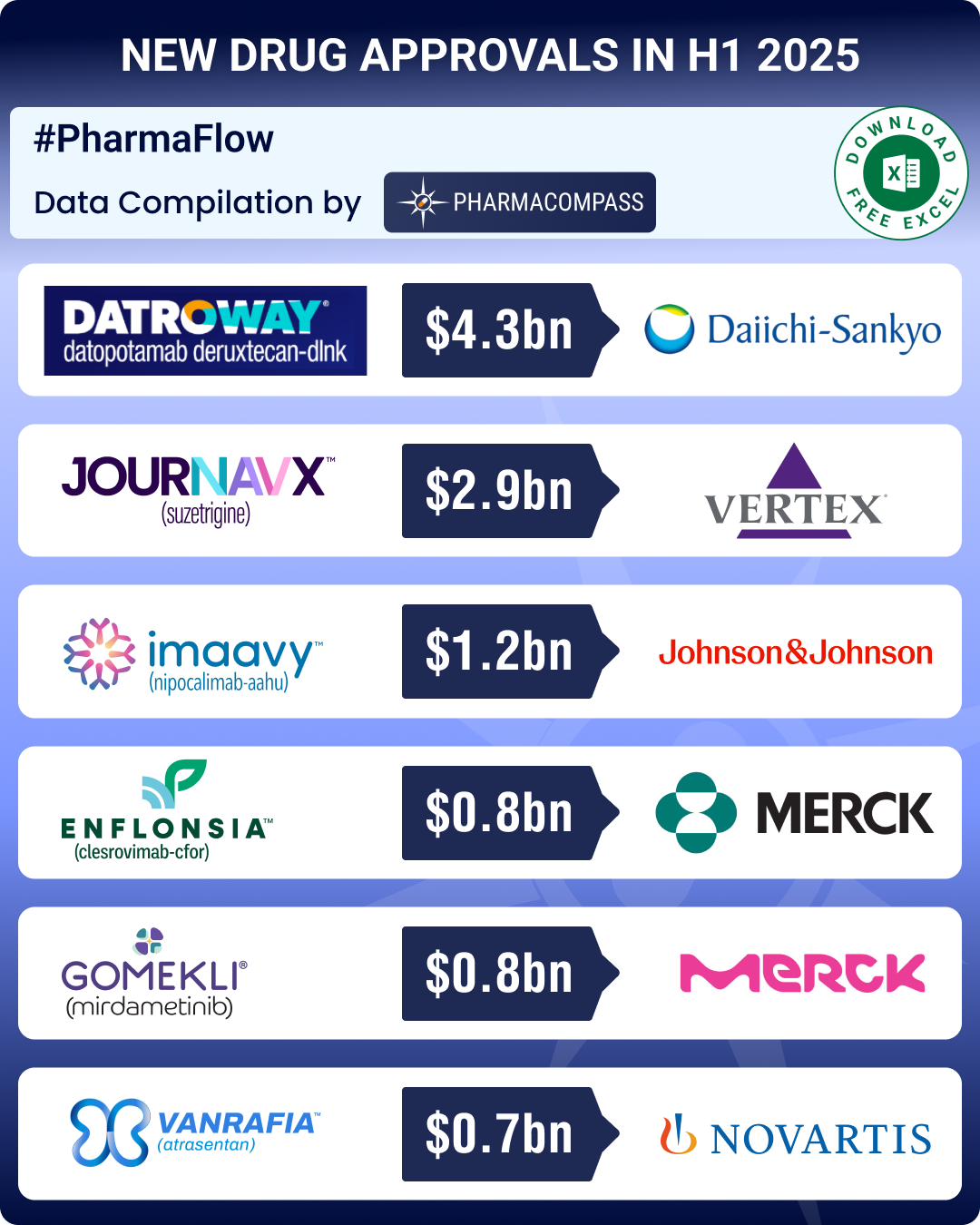
It has been a turbulent year for the US Food and Drug Administration (FDA), marked by reductions in both staff and budget, shake-ups at the top and a reduction in inspections. This upheaval has clearly impacted the functioning of the agency, with reports of missed deadlines and reduced responsiveness. This disruption resulted in a slowdown in new drug approvals in the first half of 2025 (H1 2025), as opposed to the same period last year. Incidentally, drug approvals in H1 2024 were also down by 19 percent compared to H1 2023. FDA’s Center for Drug Evaluation and Research (CDER) approved 16 novel drugs in H1 2025, down from 21 in H1 2024, a decline of nearly 24 percent. Of these, nine were small molecules and seven were biologics. The period saw eight first-in-class therapies get CDER’s approval, as opposed to 17 in H1 2024. FDA’s Center for Biologics Evaluation and Research (CBER) approved seven biologics in H1 2025, compared to eight in the same period last year. In comparison, both Health Canada and the European Medicines Agency (EMA) reported a strong rebound in approvals and authorizations, respectively. Health Canada approved 20 drugs in H1 2025, as opposed to 10 in H1 2024. Similarly, EMA authorized 19 new therapies in H1 2025, compared to 15 in H1 2024. Notably, EMA’s pending decisions increased to 25 in H1 2025, from 14 in the same period last year, while conditional authorizations remained static at five. This underscores EMA’s active regulatory pipeline, suggesting that more drugs could be approved in Europe soon.   View New Drug Approvals in H1 2025 with Estimated Sales (Free Excel Available) Vertex’s non-opioid painkiller, GSK’s antibiotic for UTI, Merck’s RSV antibody bag FDA nods  Oncology remained the single largest category in H1 2025 with seven new drugs being approved by the FDA, followed by four rare diseases and disorders and as many infections and infective diseases.  The eight drugs that were designated first-in-class in H1 2025 are: Journavx (Suzetrigine), Imaavy (nipocalimab), Emrelis (telisotuzumab vedotin), Blujepa (gepotidacin mesylate), Qfitlia (fitusiran), Avmapki Fakzynja Co-Pack (avutometinib potassium/defactinib hydrochloride), Tryptyr (acoltremon), and Andembry (garadacimab). In January, a new class of non-opioid pain therapy made a debut — FDA approved Vertex Pharmaceuticals’ Journavx (suzetrigine). This first-in-class oral analgesic could bring in US$ 2.9 billion in sales for Vertex by 2030. The half year also saw a new oral antibiotic — GSK’s Blujepa (gepotidacin) — for treating uncomplicated urinary tract infections (uUTIs) bag FDA approval. This is the first new antibiotic for uUTIs in nearly three decades. It treats infections caused by resistant pathogens such as E. coli and K. pneumoniae In June, Merck’s Enflonsia (clesrovimab), a long-acting monoclonal antibody, won FDA approval to prevent respiratory syncytial virus (RSV) lower respiratory tract disease in neonates and infants entering their first RSV season. A single 105 mg dose provides protection for about five months, the length of a typical RSV season. Enflonsia could bring in US$844 million in annual sales by 2030. FDA approves four meds for rare diseases, including SpringWorks’ Gomekli, Novartis’ Vanrafia In H1 2024, rare genetic diseases had witnessed some significant approvals. The trend continued in H1 2025. In February, Gomekli (mirdametinib), developed by SpringWorks Therapeutics, became the first approved therapy for neurofibromatosis type 1 (a genetic disorder that causes tumors to grow on nerve tissues) in adult and pediatric patients who have symptomatic plexiform neurofibromas (benign, complex nerve tumors) not amenable to complete resection. Analysts expect peak sales of around US$ 0.8 billion by 2030. Post this approval, SpringWorks got acquired by Merck KGaA for approximately US$ 3.9 billion. The same month, Ono Pharma-owned Deciphera’s Romvimza (vimseltinib) became the first oral therapy approved for another rare disease known as symptomatic tenosynovial giant cell tumor. This is a benign but aggressive growth that can be painful. This new drug offers patients an option beyond surgery. In March, Sanofi’s Qfitlia (fitusiran) was approved for routine prophylaxis in hemophilia A or B, with or without inhibitors. And in April, Novartis’ Vanrafia (atrasentan) was granted accelerated approval for IgA nephropathy (a chronic autoimmune kidney disease), which is at the risk of rapid progression. Vanrafia could bring in sales of over US$ 735 million by 2030 Johnson & Johnson secured approval for Imaavy (nipocalimab-aahu) for generalized myasthenia gravis (a chronic autoimmune disease that causes muscle weakness) in adults and adolescents. Imaavy’s sales could cross US$1.17 billion by 2030. Rare diseases continue to attract regulatory attention, with the trend carrying into the current quarter. July witnessed two noteworthy rare-disease approvals — Ekterly (garadacimab), CSL’s once-monthly prophylactic treatment for hereditary angioedema (a genetic disorder that causes recurrent episodes of swellings), and Sephience (pegvaliase-abcx), BioMarin’s new therapy for phenylketonuria (a rare metabolic disorder). FDA greenlights new oncology therapies, including Astra’s Datroway, AbbVie’s Emrelis The field of oncology saw some notable new drug approvals. In January, Datroway (datopotamab deruxtecan), an antibody-drug conjugate (ADC) developed by AstraZeneca and Daiichi Sankyo, was granted approval for adults with unresectable or metastatic, hormone receptor-positive, HER2-negative breast cancer. Later, in June, the FDA granted accelerated approval  to AstraZeneca;s Datroway for adults with locally advanced or metastatic, EGFR-mutated non-small cell lung cancer. The drug’s peak annual sales are projected at about US$ 4.2 billion by 2030. In May, Emrelis (telisotuzumab vedotin-tllv), AbbVie’s ADC was granted FDA’s accelerated approval. Emrelis treats locally advanced or metastatic non-squamous non-small cell lung cancer (NSCLC) characterized by significantly increased levels of the c-Met protein in cancer cells. FDA also approved a companion diagnostic test — Roche's Ventana — in May to determine the c-Met protein biomarker status in order to identify patients eligible for Emrelis.  The same month, FDA also granted accelerated approval to Verastem’s Avmapki Fakzynja Co-pack, a dual oral therapy for adults with KRAS‑mutated recurrent low‑grade serous ovarian cancer (LGSOC). This novel regimen combines two inhibitors — avutometinib and defactinib — to disrupt critical signaling pathways that fuel tumor growth. In ophthalmology, Alcon re-entered the prescription pharmaceutical market with Tryptry (acoltremon), a first-in-class TRPM8 agonist for dry eye disease, which stimulates corneal nerves to increase tear production. Our view The changes in the FDA are clearly having a far-reaching impact on the global pharmaceutical industry. There have been reports of drugmakers losing confidence in the FDA, which has been a gold standard for drug regulation. Some American biotechs are shifting early trials outside of the US. With EMA and Health Canada authorizing/approving a larger number of drugs in H1 2025, we do see some changes underway that may eventually reshape drug development.  

Impressions: 8107

https://dev1.pharmacompass.com/radio-compass-blog/fda-approvals-drop-24-in-h1-2025-gsk-s-uti-med-vertex-s-non-opioid-painkiller-lead-pack-of-first-in-class-meds

#PharmaFlow by PHARMACOMPASS
28 Aug 2025

WEEKLY INDUSTRY NEWS

5read-more
read-more
FDA approves AbbVie’s drug for Parkinson’s disease, Eli Lilly’s once-weekly insulin for type 2 diabetes
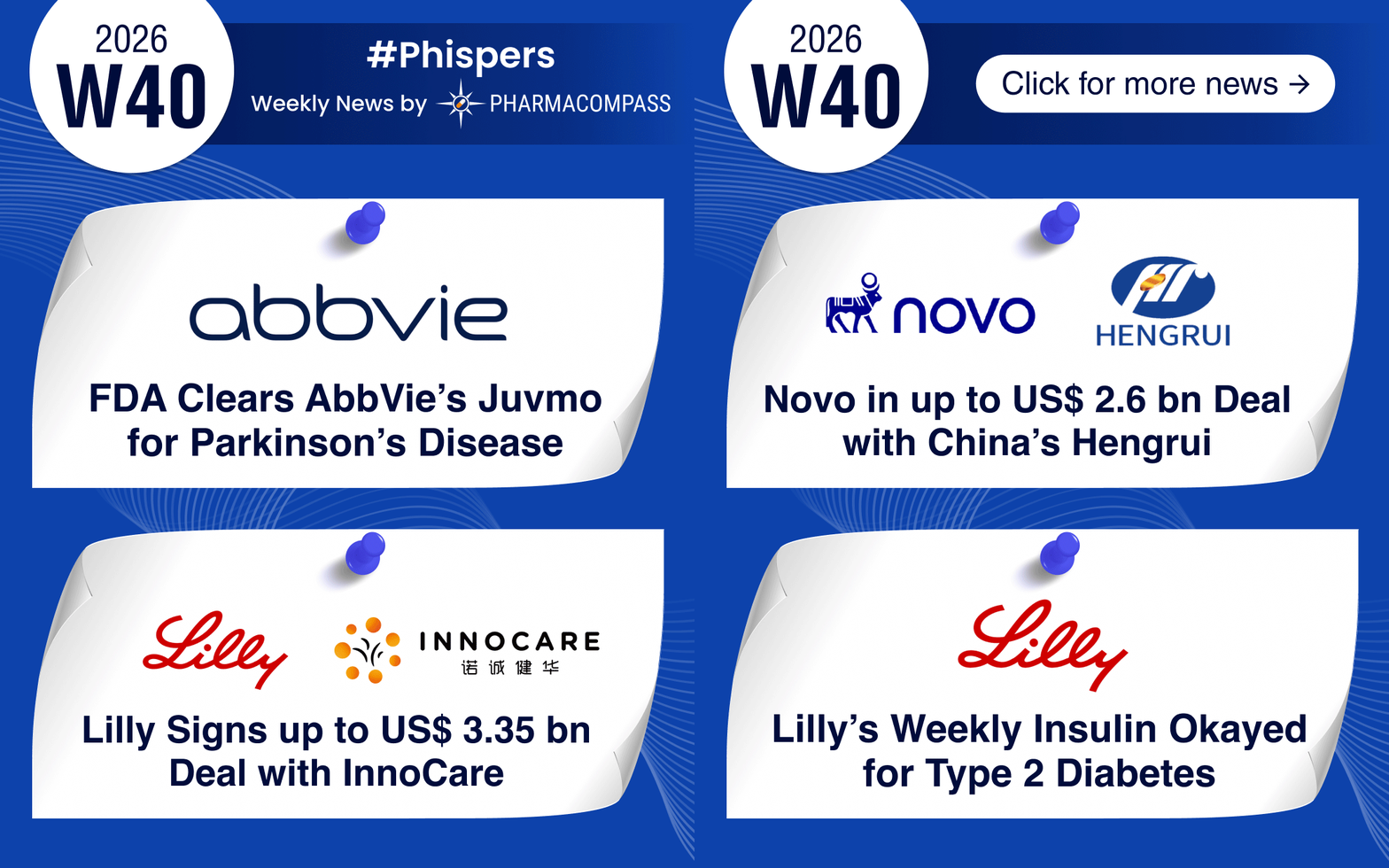
This week’s Phispers is packed with drug approvals. The US Food and Drug Administration (FDA) cleared AbbVie’s Juvmo (tavapadon) for treating Parkinson’s disease, Eli Lilly’s Onswik (insulin efsitora alfa-gobe) for type 2 diabetes, and Elevar Therapeutics’ Lyrfigtu (lirafugratinib) for advanced bile duct cancer.The agency expanded the label of Lilly’s Olumiant (baricitinib) to include patients aged 12 and above with severe alopecia areata, and cleared Merck’s Welireg (belzutifan) in combination with Eisai’s Lenvima (lenvatinib) for adults with advanced renal cell carcinoma. FDA also approved Genentech’s Gazyva (obinutuzumab) to reduce the risk of relapse in patients aged two and above with idiopathic nephrotic syndrome (INS), a kidney disorder.Additionally, FDA okayed Mirum Pharmaceuticals and Incyte’s Atebrioz (zilurgisertib) for patients aged 12 and above with fibrodysplasia ossificans progressiva (FOP), a rare genetic disorder.AstraZeneca agreed to buy US$ 2 billion worth of newly issued preferred stock in Summit Therapeutics. Merck licensed exclusive global rights to SPR2015, an investigational, preclinical drug, from Shanghai-based SciBrunch Therapeutics in a deal worth up to US$ 2.13 billion.Eli Lilly signed a research collaboration with InnoCare Pharma to use the Chinese drugmaker’s discovery platform to develop new drugs. Novo signed deals with China’s Hengrui Pharma and Sweden’s Nanexa to strengthen its obesity and diabetes portfolio. And Roche’s Genentech signed a research collaboration with AI-driven biotech Earendil Labs.In clinical trials, Roche said its experimental drug sefaxersen significantly reduced proteinuria in IgA nephropathy (IgAN).FDA approves AbbVie’s Juvmo, a once-daily pill for Parkinson’s disease FDA has approved AbbVie’s Juvmo (tavapadon), a once-daily pill for adults with Parkinson’s disease, a brain disorder that causes tremors, stiffness, and slowed movement. Juvmo can be used on its own in early disease or added to levodopa in patients whose symptoms fluctuate. Juvmo is the first approval from AbbVie’s US$ 8.7 billion acquisition of Cerevel Therapeutics.Clears Genentech’s kidney disorder drug: FDA has approved Roche unit Genentech’s Gazyva (obinutuzumab) to reduce the risk of relapse in patients aged two and above whose idiopathic nephrotic syndrome (INS) relapses often or depends on steroids, once they are in remission. INS is a kidney disorder characterized by large amounts of protein leaking into the urine.Approves Mirum’s rare bone disorder drug: FDA has approved Mirum Pharmaceuticals and Incyte’s Atebrioz (zilurgisertib) for patients aged 12 and above with fibrodysplasia ossificans progressiva (FOP), a rare genetic disorder in which muscle, tendon, and ligament tissue gradually turns into bone. Atebrioz is the third FDA-approved drug for FOP.Okays Egetis’ Emcitate: FDA has approved Egetis Therapeutics’ Emcitate (tiratricol) for the treatment of peripheral thyrotoxicosis (excess thyroid hormone in the body, which causes a racing heart, high blood pressure, and muscle wasting) in MCT8 deficiency — a rare, devastating genetic disorder.AstraZeneca to buy US$ 2 billion worth of newly issued preferred shares in SummitAstraZeneca has agreed to buy US$ 2 billion of newly issued preferred stock in Summit Therapeutics, which would give it a stake of about 12 percent in the company (10.6 percent on a fully diluted basis). The goal is to test Summit’s ivonescimab alongside AstraZeneca’s antibody-drug conjugates (targeted cancer treatments). Each company keeps the rights to its own drug.Merck licenses SciBrunch’s drug: Merck has licensed exclusive global rights to SPR2015, an investigational, preclinical drug, from Shanghai-based SciBrunch Therapeutics for US$ 400 million upfront, in a deal worth up to US$ 2.13 billion. SPR2015 is a “molecular glue,” a small molecule that makes proteins stick together in a way that shuts down its target.FDA approves Lilly’s once-weekly insulin Onswik for treating type 2 diabetesFDA has approved Eli Lilly’s Onswik (insulin efsitora alfa-gobe), a once-weekly basal (background) insulin, for use with diet and exercise to control blood sugar in adults with type 2 diabetes. Onswik is designed to deliver steady basal insulin levels over seven days. Onswik is the second once-weekly insulin approved in the US, after Novo’s Awiqli (insulin icodec).Elevar’s Lyrfigtu cleared for rare bile duct cancer: FDA has approved Elevar Therapeutics’ Lyrfigtu (lirafugratinib) for adults with previously treated, advanced bile duct cancer (cholangiocarcinoma) whose tumors carry an FGFR2 gene fusion or rearrangement, a genetic error that drives tumor growth.Okays Merck-Eisai combo for kidney cancer: FDA has approved Merck’s Welireg (belzutifan) in combination with Eisai’s Lenvima (lenvatinib) for adults with advanced renal cell carcinoma with a clear cell component (the most common type of kidney cancer) that has progressed after PD-1 or PD-L1 immunotherapy.Clears Olumiant for teens with severe alopecia: FDA has expanded the label of Lilly’s Olumiant (baricitinib) to include patients aged 12 and above with severe alopecia areata, an immune disease that causes patchy or total hair loss.Lilly signs research deal worth up to US$ 3.35 bn with China’s InnoCareEli Lilly has signed a research collaboration and license agreement with China’s InnoCare Pharma to discover drugs against up to five targets. InnoCare will use its discovery platform to develop new drugs. It is eligible for up to US$ 100 million in upfront and near-term payments, and up to US$ 3.25 billion in development and commercial milestones, and single-digit royalties.Novo licenses Hengrui’s weekly GLP-1/GIP pill in deal worth up to US$ 2.6 bnNovo has signed a deal with China’s Hengrui Pharma for exclusive rights to HRS-1596, an experimental obesity and diabetes drug that activates two gut-hormone receptors — GLP-1 and GIP. Lilly’s injectable Zepbound works the same way. Novo will pay US$ 300 million upfront. The potential deal value is up to US$ 2.6 billion.Taps Nanexa for longer-acting obesity shots: Novo has signed a license and collaboration deal worth up to € 1.165 billion (about US$ 1.32 billion) with Sweden’s Nanexa. Novo will apply Nanexa's PharmaShell delivery technology to its drugs for treating obesity, type 2 diabetes, and other cardiometabolic diseases.Roche’s sefaxersen cuts urine protein in IgA nephropathy in late-stage trial Roche and its partner Ionis have said their experimental drug sefaxersen significantly reduced proteinuria (protein leaking into the urine) compared with placebo in an interim analysis of a phase 3 trial in 459 adults with IgA nephropathy (IgAN), an autoimmune kidney disease. If approved, sefaxersen would compete with Novartis’ Fabhalta (iptacopan).Genentech partners Earendil: Roche unit Genentech has signed a research collaboration with AI-driven biotech Earendil Labs to discover several bispecific antibodies (antibodies that bind two targets at once) for cancer. Earendil will receive an upfront payment of US$ 55 million. The potential value of the deal is in excess of US$ 1.5 billion.

Impressions: 3579

https://dev1.pharmacompass.com/radio-compass-phisper/fda-approves-abbvie-s-drug-for-parkinson-s-disease-eli-lilly-s-once-weekly-insulin-for-type-2-diabetes

#Phispers by PHARMACOMPASS
01 Oct 2026

NEWS LIBRARY

32read-more
read-more

https://www.reuters.com/business/healthcare-pharmaceuticals/novartis-ends-mid-stage-fabhalta-trial-targeting-serious-kidney-condition-2026-10-16/

REUTERS
16 Oct 2026

https://www.globenewswire.com/news-release/2026/07/16/3328875/0/en/novartis-fabhalta-iptacopan-receives-fda-traditional-approval-as-first-and-only-complement-inhibitor-to-significantly-slow-kidney-function-decline-in-primary-igan.html

GLOBENEWSWIRE
16 Jul 2026

https://www.globenewswire.com/news-release/2026/03/29/3264223/0/en/Novartis-IgAN-data-in-New-England-Journal-of-Medicine-show-Fabhalta-slowed-kidney-function-decline-by-49-3.html

GLOBENEWSWIRE
29 Mar 2026

https://www.globenewswire.com/news-release/2025/10/16/3167612/0/en/Novartis-Fabhalta-iptacopan-meets-Phase-III-primary-endpoint-slows-kidney-function-decline-in-patients-with-IgA-nephropathy-IgAN.html

GLOBENEWSWIRE
16 Oct 2025

https://www.loncompharm.com/New-Launch-star-products-Abrocitinib-Ritlecitinib-Mesylate-Iptacopan-id48351685.html

PRESS RELEASE
09 Sep 2025

https://www.globenewswire.com/news-release/2025/06/12/3098041/0/en/Novartis-Fabhalta-shows-statistically-significant-and-clinically-meaningful-improvements-in-hemoglobin-in-new-population-of-patients-with-PNH.html

GLOBENEWSWIRE
12 Jun 2025
digital-content90467622##p