Please Wait
Applying Filters...
Menu

Digital Content read-more

Create Content with PharmaCompass, ask us

PHARMA & BIOTECH INSIGHTS

1read-more
read-more
CEP Q1 2026 Update: CEP 2.0, EDQM’s new guidelines strengthen ecosystem; Indian firms top list of CEPs issued
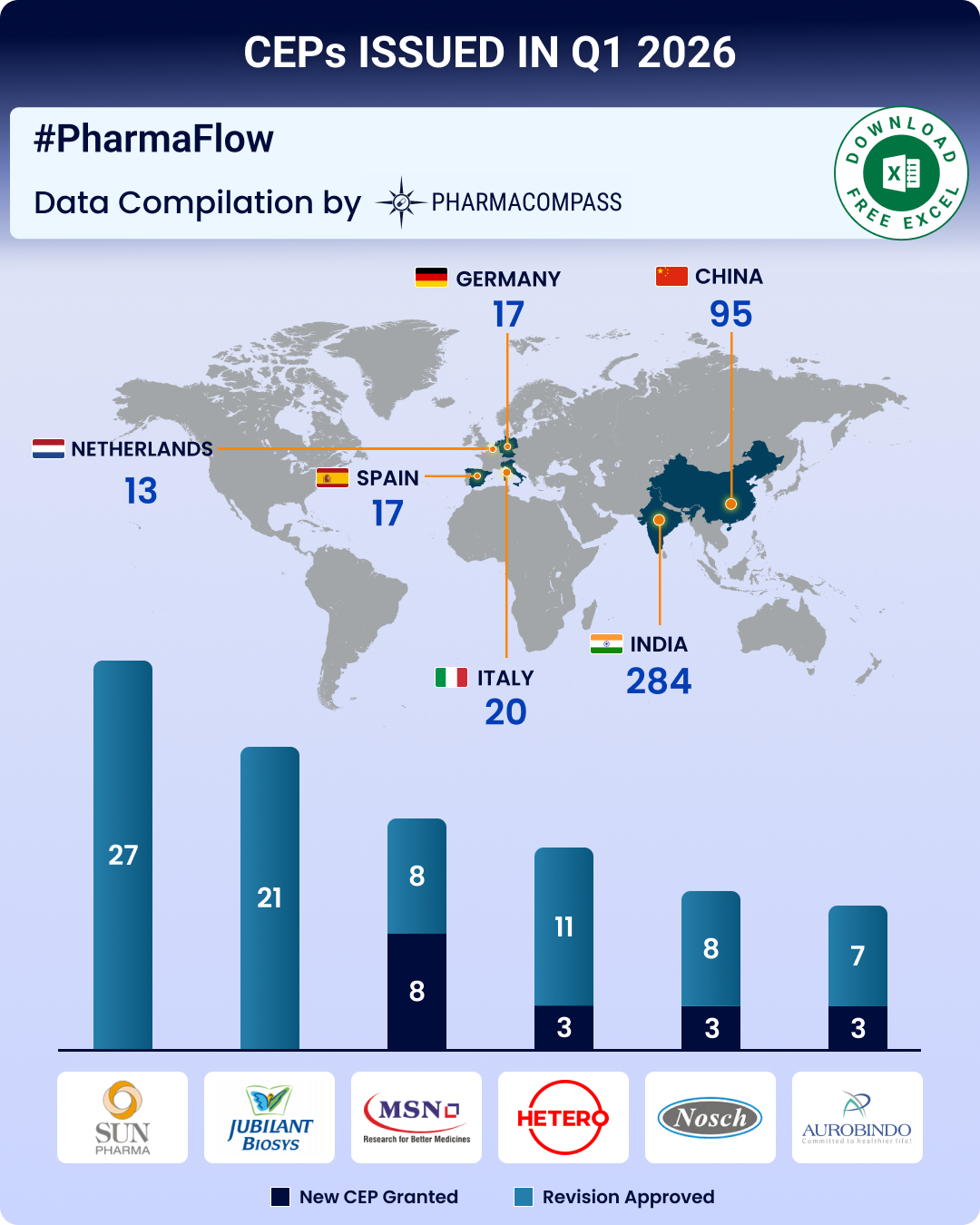
PharmaCompass is introducing a new regulatory update that tracks developments in Certificates of Suitability to the Monographs of the European Pharmacopoeia, referred to as CEPs. These certificates are a critical regulatory instrument in the global pharmaceutical supply chain. Also known as a Certification of Suitability (COS), CEPs are issued by the European Directorate for the Quality of Medicines and HealthCare (EDQM), with or without inspection of the manufacturing site. A CEP must be renewed every five years from its original issue date to remain valid, regardless of any revisions made during the interim period. However, a CEP does not replace Good Manufacturing Practice certification. CEPs are recognized as a trusted reference for API quality, thereby simplifying global registration strategies. Apart from Europe, the CEP system is widely used by many regulatory authorities, including those in Canada, Australia, Brazil, Singapore and South Africa.  View CEPs Issued in Q1 2026 (Power BI Dashboard, Free Excel Available) CEP 2.0 enhances regulatory clarity, brings efficiency, global interoperability  There are several types of CEPs, depending on the nature of the substance and evaluation. The most common type is the Chemical CEP, which confirms that a chemically synthesized API meets standards for purity and impurity control. Then there are Herbal CEPs for herbal substances and preparations. Another key category is the TSE CEP, which addresses risks associated with transmissible spongiform encephalopathies in animal-derived materials. In addition, there are Combined CEPs that may cover multiple aspects, such as chemical quality, TSE risk, and sterility. However, biological products such as vaccines and blood products fall outside the scope of the CEP framework. In 2023, the CEP system underwent a major transformation with the introduction of CEP 2.0, which marks a shift from a largely document-based system to a more structured, transparent, and digitally aligned model. This makes it easier for companies to manage compliance while improving trust among global regulators. While increasing data and compliance requirements for API manufacturers, CEP 2.0 enables better regulatory clarity, streamlined dossier integration, and stronger global acceptance. Overall, CEP 2.0 is designed to enhance regulatory clarity while making the system more efficient and globally interoperable. Indian firms issued maximum CEPs; Sun Pharma and its subsidiaries, Jubilant Biosys top list India topped the charts for CEPs issued, both in terms of new CEPs and revisions in the first quarter (Q1) of 2026. Indian companies were issued 81 new CEPs in Q1 2026 (as against 40 in Q1 2025) and 203 revisions (as against 129 in Q1 2025). In comparison, Chinese companies were issued 42 new CEPs in Q1 2026 (against 25 in Q1 2025) and 53 revisions (against 67 in Q1 2025). Italy came a distant third, followed by Germany and Spain. India’s Sun Pharmaceuticals and its subsidiaries topped the list of companies with the maximum number of CEPs issued— while no new CEP was issued, 27 CEPs were revised in Q1 2026. At second place was Jubilant Biosys — 21 CEPs were revised in Q1 2026. In terms of products, the maximum CEPs were issued for amlodipine besylate (a calcium channel blocker used for treating hypertension), followed by sitagliptin phosphate (a type 2 diabetes medicine) and pregabalin (a drug used to treat neuropathic pain, fibromyalgia, seizures, and generalized anxiety disorder). Both amlodipine besylate and sitagliptin phosphate had not been issued new CEPs or revisions in Q1 2025. EDQM introduces new guidelines to accelerate CEP assessments The EDQM charges fees for various services related to CEPs that depend on the type of request or regulatory activity involved. In general, fees apply to handling CEP applications, revisions or renewals and for offering technical advice (where applicants seek scientific or regulatory guidance). In March 2026, the EDQM introduced two new guidelines aimed at accelerating CEP assessments. The first is a reliance-based assessment pathway, which allows regulators to leverage prior approvals from trusted authorities, such as those in the EU, UK, Australia, Canada, and the WHO pre-qualification program. The second is a fast-track assessment route designed to expedite reviews in situations such as medicine shortages and to support initiatives like the EU Critical Medicines Act. Timelines have been significantly compressed under these new pathways. Initial evaluations are completed within 46 working days, compared to up to 115 days under the standard procedure. Applicants are given 30 calendar days to respond to queries, after which regulators complete the final assessment within 23 working days. Another important regulatory update relates to electronic submissions. From April 1, 2026, the EDQM will reject non-compliant CEP applications at the point of submission. All applications must include a validated electronic Common Technical Document (eCTD) dossier along with a proper validation report, submitted in line with the updated Common European Submission Portal (CESP) guidelines. Taken together, these developments signal a more rigorous yet efficient CEP ecosystem. Our view The shift to CEP 2.0 signals a move toward greater transparency, digitalization, and global regulatory alignment. Though enhanced disclosure and stricter e-submission requirements may increase the compliance burden, especially for smaller manufacturers, the long-term gains are expected to be significant. Going forward, companies that invest in data quality and regulatory readiness stand to gain from these changes.

Impressions: 3970

https://dev1.pharmacompass.com/radio-compass-blog/cep-q1-2026-update-cep-2-0-edqm-s-new-guidelines-strengthen-ecosystem-indian-firms-top-list-of-ceps-issued

#PharmaFlow by PHARMACOMPASS
09 Apr 2026

WEEKLY INDUSTRY NEWS

3read-more
read-more
Merck’s RSV jab shows efficacy in infants; Novo-Lilly weight loss rivalry intensifies as China okays tirzepatide
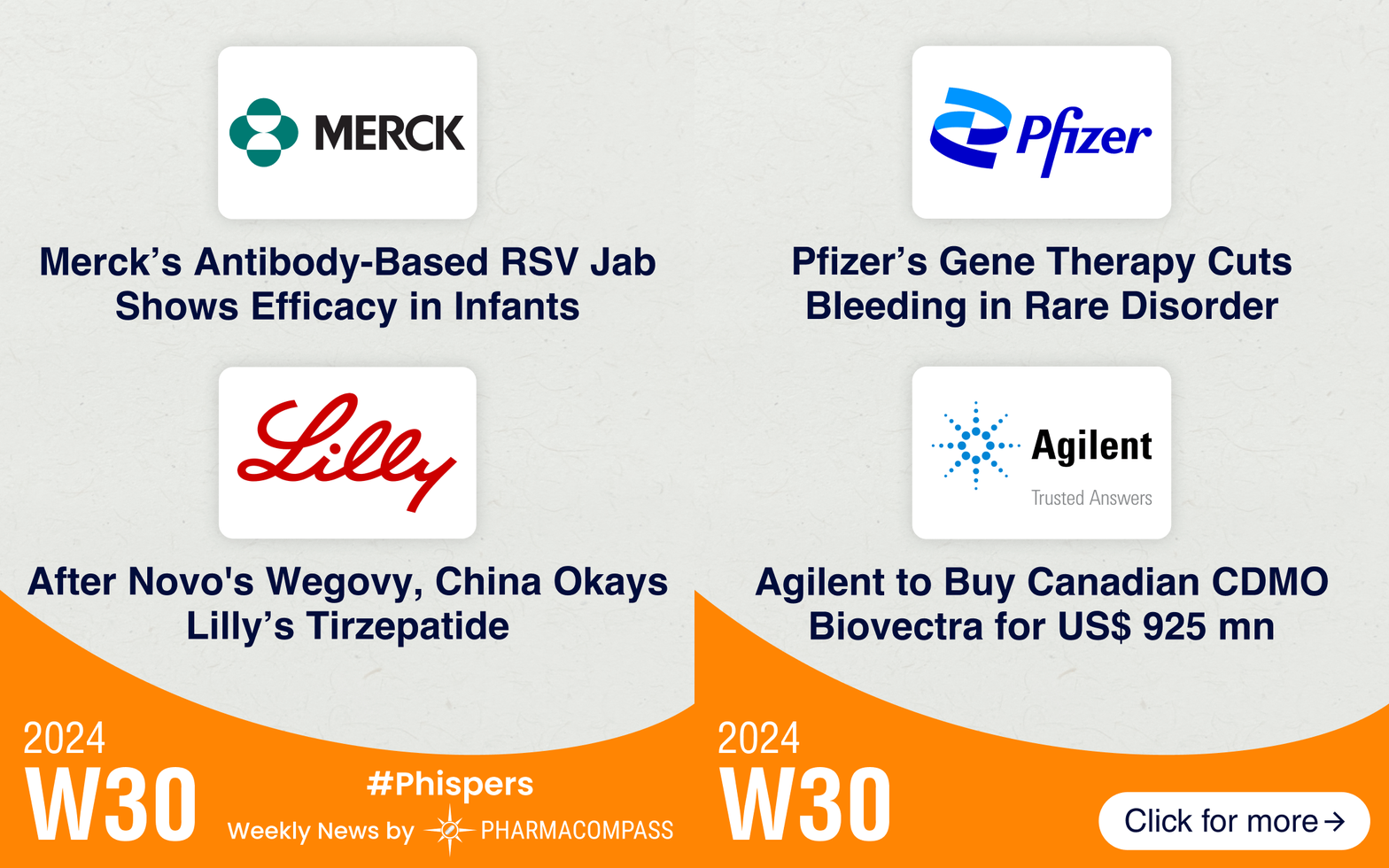
This was a week when the US President Joe Biden ended his reelection bid, after giving America the Inflation Reduction Act that allows Medicare to negotiate drug prices. The week didn’t see major drug approvals in the US. But China approved Lilly’s tirzepatide, a month after okaying Novo Nordisk’s Wegovy. This approval in the world’s second largest pharmaceutical market has intensified rivalry in the weight loss market.The week also saw a slew of activity around drug manufacturing. Agilent has agreed to buy the Canadian contract development and manufacturing organization (CDMO) Biovectra for US$ 925 million. Novo Nordisk has broken ground on a 200-acre site to construct a new production plant. BeiGene has opened a flagship facility in New Jersey with biologics manufacturing capabilities and Pfizer has cut the ribbon on a US$ 743 million extension of an API plant in Singapore.In trials, Merck’s antibody-based injection hit its main goal of protecting infants from the respiratory syncytial virus (RSV) and GSK’s Dovato proved to be non-inferior to Gilead’s Biktarvy in a head-to-head matchup in treating HIV.In other news from trials, Pfizer’s gene therapy for hemophilia A significantly cut the number of annual bleeding episodes in patients with the rare disorder. And Sage and Biogen have decided to scrap trials on a drug that was being studied as a treatment for essential tremor, a nervous system condition.The European Commission (EC) has accepted CSL Vifor’s offer to address potential EU antitrust violations after it allegedly disparaged its Danish rival Pharmacosmos. And the US Food and Drug Administration (FDA) hit Indian drugmaker Brassica with a warning letter after it found employees routinely fabricating data results.Merck’s RSV injection protects infants in trial, to file data with global regulatorsMerck said its monoclonal antibody jab to protect infants against RSV-related infections has met the main goals of a mid-to-late-stage trial. Merck didn’t go into details but said clesrovimab reduced medically attended lower respiratory infections caused by RSV through day 150.The New Jersey drugmaker will file the data with global regulators. Currently, FDA has approved Sanofi and Astra’s Beyfortus for preventing RSV in children up to 24 months.GSK’s Dovato proves to be non-inferior to Gilead’s Biktarvy: In the largest study of its kind, GSK’s HIV drug Dovato (dolutegravir/lamivudine) was found to be non-inferior to Gilead Sciences’ Biktarvy (bictegravir/emtricitabine/tenofovir alafenamide) which is seen as the benchmark for HIV treatment. Significantly, Dovato did so with lesser weight gain in a 48-week head-to-head study of virologically suppressed HIV-1 patients. Both Dovato and Biktarvy are single pill treatments for HIV given once a day. Biktarvy raked in US$ 11.9 billion in 2023.After Novo’s Wegovy, China approves Lilly’s tirzepatide for weight lossThe Novo Nordisk-Eli Lilly rivalry in the field of weight loss drugs has got intensified with China, the world’s second largest market for pharmaceuticals, approving Lilly’s weight loss drug tirzepatide. The approval from the Chinese regulators for tirzepatide comes around a month after its rival Novo Nordisk’s Wegovy (semaglutide) was approved in China.Agilent to buy CDMO Biovectra; Novo, BeiGene, Pfizer expand capacitiesAgilent Technologies has agreed to buy the CDMO Biovectra for US$ 925 million. Canada-based Biovectra is capable of fill-and-finish services and can produce complex APIs. It also specializes in fast-growing segments like antibody-drug-conjugates (ADCs) and GLP-1 drugs.Meanwhile, there was a lot of news on capacity expansions. For instance, Novo Nordisk purchased a 200-acre site in the Danish city of Odense to build a new production plant, a Reuters report said. A report submitted to authorities revealed the Danish drugmaker plans to include fill-finish facilities to fill injector pens.Similarly, BeiGene has opened a flagship facility in Hopewell, New Jersey, which houses state-of-the-art biologics manufacturing capabilities and a clinical research and development center. The 42-acre facility is projected to “create hundreds of skilled high-tech jobs at the site by the end of 2025.” And Pfizer is investing SGD$ 1 billion (US$ 743 million) to expand its API manufacturing facility in Singapore to meet the needs of oncology, pain, and antibiotic medicines.CSL Vifor to highlight rival’s product in campaign to resolve anti-trust probeIn a unique settlement, CSL Vifor will launch a marketing campaign spotlighting its Danish rival’s product rather than its own in order to resolve an antitrust probe in the EU. This follows a two-year investigation by the European Commission alleging Vifor disparaged Pharmacosmos' iron deficiency treatment Monofer (ferric derisomaltose) in a campaign targeting healthcare professionals. Monofer is possibly the sole competitor in Europe to Vifor's flagship intravenous iron medicine Ferinject (ferric carboxymaltose). Vifor has made a 10-year pledge to “launch a comprehensive and multi-channel communication campaign to rectify and undo the effects of the potentially misleading messages previously disseminated by Vifor regarding the safety of Monofer.”Pfizer scores late-stage trial win for its gene therapy for hemophilia AIn a late-stage trial, Pfizer’s gene therapy for hemophilia A — giroctocogene fitelparvovec — significantly cut the number of annual bleeding episodes in patients with the rare disorder.The data takes Pfizer one step closer to securing an FDA approval for this hemophilia A drug. In April, FDA had approved Beqvez as a one-time gene therapy for hemophilia B. If approved, Pfizer’s hemophilia A gene therapy will compete with BioMarin’s Roctavian.Biogen, Sage to abandon trial on essential tremor drug after trial failureAfter Sage and its partner Biogen’s pill Zurzuvae (zuranolone) could not secure FDA approval for treating clinical depression in August last year, the partnership has faced yet another setback.Their drug — SAGE 324 — which was being studied as a treatment for essential tremor (ET), a disorder that causes uncontrollable shaking of hands, arms and other parts of the body, has failed a phase 2 trial. “Given these results, Sage and Biogen will close the ongoing open label safety study of SAGE-324 in ET and do not plan to conduct further clinical development of SAGE-324 in ET,” a  statement said.FDA issues warning letter to Indian drugmaker after employees fabricate recordsIndian CDMO Brassica Pharma was hit with a warning letter from the FDA after the US agency found it was a “routine practice” at its plant “to not test all batches for sterility and to fabricate records for those samples not tested.” FDA also pointed out that operators wore torn and stained clothing while performing aseptic processing activities, which could lead to contamination. FDA deemed Brassica’s response to the Form 483 it issued to be inadequate.  

Impressions: 1376

https://dev1.pharmacompass.com/radio-compass-phisper/merck-s-rsv-jab-shows-efficacy-in-infants-novo-lilly-weight-loss-rivalry-intensifies-as-china-okays-tirzepatide

#Phispers by PHARMACOMPASS
25 Jul 2024

NEWS LIBRARY

107read-more
read-more

https://www.businesswire.com/news/home/20260721822679/en/ViiV-Healthcare-to-present-phase-IIIb-data-comparing-Dovato-with-Biktarvy-in-treatment-nave-adults-alongside-INSTI-powered-long-acting-injectable-innovation-at-AIDS-2026

BUSINESSWIRE
21 Jul 2026

https://www.accessdata.fda.gov/scripts/cder/daf/index.cfm?event=overview.process&ApplNo=219804

FDA
07 May 2026

https://www.businesswire.com/news/home/20260217311861/en/ViiV-Healthcare-showcases-long-acting-HIV-innovation-and-potential-of-ultra-long-acting-pipeline-including-new-data-for-first-third-generation-integrase-inhibitor-at-CROI-2026

BUSINESSWIRE
17 Feb 2026

https://www.accessdata.fda.gov/scripts/cder/daf/index.cfm?event=overview.process&ApplNo=210811

FDA
12 Jun 2025
Lupin gets USFDA nod for generic HIV drug

24 Jan 2025

// ECONOMICTIMES

https://economictimes.indiatimes.com/industry/healthcare/biotech/pharmaceuticals/lupin-gets-usfda-nod-for-generic-hiv-drug/articleshow/117517932.cms

ECONOMICTIMES
24 Jan 2025

https://www.expresspharma.in/lupin-receives-u-s-fda-tentative-approval-for-hiv-treatment-generic/

EXPRESSPHARMA
07 Dec 2024
digital-content60825##p