Please Wait
Applying Filters...
Menu

Digital Content read-more

Create Content with PharmaCompass, ask us

PHARMA & BIOTECH INSIGHTS

1read-more
read-more

A PHP Error was encountered

Severity: 8192

Message: mb_convert_encoding(): Handling HTML entities via mbstring is deprecated; use htmlspecialchars, htmlentities, or mb_encode_numericentity/mb_decode_numericentity instead

Filename: blog/grid.php

Line Number: 52

Backtrace:

File: /var/www/html/application/views/include/media/blog/grid.php
Line: 52
Function: mb_convert_encoding

File: /var/www/html/application/models/Cmn.php
Line: 3595
Function: view

File: /var/www/html/application/views/include/product/digitalContent/grid.php
Line: 17
Function: common

File: /var/www/html/application/views/include/desc/inner.php
Line: 13
Function: view

File: /var/www/html/application/views/include/desc/indexNew.php
Line: 2433
Function: include

File: /var/www/html/application/controllers/Common.php
Line: 11303
Function: view

File: /var/www/html/index.php
Line: 231
Function: require_once

DMF filings rise 4.5% in Q3 2025; China holds lead, India records 20% growth in submissions
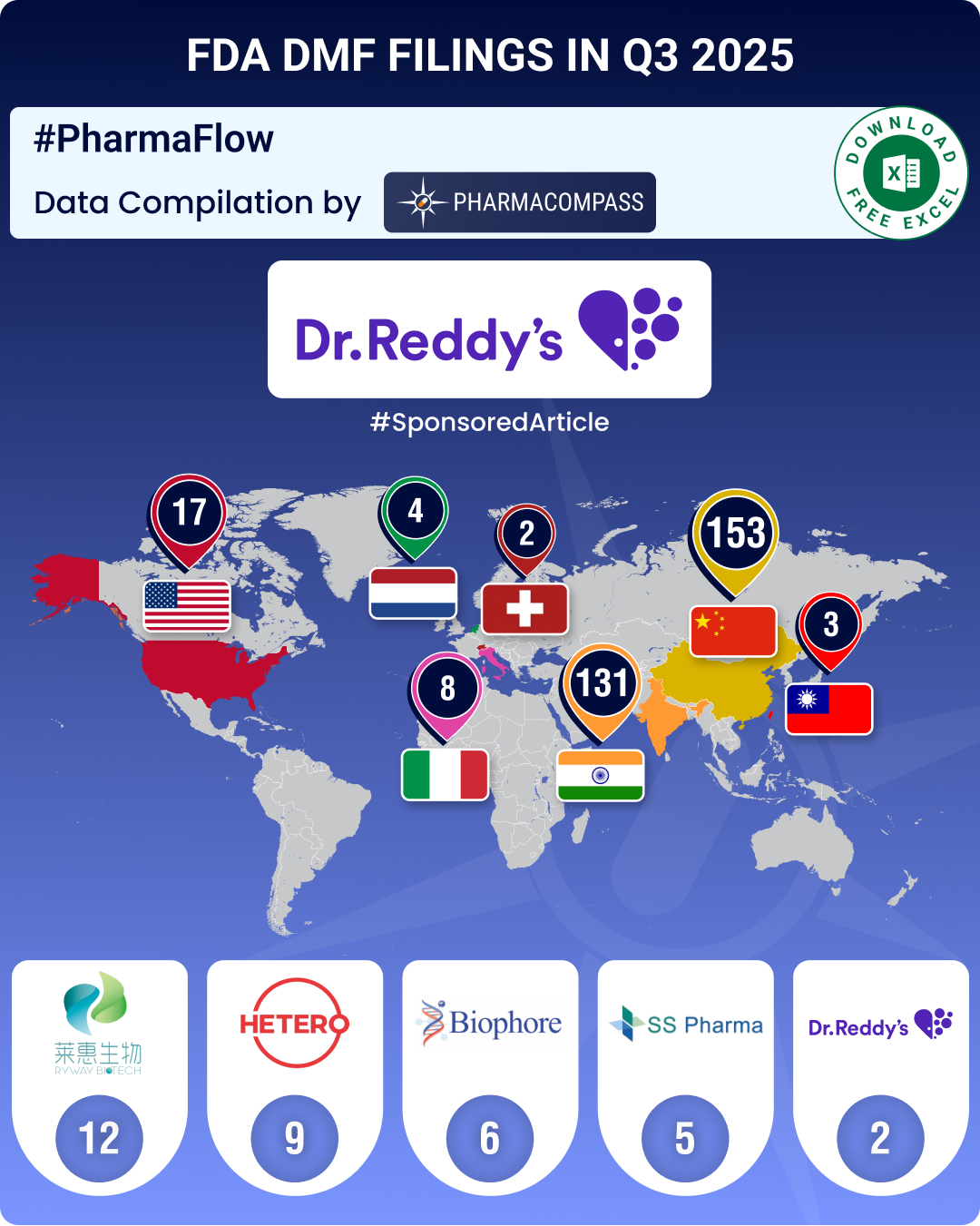
The third quarter (Q3) of 2025 witnessed a steady rise in Drug Master File (DMF) submissions to the US Food and Drug Administration (FDA). DMFs are used to provide confidential, detailed information about facilities, processes, or articles used in the manufacturing, processing, packaging, and storing of human drug products A total of 323 Type II DMFs were submitted during this period, as opposed to 309 submissions in Q3 2024, marking an increase of 4.53 percent. This is the second highest number since 2018. In Q1 2025, 339 Type II filings were recorded. Across all DMF types (II, III, IV, and V), 479 DMFs were filed in Q3 2025, compared to 394 in Q3 2024, representing a 21.57 percent increase. Out of the 323 Type II DMFs submitted in Q3 2025, 40 had completed their review by the end of Q3, reflecting a processing lag between submission and review completion.  View FDA DMF Filings in Q3 2025 (Power BI Dashboard, Free Excel Available) China maintains its lead while India posts double-digit growth in DMF submissions  China and India continued to dominate DMF submissions in Q3 2025. China retained the top spot with 153 Type II DMFs, matching its submission count from Q3 2024. India recorded 131 DMFs, marking a 20.18 percent increase over 109 filings during the corresponding period last year. The United States stood a distant third with 17 filings, compared to 13 in Q3 2024. Among European nations, Italy recorded eight DMFs, doubling its 2024 tally. The Netherlands filed four, up from three. Spain submitted only one DMF, as against seven submitted in Q3 2024. Taiwan made three filings, up from one submitted in Q3 2024. Together, India, China and Taiwan accounted for about 88.9 percent of all Type II DMFs filed during the quarter. China’s Suzhou Ryway Biotech tops corporate tally; India’s Hetero, Biophore follow China’s Suzhou Ryway Biotech led the company-wise tally with 12 DMF submissions in Q3 2025. The company had not filed any DMFs in Q3 2024. India’s Hetero Group followed with nine DMFs, maintaining the same number of filings as Q3 2024. Biophore India Pharmaceuticals ranked third with six DMFs, doubling its count from three last year. Other notable contributors include Sai Sreyas Pharmaceuticals (India) and Shanghai Haoyuan Chemexpress (China), with five DMFs each. Companies such as SNJ Group, Lunan Pharmaceutical, Allsino Pharmaceutical, Shankus Pharma, Jiangxi Xinganjiang Pharmaceutical, Sunpure Extracts, Lee Pharma, Umedica Laboratories, Linhai Tianyu Pharmaceutical and Maithri Drugs filed four DMFs each. Olaparib, semaglutide lead molecular filings; Dr. Reddy’s files DMF for edoxaban & tucatinib Dr. Reddy’s Laboratories also featured among key DMF filers in Q3 2025, submitting two DMFs — for edoxaban tosylate monohydrate and tucatinib copovidone. Edoxaban tosylate monohydrate (marketed as Savaysa by Daiichi Sankyo) is a prescription anticoagulant used to reduce the risk of stroke and to treat deep vein thrombosis and pulmonary embolism. Patent exclusivity for Savaysa extends until October 2026 in the United States, with no generic currently available. In terms of molecules, the highest number of DMFs were filed for olaparib, semaglutide, ruxolitinib phosphate, ferric carboxymaltose, and vismodegib, with three DMFs each in Q3 2025. Olaparib, sold by AstraZeneca under the brand name Lynparza, saw DMFs being filed by BDR Lifesciences and Intas Pharmaceuticals from India, and by ScinoPharm Taiwan during the quarter. Semaglutide, a glucagon-like peptide-1 (GLP-1) receptor agonist developed by Novo Nordisk, continued to draw strong interest from API manufacturers. DMFs for semaglutide were filed by three Chinese companies: Yangzhou Aurisco Pharmaceutical, Zhejiang Peptites Biotech, and Fujian Genohope Biotech. Ruxolitinib phosphate, marketed by Incyte as Jakafi, saw three DMFs. Three Indian companies — Alembic Pharmaceuticals, Valary Labs, and Devi Pharmatech — filed DMFs for this API in Q3 2025. Other molecules that received multiple DMF submissions include ferric carboxymaltose (used to treat iron-deficiency anemia) and vismodegib (an oral therapy for basal-cell carcinoma). First-time DMF filings span 17 companies; India leads with nine first-time DMF The quarter saw first-time DMF filings from 17 companies. India took a lead here with nine first-time DMF filings, followed by China (six), and the US (two). The DMF filings in this quarter included inclisiran sodium (filed by Aurisco Pharmaceutical of China), pacritinib citrate (by TAPI Nl B.V. of the Netherlands), and vosoritide (by Apicore LLC of the US). Out of the 19 first-time DMFs filed in Q3 2025, four completed their Generic Drug User Fee Amendments (GDUFA) review process during the quarter. GDUFA fee for FY 2026: The FDA Generic Drug User Fee Amendments (GDUFA) is a law designed to speed access to safe and effective generic drugs to the public and reduce costs to the industry. Fee rates for fiscal year 2026 were published on July 30, 2025. FDA has revised fees under GDUFA III across all categories. While there is a slight increase in the DMF fee from US$ 95,084 in 2025 to US$ 102,584 in 2026, the ANDA fee has seen a sharp rise: from US$ 321,920 in 2025 to US$ 358,247 in 2026. FY 2025 and FY 2026 User Fee Rates Generic drug fee category Fees rates for FY 2025 Fees rates for FY 2026 Applications:     Abbreviated New Drug Application (ANDA) US$ 3,21,920 US$ 3,58,247 Drug Master File (DMF) US$ 95,084 US$ 1,02,584 Facilities:     Active Pharmaceutical Ingredient (API)—Domestic US$ 41,580 US$ 43,549 API—Foreign US$ 56,580 US$ 58,549 Finished Dosage Form (FDF)—Domestic US$ 2,31,952 US$ 2,38,943 FDF—Foreign US$ 2,46,952 US$ 2,53,943 Contract Manufacturing Organization (CMO)—Domestic US$ 55,668 US$ 57,346 CMO—Foreign US$ 70,668 US$ 72,346 GDUFA Program:     Large size operation generic drug applicant US$ 18,91,664 US$ 19,18,377 Medium size operation generic drug applicant US$ 7,56,666 US$ 7,67,351 Small business generic drug applicant US$ 1,89,166 US$ 1,91,838 Our view For several years prior to the pandemic, India had a lead in Type II DMF submissions. In recent years, China has surpassed India in DMF filings. But Q3 2025 numbers indicate that Indian drugmakers are fast catching up. Since DMFs establish trust in APIs from across the world, we feel this healthy competition between drugmakers from the two countries is good for the global pharmaceutical industry.  

Impressions: 5446

https://dev1.pharmacompass.com/radio-compass-blog/dmf-filings-rise-4-5-in-q3-2025-china-holds-lead-india-records-20-growth-in-submissions

#PharmaFlow by PHARMACOMPASS
13 Nov 2025

MARKET PERFORMANCE RECAP

3read-more
read-more
Market Performance Recap August 2026 highlights: FDA okays first mRNA flu shot; Curium agrees to buy Lantheus for up to US$ 8 bn
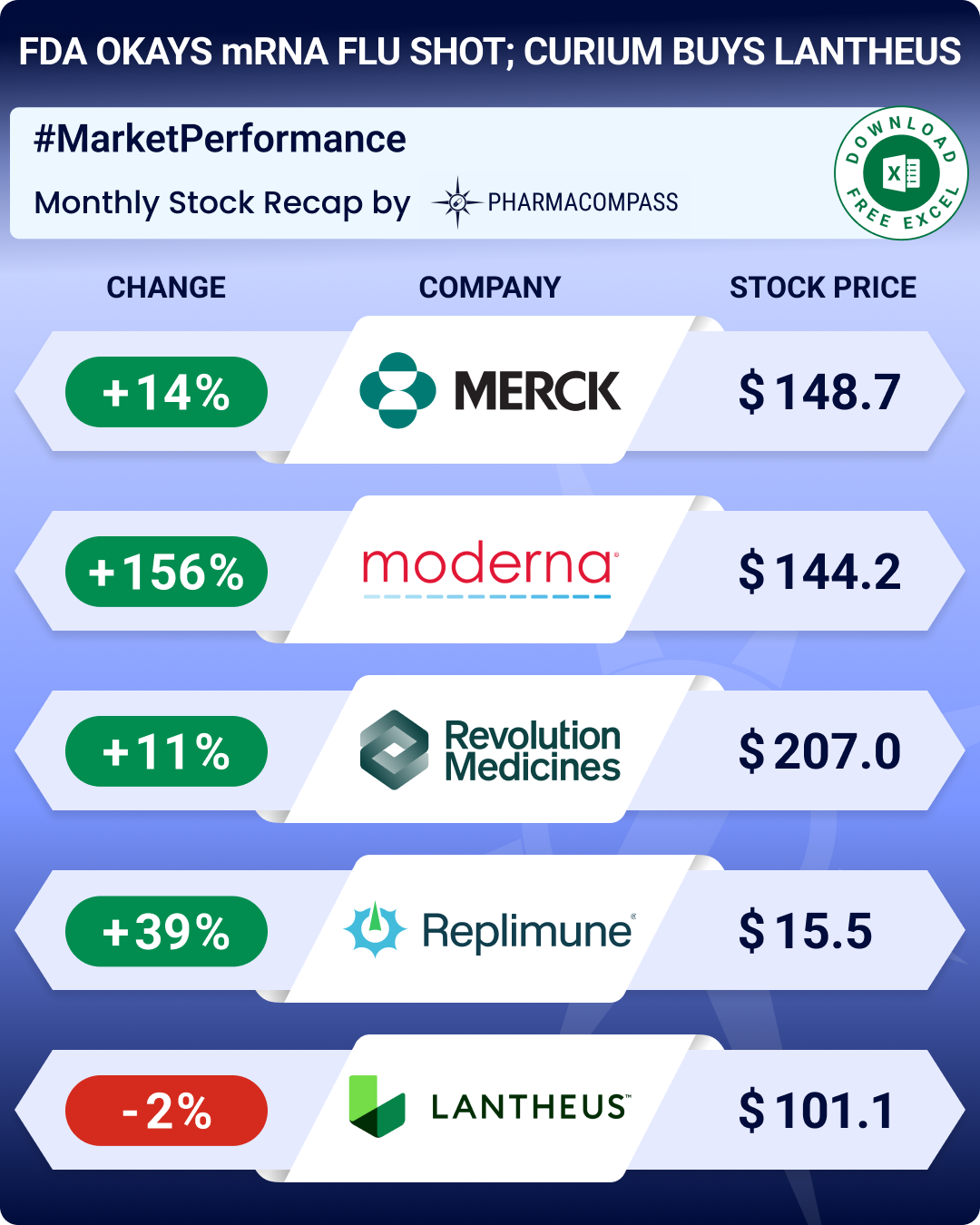
August was an important month for drug approvals, with the US Food and Drug Administration (FDA) approving Moderna’s mRNA-based seasonal influenza vaccine and Revolution Medicines’ drug to treat stage 4 pancreatic cancer. In clinical trials, Merck and Moderna’s personalized mRNA-based cancer vaccine significantly delayed melanoma from returning in patients whose tumors had been surgically removed. And Definium Therapeutics’ oral LSD candidate significantly reduced symptoms of generalized anxiety disorder, after showing benefit in depression earlier this year. As compared to July, the pharma indices rose at a faster clip. The Nasdaq Biotechnology Index (NBI) increased by 10.35 percent, from 6,456.75 in July-end to 7,125.06 at the end of August. The SPDR S&P Biotech ETF (XBI) increased by 10.56 percent, from 146.98 to 162.50. The S&P Biotechnology Select Industry Index (SPSIBI) increased by 10.57 percent, from 11,508.60 to 12,725.46.   Access the Market Performance Dashboard for August 2026 Newsmakers (Free Excel) FDA approves Moderna’s mRNA flu shot, Revolution’s therapy for pancreatic cancer  Amongst the month’s most notable drug approvals was Moderna's mFlusiva (mRNA-1010) — FDA cleared it for preventing seasonal influenza in all adults aged 50 and older. This is Moderna’s fourth approved product, and the first mRNA-based flu shot cleared in the US. Moderna’s stock rose 156 percent in August. Another first was FDA’s approval of Revolution Medicines’ Rasonque (daraxonrasib) for the treatment of adults with metastatic pancreatic ductal adenocarcinoma (PDAC), or stage 4 pancreatic cancer. Rasonque is the first targeted cancer medicine to be approved from a groundbreaking new class of targeted therapy known as RAS(ON) multi-selective and mutant-selective inhibitors. FDA also approved Takeda’s Orzeyful (oveporexton) for a lifelong neuropsychiatric sleep disorder, known as narcolepsy type 1. This is the first medicine approved for addressing the underlying cause of the disease in adults. The agency approved Gilead Sciences’ Bixlenvo (bictegravir/lenacapavir), the smallest once-daily single tablet regimen, for the treatment of HIV in adults who are virologically suppressed. The UK’s Medicines and Healthcare products Regulatory Agency (MHRA) authorized Eli Lilly's Foundayo (orforglipron), making Britain the first country in Europe to clear the GLP-1 tablet. Meanwhile, Japan’s health ministry approved GSK’s Hibsago (bepirovirsen) as a functional cure for chronic hepatitis B in adults who have taken antiviral pills for at least six months. This is the drug’s first approval anywhere in the world. A functional cure means the virus stays undetectable for at least 24 weeks after all treatment is stopped. Curium to acquire Lantheus for up to US$ 8 bn to create global radiopharma player August didn’t see many large M&A deals. The biggest acquisition was announced by Curium — it agreed to buy Lantheus Holdings for up to US$ 8 billion. Both companies are into radiopharmaceuticals, or radioactive isotopes used to diagnose and treat diseases, including cancers. Eli Lilly agreed to acquire Merida Biosciences for up to US$ 2.875 billion in cash. The acquisition gives Lilly access to Merida’s antibody-engineering platform and its lead phase 1 candidate MER511, being developed for Graves’ disease and thyroid eye disease, along with preclinical programs targeting food allergy, asthma and chronic spontaneous urticaria. Jazz Pharmaceuticals agreed to acquire San Diego-based Actio Biosciences for up to US$ 1.32 billion. The deal adds an experimental treatment for a rare inherited form of epilepsy to Jazz’s portfolio. In deals, Roche’s Genentech is partnering with South Korea’s Hanmi Pharm to advance a novel therapy (HM17321) that could improve the quality of weight loss by preserving lean mass in a deal worth up to US$ 2.3 billion. Unlike GLP-1 drugs, which cause muscle loss, HM17321 is designed to cut fat while increasing lean mass. The drug is still in phase 1 trials. FDA approves two drugs for blood cancer — Takeda’s Mimrylo, BMS’s Zenbexus In oncology, FDA approved Takeda’s Mimrylo (rusfertide) for the treatment of erythrocytosis (a condition where the body has a higher-than-normal number of red blood cells) in adults with polycythemia vera, a type of blood cancer. The agency granted accelerated approval to Bristol Myers Squibb’s Zenbexus (iberdomide), combined with subcutaneous daratumumab and hyaluronidase-fihj and dexamethasone, for adults with multiple myeloma (a type of blood cancer) who have had at least one prior line of therapy. FDA also granted accelerated approval to Replimune’s Tudriqev (vusolimogene oderparepvec-wtpg), in combination with BMS’ Opdivo (nivolumab), for treating adults with a difficult form of skin cancer, known as unresectable advanced cutaneous melanoma. The approval follows two rejections, in July 2025 and April 2026. Replimune’s stock was up 39 percent in August. In rare diseases, FDA approved Regeneron Pharmaceuticals’ Pasatru (garetosmab-grts) for a rare genetic disorder known as fibrodysplasia ossificans progressiva (FOP). In this condition, muscle, tendon and ligament tissue gradually turn into bone. FDA also granted accelerated approval to Ultragenyx’s Genglycos (pariglasgene brecaparvovec-opnr), the first treatment for glycogen storage disease type Ia (GSD1a) in patients aged eight and above. Children and adults with the rare disorder lack an enzyme needed to release stored sugar from the liver. As a result, their blood sugar crashes whenever they go too long without eating. Merck-Moderna’s mRNA cancer vaccine notches first phase 3 win; Definium’s LSD drug shows benefit in anxiety In clinical trials, the biggest readout came from Merck and Moderna — in a phase 3 trial, their personalized mRNA cancer vaccine, intismeran autogene, given in combination with Keytruda (pembrolizumab), significantly delayed melanoma recurrence in patients whose tumors had been surgically removed. Otsuka’s Voyxact (sibeprenlimab) became the first drug to stabilize kidney function in IgA nephropathy to the rate seen in healthy adults, according to two-year results from a phase 3 trial. IgA nephropathy is a disease in which faulty antibodies lodge in the kidney’s filters. Psychedelics saw another late-stage success. Definium Therapeutics’ oral LSD candidate DT120 (lysergide) significantly reduced symptoms of generalized anxiety disorder in a phase 3 trial. DT120 is an orally disintegrating tablet. AstraZeneca posted two lung cancer wins on the same day. In one phase 3 trial, Tagrisso (osimertinib) plus Orpathys (savolitinib) showed benefit in a type of lung cancer, known as EGFR-mutated NSCLC driven by MET resistance. In another phase 3 trial, Enhertu (trastuzumab deruxtecan) showed benefit as a first-line treatment of patients with unresectable, locally advanced or metastatic HER2-mutant NSCLC. Our view All three pharma indices rose over 10 percent in August, against the S&P 500’s modest increase of 2.42 percent. As geopolitical uncertainties continue to rock industries across the world, it’s clear that the pharmaceutical industry is building resilience through its laboratories and clinical trials.

Impressions: 1229

https://dev1.pharmacompass.com/pipeline-prospector-blog/market-performance-recap-august-2026-highlights-fda-okays-first-mrna-flu-shot-curium-agrees-to-buy-lantheus-for-up-to-us-8-bn

#PharmaFlow by PHARMACOMPASS
03 Sep 2026

WEEKLY INDUSTRY NEWS

7read-more
read-more
Lilly’s retatrutide beats Novo’s Ozempic on reducing sugar, weight; Lonza more than doubles CDMO sites in US
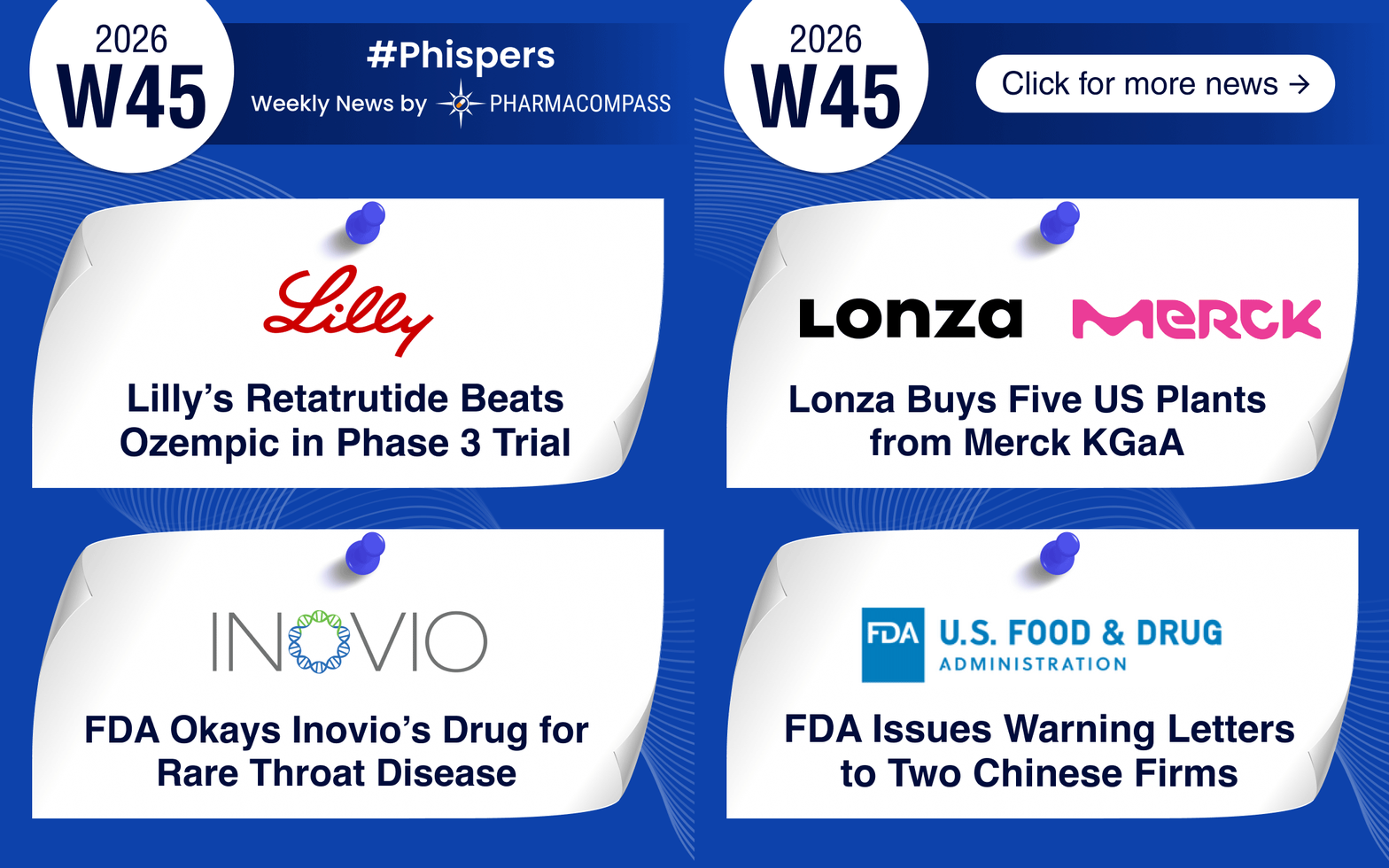
In Phispers this week, Eli Lilly’s experimental drug retatrutide produced greater reductions in blood sugar and weight as compared to Novo’s Ozempic (semaglutide) in a phase 3 trial. Genmab’s investigational drug petosemtamab, in combination with Keytruda (pembrolizumab), reduced the risk of death by 50 percent against Keytruda alone in a global phase 3 trial in head and neck cancer. In trial failures, Acumen Pharmaceuticals said it will discontinue its only clinical program after its investigational drug missed its primary endpoint in a phase 2 Alzheimer’s trial. And Geron discontinued a phase 3 trial of imetelstat in patients with a rare type of blood cancer. In deals, Lonza announced the acquisition of five US contract development and manufacturing sites from Germany’s Merck KGaA, taking its US network from four sites to nine. Astellas licensed a preclinical cancer drug from Melbourne-based Audax Biosciences in a deal worth up to US$ 1.34 billion excluding royalties. Flagship Pioneering has merged three biotech platforms into a new Somerville, Massachusetts company called Etcelera. AstraZeneca unveiled a restructuring program aimed at saving US$ 1.5 billion in costs by 2029. Meanwhile, in drug approvals, the US Food and Drug Administration (FDA) granted accelerated approval to Inovio Pharmaceuticals’ immunotherapy to reduce the frequency of surgery in adults with recurrent respiratory papillomatosis (RRP). The agency also granted tentative approval to Dr Reddy’s Laboratories’ generic lenacapavir, an HIV prevention drug. FDA sent warning letters to two Chinese drugmakers — Sanrace Biotechnology and Guangdong Bangze Medicine — over violations of current good manufacturing practices (cGMPs). It also issued a warning letter to Northland Nuclear Medicine over cGMP violations in the production of positron emission tomography (PET) drugs. Lilly’s retatrutide beats Novo’s Ozempic in reducing blood sugar, weight  Eli Lilly has said its experimental drug retatrutide produced greater reductions in blood sugar and weight compared to Novo’s Ozempic (semaglutide) in a phase 3 trial in adults with type 2 diabetes. The head-to-head trial compared 9 mg and 12 mg doses of retatrutide with a 2 mg dose of Ozempic (the highest approved dose for type 2 diabetes). Retatrutide also improved cholesterol, triglycerides and systolic blood pressure more. Lonza buys five US sites from Merck KGaA, more than doubles its US footprint Lonza has signed a definitive agreement to acquire five US contract development and manufacturing sites from Germany’s Merck KGaA, taking its US network from four sites to nine. Lonza will also gain 1,100 employees, taking its US workforce to over 6,000. The sites are expected to contribute around CHF 250 million (US$ 306.5 million) in 2028 sales. Astra launches US$ 1.5 bn cost savings program: AstraZeneca has unveiled a three-year restructuring program aimed at generating about US$ 1.5 billion in annualized savings by 2029. The savings will largely be reinvested in its pipeline of over 180 projects. Some departments could face cutbacks, while others will re-skill their employees for emerging needs, the company said. FDA grants accelerated approval to Inovio’s drug for rare throat disease FDA has granted accelerated approval to Inovio Pharmaceuticals’ immunotherapy Voceryq (doruxapapogene ralaplasmid and lalikinogene sifuplasmid-gxfd) to reduce the frequency of surgery in adults with recurrent respiratory papillomatosis (RRP). This rare disease is caused by low-risk human papillomavirus (HPV) types that produce wart-like growths in the airway which need to be repeatedly removed through surgery. Dr Reddy’s wins tentative nod for generic HIV shot: FDA has granted tentative approval to Dr Reddy’s Laboratories’ generic lenacapavir, an HIV prevention drug. This is the first generic version of lenacapavir. Tentative approval means the product meets FDA standards but cannot be sold in the US while Gilead’s patents stand. The approval potentially accelerates access in 120 low- and middle-income countries covered by licensing agreements. Flagship Pioneering merges three startups into AI drug discovery firm Etcelera Flagship Pioneering, an American life sciences venture capital company, has merged three biotech platforms — Cellarity, Etiome and Empress Therapeutics — into a new Somerville, Massachusetts company called Etcelera. With the help of Flagship’s in-house AI capabilities, Etcelera will be able to define novel targets and discover and develop small molecules with a greater chance of success. Astellas licenses Audax’s cancer drug: Astellas has taken an exclusive option to license DAX-044, a preclinical cancer drug from Melbourne-based Audax Biosciences, in a deal worth up to US$ 1.34 billion excluding royalties. Audax receives US$ 285 million in upfront and option exercise payments, with up to US$ 1.05 billion in milestones. Genmab’s drug combo scores phase 3 win in head and neck cancer Genmab has announced positive topline results from a global phase 3 trial that evaluated its investigational drug petosemtamab, in combination with Keytruda (pembrolizumab), against Keytruda alone in patients with previously untreated PD-L1 positive recurrent or metastatic head and neck squamous cell carcinoma (HNSCC). The combo demonstrated a statistically significant and clinically meaningful improvement in overall survival (OS), cutting the risk of death by 50 percent. Geron scraps phase 3 blood cancer trial: Hematology biopharma Geron has discontinued a phase 3 trial of imetelstat in patients with myelofibrosis (a rare type of blood cancer) who had relapsed or stopped responding to a JAK inhibitor, after an independent data monitoring committee advised that the study was unlikely to meet its primary endpoint of overall survival. Acumen abandons sole asset: Acumen Pharmaceuticals will discontinue sabirnetug, its only clinical program, after a phase 2 trial in early Alzheimer’s disease missed its primary endpoint. India plans immediate license suspension for drugs that fail critical quality tests India plans to amend Drugs Rules, 1945, to allow regulators to immediately suspend manufacturing licenses for drugs that fail to meet the critical quality standards in government testing. Once implemented, the rule will do away with the need for first issuing a show-cause notice. Once suspended, the manufacturer will have to undergo a root cause analysis and take corrective and preventive action to the regulator’s satisfaction. Overall, the country has tightened oversight. In August, the Central Drugs Standard Control Organization (CDSCO) and the drug regulator of Assam had ordered Sun Pharma, India’s largest drugmaker, to stop manufacturing, selling and distributing ophthalmic products made at its plant in Kokjhar, Assam, until it files a satisfactory compliance report. FDA issues warning letters to China’s Sanrace, Guangdong Bangze  FDA has issued warning letters to two Chinese drugmakers — Sanrace Biotechnology and Guangdong Bangze Medicine (GBM) — based on review of records, as opposed to inspections. In the case of Sanrace, FDA found the company failed to test the identity of each component used in its drug products, and that it had no process validation procedures or studies at all. GBM, an over-the-counter (OTC) drug manufacturer in Shantou, China, did not adequately test incoming components for identity, purity or strength. It relied on suppliers’ certificates of analysis without verifying them.Cites repeat violations at US PET drugmaker: FDA has issued a warning letter to Northland Nuclear Medicine, located in Bismarck, North Dakota, over critical cGMP violations in its production of PET drugs, found during an inspection from May 26 to 29.

Impressions: 1188

https://dev1.pharmacompass.com/radio-compass-phisper/lilly-s-retatrutide-beats-novo-s-ozempic-on-reducing-sugar-weight-lonza-more-than-doubles-cdmo-sites-in-us

#Phispers by PHARMACOMPASS
05 Nov 2026

NEWS LIBRARY

85read-more
read-more

https://www.indianpharmapost.com/news/dr-reddys-bags-tentative-usfda-nod-for-twice-yearly-hiv-injectable-lenacapavir-across-120-nations-22303

INDPHARMAPOST
02 Nov 2026

https://www.indianpharmapost.com/news/dr-reddys-signs-gilead-deal-for-once-yearly-lenacapavir-for-hiv-prevention-21889

INDPHARMAPOST
17 Sep 2026

https://www.contractpharma.com/breaking-news/gilead-partners-with-pan-american-health-organization-on-lenacapavir-access-for-latin-america-caribbean/

CONTRACTPHARMA
16 Sep 2026

https://www.fiercepharma.com/pharma/draft-guidance-uk-cost-arbiter-nice-rebuffs-gileads-twice-year-prep-med-national-coverage

FIERCE PHARMA
10 Sep 2026

https://www.gilead.com/news/news-details/2026/u-s--fda-approves-gileads-bixlenvo-a-new-once-daily-single-tablet-option-for-virologically-suppressed-adults-with-hiv-including-those-on-complex-regimens

PRESS RELEASE
27 Aug 2026

https://economictimes.indiatimes.com/industry/healthcare/biotech/pharmaceuticals/lenacapavir-drl-emcure-get-approval-to-make-breakthrough-hiv-drug/articleshow/133476844.cms

ECONOMICTIMES
25 Aug 2026
digital-content133082658##p