Please Wait
Applying Filters...
Menu

Digital Content read-more

Create Content with PharmaCompass, ask us

PHARMA & BIOTECH INSIGHTS

1read-more
read-more

A PHP Error was encountered

Severity: 8192

Message: mb_convert_encoding(): Handling HTML entities via mbstring is deprecated; use htmlspecialchars, htmlentities, or mb_encode_numericentity/mb_decode_numericentity instead

Filename: blog/grid.php

Line Number: 52

Backtrace:

File: /var/www/html/application/views/include/media/blog/grid.php
Line: 52
Function: mb_convert_encoding

File: /var/www/html/application/models/Cmn.php
Line: 3595
Function: view

File: /var/www/html/application/views/include/product/digitalContent/grid.php
Line: 17
Function: common

File: /var/www/html/application/views/include/desc/inner.php
Line: 13
Function: view

File: /var/www/html/application/views/include/desc/indexNew.php
Line: 2433
Function: include

File: /var/www/html/application/controllers/Common.php
Line: 11303
Function: view

File: /var/www/html/index.php
Line: 231
Function: require_once

DMF filings rise 4.5% in Q3 2025; China holds lead, India records 20% growth in submissions
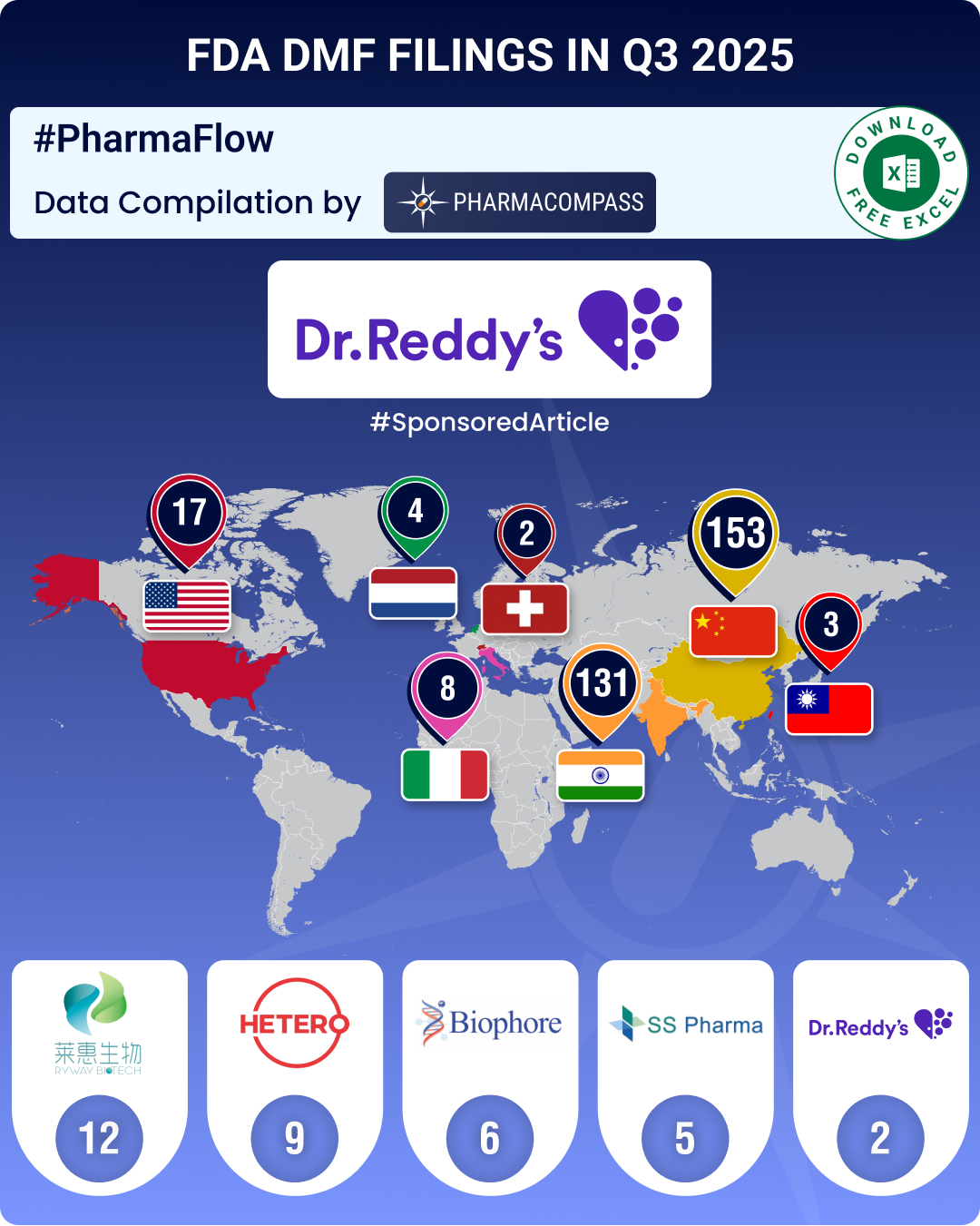
The third quarter (Q3) of 2025 witnessed a steady rise in Drug Master File (DMF) submissions to the US Food and Drug Administration (FDA). DMFs are used to provide confidential, detailed information about facilities, processes, or articles used in the manufacturing, processing, packaging, and storing of human drug products A total of 323 Type II DMFs were submitted during this period, as opposed to 309 submissions in Q3 2024, marking an increase of 4.53 percent. This is the second highest number since 2018. In Q1 2025, 339 Type II filings were recorded. Across all DMF types (II, III, IV, and V), 479 DMFs were filed in Q3 2025, compared to 394 in Q3 2024, representing a 21.57 percent increase. Out of the 323 Type II DMFs submitted in Q3 2025, 40 had completed their review by the end of Q3, reflecting a processing lag between submission and review completion.  View FDA DMF Filings in Q3 2025 (Power BI Dashboard, Free Excel Available) China maintains its lead while India posts double-digit growth in DMF submissions  China and India continued to dominate DMF submissions in Q3 2025. China retained the top spot with 153 Type II DMFs, matching its submission count from Q3 2024. India recorded 131 DMFs, marking a 20.18 percent increase over 109 filings during the corresponding period last year. The United States stood a distant third with 17 filings, compared to 13 in Q3 2024. Among European nations, Italy recorded eight DMFs, doubling its 2024 tally. The Netherlands filed four, up from three. Spain submitted only one DMF, as against seven submitted in Q3 2024. Taiwan made three filings, up from one submitted in Q3 2024. Together, India, China and Taiwan accounted for about 88.9 percent of all Type II DMFs filed during the quarter. China’s Suzhou Ryway Biotech tops corporate tally; India’s Hetero, Biophore follow China’s Suzhou Ryway Biotech led the company-wise tally with 12 DMF submissions in Q3 2025. The company had not filed any DMFs in Q3 2024. India’s Hetero Group followed with nine DMFs, maintaining the same number of filings as Q3 2024. Biophore India Pharmaceuticals ranked third with six DMFs, doubling its count from three last year. Other notable contributors include Sai Sreyas Pharmaceuticals (India) and Shanghai Haoyuan Chemexpress (China), with five DMFs each. Companies such as SNJ Group, Lunan Pharmaceutical, Allsino Pharmaceutical, Shankus Pharma, Jiangxi Xinganjiang Pharmaceutical, Sunpure Extracts, Lee Pharma, Umedica Laboratories, Linhai Tianyu Pharmaceutical and Maithri Drugs filed four DMFs each. Olaparib, semaglutide lead molecular filings; Dr. Reddy’s files DMF for edoxaban & tucatinib Dr. Reddy’s Laboratories also featured among key DMF filers in Q3 2025, submitting two DMFs — for edoxaban tosylate monohydrate and tucatinib copovidone. Edoxaban tosylate monohydrate (marketed as Savaysa by Daiichi Sankyo) is a prescription anticoagulant used to reduce the risk of stroke and to treat deep vein thrombosis and pulmonary embolism. Patent exclusivity for Savaysa extends until October 2026 in the United States, with no generic currently available. In terms of molecules, the highest number of DMFs were filed for olaparib, semaglutide, ruxolitinib phosphate, ferric carboxymaltose, and vismodegib, with three DMFs each in Q3 2025. Olaparib, sold by AstraZeneca under the brand name Lynparza, saw DMFs being filed by BDR Lifesciences and Intas Pharmaceuticals from India, and by ScinoPharm Taiwan during the quarter. Semaglutide, a glucagon-like peptide-1 (GLP-1) receptor agonist developed by Novo Nordisk, continued to draw strong interest from API manufacturers. DMFs for semaglutide were filed by three Chinese companies: Yangzhou Aurisco Pharmaceutical, Zhejiang Peptites Biotech, and Fujian Genohope Biotech. Ruxolitinib phosphate, marketed by Incyte as Jakafi, saw three DMFs. Three Indian companies — Alembic Pharmaceuticals, Valary Labs, and Devi Pharmatech — filed DMFs for this API in Q3 2025. Other molecules that received multiple DMF submissions include ferric carboxymaltose (used to treat iron-deficiency anemia) and vismodegib (an oral therapy for basal-cell carcinoma). First-time DMF filings span 17 companies; India leads with nine first-time DMF The quarter saw first-time DMF filings from 17 companies. India took a lead here with nine first-time DMF filings, followed by China (six), and the US (two). The DMF filings in this quarter included inclisiran sodium (filed by Aurisco Pharmaceutical of China), pacritinib citrate (by TAPI Nl B.V. of the Netherlands), and vosoritide (by Apicore LLC of the US). Out of the 19 first-time DMFs filed in Q3 2025, four completed their Generic Drug User Fee Amendments (GDUFA) review process during the quarter. GDUFA fee for FY 2026: The FDA Generic Drug User Fee Amendments (GDUFA) is a law designed to speed access to safe and effective generic drugs to the public and reduce costs to the industry. Fee rates for fiscal year 2026 were published on July 30, 2025. FDA has revised fees under GDUFA III across all categories. While there is a slight increase in the DMF fee from US$ 95,084 in 2025 to US$ 102,584 in 2026, the ANDA fee has seen a sharp rise: from US$ 321,920 in 2025 to US$ 358,247 in 2026. FY 2025 and FY 2026 User Fee Rates Generic drug fee category Fees rates for FY 2025 Fees rates for FY 2026 Applications:     Abbreviated New Drug Application (ANDA) US$ 3,21,920 US$ 3,58,247 Drug Master File (DMF) US$ 95,084 US$ 1,02,584 Facilities:     Active Pharmaceutical Ingredient (API)—Domestic US$ 41,580 US$ 43,549 API—Foreign US$ 56,580 US$ 58,549 Finished Dosage Form (FDF)—Domestic US$ 2,31,952 US$ 2,38,943 FDF—Foreign US$ 2,46,952 US$ 2,53,943 Contract Manufacturing Organization (CMO)—Domestic US$ 55,668 US$ 57,346 CMO—Foreign US$ 70,668 US$ 72,346 GDUFA Program:     Large size operation generic drug applicant US$ 18,91,664 US$ 19,18,377 Medium size operation generic drug applicant US$ 7,56,666 US$ 7,67,351 Small business generic drug applicant US$ 1,89,166 US$ 1,91,838 Our view For several years prior to the pandemic, India had a lead in Type II DMF submissions. In recent years, China has surpassed India in DMF filings. But Q3 2025 numbers indicate that Indian drugmakers are fast catching up. Since DMFs establish trust in APIs from across the world, we feel this healthy competition between drugmakers from the two countries is good for the global pharmaceutical industry.  

Impressions: 5446

https://dev1.pharmacompass.com/radio-compass-blog/dmf-filings-rise-4-5-in-q3-2025-china-holds-lead-india-records-20-growth-in-submissions

#PharmaFlow by PHARMACOMPASS
13 Nov 2025

MARKET PERFORMANCE RECAP

1read-more
read-more
Pipeline Prospector 2025 highlights: FDA approves pill version of Novo’s Wegovy; BioMarin acquires Amicus for US$ 4.8 bn
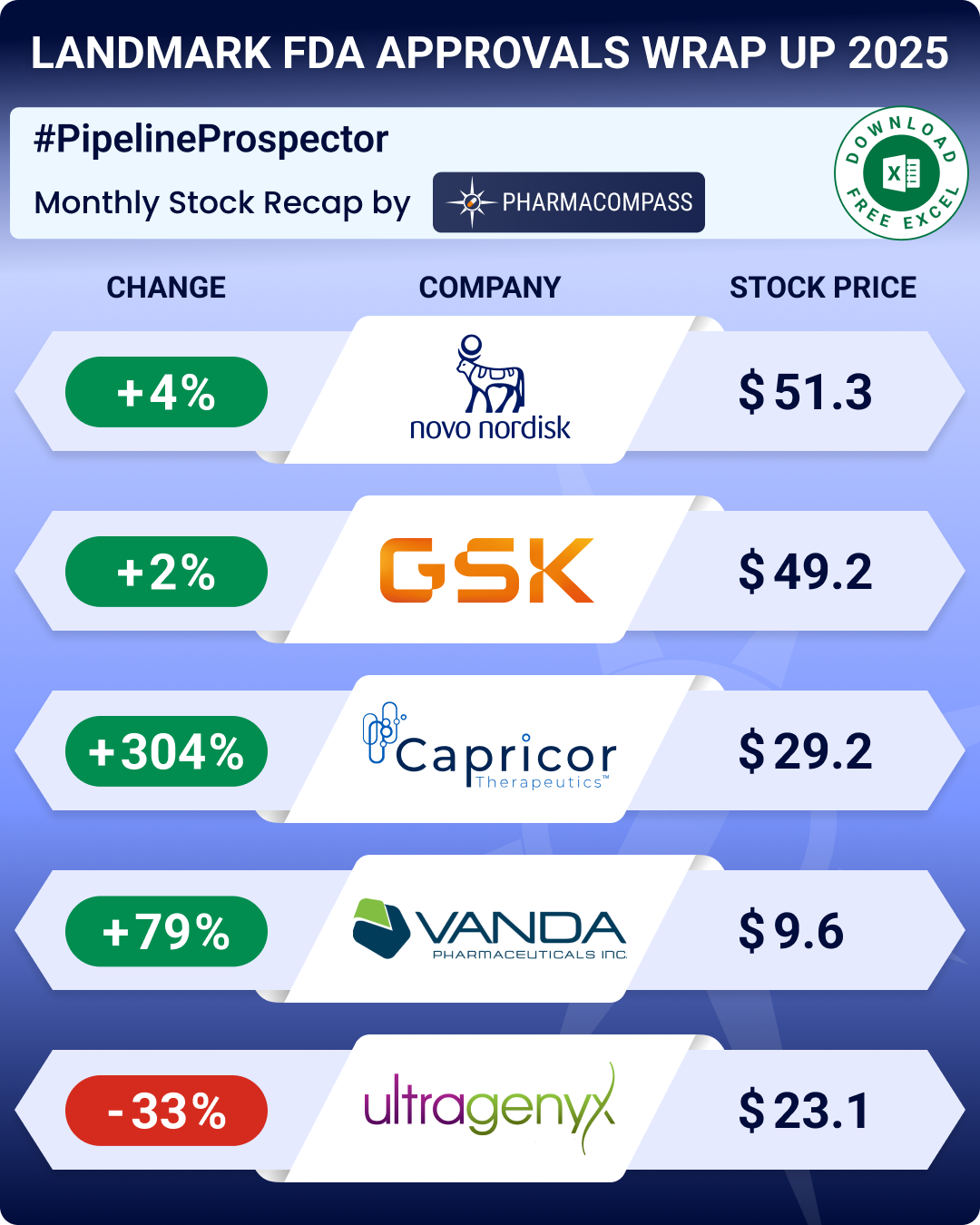
Even though the biotech indices delivered strong gains through 2025, December closed on a muted note. The Nasdaq Biotechnology Index (NBI) declined 1.12 percent in December, slipping from 5,772.06 to 5,707.20. The SPDR S&P Biotech ETF (XBI) was largely flat, edging up 0.07 percent from 121.85 to 121.93. Meanwhile, the S&P Biotechnology Select Industry Index (SPSIBI) fell 0.62 percent, from 9,588.09 to 9,528.24. Overall, biotech indices showed sharp gains during 2025. From January to December, NBI rose 31.48 percent, climbing from 4,340.87 to 5,707.20. XBI gained 34.06 percent over the same period, increasing from 90.95 to 121.93, while SPSIBI jumped 36.52 percent, advancing from 7,023.04 to 9,528.24. The year saw the world’s largest pharmaceutical market put pressure on drugmakers to invest and reduce drug prices. In December, US President Donald Trump and nine major drugmakers — including Bristol Myers Squibb, Gilead Sciences, Merck, Genentech, Novartis, Amgen, Boehringer Ingelheim, Sanofi and GSK — announced agreements to lower prescription drug prices for the Medicaid program and for cash-paying patients under a most-favored-nation (MFN) pricing framework. These announcements built on earlier MFN pricing agreements the administration had signed with Pfizer and AstraZeneca. During 2025, several big drugmakers announced new US investments to avert the looming threat of import tariffs. In all, drugmakers pledged over US$ 370 billion in the US in 2025. In December, the US also finalized a trade agreement with the UK, eliminating US tariffs on British pharmaceutical products and medical technology for at least three years in return for Britain spending more on medicines and overhauling how it values drugs.  Access the Pipeline Prospector Dashboard for December 2025 Newsmakers (Free Excel)  FDA approves pill version of Novo’s Wegovy, GSK’s treatment for eosinophilic asthma okayed  Regulatory approvals remained a major theme in December 2025. Novo Nordisk (stock up 4 percent in December) gained an edge in the obesity market after the FDA approved the oral pill version of its blockbuster Wegovy (semaglutide) for weight management and reduction of cardiovascular risk in overweight and obese patients. The drug is approved for maintenance doses of up to 25 mg.  On December 16, GSK secured FDA approval for Exdensur (depemokimab) as an add-on maintenance treatment for patients aged 12 and older with eosinophilic asthma. During the same week, UK regulators approved Exdensur for both asthma and nasal polyps. GSK also received FDA approval for a label expansion of Blujepa (gepotidacin) — now approved as a treatment for gonorrhea for the same age bracket. California-based Innoviva received FDA approval for Nuzolvence (zoliflodacin), a first-in-class oral antibiotic for uncomplicated gonorrhea for patients aged 12 and older. Milestone Pharmaceuticals secured FDA approval for Cardamyst (etripamil), becoming the the first and only approved nasal spray to treat acute symptomatic episodes of paroxysmal supraventricular tachycardia (PSVT), a type of abnormal heart rhythm. Cytokinetics secured FDA approval for Myqorzo (aficamten), an oral treatment for obstructive hypertrophic cardiomyopathy. The approval marks the company’s first FDA-cleared product. Vanda Pharmaceuticals received FDA approval for Nereus (tradipitant) to prevent motion-induced vomiting, becoming the first new FDA-approved treatment for the condition in more than 40 years. US-based Agios Pharmaceuticals won FDA approval to expand the use of mitapivat, sold as Aqvesme, to treat anemia in adults with alpha- or beta-thalassemia, making it the first oral therapy for anemia in both transfusion-dependent and non-transfusion-dependent patients. BioMarin acquires Amicus for US$ 4.8 bn, Sanofi buys Dynavax, Shionogi bags Tanabe’s ALS biz December 2025 witnessed some mid-sized deals. BioMarin Pharmaceutical (stock up 6 percent) agreed to acquire Amicus Therapeutics in an all-cash transaction valued at approximately US$ 4.8 billion, marking the largest deal in BioMarin’s 28-year history. The acquisition adds two approved and fast-growing rare disease therapies — Galafold (migalastat) for Fabry disease and the Pompe disease combination treatment Pombiliti (cipaglucosidase alfa-atga) + Opfolda (miglustat) — to BioMarin’s portfolio. Sanofi announced the acquisition of Dynavax Technologies for around US$ 2.2 billion (€1.9 billion). The transaction, all cash, strengthens Sanofi’s vaccine portfolio with an approved adult hepatitis B vaccine and an experimental shingles shot. In all, Sanofi cracked over a dozen deals in 2025. Japan-based Shionogi agreed to acquire Tanabe Pharma’s ALS business for US$ 2.5 billion, gaining both the oral and intravenous formulations of Radicava (edaravone), a US Food and Drug Administration (FDA)-approved treatment for amyotrophic lateral sclerosis (a progressive neurodegenerative disorder). Under the deal, Tanabe Pharma will set up a new company in the US to hold the rights to Radicava, which Shionogi will then acquire outright. Lilly to build new API plant in Alabama for its GLP-1 drug; Ultragenyx faces phase 3 setback The year 2025 was a good year for Eli Lilly — it inked nearly 30 deals through the year and became the first healthcare company in the world to reach a market capitalization of US$ 1 trillion in November. Lilly closed the year by pledging over  US$ 6 billion towards building a new API manufacturing facility in Huntsville, Alabama. The plant will produce small-molecule and peptide medicines, including orforglipron, Lilly’s oral GLP-1 weight-loss drug. Earlier in the year, Lilly had committed US$ 27 billion towards expanding US manufacturing capacity.  After failing to bag an FDA approval for its rare disease gene therapy in July, Ultragenyx Pharmaceutical faced yet another setback in December when a late-stage trial of its experimental drug setrusumab failed to meet its primary endpoint in children and young adults with osteogenesis imperfecta (brittle bone disease). The trials were conducted in partnership with Mereo BioPharma. Ultragenyx’s stock was down 33 percent in December. There was some good news for patients suffering from Duchenne muscular dystrophy (DMD). Capricor Therapeutics reported positive phase 3 results for its DMD cell therapy — deramiocel. This success comes after Sarepta’s gene therapy Elevidys (delandistrogene moxeparvovec-rokl) suffered a setback in June, following patient deaths. Our view The pharmaceutical industry is growing at a healthy rate, and is expected to attain a size of US$ 1.19 trillion in 2026 (up from US$ 1.16 trillion in 2025). The industry is also expected to witness innovations, especially in fields such as weight management, rare diseases and oncology. However, we do expect some tug-of-war on drug prices. According to a Reuters report, drugmakers plan to raise US prices on at least 350 branded medications including some vaccines, even as the US administration pressures them for price cuts. On the geopolitical front, 2026 began with the US military capturing Venezuelan president Nicolás Maduro. Such developments can add to the volatility and uncertainties in the market, impacting supply chains, energy prices and investor sentiments.

Impressions: 4461

https://dev1.pharmacompass.com/pipeline-prospector-blog/pipeline-prospector-2025-highlights-fda-approves-pill-version-of-novo-s-wegovy-biomarin-acquires-amicus-for-us-4-8-bn

#PharmaFlow by PHARMACOMPASS
08 Jan 2026

WEEKLY INDUSTRY NEWS

1read-more
read-more
BioMarin inks US$ 4.8 billion rare disease deal with Amicus; FDA approves pill version of Novo’s Wegovy
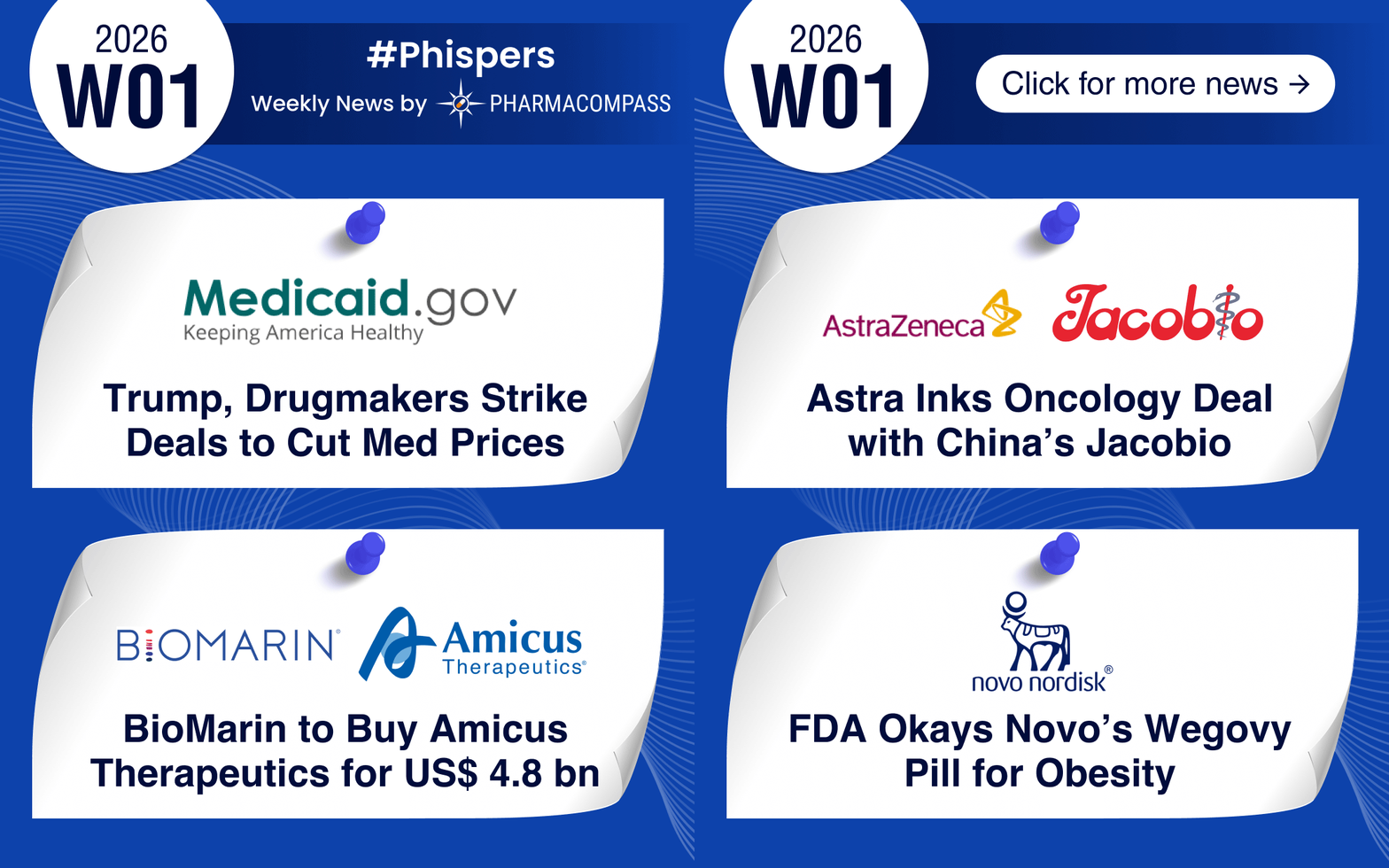
PharmaCompass wishes its readers a very Happy New Year and brings news from the last two weeks in this double-dose edition of Phispers.US President Donald Trump announced agreements with major drugmakers to lower medicine prices for the Medicaid program and cash-pay patients, with discounts tied to the lowest levels paid by other developed nations.On December 19, BioMarin agreed to buy rare disease specialist Amicus Therapeutics for US$ 4.8 billion, adding Fabry and Pompe disease drugs to its portfolio. AstraZeneca signed a deal worth up to US$ 2 billion with China-based Jacobio Pharma for an early-stage pan-KRAS cancer drug. Japan’s Shionogi moved to strengthen its rare disease focus with a US$ 2.5 billion acquisition of Tanabe Pharma’s Radicava ALS business. And Sanofi announced the acquisition of US biotech Dynavax Technologies for around US$ 2.2 billion (€ 1.9 billion).On the regulatory front, the US Food and Drug Administration (FDA) approved a pill version of Novo Nordisk’s Wegovy for weight management, cleared Cytokinetics’ Myqorzo for a rare obstructive heart condition and approved Omeros’ Yartemlea to treat a transplant-associated complication. It also gave a nod to Vanda’s drug for motion sickness in more than 40 years, and expanded Agios’ drug as the first oral treatment for anemia. And the agency placed a partial clinical hold on Merck and Daiichi Sankyo’s late-stage lung cancer trial due to safety concerns. Separately, Ultragenyx’s drug missed a key trial goal in rare bone disorder.Trump, drugmakers strike deals to cut medicine prices for Medicaid programUS President Donald Trump and nine major drugmakers have announced agreements to lower prescription drug prices for the government’s Medicaid program and for cash payers. These prices will be in line with the lowest prices paid by other developed nations (known as ‘most-favored-nation’ pricing).Companies that signed the deals with the Trump administration include Bristol Myers Squibb, Gilead Sciences, Merck, Genentech, Novartis, Amgen, Boehringer Ingelheim, Sanofi, and GSK. These companies pledged to invest over US$ 150 billion in the US. However, it was not clear if this included their earlier commitments.Under the agreements, discounts could reach up to 70 percent of the list prices, and will be offered potentially through the TrumpRx website, expected to be launched this year.BioMarin to buy Amicus Therapeutics for US$ 4.8 bn in rare disease dealBioMarin has agreed to acquire Amicus Therapeutics in an all-cash transaction valued at approximately US$ 4.8 billion. This is the largest deal signed by BioMarin in its 28-year history.The deal adds two approved and fast-growing rare disease medicines to BioMarin’s portfolio: Galafold (migalastat) for Fabry disease and, Pombiliti-Opfolda (cipaglucosidase alfa-atga + miglustat), a combination treatment for Pompe disease. BioMarin will also gain US rights to DMX-200, an experimental kidney disease drug.Fabry disease is caused by a lack of an enzyme that breaks down fats, causing fat buildup in blood vessels and tissues. Pompe disease involves a buildup of glycogen in cells, leading to muscle weakness and other symptoms.Astra inks oncology deal with China’s Jacobio: AstraZeneca has signed a deal with China-based Jacobio Pharma to develop an early-stage cancer drug that targets multiple KRAS mutations. Under the agreement, AstraZeneca will pay US$ 100 million upfront and could provide up to about US$ 2 billion more in milestone payments, along with royalties.Shionogi to buy Tanabe’s ALS business for US$ 2.5 bn: Japanese drugmaker Shionogi has agreed to acquire Tanabe Pharma’s ALS (amyotrophic lateral sclerosis) business for US$ 2.5 billion, including both the oral formulation of Radicava (edaravone) and its intravenous version. As part of the deal, Tanabe Pharma will set up a new company to hold the rights to Radicava (an FDA-approved ALS treatment), which Shionogi will then acquire outright.Sanofi to buy Dynavax: Sanofi has announced the acquisition of US biotech Dynavax Technologies for around US$ 2.2 billion (€ 1.9 billion). The deal will add an adult hepatitis B vaccine and a promising experimental shingles shot to Sanofi’s portfolio.FDA okays pill version of Novo’s Wegovy, Cytokinetics med for rare heart conditionNovo Nordisk has got a leg up against its competitors in the fast-growing obesity treatment market with the FDA approving the pill version of Wegovy (semaglutide) for weight management and reduction of cardiovascular risk in overweight/obese patients. The drug can be given at a maintenance dose of up to 25 mg. Approves Cytokinetics’ Myqorzo for rare obstructive heart condition: FDA has approved Cytokinetics’ oral drug Myqorzo (aficamten) to treat obstructive hypertrophic cardiomyopathy, a rare heart condition in which the heart muscle becomes abnormally thick, making it harder for the heart to pump blood. The disease can cause symptoms such as shortness of breath, chest pain and dizziness. Myqorzo is Cytokinetics’ first FDA-approved product and only the second drug in its class to be approved in the US. The FDA approval includes a boxed warning about the risk of heart failure.Okays Omeros’ drug to treat transplant associated complication: FDA has approved Omeros’ drug — Yartemlea  (narsoplimab-wuug) — for a dangerous transplant complication, known as transplant-associated thrombotic microangiopathy (TA-TMA). This serious complication develops after stem cell transplants.Clears Agios’ Aqvesme as first oral treatment for anemia: The FDA approved an expanded use of Agios Pharmaceuticals’ drug mitapivat, sold under the brand name Aqvesme, to treat anemia in adults with alpha- or beta-thalassemia. The approval makes Aqvesme the first oral treatment for anemia in both transfusion-dependent and non-transfusion-dependent thalassemia patients.Gives nod to Vanda’s drug for motion-induced vomiting: Vanda Pharmaceuticals said the FDA has approved its drug Nereus (tradipitant) for the prevention of motion-induced vomiting, marking the first FDA approval for this condition in more than 40 years. Existing options for motion sickness include patches and over-the-counter medicines, but no new treatment had been approved in decades.Partial hold on Merck-Daiichi’s lung cancer trial: FDA has placed a partial clinical hold on a late-stage trial of ifinatamab deruxtecan (I-DXd), an experimental cancer drug being developed by Merck and Daiichi Sankyo. The decision follows reports of a higher-than-expected number of patient deaths linked to a serious lung condition.Ultragenyx’s drug misses key trial goal in rare bone disorderUltragenyx Pharmaceutical said late-stage trials of its experimental drug setrusumab failed to meet their main goal, causing the company’s shares to plunge more than 43 percent to a record low on the day. The drug was being tested in children and young adults with osteogenesis imperfecta, a rare genetic bone disease that makes bones fragile and prone to fractures. Ultragenyx ran the studies with partner Mereo BioPharma.  

Impressions: 1781

https://dev1.pharmacompass.com/radio-compass-phisper/biomarin-inks-us-4-8-billion-rare-disease-deal-with-amicus-fda-approves-pill-version-of-novo-s-wegovy

#Phispers by PHARMACOMPASS
01 Jan 2026

NEWS LIBRARY

29read-more
read-more

https://www.prnewswire.com/news-releases/biomarin-completes-acquisition-of-amicus-therapeutics-302754256.html

PR NEWSWIRE
27 Apr 2026

https://www.accessdata.fda.gov/scripts/cder/daf/index.cfm?event=overview.process&ApplNo=217786

FDA
10 Feb 2026

https://www.globenewswire.com/news-release/2026/02/03/3230998/15991/en/Amicus-Therapeutics-Presents-New-Long-term-Data-for-both-Galafold-migalastat-and-POMBILITI-cipaglucosidase-alfa-atga-OPFOLDA-miglustat-at-the-22nd-Annual-WORLDSymposium-2026.html

GLOBENEWSWIRE
03 Feb 2026

https://www.globenewswire.com/news-release/2024/10/17/2964736/0/en/Fortrea-Releases-Inaugural-Corporate-Social-Responsibility-Report.html

GLOBENEWSWIRE
17 Oct 2024

https://www.globenewswire.com/news-release/2024/08/08/2926804/15991/en/Amicus-Therapeutics-Announces-Second-Quarter-2024-Financial-Results-and-Corporate-Updates.html

GLOBENEWSWIRE
08 Aug 2024

https://www.pharmacompass.com/pdf/news/fda-confirms-paragraph-iv-patent-litigation-for-galafold-migalastat-hydrochloride-12390.pdf

FDA
03 Oct 2022
digital-content11644097##p