Please Wait
Applying Filters...
Menu

Digital Content read-more

Create Content with PharmaCompass, ask us

PHARMA & BIOTECH INSIGHTS

3read-more
read-more

A PHP Error was encountered

Severity: 8192

Message: mb_convert_encoding(): Handling HTML entities via mbstring is deprecated; use htmlspecialchars, htmlentities, or mb_encode_numericentity/mb_decode_numericentity instead

Filename: blog/grid.php

Line Number: 52

Backtrace:

File: /var/www/html/application/views/include/media/blog/grid.php
Line: 52
Function: mb_convert_encoding

File: /var/www/html/application/models/Cmn.php
Line: 3595
Function: view

File: /var/www/html/application/views/include/product/digitalContent/grid.php
Line: 17
Function: common

File: /var/www/html/application/views/include/desc/inner.php
Line: 13
Function: view

File: /var/www/html/application/views/include/desc/indexNew.php
Line: 2433
Function: include

File: /var/www/html/application/controllers/Common.php
Line: 11303
Function: view

File: /var/www/html/index.php
Line: 231
Function: require_once

FDA approvals drop 24% in H1 2025; GSK’s UTI med, Vertex’s non-opioid painkiller lead pack of first-in-class meds
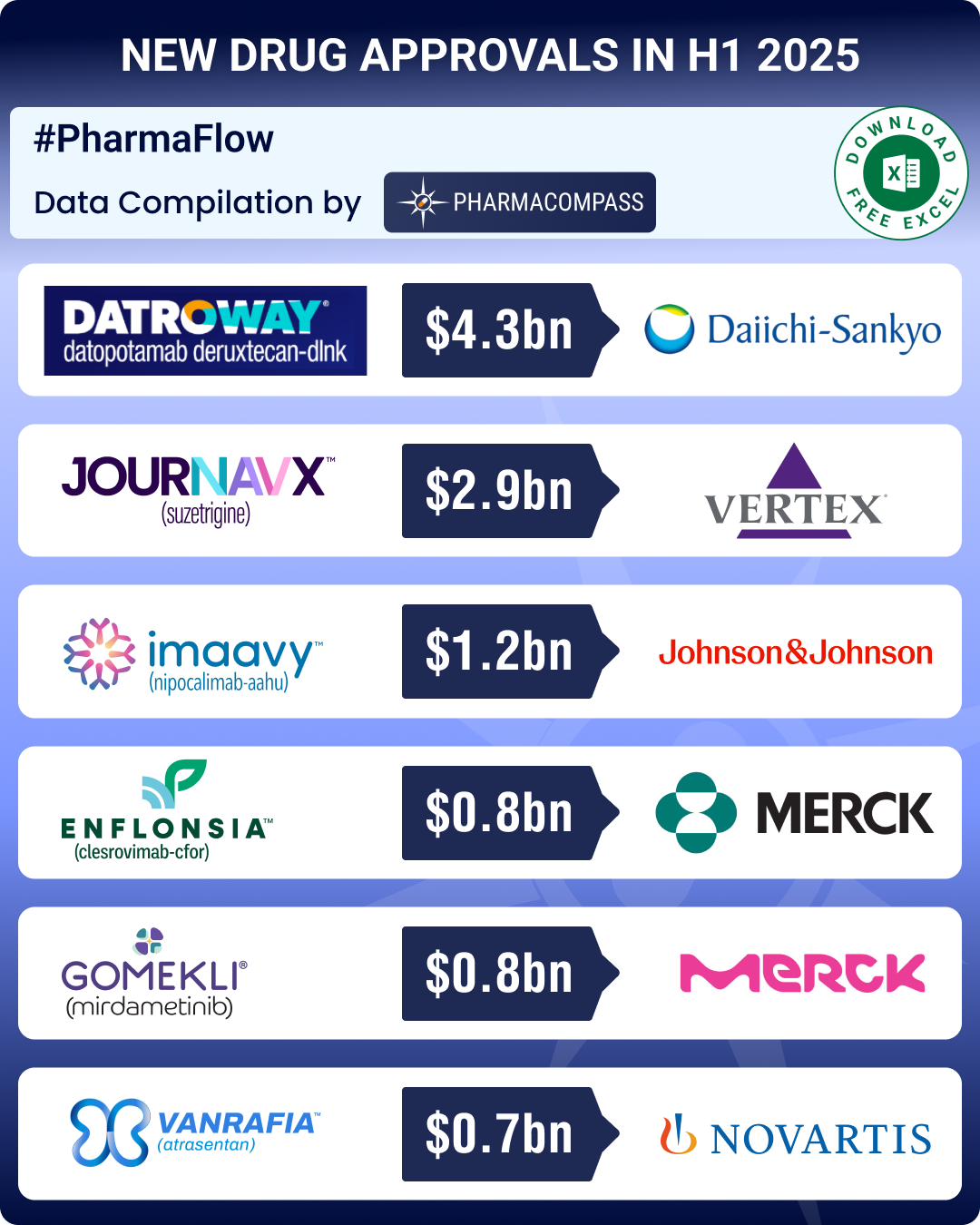
It has been a turbulent year for the US Food and Drug Administration (FDA), marked by reductions in both staff and budget, shake-ups at the top and a reduction in inspections. This upheaval has clearly impacted the functioning of the agency, with reports of missed deadlines and reduced responsiveness. This disruption resulted in a slowdown in new drug approvals in the first half of 2025 (H1 2025), as opposed to the same period last year. Incidentally, drug approvals in H1 2024 were also down by 19 percent compared to H1 2023. FDA’s Center for Drug Evaluation and Research (CDER) approved 16 novel drugs in H1 2025, down from 21 in H1 2024, a decline of nearly 24 percent. Of these, nine were small molecules and seven were biologics. The period saw eight first-in-class therapies get CDER’s approval, as opposed to 17 in H1 2024. FDA’s Center for Biologics Evaluation and Research (CBER) approved seven biologics in H1 2025, compared to eight in the same period last year. In comparison, both Health Canada and the European Medicines Agency (EMA) reported a strong rebound in approvals and authorizations, respectively. Health Canada approved 20 drugs in H1 2025, as opposed to 10 in H1 2024. Similarly, EMA authorized 19 new therapies in H1 2025, compared to 15 in H1 2024. Notably, EMA’s pending decisions increased to 25 in H1 2025, from 14 in the same period last year, while conditional authorizations remained static at five. This underscores EMA’s active regulatory pipeline, suggesting that more drugs could be approved in Europe soon.   View New Drug Approvals in H1 2025 with Estimated Sales (Free Excel Available) Vertex’s non-opioid painkiller, GSK’s antibiotic for UTI, Merck’s RSV antibody bag FDA nods  Oncology remained the single largest category in H1 2025 with seven new drugs being approved by the FDA, followed by four rare diseases and disorders and as many infections and infective diseases.  The eight drugs that were designated first-in-class in H1 2025 are: Journavx (Suzetrigine), Imaavy (nipocalimab), Emrelis (telisotuzumab vedotin), Blujepa (gepotidacin mesylate), Qfitlia (fitusiran), Avmapki Fakzynja Co-Pack (avutometinib potassium/defactinib hydrochloride), Tryptyr (acoltremon), and Andembry (garadacimab). In January, a new class of non-opioid pain therapy made a debut — FDA approved Vertex Pharmaceuticals’ Journavx (suzetrigine). This first-in-class oral analgesic could bring in US$ 2.9 billion in sales for Vertex by 2030. The half year also saw a new oral antibiotic — GSK’s Blujepa (gepotidacin) — for treating uncomplicated urinary tract infections (uUTIs) bag FDA approval. This is the first new antibiotic for uUTIs in nearly three decades. It treats infections caused by resistant pathogens such as E. coli and K. pneumoniae In June, Merck’s Enflonsia (clesrovimab), a long-acting monoclonal antibody, won FDA approval to prevent respiratory syncytial virus (RSV) lower respiratory tract disease in neonates and infants entering their first RSV season. A single 105 mg dose provides protection for about five months, the length of a typical RSV season. Enflonsia could bring in US$844 million in annual sales by 2030. FDA approves four meds for rare diseases, including SpringWorks’ Gomekli, Novartis’ Vanrafia In H1 2024, rare genetic diseases had witnessed some significant approvals. The trend continued in H1 2025. In February, Gomekli (mirdametinib), developed by SpringWorks Therapeutics, became the first approved therapy for neurofibromatosis type 1 (a genetic disorder that causes tumors to grow on nerve tissues) in adult and pediatric patients who have symptomatic plexiform neurofibromas (benign, complex nerve tumors) not amenable to complete resection. Analysts expect peak sales of around US$ 0.8 billion by 2030. Post this approval, SpringWorks got acquired by Merck KGaA for approximately US$ 3.9 billion. The same month, Ono Pharma-owned Deciphera’s Romvimza (vimseltinib) became the first oral therapy approved for another rare disease known as symptomatic tenosynovial giant cell tumor. This is a benign but aggressive growth that can be painful. This new drug offers patients an option beyond surgery. In March, Sanofi’s Qfitlia (fitusiran) was approved for routine prophylaxis in hemophilia A or B, with or without inhibitors. And in April, Novartis’ Vanrafia (atrasentan) was granted accelerated approval for IgA nephropathy (a chronic autoimmune kidney disease), which is at the risk of rapid progression. Vanrafia could bring in sales of over US$ 735 million by 2030 Johnson & Johnson secured approval for Imaavy (nipocalimab-aahu) for generalized myasthenia gravis (a chronic autoimmune disease that causes muscle weakness) in adults and adolescents. Imaavy’s sales could cross US$1.17 billion by 2030. Rare diseases continue to attract regulatory attention, with the trend carrying into the current quarter. July witnessed two noteworthy rare-disease approvals — Ekterly (garadacimab), CSL’s once-monthly prophylactic treatment for hereditary angioedema (a genetic disorder that causes recurrent episodes of swellings), and Sephience (pegvaliase-abcx), BioMarin’s new therapy for phenylketonuria (a rare metabolic disorder). FDA greenlights new oncology therapies, including Astra’s Datroway, AbbVie’s Emrelis The field of oncology saw some notable new drug approvals. In January, Datroway (datopotamab deruxtecan), an antibody-drug conjugate (ADC) developed by AstraZeneca and Daiichi Sankyo, was granted approval for adults with unresectable or metastatic, hormone receptor-positive, HER2-negative breast cancer. Later, in June, the FDA granted accelerated approval  to AstraZeneca;s Datroway for adults with locally advanced or metastatic, EGFR-mutated non-small cell lung cancer. The drug’s peak annual sales are projected at about US$ 4.2 billion by 2030. In May, Emrelis (telisotuzumab vedotin-tllv), AbbVie’s ADC was granted FDA’s accelerated approval. Emrelis treats locally advanced or metastatic non-squamous non-small cell lung cancer (NSCLC) characterized by significantly increased levels of the c-Met protein in cancer cells. FDA also approved a companion diagnostic test — Roche's Ventana — in May to determine the c-Met protein biomarker status in order to identify patients eligible for Emrelis.  The same month, FDA also granted accelerated approval to Verastem’s Avmapki Fakzynja Co-pack, a dual oral therapy for adults with KRAS‑mutated recurrent low‑grade serous ovarian cancer (LGSOC). This novel regimen combines two inhibitors — avutometinib and defactinib — to disrupt critical signaling pathways that fuel tumor growth. In ophthalmology, Alcon re-entered the prescription pharmaceutical market with Tryptry (acoltremon), a first-in-class TRPM8 agonist for dry eye disease, which stimulates corneal nerves to increase tear production. Our view The changes in the FDA are clearly having a far-reaching impact on the global pharmaceutical industry. There have been reports of drugmakers losing confidence in the FDA, which has been a gold standard for drug regulation. Some American biotechs are shifting early trials outside of the US. With EMA and Health Canada authorizing/approving a larger number of drugs in H1 2025, we do see some changes underway that may eventually reshape drug development.  

Impressions: 8106

https://dev1.pharmacompass.com/radio-compass-blog/fda-approvals-drop-24-in-h1-2025-gsk-s-uti-med-vertex-s-non-opioid-painkiller-lead-pack-of-first-in-class-meds

#PharmaFlow by PHARMACOMPASS
28 Aug 2025

MARKET PERFORMANCE RECAP

1read-more
read-more
Pipeline Prospector Feb 2025: Bain buys Mitsubishi Tanabe for US$ 3.4 bn; Japan’s Ono gets FDA nod for rare joint tumor drug
February was a mixed bag for biopharma indices, underscoring the volatility and uncertainty in the sector. The Nasdaq Biotechnology Index (NBI) managed a modest gain of 1.16 percent, climbing from 4,466.41 to 4,518.06. However, the SPDR S&P Biotech ETF (XBI) fell 2.06 percent from 90.58 to 88.71, and the S&P Biotechnology Select Industry Index (SPSIBI) experienced a more substantial drop of 4.26 percent, declining from 7,222.3 to 6,914.8. The month saw several notable developments among Asian pharmaceutical companies, signaling their growing influence. Meanwhile, the confirmation of Robert F. Kennedy Jr. as the US Secretary of Health and Human Services (HHS) cast a veil of uncertainty over the sector, prompting investors to brace for potential shifts in vaccine policy and regulatory oversight.  Access the Pipeline Prospector Dashboard for February 2025 Newsmakers (Free Excel) Bain buys Mitsubishi Tanabe in US$ 3.4 bn deal; Japan’s Ono secures FDA nod for joint tumor drug  US private equity firm Bain Capital acquired Mitsubishi Tanabe Pharma for approximately JPY 510 billion (US$ 3.4 billion). This strategic acquisition positions Bain to leverage the Osaka-based pharmaceutical company’s expertise in central nervous system disorders, immuno-inflammation, and oncology. Bain’s investment reflects growing confidence in Japan’s life sciences sector, particularly in light of the recent initiatives by the Japanese government to accelerate the development and approval of innovative medicines.  Japan’s Ono Pharmaceutical (stock up 2 percent) received FDA approval for Romvimza (vimseltinib), a treatment for tenosynovial giant cell tumor (TGCT), a rare condition affecting joints. The approval follows Ono’s US$ 2.4 billion acquisition of Deciphera Pharmaceuticals, which included Romvimza and other cancer drugs. Romvimza will compete with Daiichi Sankyo’s Turalio (pexidartinib), the only other FDA-approved systemic treatment for TGCT. Meanwhile, Radiance Biopharma has acquired an antibody-drug conjugate (ADC) asset from China’s CSPC Megalith Biopharmaceutical. The ADC targets ROR1 (receptor tyrosine kinase-like orphan receptor 1), a protein implicated in embryonic development and cancer pathways. The transaction structure includes an upfront payment of US$ 15 million, with potential milestone payments exceeding US$ 1 billion. Continuing with its aggressive dealmaking, Novartis agreed to acquire Anthos Therapeutics, an anticoagulant drug development company majority-owned by investment firm Blackstone, for up to US$ 3.1 billion, with US$ 925 million paid upfront. Anthos emerged from a partnership between Blackstone and Novartis to develop abelacimab, a novel blood-thinning drug aimed at preventing strokes and dangerous blood clots in patients with atrial fibrillation. FDA okays SpringWorks’ med for rare genetic condition, AbbVie-Pfizer’s antibiotic for drug-resistant infections FDA approved SpringWorks Therapeutics’ Gomekli (mirdametinib) for the treatment of neurofibromatosis type 1 (NF1), a rare genetic condition that causes tumors to grow along nerve tissues throughout the body, often resulting in severe pain and physical deformity. Gomekli is the first and only medicine approved for addressing this condition in both pediatric and adult populations with inoperable tumors. SpringWorks’ shares skyrocketed 57 percent in February. Meanwhile, reports suggest that Germany’s Merck KGaA is currently in advanced talks to acquire Connecticut-based SpringWorks. AbbVie and Pfizer received FDA approval for Emblaveo (aztreonam and avibactam), a novel intravenous antibiotic developed jointly for the treatment of complicated intra-abdominal infections (cIAIs) in adults with limited or no alternative treatment options. To be used in combination with metronidazole, Emblaveo targets gram-negative bacteria, including drug-resistant strains. AbbVie (stock up 9 percent) further strengthened its oncology portfolio with a collaboration with Xilio Therapeutics to develop novel tumor-activated immunotherapies, including masked T-cell engagers. This partnership could potentially be worth over US$ 2 billion. Mirum Pharma’s Ctexli (chenodiol) was approved as the first targeted treatment for cerebrotendinous xanthomatosis (CTX), a rare lipid storage disease. In drug-device combinations, Supernus Pharmaceuticals received FDA approval for Onapgo, a treatment of motor fluctuations in adults with advanced Parkinson’s disease. Onapgo is a wearable device that continuously delivers apomorphine hydrochloride subcutaneously throughout waking hours. Meanwhile, Roche’s Susvimo (ranibizumab injection) eye implant received a label expansion to include the treatment of diabetic macular edema (DME). Additionally, Roche (stock up 8 percent) reported promising late-stage clinical data for its blood cancer drug Gazyva (obinutuzumab) in lupus nephritis. RFK Jr’s confirmation as HHS Secy hits vaccine makers; GSK gains on buyback plan; FDA okays 5-strain meningitis vaccine With RFK Jr taking charge of HHS, stocks of vaccine makers took a hit. For instance, Bavarian Nordic’s stock fell by 11 percent, even though its chikungunya vaccine Vimkunya got approved by the FDA on February 14. Meanwhile, FDA paused a late-stage trial of Moderna’s experimental norovirus vaccine, mRNA-1403. The pause came after a single reported case of Guillain–Barré syndrome — a rare neurological side effect. Moderna’s stock fell 21 percent. In contrast, GSK’s stock rose 9 percent after it launched a £ 2 billion (US$ 2.5 billion) share buyback and raised its long-term sales target to nearly US$ 50 billion by 2031, largely driven by robust growth in specialty medicines, such as its HIV and cancer treatments. The British pharma giant also received FDA approval for its meningitis combination vaccine, Penmenvy. This five-in-one vaccine protects against five strains of Neisseria meningitidis, combining protective components of two existing vaccines into a single shot.  Sanofi (stock up 2 percent) announced plans to repurchase € 5 billion (US$ 5.21 billion) worth of its shares in 2025 following the anticipated sale of its Opella consumer healthcare unit to private equity firm Clayton, Dubilier & Rice for € 15.5 billion (US$ 16.11 billion). The French giant also indicated it could be “a bit more” active with mergers and acquisitions in the near future. As part of Sanofi’s share buyback program, L’Oréal has agreed to sell a € 3 billion (US$ 3.11 billion) stake in Sanofi back to the drugmaker. The month saw some dramatic exits in the gene therapy space. Bluebird Bio, which was once valued at about US$ 10 billion, agreed to be acquired by private equity firms Carlyle and SK Capital Partners for less than US$ 30 million. Similarly, Pfizer announced it would discontinue the global development and commercialization of its hemophilia B gene therapy Beqvez (fidanacogene elaparvovec-dzkt), which is priced at US$ 3.5 million per treatment. Our view  The biopharma sector is doing the right things by taking strategic business decisions, focusing on innovation and a strong drug pipeline. However, the geopolitical environment is uncertain. With a trade war ensuing between the US, China, Mexico and Canada, and the Trump administration suspending all military aid to Ukraine, we are entering uncertain times when it's difficult to say what the next few months would look like for the biopharma sector.

Impressions: 3501

https://dev1.pharmacompass.com/pipeline-prospector-blog/pipeline-prospector-feb-2025-bain-buys-mitsubishi-tanabe-for-us-3-4-bn-japan-s-ono-gets-fda-nod-for-rare-joint-tumor-drug

#PharmaFlow by PHARMACOMPASS
06 Mar 2025

WEEKLY INDUSTRY NEWS

1read-more
read-more
Bain buys Mitsubishi Tanabe for US$ 3.4 bn, Novartis acquires Anthos for US$ 3.1 bn, FDA okays AbbVie-Pfizer’s new antibiotic
In this week’s news, Bain Capital acquired Japanese pharma Mitsubishi Tanabe for US$ 3.4 billion. And Novartis acquired Blackstone-backed Anthos Therapeutics for up to US$ 3.1 billion, bringing the promising blood thinner abelacimab back into its portfolio. Additionally, there was news that Germany’s Merck KGaA is in advanced talks to acquire SpringWorks Therapeutics. Interestingly, SpringWorks secured FDA approval for its genetic disorder drug, Gomekli this week. In deals, AbbVie and Xilio entered into an over US$ 2 billion collaboration to develop novel tumor-activated immunotherapies. Deaths from superbugs (i.e. antibiotic-resistant bacteria) have been rising globally. With resistance to older antibiotics growing, health regulators have been stressing the need for new treatments. AbbVie and Pfizer have responded and the US Food and Drug Administration (FDA) has approved their novel antibiotic Emblaveo for drug-resistant abdominal infections. In regulatory news, FDA issued warning letters to Chinese API manufacturers Wuhu Nuowei Chemistry and Chengdu Innovation Pharmaceutical, placing both on import alert over quality control failures. In news from clinical trials, Novo Nordisk’s bispecific antibody Mim8 delivered strong results in a pediatric hemophilia A trial. Roche’s blood cancer drug Gazyva showed promise in lupus nephritis (a kidney disease) in a late-stage study. And Boehringer Ingelheim’s nerandomilast has achieved positive results in treating fibrotic lung diseases in a second, late-stage trial. Bain Capital forays into Japanese pharma with US$ 3.4 bn Mitsubishi Tanabe buyout US private equity firm Bain Capital has acquired Mitsubishi Tanabe Pharma, a subsidiary of Mitsubishi Chemical Group, for approximately JPY 510 billion (around US$ 3.4 billion). The Osaka-based pharmaceutical company specializes in treatments for central nervous system disorders, immuno-inflammation, and oncology, and operates in over a dozen locations across three continents. Novartis acquires Blackstone’s blood thinner developer Anthos for up to US$ 3.1 bn Novartis has agreed to buy Anthos Therapeutics — a drug development company majority-owned by investment firm Blackstone — for up to US$ 3.1 billion, with US$ 925 million paid upfront. Anthos was created through a partnership between Blackstone and Novartis to develop a new blood-thinning drug called abelacimab. The drug aims to prevent strokes and dangerous blood clots in patients with irregular heartbeat (atrial fibrillation). Now in phase 3 trials, abelacimab works differently from existing blood thinners by blocking Factor XI, an important protein that helps blood form clots. FDA okays AbbVie-Pfizer’s novel antibiotic for drug-resistant abdominal infections FDA has approved Emblaveo (aztreonam and avibactam), a novel intravenous antibiotic developed jointly by AbbVie and Pfizer, for the treatment of complicated intra-abdominal infections (cIAIs) in adults who have limited or no alternative treatment options. Emblaveo is to be used in combination with metronidazole to target Gram-negative bacteria, including drug-resistant strains. This approval addresses a significant public health concern, as cIAIs affect approximately 3.5 million people in the US annually and are a leading cause of sepsis in intensive care units. Antibiotic-resistant infections have made it more difficult to effectively treat intra-abdominal infections. Amid takeover talks, SpringWorks’ Gomekli gets FDA nod for rare genetic condition FDA has approved SpringWorks Therapeutics’ new drug, Gomekli (mirdametinib), to treat a rare genetic condition called neurofibromatosis type 1 (NF1) in both adults and children aged two years and older. According to a Reuters report, Germany’s Merck KGaA is currently in advanced talks to acquire SpringWorks Therapeutics. NF1 causes tumors to grow along nerve tissues throughout the body. These tumors can cause severe pain and physical deformity, and sometimes they can’t be removed through surgery. Gomekli is the first and only medicine approved for addressing this condition in both pediatric and adult populations with inoperable tumors. AbbVie, Xilio in over US$ 2 bn oncology deal: AbbVie and Xilio Therapeutics have announced a collaboration to develop novel tumor-activated immunotherapies, including masked T-cell engagers. This partnership aims to combine AbbVie’s oncology expertise with Xilio's proprietary tumor-activation technology to create treatments that selectively target tumors while minimizing systemic toxicity and side effects. Xilio is eligible to receive up to approximately US$ 2.1 billion in contingent payments above the upfront payment of US$ 52 million. Novo Nordisk reports strong results for children’s hemophilia treatment Novo Nordisk’s investigational bispecific antibody Mim8 has met its primary endpoints in a late-stage pediatric trial for hemophilia A. Notably, 74.3 percent of the participants experienced no treated bleeds during a 26‐week period, and all 14 children taking the treatment with inhibitors reported zero treated bleeds. In addition to these impressive efficacy results, caregivers reported significant improvements in their children’s physical functioning and overall quality of life, with 98 percent preferring Mim8 over prior treatment regimens. Roche’s blood cancer drug shows promise in lupus: Roche detailed promising clinical data for its blood cancer drug Gazyva (obinutuzumab) in lupus nephritis. In a recent late-stage study, Gazyva significantly reduced proteinuria and stabilized kidney function when combined with standard-of-care treatments, suggesting meaningful renal improvements for patients suffering from this severe complication of systemic lupus erythematosus. Boehringer’s med shows promise in lung fibrosis: Boehringer Ingelheim has announced that its investigational drug, nerandomilast, has achieved positive results in treating fibrotic lung diseases in a second late-stage trial. Nerandomilast met its primary endpoint in patients with progressive pulmonary fibrosis (PPF) by demonstrating a significant improvement in forced vital capacity (FVC) over 52 weeks compared to placebo. FVC is a key measure of lung function, assessing the volume of air a patient can exhale forcefully. FDA puts two Chinese API makers on import alert over quality control breaches Chinese API manufacturers Wuhu Nuowei Chemistry and Chengdu Innovation Pharmaceutical have been placed on US import alerts due to significant deficiencies in their quality control and testing procedures. Wuhu Nuowei, which labels some API shipments “for R&D only,” raised concerns when the FDA found that the quantities shipped were inconsistent with typical research needs. It has since stopped exporting APIs to the US and is no longer registered as a drug manufacturer. FDA also noted that Wuhu Nuowei failed to validate its purity testing methods and did not provide complete raw stability data, casting doubt over its scientific rigor. Similarly, Chengdu Innovation Pharmaceutical did not adequately test incoming raw materials used in products, nor did it maintain a robust quality unit to oversee its manufacturing processes. The FDA has recommended that Chengdu hire a third-party consultant to address these issues, warning that failure to improve could lead to its new drug applications being blocked.  

Impressions: 2043

https://dev1.pharmacompass.com/radio-compass-phisper/bain-buys-mitsubishi-tanabe-for-us-3-4-bn-novartis-acquires-anthos-for-us-3-1-bn-fda-okays-abbvie-pfizer-s-new-antibiotic

#Phispers by PHARMACOMPASS
13 Feb 2025

NEWS LIBRARY

17read-more
read-more

https://www.thepharmaletter.com/pharma-news/ice-backs-ezmekly-for-children-with-nf1-associated-pn-tumors

THE PHARMALETTER
04 Sep 2026

https://www.globenewswire.com/news-release/2025/07/18/3118038/0/en/European-Commission-Grants-Conditional-Approval-of-EZMEKLY-mirdametinib-for-the-Treatment-of-Adult-and-Pediatric-Patients-with-NF1-PN.html

GLOBENEWSWIRE
18 Jul 2025

https://www.ema.europa.eu/en/documents/overview/ezmekly-epar-medicine-overview_en.pdf

EMA
17 Jul 2025

https://www.globenewswire.com/news-release/2025/05/23/3087438/0/en/SpringWorks-Therapeutics-Receives-Positive-CHMP-Opinion-for-Mirdametinib-for-the-Treatment-of-Adult-and-Pediatric-Patients-with-NF1-PN.html

GLOBENEWSWIRE
23 May 2025

https://www.globenewswire.com/news-release/2025/02/17/3027425/0/en/Onco360-Has-Been-Selected-as-a-National-Specialty-Pharmacy-Partner-for-GOMEKLI-mirdametinib-Manufactured-By-SpringWorks-Therapeutics.html

GLOBENEWSWIRE
17 Feb 2025

https://www.globenewswire.com/news-release/2024/11/11/2978166/0/en/SpringWorks-Therapeutics-Announces-Publication-of-the-Pivotal-Phase-2b-ReNeu-Trial-Evaluating-Mirdametinib-in-Adults-and-Children-with-NF1-PN-in-the-Journal-of-Clinical-Oncology.html

GLOBENEWSWIRE
11 Nov 2024
digital-content9826528##p