Please Wait
Applying Filters...
Menu

Digital Content read-more

Create Content with PharmaCompass, ask us

PHARMA & BIOTECH INSIGHTS

1read-more
read-more

A PHP Error was encountered

Severity: 8192

Message: mb_convert_encoding(): Handling HTML entities via mbstring is deprecated; use htmlspecialchars, htmlentities, or mb_encode_numericentity/mb_decode_numericentity instead

Filename: blog/grid.php

Line Number: 52

Backtrace:

File: /var/www/html/application/views/include/media/blog/grid.php
Line: 52
Function: mb_convert_encoding

File: /var/www/html/application/models/Cmn.php
Line: 3595
Function: view

File: /var/www/html/application/views/include/product/digitalContent/grid.php
Line: 17
Function: common

File: /var/www/html/application/views/include/desc/inner.php
Line: 13
Function: view

File: /var/www/html/application/views/include/desc/indexNew.php
Line: 2433
Function: include

File: /var/www/html/application/controllers/Common.php
Line: 11303
Function: view

File: /var/www/html/index.php
Line: 231
Function: require_once

FDA okays 50 new drugs in 2024; BMS’ Cobenfy, Lilly’s Kisunla lead pack of breakthrough therapies
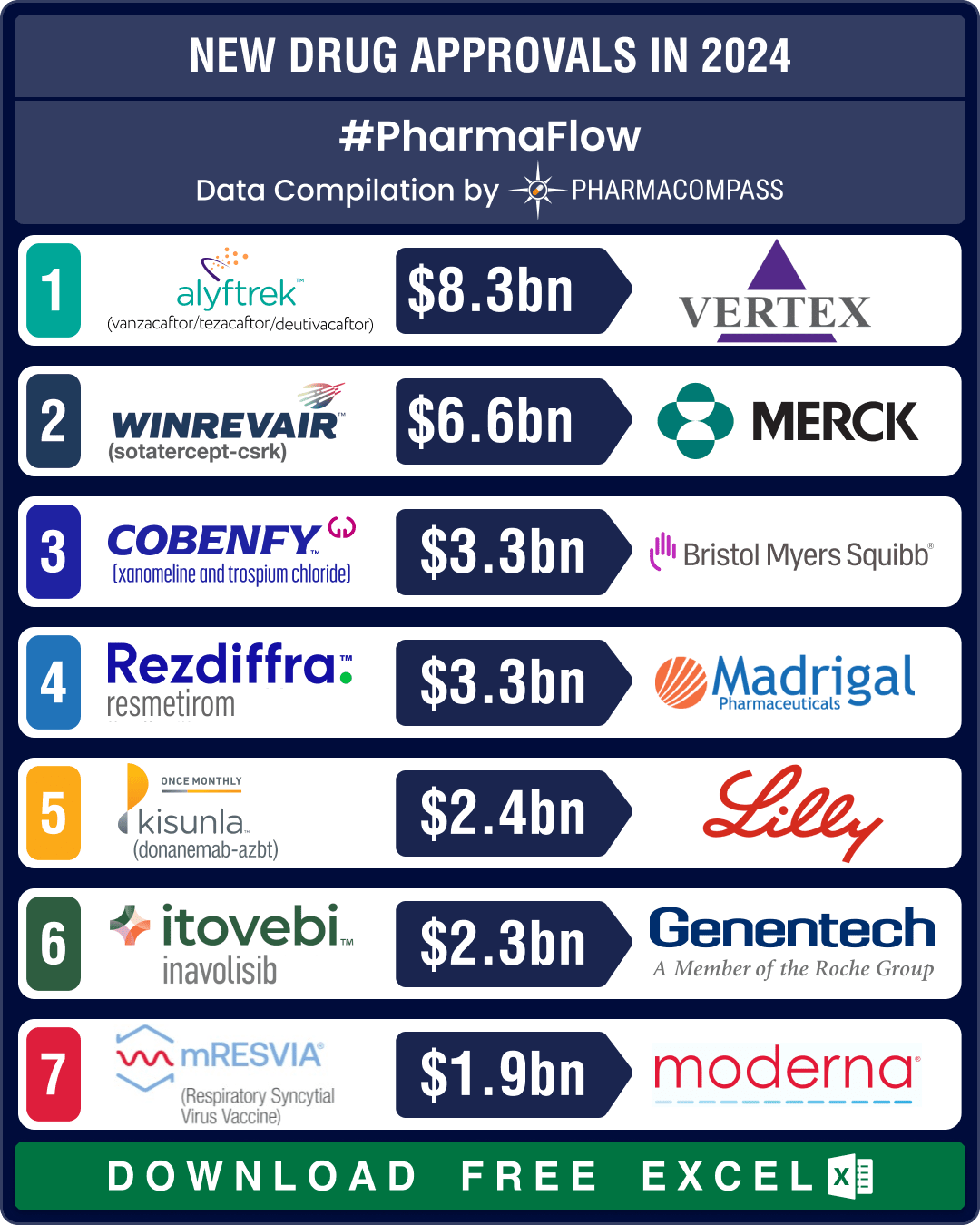
In 2024, the biopharma industry continued to advance on its robust trajectory of innovation. Though the US Food and Drug Administration’s Center for Drug Evaluation and Research (CDER) and the Center for Biologics Evaluation and Research (CBER) approved fewer drugs, there was a significant increase in medical breakthroughs.  While the CDER approved 50 new drugs in 2024, as compared to 55 in 2023, the CBER granted 14 biologics approvals in 2024, down from 20 in 2023. The European Medicines Agency (EMA) approved 34 new therapies, up from 32 in 2023, while Health Canada granted 28 approvals, down from 38 in 2023. The year saw long-awaited treatments being approved in areas such as schizophrenia and Alzheimer’s disease in the second half (H2) of 2024. In H1 2024, drugs to treat metabolic dysfunction-associated steatohepatitis (MASH) and chronic obstructive pulmonary disease (COPD) had been granted FDA approvals. As the year drew to a close, FDA began approving drugs at a feverish pace, with 29 of the CDER’s 50 approvals coming in H2. Like most years, the landscape of drug approvals was dominated by oncology, with 15 of the 50 drugs (30 percent) approved targeting various forms of cancer. This was followed by dermatology and non-malignant hematology, each accounting for 12 percent of approvals. Notably, small molecules continued to dominate the market, making up for 64 percent of the new drug approvals, while 32 percent were proteins, including monoclonal and bi-specific antibodies.  View New Drug Approvals in 2024 with Estimated Sales (Free Excel Available) Karuna-BMS’ schizophrenia drug, Lilly’s Alzheimer’s med, Neurocrine’s Crenessity dominate list of pathbreaking approvals in H2  Out of the 50 new drugs approved in 2024, CDER identified 24 (48 percent) as first-in-class, showcasing novel mechanisms of action. The most anticipated approval of 2024 was Karuna and Bristol Myers Squibb’s Cobenfy, a groundbreaking treatment for schizophrenia. This fixed-dose combination of xanomeline and trospium chloride represents the first novel mechanism of action in decades for this debilitating psychiatric condition. Analysts forecast peak annual sales of over US$ 3.3 billion for Cobenfy.  Eli Lilly’s Alzheimer’s drug Kisunla (donanemab) became the third amyloid-targeting antibody to gain FDA approval. Unlike its predecessors, Kisunla offers a unique limited-duration treatment regimen, allowing patients to discontinue therapy once amyloid levels in the brain drop below a certain threshold. Priced at approximately US$ 32,000 per year, it is positioned as a cost-effective alternative to existing treatments. Analysts estimate peak sales of US$ 2.4 billion for Kisunla. Crenessity (crinecerfont), developed by Neurocrine Biosciences, became the first FDA-approved treatment in decades for classic congenital adrenal hyperplasia (genetic conditions that affect the adrenal glands). Similarly, Vertex’s triple combination therapy of deutivacaftor, tezacaftor & vanzacaftor (Alyftrek) for cystic fibrosis represents a significant advancement in genetic disease treatment. Analysts forecast peak sales exceeding US$ 8.3 billion, underscoring the therapy’s potential to transform patient care. Meanwhile, Bridgebio’s Attruby (acoramidis hydrochloride) emerged as a promising treatment for cardiac amyloidosis, a life-threatening condition. Roche’s Itovebi, Checkpoint’s Unloxcyt clinch FDA approvals in H2 2024; forecast to achieve blockbuster status The dominance of cancer drug approvals reflects the ongoing focus on targeted therapies, immuno-oncology, and precision medicine to improve outcomes for patients with hard-to-treat cancers. Among the year’s notable FDA approvals was Genentech’s Itovebi (inavolisib), another targeted therapy that treats hormone receptor-positive (HR+), HER2-negative breast cancer. Itovebi is a PI3Kα inhibitor designed specifically for patients with PIK3CA mutations, a common driver of resistance to endocrine therapy in breast cancer. It demonstrated a more tolerable safety profile. Roche projects Itovebi’s peak (annual) sales to reach CHF 2 billion (US$ 2.3 billion). Checkpoint Therapeutics’ Unloxcyt (cosibelimab) joined the crowded checkpoint inhibitor market as the eleventh PD-1/PD-L1-targeting monoclonal antibody approved by the FDA. It was granted approval for cutaneous squamous cell carcinoma (cSCC), an aggressive form of skin cancer with high recurrence rates. As compared to other checkpoint inhibitors, like Keytruda (pembrolizumab) and Opdivo (nivolumab), Unloxcyt is likely to offer an advantage in immune activation. FDA also approved Astellas’ Vyloy (zolbetuximab), a first-in-class monoclonal antibody for metastatic gastric and gastroesophageal junction (GEJ) adenocarcinoma. Analysts forecast peak sales of approximately US$ 850 million for Vyloy. Syndax Pharmaceuticals’ Revuforj (revumenib) was approved by FDA to treat a type of acute leukemia in both adults and children. This approval introduces a novel class of medications known as menin inhibitors. These agents are currently in clinical development for the treatment of genetically defined subsets of acute leukemia. These inhibitors function by preventing the activation of cancer growth-related proteins. Potential blockbusters Lilly’s Ebglyss, Galderma’s Nemluvio lead advances in dermatology Eli Lilly’s Ebglyss (lebrikizumab) garnered significant attention. Approved by FDA for moderate-to-severe atopic dermatitis, this monoclonal antibody introduces a less burdensome dosing regimen compared to its competitors, with maintenance therapy required only once a month. This feature positions it as a potential contender to Dupixent (dupilumab), a market leader in atopic dermatitis. Ebglyss sales are forecast to reach US$ 1.9 billion by 2030. Galderma’s Nemluvio (nemolizumab) secured FDA approval for two indications in 2024 — prurigo nodularis (a chronic disorder of the skin) and moderate-to-severe atopic dermatitis in patients aged 12 years and older. As the first humanized IgG2 monoclonal antibody targeting the IL-31 receptor, Nemluvio directly inhibits the key driver of itch and inflammation in both these conditions. With its unique mechanism and broad dermatology potential, analysts forecast peak sales of approximately US$ 1.66 billion.  Ebglyss and Nemluvio underscore the growing importance of biologics in dermatological care. Botanix Pharmaceuticals also made strides in dermatology by clinching an FDA approval for Sofdra (sofpironium) in June. The drug has been okayed for the treatment of primary axillary hyperhidrosis, a condition characterized by excessive sweating. Ascendis Pharma’s Yorvipath (palopegteriparatide), a therapy approved by FDA to treat hypoparathyroidism, is forecast to achieve blockbuster sales of US$ 1.8 billion by 2030, highlighting its potential to transform endocrine care. Our view Overall, 2024 was defined by its breakthrough drug approvals. The year also saw significant reduction in complete response letters (CRLs) — they dropped from 43 in 2023 to just 29 in 2024. This suggests improved industry preparedness and alignment with regulatory expectations. The new year began with the approval of Datroway (datopotamab deruxtecan) from AstraZeneca and Daiichi Sankyo, marking a significant advancement in oncology. Several other promising new drugs are coming up for FDA approval this year, such as J&J’s nipocalimab, Vertex Pharmaceuticals’ suzetrigine, Elevar Therapeutics’ rivoceranib/camrelizumab, Sanofi’s fitusiran and GSK’s gepotidacin. Hopefully, the momentum of breakthrough approvals will continue through 2025, political headwinds in the US notwithstanding.

Impressions: 14618

https://dev1.pharmacompass.com/radio-compass-blog/fda-okays-50-new-drugs-in-2024-bms-cobenfy-lilly-s-kisunla-lead-pack-of-breakthrough-therapies

#PharmaFlow by PHARMACOMPASS
30 Jan 2025

MARKET PERFORMANCE RECAP

2read-more
read-more
Market Performance Recap August 2026 highlights: FDA okays first mRNA flu shot; Curium agrees to buy Lantheus for up to US$ 8 bn
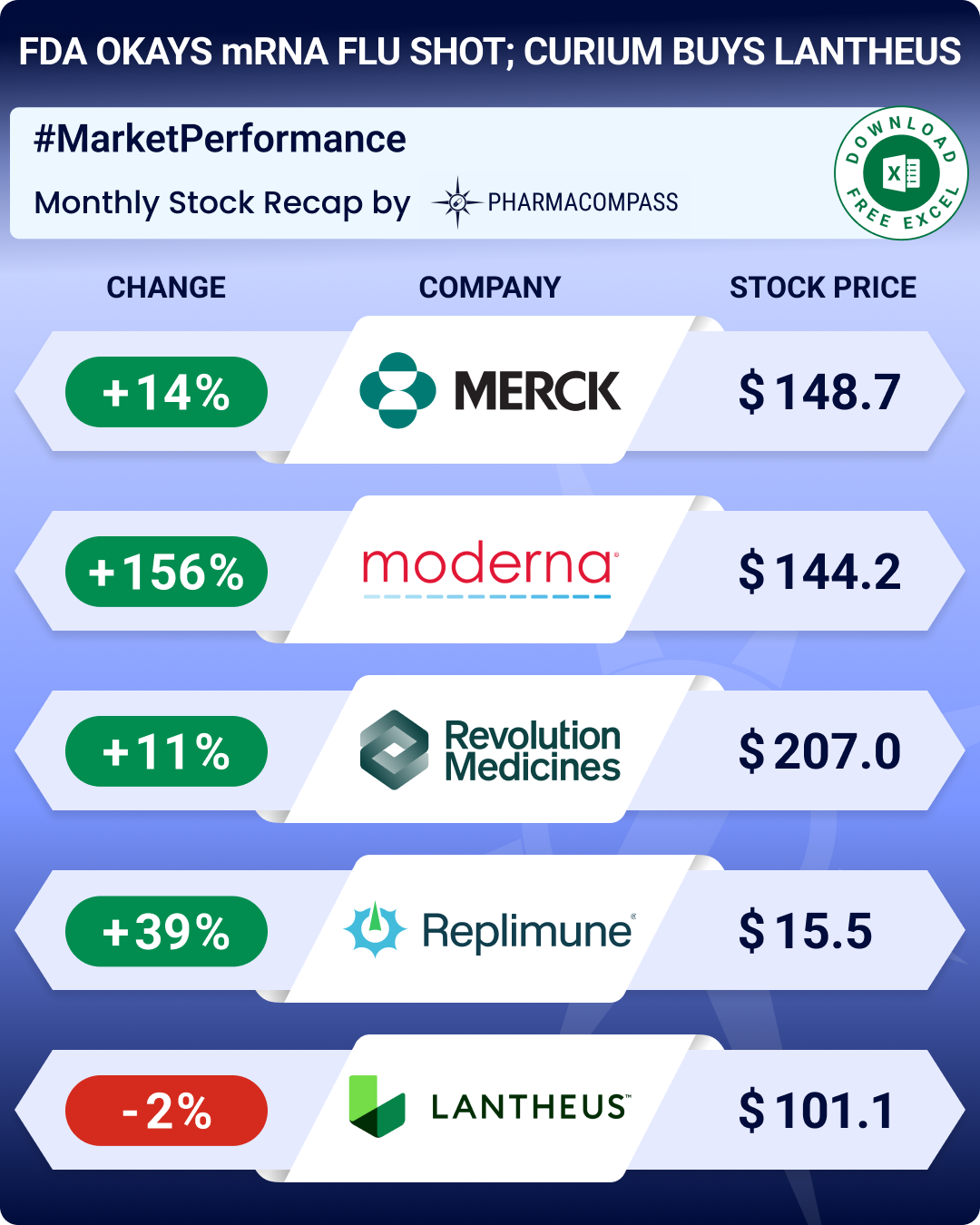
August was an important month for drug approvals, with the US Food and Drug Administration (FDA) approving Moderna’s mRNA-based seasonal influenza vaccine and Revolution Medicines’ drug to treat stage 4 pancreatic cancer. In clinical trials, Merck and Moderna’s personalized mRNA-based cancer vaccine significantly delayed melanoma from returning in patients whose tumors had been surgically removed. And Definium Therapeutics’ oral LSD candidate significantly reduced symptoms of generalized anxiety disorder, after showing benefit in depression earlier this year. As compared to July, the pharma indices rose at a faster clip. The Nasdaq Biotechnology Index (NBI) increased by 10.35 percent, from 6,456.75 in July-end to 7,125.06 at the end of August. The SPDR S&P Biotech ETF (XBI) increased by 10.56 percent, from 146.98 to 162.50. The S&P Biotechnology Select Industry Index (SPSIBI) increased by 10.57 percent, from 11,508.60 to 12,725.46.   Access the Market Performance Dashboard for August 2026 Newsmakers (Free Excel) FDA approves Moderna’s mRNA flu shot, Revolution’s therapy for pancreatic cancer  Amongst the month’s most notable drug approvals was Moderna's mFlusiva (mRNA-1010) — FDA cleared it for preventing seasonal influenza in all adults aged 50 and older. This is Moderna’s fourth approved product, and the first mRNA-based flu shot cleared in the US. Moderna’s stock rose 156 percent in August. Another first was FDA’s approval of Revolution Medicines’ Rasonque (daraxonrasib) for the treatment of adults with metastatic pancreatic ductal adenocarcinoma (PDAC), or stage 4 pancreatic cancer. Rasonque is the first targeted cancer medicine to be approved from a groundbreaking new class of targeted therapy known as RAS(ON) multi-selective and mutant-selective inhibitors. FDA also approved Takeda’s Orzeyful (oveporexton) for a lifelong neuropsychiatric sleep disorder, known as narcolepsy type 1. This is the first medicine approved for addressing the underlying cause of the disease in adults. The agency approved Gilead Sciences’ Bixlenvo (bictegravir/lenacapavir), the smallest once-daily single tablet regimen, for the treatment of HIV in adults who are virologically suppressed. The UK’s Medicines and Healthcare products Regulatory Agency (MHRA) authorized Eli Lilly's Foundayo (orforglipron), making Britain the first country in Europe to clear the GLP-1 tablet. Meanwhile, Japan’s health ministry approved GSK’s Hibsago (bepirovirsen) as a functional cure for chronic hepatitis B in adults who have taken antiviral pills for at least six months. This is the drug’s first approval anywhere in the world. A functional cure means the virus stays undetectable for at least 24 weeks after all treatment is stopped. Curium to acquire Lantheus for up to US$ 8 bn to create global radiopharma player August didn’t see many large M&A deals. The biggest acquisition was announced by Curium — it agreed to buy Lantheus Holdings for up to US$ 8 billion. Both companies are into radiopharmaceuticals, or radioactive isotopes used to diagnose and treat diseases, including cancers. Eli Lilly agreed to acquire Merida Biosciences for up to US$ 2.875 billion in cash. The acquisition gives Lilly access to Merida’s antibody-engineering platform and its lead phase 1 candidate MER511, being developed for Graves’ disease and thyroid eye disease, along with preclinical programs targeting food allergy, asthma and chronic spontaneous urticaria. Jazz Pharmaceuticals agreed to acquire San Diego-based Actio Biosciences for up to US$ 1.32 billion. The deal adds an experimental treatment for a rare inherited form of epilepsy to Jazz’s portfolio. In deals, Roche’s Genentech is partnering with South Korea’s Hanmi Pharm to advance a novel therapy (HM17321) that could improve the quality of weight loss by preserving lean mass in a deal worth up to US$ 2.3 billion. Unlike GLP-1 drugs, which cause muscle loss, HM17321 is designed to cut fat while increasing lean mass. The drug is still in phase 1 trials. FDA approves two drugs for blood cancer — Takeda’s Mimrylo, BMS’s Zenbexus In oncology, FDA approved Takeda’s Mimrylo (rusfertide) for the treatment of erythrocytosis (a condition where the body has a higher-than-normal number of red blood cells) in adults with polycythemia vera, a type of blood cancer. The agency granted accelerated approval to Bristol Myers Squibb’s Zenbexus (iberdomide), combined with subcutaneous daratumumab and hyaluronidase-fihj and dexamethasone, for adults with multiple myeloma (a type of blood cancer) who have had at least one prior line of therapy. FDA also granted accelerated approval to Replimune’s Tudriqev (vusolimogene oderparepvec-wtpg), in combination with BMS’ Opdivo (nivolumab), for treating adults with a difficult form of skin cancer, known as unresectable advanced cutaneous melanoma. The approval follows two rejections, in July 2025 and April 2026. Replimune’s stock was up 39 percent in August. In rare diseases, FDA approved Regeneron Pharmaceuticals’ Pasatru (garetosmab-grts) for a rare genetic disorder known as fibrodysplasia ossificans progressiva (FOP). In this condition, muscle, tendon and ligament tissue gradually turn into bone. FDA also granted accelerated approval to Ultragenyx’s Genglycos (pariglasgene brecaparvovec-opnr), the first treatment for glycogen storage disease type Ia (GSD1a) in patients aged eight and above. Children and adults with the rare disorder lack an enzyme needed to release stored sugar from the liver. As a result, their blood sugar crashes whenever they go too long without eating. Merck-Moderna’s mRNA cancer vaccine notches first phase 3 win; Definium’s LSD drug shows benefit in anxiety In clinical trials, the biggest readout came from Merck and Moderna — in a phase 3 trial, their personalized mRNA cancer vaccine, intismeran autogene, given in combination with Keytruda (pembrolizumab), significantly delayed melanoma recurrence in patients whose tumors had been surgically removed. Otsuka’s Voyxact (sibeprenlimab) became the first drug to stabilize kidney function in IgA nephropathy to the rate seen in healthy adults, according to two-year results from a phase 3 trial. IgA nephropathy is a disease in which faulty antibodies lodge in the kidney’s filters. Psychedelics saw another late-stage success. Definium Therapeutics’ oral LSD candidate DT120 (lysergide) significantly reduced symptoms of generalized anxiety disorder in a phase 3 trial. DT120 is an orally disintegrating tablet. AstraZeneca posted two lung cancer wins on the same day. In one phase 3 trial, Tagrisso (osimertinib) plus Orpathys (savolitinib) showed benefit in a type of lung cancer, known as EGFR-mutated NSCLC driven by MET resistance. In another phase 3 trial, Enhertu (trastuzumab deruxtecan) showed benefit as a first-line treatment of patients with unresectable, locally advanced or metastatic HER2-mutant NSCLC. Our view All three pharma indices rose over 10 percent in August, against the S&P 500’s modest increase of 2.42 percent. As geopolitical uncertainties continue to rock industries across the world, it’s clear that the pharmaceutical industry is building resilience through its laboratories and clinical trials.

Impressions: 1229

https://dev1.pharmacompass.com/pipeline-prospector-blog/market-performance-recap-august-2026-highlights-fda-okays-first-mrna-flu-shot-curium-agrees-to-buy-lantheus-for-up-to-us-8-bn

#PharmaFlow by PHARMACOMPASS
03 Sep 2026

WEEKLY INDUSTRY NEWS

9read-more
read-more
FDA clears first mRNA-based flu shot from Moderna for those above 50 years; approves Takeda’s sleep disorder pill
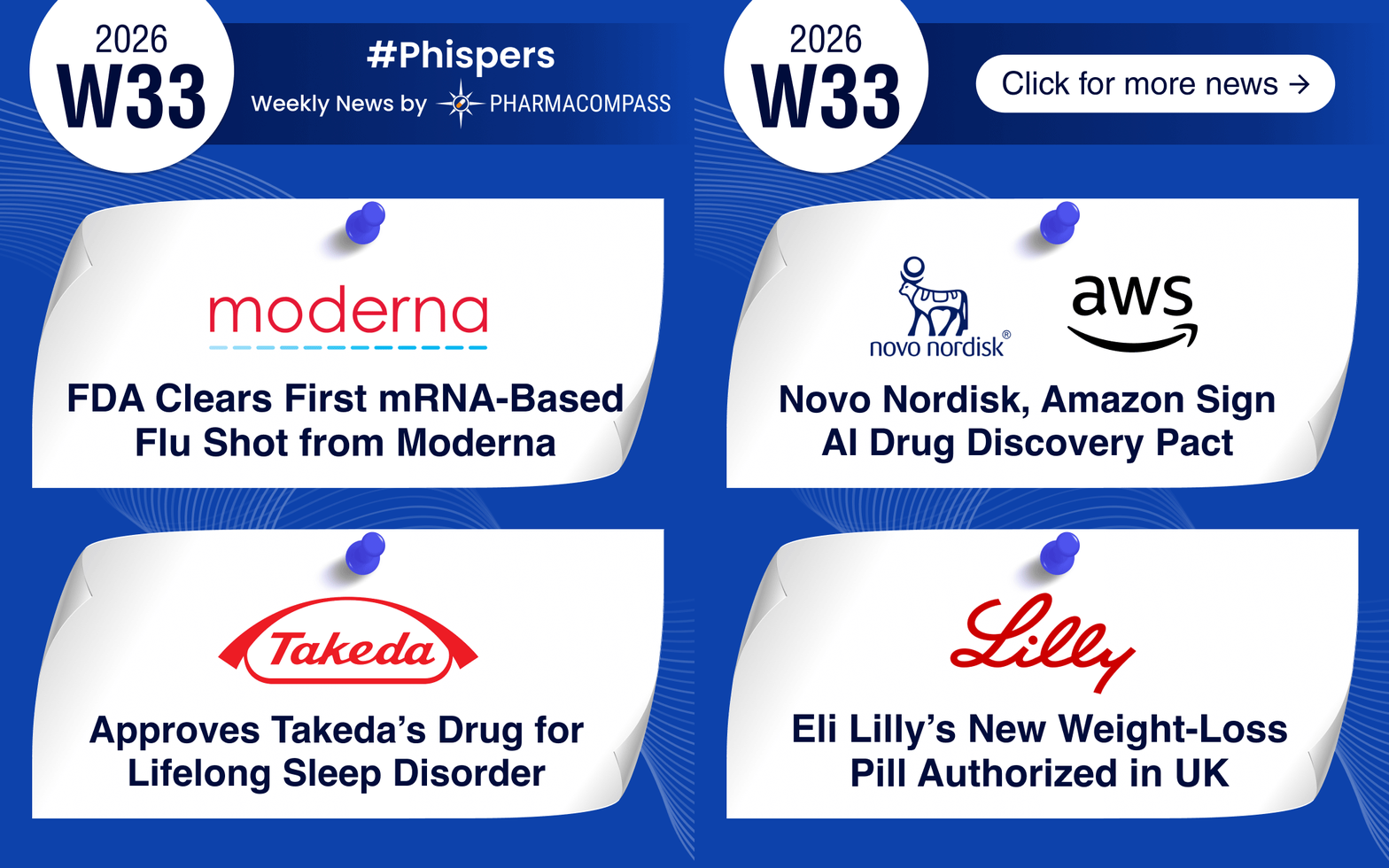
In Phispers this week, the US Food and Drug Administration (FDA) approved Moderna’s mFlusiva, an mRNA-based seasonal influenza vaccine whose application had been issued refusal-to-file in February. The agency also approved Takeda’s sleep disorder pill Orzeyful (oveporexton) and granted an accelerated approval to Replimune’s Tudriqev (vusolimogene oderparepvec-wtpg), in combination with Bristol Myers Squibb’s Opdivo (nivolumab), for treating adults with a difficult-to-treat form of skin cancer. The agency rejected ITM Isotope Technologies Munich’s investigational radiopharmaceutical for rare cancers that start in hormone-making cells of the gut and pancreas.China’s drug regulator granted a conditional approval to TransThera Sciences’ Yochanra (tinengotinib) for adults with a type of bile duct cancer. And the UK’s Medicines and Healthcare products Regulatory Agency (MHRA) authorized Eli Lilly’s Foundayo (orforglipron), making Britain the first country in Europe to clear the GLP-1 weight loss tablet.In deals, Novo Nordisk entered into a strategic partnership with Amazon Web Services (AWS) to accelerate drug discovery and modernize its operations. And Jazz Pharmaceuticals agreed to acquire San Diego-based Actio Biosciences for up to US$ 1.32 billion.Meanwhile, Bristol Myers Squibb announced a US$ 2.3 billion investment towards building a new manufacturing facility in Houston, Texas.In news from clinical trials, Swiss biotech MoonLake Immunotherapeutics reported positive top-line results from a phase 3 trial of sonelokimab in adults with active psoriatic arthritis who have not previously received a biologic.FDA approves first mRNA-based flu shot from Moderna for those above 50 years FDA has approved Moderna’s mFlusiva (mRNA-1010) to prevent seasonal influenza in all adults aged 50 to 64. This is Moderna’s fourth approved product, and the first mRNA-based flu shot cleared in the US. The shot also won an accelerated approval for those 65 years and older. In February this year, FDA had issued a rare refusal-to-file for this vaccine over the design of the phase 3 trial. When Moderna pushed back a week later, the agency had reversed course. An advisory committee subsequently voted unanimously in favor of the vaccine.Approves Takeda’s sleep disorder pill: FDA has approved Takeda’s Orzeyful (oveporexton) tablets for a lifelong neuropsychiatric sleep disorder, known as narcolepsy type 1. This is the first medicine approved for addressing the underlying cause of the disease in adults. Narcolepsy type 1 stems from the loss of brain cells producing orexin, a chemical messenger governing wakefulness and muscle tone. Without orexin, the brain struggles to maintain alertness or to control the boundary between sleep and waking.FDA grants accelerated approval to Replimune’s melanoma drug after two rejectionsFDA has granted accelerated approval to Replimune’s Tudriqev (vusolimogene oderparepvec-wtpg), in combination with BMS’ Opdivo (nivolumab), for treating adults with a difficult form of skin cancer, known as unresectable advanced cutaneous melanoma who experienced disease progression on an anti-PD-1 antibody-based regimen. This form of advanced skin cancer doesn’t respond to a widely used class of immunotherapy drugs. The approval follows two rejections, in July 2025 and April 2026.Rejects ITM’s radiopharmaceutical: Germany’s ITM Isotope Technologies Munich has received a complete response letter from FDA for 177Lu-edotreotide (ITM-11), an investigational radiopharmaceutical for rare cancers that start in hormone-making cells of the gut and pancreas.Novo Nordisk, Amazon sign AI drug discovery pact, open London hubNovo Nordisk has entered into a strategic partnership with Amazon Web Services (AWS) to accelerate drug discovery and modernize Novo Nordisk’s operations through agentic AI and cloud technologies. The two companies have opened a co-innovation hub at Novo’s London facility. This facility brings together AWS engineers, AI specialists and applied scientists alongside Novo Nordisk research and development teams to increase productivity and help reduce the time to market for future medicines.Jazz acquires Actio Biosciences: Jazz Pharmaceuticals has agreed to acquire San Diego-based Actio Biosciences for up to US$ 1.32 billion. This includes an upfront payment of US$ 820 million, with up to US$ 500 million more tied to approval and sales milestones. The deal adds an experimental treatment for a rare inherited form of epilepsy to Jazz’s portfolio.BMS to build campus in Houston: Bristol Myers Squibb has announced an investment of US$ 2.3 billion towards building a new manufacturing facility in Houston, Texas. This is part of a previously announced US$ 40 billion investment commitment in the US.Lilly’s new weight-loss pill authorized in UK; TransThera’s cancer drug approved in ChinaThe UK’s Medicines and Healthcare products Regulatory Agency (MHRA) has authorized Eli Lilly's Foundayo (orforglipron), making Britain the first country in Europe to clear the GLP-1 tablet. Unlike injected GLP-1 drugs, Foundayo is a once-daily pill taken at any time, with no food or water restrictions.TransThera’s drug wins conditional approval in China: China’s National Medical Products Administration has granted conditional approval to TransThera Sciences’ Yochanra (tinengotinib) for treating adults with a type of bile duct cancer, known as advanced, metastatic or unresectable cholangiocarcinoma with an FGFR2 fusion or rearrangement. This is the first approved treatment in China that addresses the longstanding global challenge of acquired resistance to FGFR inhibitor therapy in patients with bile duct cancer.MoonLake’s psoriatic arthritis drug posts phase 3 win; Sionna scraps cystic fibrosis program Swiss biotech MoonLake Immunotherapeutics has reported positive topline results from a phase 3 trial of sonelokimab in adults with active psoriatic arthritis who have not previously received a biologic. Psoriatic arthritis is a type of arthritis that can affect people who have psoriasis, a skin condition that causes itchy, scaly patches on the skin.Sionna scraps cystic fibrosis program: Sionna Therapeutics will not advance Sion-719 as an add-on to standard care after its phase 2a trial missed its key activity endpoint in cystic fibrosis, a genetic disease that causes thick mucus to build up in the lungs and can lead to breathing problems and repeated infection. The drug was being tested as an addition to Vertex Pharmaceuticals' Trikafta (elexacaftor/tezacaftor/ivacaftor) in 15 adults with cystic fibrosis. 

Impressions: 2085

https://dev1.pharmacompass.com/radio-compass-phisper/fda-clears-first-mrna-based-flu-shot-from-moderna-for-those-above-50-years-approves-takeda-s-sleep-disorder-pill

#Phispers by PHARMACOMPASS
13 Aug 2026

NEWS LIBRARY

685read-more
read-more

https://economictimes.indiatimes.com/industry/healthcare/biotech/pharmaceuticals/cancer-drug-price-cuts-leave-costly-brands-untouched/articleshow/135244832.cms

ECONOMICTIMES
29 Oct 2026

https://economictimes.indiatimes.com/industry/healthcare/biotech/pharmaceuticals/rs-1-lakh-to-rs-30000-cancer-immunotherapy-gets-cheaper-but-will-patients-get-the-price-benefit/articleshow/135185711.cms

ECONOMICTIMES
25 Oct 2026

https://www.prnewswire.com/news-releases/huyabio-international-announces-hbi-8000-and-nivolumab-combination-reduces-the-risk-of-disease-progression-by-27-in-patients-with-advanced-melanoma-in-phase-3-trial-302917490.html

PR NEWSWIRE
22 Oct 2026

https://www.fiercepharma.com/pharma/bms-ono-take-amgen-task-fdas-opdivo-biosimilar-decision-looms

FIERCE PHARMA
16 Sep 2026

https://economictimes.indiatimes.com/industry/healthcare/biotech/pharmaceuticals/dr-reddys-launches-nivolumab-biosimilar-in-india/articleshow/134266368.cms

ECONOMICTIMES
15 Sep 2026

https://www.swissmedic.ch/swissmedic/en/home/about-us/publications/public-summary-swiss-par/public-summary-swiss-par-opdualag-1.html

SWISSMEDIC
04 Sep 2026
digital-contentPB000205##p