Please Wait
Applying Filters...
Menu

Digital Content read-more

Create Content with PharmaCompass, ask us

PHARMA & BIOTECH INSIGHTS

1read-more
read-more

A PHP Error was encountered

Severity: 8192

Message: mb_convert_encoding(): Handling HTML entities via mbstring is deprecated; use htmlspecialchars, htmlentities, or mb_encode_numericentity/mb_decode_numericentity instead

Filename: blog/grid.php

Line Number: 52

Backtrace:

File: /var/www/html/application/views/include/media/blog/grid.php
Line: 52
Function: mb_convert_encoding

File: /var/www/html/application/models/Cmn.php
Line: 3595
Function: view

File: /var/www/html/application/views/include/product/digitalContent/grid.php
Line: 17
Function: common

File: /var/www/html/application/views/include/desc/inner.php
Line: 13
Function: view

File: /var/www/html/application/views/include/desc/indexNew.php
Line: 2433
Function: include

File: /var/www/html/application/controllers/Common.php
Line: 11303
Function: view

File: /var/www/html/index.php
Line: 231
Function: require_once

DMF filings rise 4.5% in Q3 2025; China holds lead, India records 20% growth in submissions
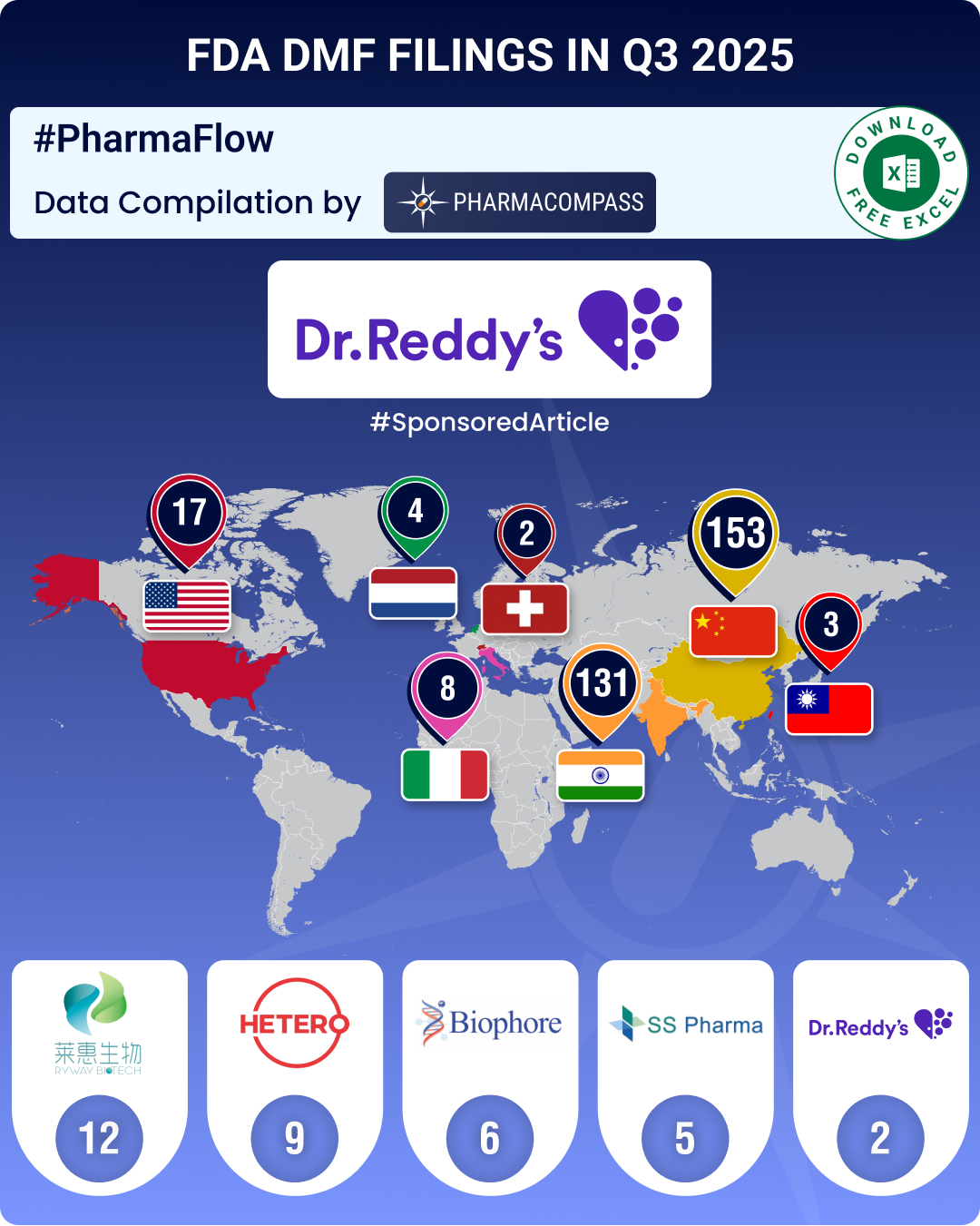
The third quarter (Q3) of 2025 witnessed a steady rise in Drug Master File (DMF) submissions to the US Food and Drug Administration (FDA). DMFs are used to provide confidential, detailed information about facilities, processes, or articles used in the manufacturing, processing, packaging, and storing of human drug products A total of 323 Type II DMFs were submitted during this period, as opposed to 309 submissions in Q3 2024, marking an increase of 4.53 percent. This is the second highest number since 2018. In Q1 2025, 339 Type II filings were recorded. Across all DMF types (II, III, IV, and V), 479 DMFs were filed in Q3 2025, compared to 394 in Q3 2024, representing a 21.57 percent increase. Out of the 323 Type II DMFs submitted in Q3 2025, 40 had completed their review by the end of Q3, reflecting a processing lag between submission and review completion.  View FDA DMF Filings in Q3 2025 (Power BI Dashboard, Free Excel Available) China maintains its lead while India posts double-digit growth in DMF submissions  China and India continued to dominate DMF submissions in Q3 2025. China retained the top spot with 153 Type II DMFs, matching its submission count from Q3 2024. India recorded 131 DMFs, marking a 20.18 percent increase over 109 filings during the corresponding period last year. The United States stood a distant third with 17 filings, compared to 13 in Q3 2024. Among European nations, Italy recorded eight DMFs, doubling its 2024 tally. The Netherlands filed four, up from three. Spain submitted only one DMF, as against seven submitted in Q3 2024. Taiwan made three filings, up from one submitted in Q3 2024. Together, India, China and Taiwan accounted for about 88.9 percent of all Type II DMFs filed during the quarter. China’s Suzhou Ryway Biotech tops corporate tally; India’s Hetero, Biophore follow China’s Suzhou Ryway Biotech led the company-wise tally with 12 DMF submissions in Q3 2025. The company had not filed any DMFs in Q3 2024. India’s Hetero Group followed with nine DMFs, maintaining the same number of filings as Q3 2024. Biophore India Pharmaceuticals ranked third with six DMFs, doubling its count from three last year. Other notable contributors include Sai Sreyas Pharmaceuticals (India) and Shanghai Haoyuan Chemexpress (China), with five DMFs each. Companies such as SNJ Group, Lunan Pharmaceutical, Allsino Pharmaceutical, Shankus Pharma, Jiangxi Xinganjiang Pharmaceutical, Sunpure Extracts, Lee Pharma, Umedica Laboratories, Linhai Tianyu Pharmaceutical and Maithri Drugs filed four DMFs each. Olaparib, semaglutide lead molecular filings; Dr. Reddy’s files DMF for edoxaban & tucatinib Dr. Reddy’s Laboratories also featured among key DMF filers in Q3 2025, submitting two DMFs — for edoxaban tosylate monohydrate and tucatinib copovidone. Edoxaban tosylate monohydrate (marketed as Savaysa by Daiichi Sankyo) is a prescription anticoagulant used to reduce the risk of stroke and to treat deep vein thrombosis and pulmonary embolism. Patent exclusivity for Savaysa extends until October 2026 in the United States, with no generic currently available. In terms of molecules, the highest number of DMFs were filed for olaparib, semaglutide, ruxolitinib phosphate, ferric carboxymaltose, and vismodegib, with three DMFs each in Q3 2025. Olaparib, sold by AstraZeneca under the brand name Lynparza, saw DMFs being filed by BDR Lifesciences and Intas Pharmaceuticals from India, and by ScinoPharm Taiwan during the quarter. Semaglutide, a glucagon-like peptide-1 (GLP-1) receptor agonist developed by Novo Nordisk, continued to draw strong interest from API manufacturers. DMFs for semaglutide were filed by three Chinese companies: Yangzhou Aurisco Pharmaceutical, Zhejiang Peptites Biotech, and Fujian Genohope Biotech. Ruxolitinib phosphate, marketed by Incyte as Jakafi, saw three DMFs. Three Indian companies — Alembic Pharmaceuticals, Valary Labs, and Devi Pharmatech — filed DMFs for this API in Q3 2025. Other molecules that received multiple DMF submissions include ferric carboxymaltose (used to treat iron-deficiency anemia) and vismodegib (an oral therapy for basal-cell carcinoma). First-time DMF filings span 17 companies; India leads with nine first-time DMF The quarter saw first-time DMF filings from 17 companies. India took a lead here with nine first-time DMF filings, followed by China (six), and the US (two). The DMF filings in this quarter included inclisiran sodium (filed by Aurisco Pharmaceutical of China), pacritinib citrate (by TAPI Nl B.V. of the Netherlands), and vosoritide (by Apicore LLC of the US). Out of the 19 first-time DMFs filed in Q3 2025, four completed their Generic Drug User Fee Amendments (GDUFA) review process during the quarter. GDUFA fee for FY 2026: The FDA Generic Drug User Fee Amendments (GDUFA) is a law designed to speed access to safe and effective generic drugs to the public and reduce costs to the industry. Fee rates for fiscal year 2026 were published on July 30, 2025. FDA has revised fees under GDUFA III across all categories. While there is a slight increase in the DMF fee from US$ 95,084 in 2025 to US$ 102,584 in 2026, the ANDA fee has seen a sharp rise: from US$ 321,920 in 2025 to US$ 358,247 in 2026. FY 2025 and FY 2026 User Fee Rates Generic drug fee category Fees rates for FY 2025 Fees rates for FY 2026 Applications:     Abbreviated New Drug Application (ANDA) US$ 3,21,920 US$ 3,58,247 Drug Master File (DMF) US$ 95,084 US$ 1,02,584 Facilities:     Active Pharmaceutical Ingredient (API)—Domestic US$ 41,580 US$ 43,549 API—Foreign US$ 56,580 US$ 58,549 Finished Dosage Form (FDF)—Domestic US$ 2,31,952 US$ 2,38,943 FDF—Foreign US$ 2,46,952 US$ 2,53,943 Contract Manufacturing Organization (CMO)—Domestic US$ 55,668 US$ 57,346 CMO—Foreign US$ 70,668 US$ 72,346 GDUFA Program:     Large size operation generic drug applicant US$ 18,91,664 US$ 19,18,377 Medium size operation generic drug applicant US$ 7,56,666 US$ 7,67,351 Small business generic drug applicant US$ 1,89,166 US$ 1,91,838 Our view For several years prior to the pandemic, India had a lead in Type II DMF submissions. In recent years, China has surpassed India in DMF filings. But Q3 2025 numbers indicate that Indian drugmakers are fast catching up. Since DMFs establish trust in APIs from across the world, we feel this healthy competition between drugmakers from the two countries is good for the global pharmaceutical industry.  

Impressions: 5448

https://dev1.pharmacompass.com/radio-compass-blog/dmf-filings-rise-4-5-in-q3-2025-china-holds-lead-india-records-20-growth-in-submissions

#PharmaFlow by PHARMACOMPASS
13 Nov 2025

MARKET PERFORMANCE RECAP

7read-more
read-more
Market Performance Recap August 2026 highlights: FDA okays first mRNA flu shot; Curium agrees to buy Lantheus for up to US$ 8 bn
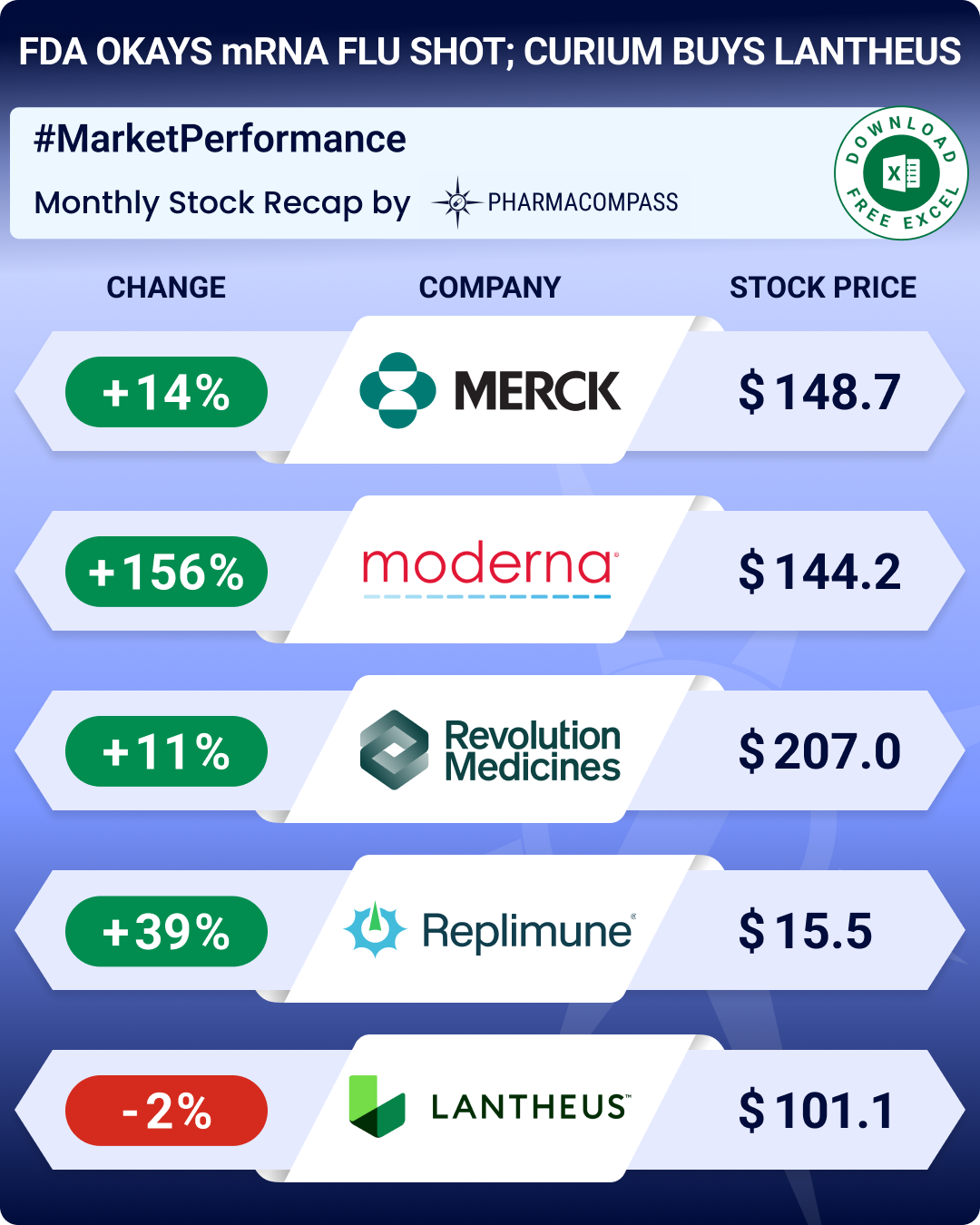
August was an important month for drug approvals, with the US Food and Drug Administration (FDA) approving Moderna’s mRNA-based seasonal influenza vaccine and Revolution Medicines’ drug to treat stage 4 pancreatic cancer. In clinical trials, Merck and Moderna’s personalized mRNA-based cancer vaccine significantly delayed melanoma from returning in patients whose tumors had been surgically removed. And Definium Therapeutics’ oral LSD candidate significantly reduced symptoms of generalized anxiety disorder, after showing benefit in depression earlier this year. As compared to July, the pharma indices rose at a faster clip. The Nasdaq Biotechnology Index (NBI) increased by 10.35 percent, from 6,456.75 in July-end to 7,125.06 at the end of August. The SPDR S&P Biotech ETF (XBI) increased by 10.56 percent, from 146.98 to 162.50. The S&P Biotechnology Select Industry Index (SPSIBI) increased by 10.57 percent, from 11,508.60 to 12,725.46.   Access the Market Performance Dashboard for August 2026 Newsmakers (Free Excel) FDA approves Moderna’s mRNA flu shot, Revolution’s therapy for pancreatic cancer  Amongst the month’s most notable drug approvals was Moderna's mFlusiva (mRNA-1010) — FDA cleared it for preventing seasonal influenza in all adults aged 50 and older. This is Moderna’s fourth approved product, and the first mRNA-based flu shot cleared in the US. Moderna’s stock rose 156 percent in August. Another first was FDA’s approval of Revolution Medicines’ Rasonque (daraxonrasib) for the treatment of adults with metastatic pancreatic ductal adenocarcinoma (PDAC), or stage 4 pancreatic cancer. Rasonque is the first targeted cancer medicine to be approved from a groundbreaking new class of targeted therapy known as RAS(ON) multi-selective and mutant-selective inhibitors. FDA also approved Takeda’s Orzeyful (oveporexton) for a lifelong neuropsychiatric sleep disorder, known as narcolepsy type 1. This is the first medicine approved for addressing the underlying cause of the disease in adults. The agency approved Gilead Sciences’ Bixlenvo (bictegravir/lenacapavir), the smallest once-daily single tablet regimen, for the treatment of HIV in adults who are virologically suppressed. The UK’s Medicines and Healthcare products Regulatory Agency (MHRA) authorized Eli Lilly's Foundayo (orforglipron), making Britain the first country in Europe to clear the GLP-1 tablet. Meanwhile, Japan’s health ministry approved GSK’s Hibsago (bepirovirsen) as a functional cure for chronic hepatitis B in adults who have taken antiviral pills for at least six months. This is the drug’s first approval anywhere in the world. A functional cure means the virus stays undetectable for at least 24 weeks after all treatment is stopped. Curium to acquire Lantheus for up to US$ 8 bn to create global radiopharma player August didn’t see many large M&A deals. The biggest acquisition was announced by Curium — it agreed to buy Lantheus Holdings for up to US$ 8 billion. Both companies are into radiopharmaceuticals, or radioactive isotopes used to diagnose and treat diseases, including cancers. Eli Lilly agreed to acquire Merida Biosciences for up to US$ 2.875 billion in cash. The acquisition gives Lilly access to Merida’s antibody-engineering platform and its lead phase 1 candidate MER511, being developed for Graves’ disease and thyroid eye disease, along with preclinical programs targeting food allergy, asthma and chronic spontaneous urticaria. Jazz Pharmaceuticals agreed to acquire San Diego-based Actio Biosciences for up to US$ 1.32 billion. The deal adds an experimental treatment for a rare inherited form of epilepsy to Jazz’s portfolio. In deals, Roche’s Genentech is partnering with South Korea’s Hanmi Pharm to advance a novel therapy (HM17321) that could improve the quality of weight loss by preserving lean mass in a deal worth up to US$ 2.3 billion. Unlike GLP-1 drugs, which cause muscle loss, HM17321 is designed to cut fat while increasing lean mass. The drug is still in phase 1 trials. FDA approves two drugs for blood cancer — Takeda’s Mimrylo, BMS’s Zenbexus In oncology, FDA approved Takeda’s Mimrylo (rusfertide) for the treatment of erythrocytosis (a condition where the body has a higher-than-normal number of red blood cells) in adults with polycythemia vera, a type of blood cancer. The agency granted accelerated approval to Bristol Myers Squibb’s Zenbexus (iberdomide), combined with subcutaneous daratumumab and hyaluronidase-fihj and dexamethasone, for adults with multiple myeloma (a type of blood cancer) who have had at least one prior line of therapy. FDA also granted accelerated approval to Replimune’s Tudriqev (vusolimogene oderparepvec-wtpg), in combination with BMS’ Opdivo (nivolumab), for treating adults with a difficult form of skin cancer, known as unresectable advanced cutaneous melanoma. The approval follows two rejections, in July 2025 and April 2026. Replimune’s stock was up 39 percent in August. In rare diseases, FDA approved Regeneron Pharmaceuticals’ Pasatru (garetosmab-grts) for a rare genetic disorder known as fibrodysplasia ossificans progressiva (FOP). In this condition, muscle, tendon and ligament tissue gradually turn into bone. FDA also granted accelerated approval to Ultragenyx’s Genglycos (pariglasgene brecaparvovec-opnr), the first treatment for glycogen storage disease type Ia (GSD1a) in patients aged eight and above. Children and adults with the rare disorder lack an enzyme needed to release stored sugar from the liver. As a result, their blood sugar crashes whenever they go too long without eating. Merck-Moderna’s mRNA cancer vaccine notches first phase 3 win; Definium’s LSD drug shows benefit in anxiety In clinical trials, the biggest readout came from Merck and Moderna — in a phase 3 trial, their personalized mRNA cancer vaccine, intismeran autogene, given in combination with Keytruda (pembrolizumab), significantly delayed melanoma recurrence in patients whose tumors had been surgically removed. Otsuka’s Voyxact (sibeprenlimab) became the first drug to stabilize kidney function in IgA nephropathy to the rate seen in healthy adults, according to two-year results from a phase 3 trial. IgA nephropathy is a disease in which faulty antibodies lodge in the kidney’s filters. Psychedelics saw another late-stage success. Definium Therapeutics’ oral LSD candidate DT120 (lysergide) significantly reduced symptoms of generalized anxiety disorder in a phase 3 trial. DT120 is an orally disintegrating tablet. AstraZeneca posted two lung cancer wins on the same day. In one phase 3 trial, Tagrisso (osimertinib) plus Orpathys (savolitinib) showed benefit in a type of lung cancer, known as EGFR-mutated NSCLC driven by MET resistance. In another phase 3 trial, Enhertu (trastuzumab deruxtecan) showed benefit as a first-line treatment of patients with unresectable, locally advanced or metastatic HER2-mutant NSCLC. Our view All three pharma indices rose over 10 percent in August, against the S&P 500’s modest increase of 2.42 percent. As geopolitical uncertainties continue to rock industries across the world, it’s clear that the pharmaceutical industry is building resilience through its laboratories and clinical trials.

Impressions: 1229

https://dev1.pharmacompass.com/pipeline-prospector-blog/market-performance-recap-august-2026-highlights-fda-okays-first-mrna-flu-shot-curium-agrees-to-buy-lantheus-for-up-to-us-8-bn

#PharmaFlow by PHARMACOMPASS
03 Sep 2026

WEEKLY INDUSTRY NEWS

18read-more
read-more
FDA flags potential risk of serious eye condition linked with GLP-1 drugs; Astra in talks to buy Rhythm Pharma, says report
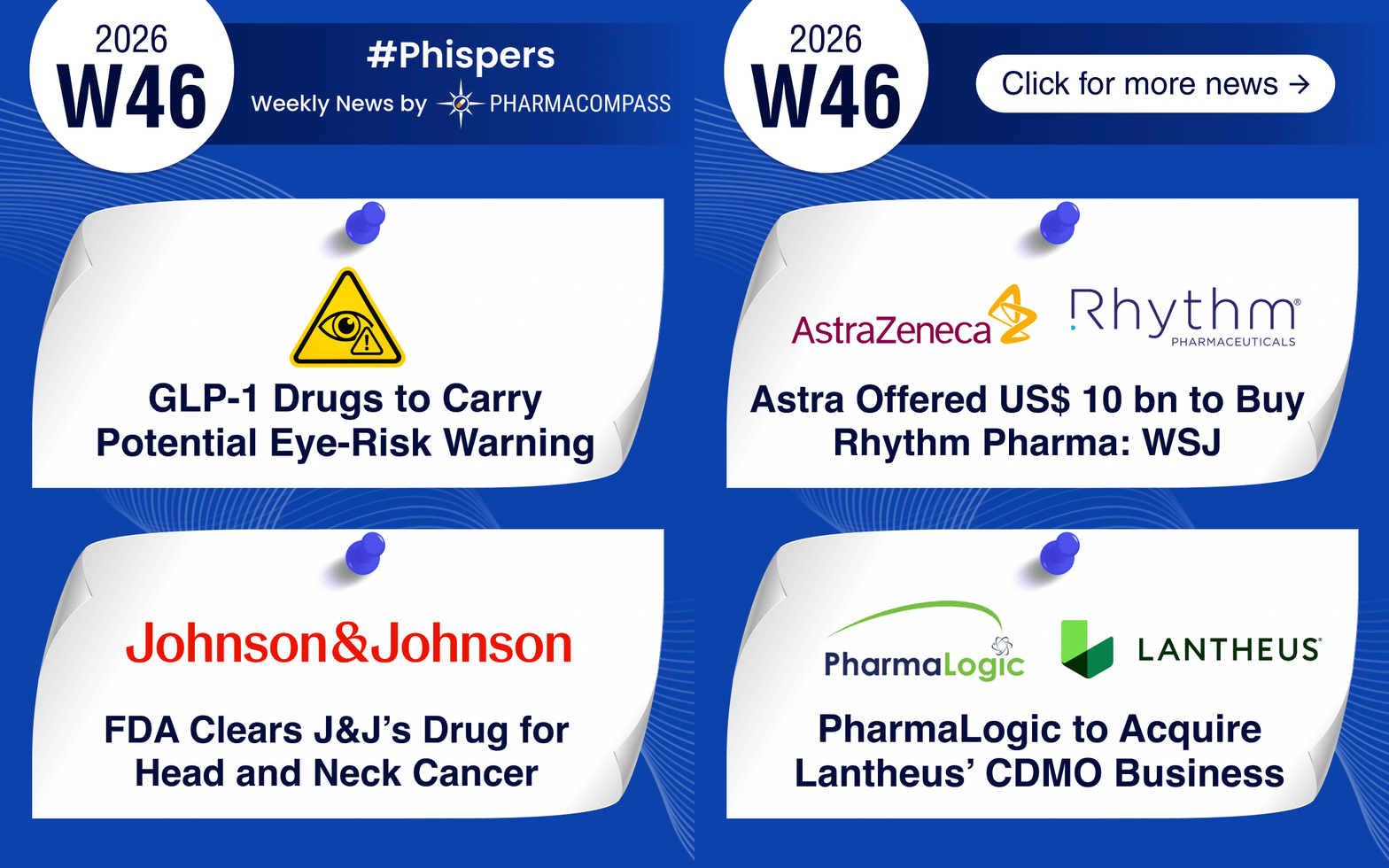
The US Food and Drug Administration (FDA) has announced a potential increased risk of a serious eye condition associated with GLP-1 drugs used for weight loss and diabetes. The agency approved Johnson & Johnson’s Rybrevant Faspro (amivantamab and hyaluronidase-lpuj) for adults with recurrent or metastatic head and neck squamous cell carcinoma, and Bayer’s Sunharbo (asundexian), a blood thinner that reduces the risk of stroke in adults with recent non-cardioembolic ischemic stroke or high-risk transient ischemic attack (TIA), so-called “mini-stroke”. It also cleared Merck’s drug for treating rare tumors in or around joints. In deals, there were reports that AstraZeneca is in talks to acquire Rhythm Pharma for about US$ 10 billion. Boehringer Ingelheim signed a deal with Sino Biopharmaceutical to develop six new cancer treatments. AbbVie bought rights to an experimental oral drug for inflammatory bowel disease from Nxera Pharma’s UK subsidiary. Mumbai-based contract development and manufacturing organization (CDMO) BDR Pharma is acquiring a controlling stake in the oral solid formulations business of Acme Formulation. And PharmaLogic, an American CDMO focused on radiopharmaceuticals, agreed to acquire Lantheus’ CDMO business and its manufacturing facility in Springfield, New Jersey. The US Department of Defense has removed biotech WuXi AppTec from its list of “Chinese military companies”. Meanwhile, FDA is probing the risk of developing tumors, including cancers, linked to Novartis’ Zolgensma (onasemnogene abeparvovec). The agency issued a Form 483 with three observations to Pinnacle Life Science, a subsidiary of India’s Aarti Drugs, after an inspection earlier this month. FDA announces ‘eye-risk’ warning for GLP-1 drugs, such as Ozempic, Mounjaro  FDA has announced a “potential increased risk” of a serious eye condition associated with GLP-1 drugs used for weight loss and diabetes. The condition, though rare, is known as non-arteritic anterior ischemic optic neuropathy (NAION) and can cause acute, painless, decreased vision in one eye, including vision loss. GLP-1 drugmakers need to add a warnings and precautions section on the label, informing about the potential risk. The requirement covers 12 drugs, including Novo’s Ozempic, Rybelsus and Wegovy (semaglutide), Eli Lilly’s Mounjaro and Zepbound (tirzepatide) and Foundayo (orforglipron). FDA grants accelerated approval to J&J’s Rybrevant Faspro in head and neck cancer FDA has granted accelerated approval to Johnson & Johnson’s Rybrevant Faspro (amivantamab and hyaluronidase-lpuj) for adults with recurrent or metastatic head and neck squamous cell carcinoma that has worsened after chemotherapy and immunotherapy. Rybrevant Faspro is already approved for lung cancer. The treatment can be administered as a subcutaneous injection. Clears Bayer’s blood thinner: FDA has approved Bayer’s Sunharbo (asundexian), a blood thinner that reduces the risk of stroke in adults with recent non-cardioembolic ischemic stroke or high-risk transient ischemic attack (TIA), so-called “mini-stroke”. Sunharbo needs to be taken in combination with an anti-platelet therapy. Okays Merck’s rare joint tumor drug: FDA has approved Merck KGaA’s Pimjetmi (pimicotinib), a once-daily oral drug for adults with symptomatic tenosynovial giant cell tumor (TGCT) when surgery could worsen function or cause severe morbidity. TGCT is a rare, locally aggressive tumor in or around the joints. Boehringer inks up to US$ 7.4 bn deal with Sino Biopharm for six cancer treatments Within weeks of opening its R&D facility in Shanghai, Boehringer Ingelheim has signed a deal with Sino Biopharmaceutical to potentially develop six new cancer treatments. The agreement seeks to advance potential next-generation cancer treatments based on antibody-drug conjugate (ADC) and T-cell engager (TcE) technologies. Sino, which recently adopted the global name SBP, will receive US$ 358 million in upfront and near-term payments and is eligible for up to US$ 7 billion in milestone payments. AbbVie licenses IBD drug from Nxera: AbbVie has bought exclusive worldwide rights to an experimental oral drug for inflammatory bowel disease from Nxera Pharma’s UK subsidiary. Nxera will receive US$ 100 million upfront and up to US$ 1.37 billion in milestone payments, plus royalties. Evommune-Hinova deal: Evommune has bought licensing rights to an experimental autoimmune drug from China’s Hinova Pharmaceuticals for all territories outside Greater China in a deal worth up to US$ 1.1 billion. AstraZeneca offered US$ 10 bn to acquire Rhythm Pharma, reports WSJ AstraZeneca has offered about US$ 10 billion to acquire Rhythm Pharmaceuticals, the Wall Street Journal has reported, citing sources. Rhythm specializes in drugs that treat metabolic conditions and severe obesity. The acquisition is being pursued by AstraZeneca’s rare-disease business Alexion, Reuters said. Argenx to buy Unnatural Products: Argenx has agreed to acquire Unnatural Products, an American biotech working on macrocyclic peptides (chains of amino acids), in a deal worth up to US$ 1.15 billion. FDA probes tumor risk tied to Novartis’ spinal muscular atrophy therapy Zolgensma FDA is investigating a risk of tumors, including cancers, linked to Novartis’ Zolgensma (onasemnogene abeparvovec), the one-time gene therapy for spinal muscular atrophy (SMA). The Swiss drugmaker has confirmed new ‌cases of tumors in children being treated with Zolgensma, taking the number of such cases to nine since the approval of the therapy in 2019. Aarti Drugs’ unit gets FDA’s Form 483: FDA has issued a Form 483 with three observations to Pinnacle Life Science, a subsidiary of India’s Aarti Drugs, after inspecting its formulations plant in Baddi, Himachal Pradesh, from November 2 to 6. WuXi AppTec removed from Pentagon’s Chinese military company list The US Department of Defense has removed biotech WuXi AppTec from its list of “Chinese military companies.” The Pentagon had added WuXi to the list in June 2026. The removal comes after a federal court order in August this year. Companies on the list risk being named ‘biotechnology companies of concern’ under the Biosecure Act. PharmaLogic to acquire Lantheus’ CDMO business, plant in New Jersey PharmaLogic, an American CDMO focused on radiopharmaceuticals, has agreed to acquire Lantheus’ CDMO business and its manufacturing facility in Springfield, New Jersey. The financial terms of the deal were not disclosed. Meanwhile, Indian CDMO BDR Pharma will acquire a controlling stake in the oral solid formulations business of Acme Formulation, another India-based CDMO, from shareholders led by private equity firm PAG. The terms of the deal were not disclosed. Vir Biotechnology’s chronic hepatitis delta combo clears phase 3 trial  Vir Biotechnology has said elebsiran plus tobevibart met the primary endpoint of a pivotal phase 3 trial in chronic hepatitis delta, the most severe form of viral hepatitis. The disease was recently classified as carcinogenic by the World Health Organization. Meanwhile, J&J has said its drug Icotyde (icotrokinra) eased symptoms in patients with active psoriatic arthritis as opposed to a placebo in a phase 3 trial.

Impressions: 3336

https://dev1.pharmacompass.com/radio-compass-phisper/fda-flags-potential-risk-of-serious-eye-condition-linked-with-glp-1-drugs-astra-in-talks-to-buy-rhythm-pharma-says-report

#Phispers by PHARMACOMPASS
12 Nov 2026

NEWS LIBRARY

48read-more
read-more

https://www.reuters.com/business/healthcare-pharmaceuticals/lillys-weight-loss-pill-meets-main-goal-late-stage-sleep-apnea-study-2026-11-09/

REUTERS
09 Nov 2026

https://www.prnewswire.com/news-releases/lillys-zepbound-tirzepatide-10-mg-and-15-mg-was-associated-with-more-weight-loss-than-wegovy-hd-semaglutide-injection-7-2-mg-in-a-new-indirect-treatment-comparison-302892601.html

PR NEWSWIRE
29 Sep 2026

https://www.prnewswire.com/news-releases/lilly-breaks-ground-in-houston-one-of-ten-us-manufacturing-sites-announced-since-2020-302885255.html

PR NEWSWIRE
22 Sep 2026

https://www.prnewswire.com/news-releases/lilly-to-present-new-data-on-foundayo-retatrutide-and-eloratzp-at-easd-2026-as-it-strives-to-change-the-course-of-cardiometabolic-health-302878341.html

PR NEWSWIRE
15 Sep 2026

https://www.reuters.com/business/healthcare-pharmaceuticals/uk-green-lights-lillys-obesity-pill-2026-08-10/

REUTERS
10 Aug 2026

https://www.prnewswire.com/news-releases/lillys-triple-agonist-retatrutide-successful-in-two-additional-phase-3-obesity-trials-delivering-significant-improvements-in-weight-and-a1c-302832674.html

PR NEWSWIRE
23 Jul 2026
digital-content137319706##p