Please Wait
Applying Filters...
Menu

Digital Content read-more

Create Content with PharmaCompass, ask us

PHARMA & BIOTECH INSIGHTS

2read-more
read-more
CEP Q1 2026 Update: CEP 2.0, EDQM’s new guidelines strengthen ecosystem; Indian firms top list of CEPs issued
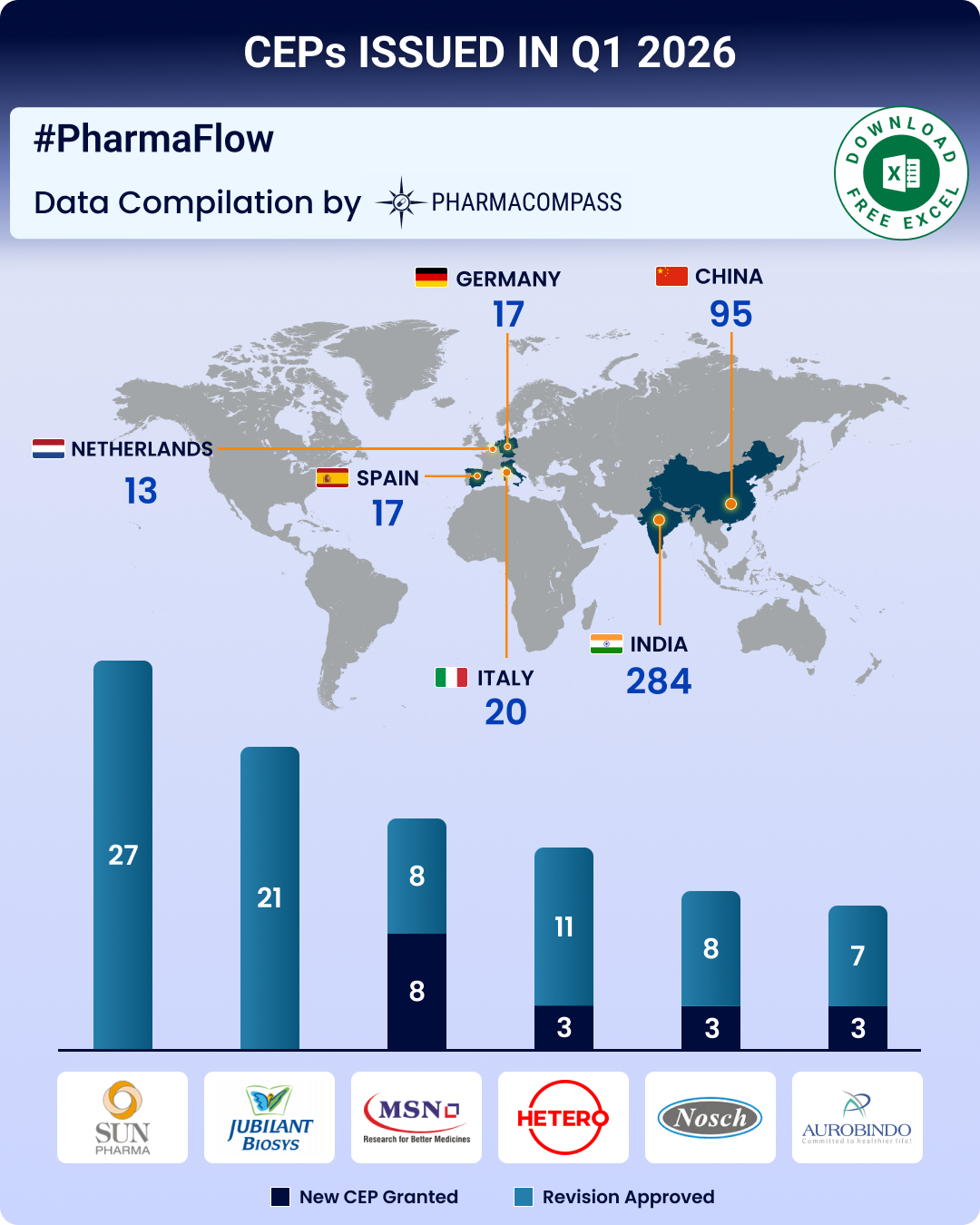
PharmaCompass is introducing a new regulatory update that tracks developments in Certificates of Suitability to the Monographs of the European Pharmacopoeia, referred to as CEPs. These certificates are a critical regulatory instrument in the global pharmaceutical supply chain. Also known as a Certification of Suitability (COS), CEPs are issued by the European Directorate for the Quality of Medicines and HealthCare (EDQM), with or without inspection of the manufacturing site. A CEP must be renewed every five years from its original issue date to remain valid, regardless of any revisions made during the interim period. However, a CEP does not replace Good Manufacturing Practice certification. CEPs are recognized as a trusted reference for API quality, thereby simplifying global registration strategies. Apart from Europe, the CEP system is widely used by many regulatory authorities, including those in Canada, Australia, Brazil, Singapore and South Africa.  View CEPs Issued in Q1 2026 (Power BI Dashboard, Free Excel Available) CEP 2.0 enhances regulatory clarity, brings efficiency, global interoperability  There are several types of CEPs, depending on the nature of the substance and evaluation. The most common type is the Chemical CEP, which confirms that a chemically synthesized API meets standards for purity and impurity control. Then there are Herbal CEPs for herbal substances and preparations. Another key category is the TSE CEP, which addresses risks associated with transmissible spongiform encephalopathies in animal-derived materials. In addition, there are Combined CEPs that may cover multiple aspects, such as chemical quality, TSE risk, and sterility. However, biological products such as vaccines and blood products fall outside the scope of the CEP framework. In 2023, the CEP system underwent a major transformation with the introduction of CEP 2.0, which marks a shift from a largely document-based system to a more structured, transparent, and digitally aligned model. This makes it easier for companies to manage compliance while improving trust among global regulators. While increasing data and compliance requirements for API manufacturers, CEP 2.0 enables better regulatory clarity, streamlined dossier integration, and stronger global acceptance. Overall, CEP 2.0 is designed to enhance regulatory clarity while making the system more efficient and globally interoperable. Indian firms issued maximum CEPs; Sun Pharma and its subsidiaries, Jubilant Biosys top list India topped the charts for CEPs issued, both in terms of new CEPs and revisions in the first quarter (Q1) of 2026. Indian companies were issued 81 new CEPs in Q1 2026 (as against 40 in Q1 2025) and 203 revisions (as against 129 in Q1 2025). In comparison, Chinese companies were issued 42 new CEPs in Q1 2026 (against 25 in Q1 2025) and 53 revisions (against 67 in Q1 2025). Italy came a distant third, followed by Germany and Spain. India’s Sun Pharmaceuticals and its subsidiaries topped the list of companies with the maximum number of CEPs issued— while no new CEP was issued, 27 CEPs were revised in Q1 2026. At second place was Jubilant Biosys — 21 CEPs were revised in Q1 2026. In terms of products, the maximum CEPs were issued for amlodipine besylate (a calcium channel blocker used for treating hypertension), followed by sitagliptin phosphate (a type 2 diabetes medicine) and pregabalin (a drug used to treat neuropathic pain, fibromyalgia, seizures, and generalized anxiety disorder). Both amlodipine besylate and sitagliptin phosphate had not been issued new CEPs or revisions in Q1 2025. EDQM introduces new guidelines to accelerate CEP assessments The EDQM charges fees for various services related to CEPs that depend on the type of request or regulatory activity involved. In general, fees apply to handling CEP applications, revisions or renewals and for offering technical advice (where applicants seek scientific or regulatory guidance). In March 2026, the EDQM introduced two new guidelines aimed at accelerating CEP assessments. The first is a reliance-based assessment pathway, which allows regulators to leverage prior approvals from trusted authorities, such as those in the EU, UK, Australia, Canada, and the WHO pre-qualification program. The second is a fast-track assessment route designed to expedite reviews in situations such as medicine shortages and to support initiatives like the EU Critical Medicines Act. Timelines have been significantly compressed under these new pathways. Initial evaluations are completed within 46 working days, compared to up to 115 days under the standard procedure. Applicants are given 30 calendar days to respond to queries, after which regulators complete the final assessment within 23 working days. Another important regulatory update relates to electronic submissions. From April 1, 2026, the EDQM will reject non-compliant CEP applications at the point of submission. All applications must include a validated electronic Common Technical Document (eCTD) dossier along with a proper validation report, submitted in line with the updated Common European Submission Portal (CESP) guidelines. Taken together, these developments signal a more rigorous yet efficient CEP ecosystem. Our view The shift to CEP 2.0 signals a move toward greater transparency, digitalization, and global regulatory alignment. Though enhanced disclosure and stricter e-submission requirements may increase the compliance burden, especially for smaller manufacturers, the long-term gains are expected to be significant. Going forward, companies that invest in data quality and regulatory readiness stand to gain from these changes.

Impressions: 3970

https://dev1.pharmacompass.com/radio-compass-blog/cep-q1-2026-update-cep-2-0-edqm-s-new-guidelines-strengthen-ecosystem-indian-firms-top-list-of-ceps-issued

#PharmaFlow by PHARMACOMPASS
09 Apr 2026

WEEKLY INDUSTRY NEWS

1read-more
read-more
FDA approves Viridian’s drug for thyroid eye disease, Orca Bio’s therapy to improve stem cell transplant outcomes
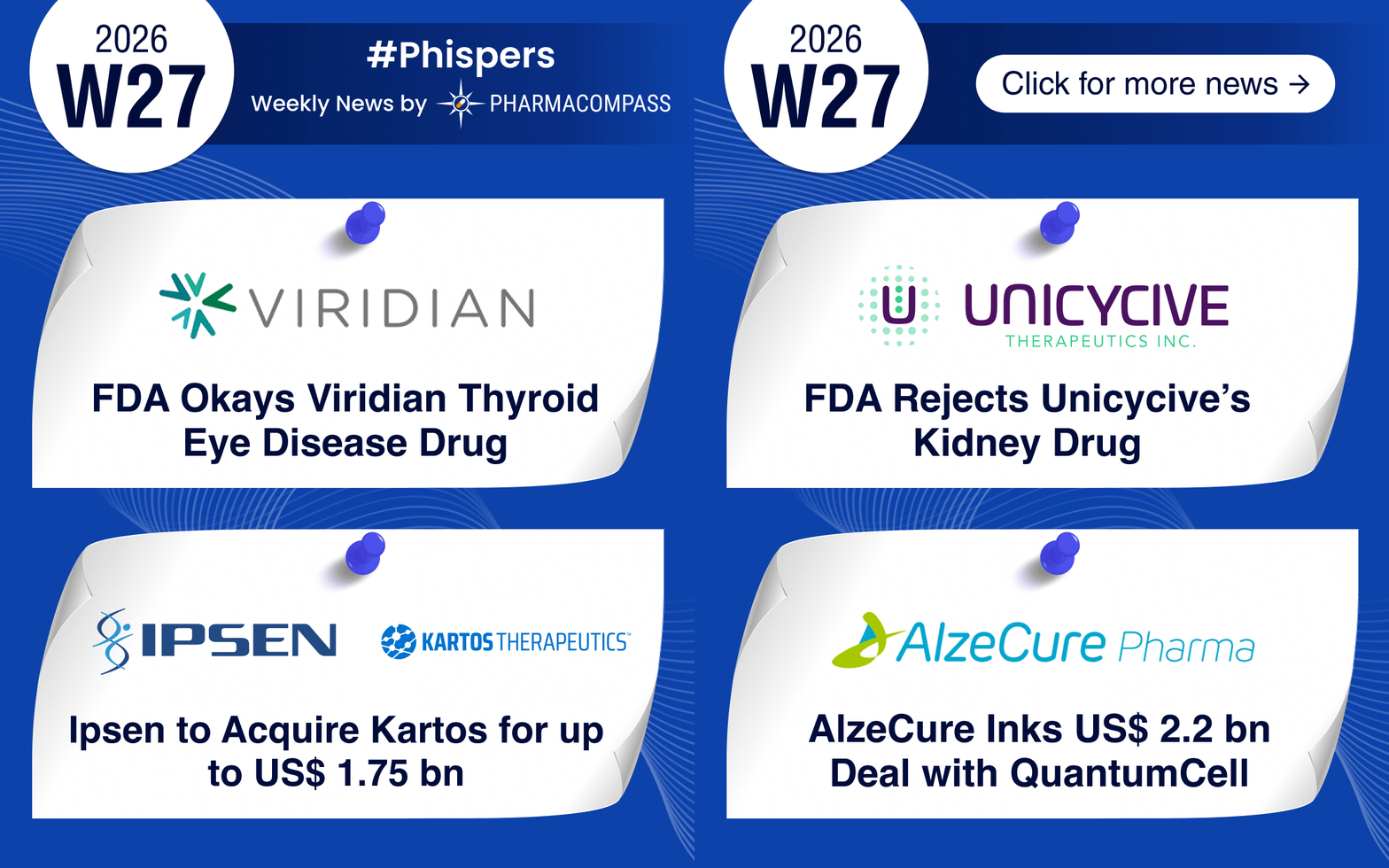
This week’s Phispers brings you news on drug approvals, rejections and voluntary recalls. The US Food and Drug Administration (FDA) has approved American biotech Viridian Therapeutics’ Lumvoa (veligrotug-vvze) for treating thyroid eye disease, an autoimmune condition that can cause vision problems. The agency also approved Orca Bio’s regulatory T-cell therapy — Tregzi — for patients undergoing stem cell transplants for blood cancers. And, it expanded the use of Vertex Pharmaceuticals’ gene therapy Casgevy (exagamglogene autotemcel) for children as young as two years with sickle cell disease.The agency rejected two drugs over manufacturing concerns. First, it issued a complete response letter (CRL) to Unicycive Therapeutics for its kidney disease drug. Second, it issued a CRL to Sobi for its experimental therapy for uncontrolled gout, a common form of inflammatory arthritis.French drugmaker Ipsen acquired California-headquartered Kartos Therapeutics in a deal worth up to US$ 1.75 billion. The deal gives Ipsen access to a late-stage therapy that targets a rare bone marrow disorder. Ipsen also acquired Swiss biotech Memo Therapeutics to strengthen its rare disease pipeline.Swedish biotech AlzeCure Pharma signed an out-licensing and collaboration agreement with Denmark’s QuantumCell ApS worth up to US$ 2.2 billion, to give QuantumCell global rights to AlzeCure’s Alzheimer's platform.Meanwhile, Amgen voluntarily recalled nearly one million bottles of two heart and kidney medications in the US after foreign particles were found in some tablets. And the Indian government cancelled the manufacturing licenses of Jackson Laboratories’ units in Punjab and Himachal Pradesh following an investigation into maternal deaths at a medical college in Kota (Rajasthan) that were linked to oxytocin injections.FDA approves Viridian thyroid eye disease drug; to compete with Amgen’s TepezzaFDA has approved American biotech Viridian Therapeutic’s Lumvoa (veligrotug-vvze) for treating thyroid eye disease, an autoimmune condition that causes inflammation, swelling and fat deposition behind eyes, leading to vision problems. The drug is expected to compete with Amgen’s Tepezza (teprotumumab-trbw). The approval ushers in the first commercial product for the Massachusetts-headquartered biotech. Viridian is also working on a subcutaneous formulation for the disease, which could expand the market by allowing patients to administer the drug at home.Okays Orca Bio’s cell therapy for blood cancers: FDA has approved Orca Bio’s Tregzi (regulatory T cell therapy) for patients undergoing stem cell transplants for blood cancers. The therapy is designed to improve transplant outcomes by reducing complications such as graft-versus-host disease, a serious condition where donor cells attack the patient’s body.Vertex’s Casgevy can now be given to two-year-olds with sickle cell diseaseFDA has expanded the use of Vertex Pharmaceuticals’ Casgevy (exagamglogene autotemcel) for children as young as two years old with sickle cell disease, marking the first gene therapy cleared for this age group. Casgevy is a one-time treatment that uses CRISPR gene-editing technology to modify a patient’s own blood stem cells, addressing the root cause of the disease. It is already approved for patients aged 12 and above.Ipsen to acquire Kartos in a deal worth up to US$ 1.75 bn; also acquires MemoFrench drugmaker Ipsen made two acquisitions this week. First, it announced the acquisition of California-headquartered Kartos Therapeutics in a deal worth up to US$ 1.75 billion, including upfront and milestone payments, to strengthen its blood cancer pipeline. Through this acquisition, Ipsen gains a late-stage therapy targeting myelofibrosis, a rare bone marrow disorder that disrupts normal blood cell production.Ipsen is also acquiring Swiss biotech Memo Therapeutics in a deal worth up to about US$ 796 million, including upfront and milestone payments, to strengthen its rare disease pipeline. The acquisition centers around potravitug, a phase 2 monoclonal antibody targeting BK polyomavirus — a common virus that can cause serious kidney complications in transplant patients and lead to graft failure.Zymeworks to acquire Theravance: Zymeworks will acquire Theravance Biopharma in a deal valued at about US$ 929 million, including cash and contingent value rights tied to future milestones. The acquisition gives Zymeworks access to a late-stage lung disease drug.FDA rejects Unicycive’s kidney drug over third-party manufacturing concernsFDA has issued a CRL to Unicycive Therapeutics for its kidney disease drug oxylanthanum carbonate, declining approval due to concerns related to third-party manufacturing. The drug is designed to control phosphate levels in patients on dialysis, helping manage complications of chronic kidney disease. In its CRL, FDA said it had no concerns over the drug’s safety or effectiveness.Rejects Sobi’s gout therapy: FDA has issued a CRL to Sobi for its experimental therapy — NASP (nanoencapsulated sirolimus plus pegadricase) — for the treatment of adult patients with uncontrolled gout, a common form of inflammatory arthritis. NASP is a four-week infusion therapy designed to reduce the level of uric acid in the blood. The agency declined approval due to manufacturing concerns rather than safety or efficacy issues.AlzeCure inks up to US$ 2.2 bn out-licensing, collaboration deal with QuantumCellAlzeCure Pharma has signed an out-licensing and collaboration agreement with Denmark’s QuantumCell worth up to US$ 2.2 billion, including upfront and milestone payments. The deal gives QuantumCell global right to AlzeCure’s Alzheimer’s platform NeuroRestore, including the lead drug candidate ACD856. This experimental drug candidate helps protect nerve cells from damage, reduces inflammation, and may slow or alter the progression of Alzheimer’s disease.Metis TechBio-Boulevard Bio deal: Hong Kong-listed drug design technology firm Metis TechBio has granted American biotech ‌Boulevard Bio exclusive global rights to develop, manufacture and commercialize its experimental autoimmune drug MTS-128 in a deal that could be worth up to US$ 1.6 billion.Amgen voluntarily recalls nearly 1 million bottles of heart and kidney disease drugsCalifornia-based Amgen has voluntarily recalled nearly one million bottles of two heart and kidney medications — Corlanor (ivabradine) and Sensipar (cinacalcet hydrochloride tablets) — in the US after foreign particles were found on some tablets. Corlanor is prescribed to treat patients with chronic heart failure, while Sensipar is mainly used to treat overactive parathyroidism in chronic kidney disease patients.India cancels Jackson Labs’ licenses due to maternal deaths linked to oxytocinThe Indian government has cancelled the manufacturing licences of Jackson Laboratories’ units in Punjab and Himachal Pradesh following an investigation into maternal deaths at a medical college in Kota (Rajasthan) that were linked to oxytocin injections. Oxytocin is used to induce labour and control bleeding after childbirth. Authorities are probing whether contaminated or substandard drugs contributed to the deaths. Meanwhile, the World Health Organization (WHO) has sought details from the Indian government on the maternal deaths case in Rajasthan.

Impressions: 1391

https://dev1.pharmacompass.com/radio-compass-phisper/fda-approves-viridian-s-drug-for-thyroid-eye-disease-orca-bio-s-therapy-to-improve-stem-cell-transplant-outcomes

#Phispers by PHARMACOMPASS
02 Jul 2026

NEWS LIBRARY

58read-more
read-more

https://economictimes.indiatimes.com/industry/healthcare/biotech/pharmaceuticals/jackson-labs-baddi-drug-manufacturing-licence-restored-after-suspension/articleshow/132795059.cms

ECONOMICTIMES
01 Aug 2026

https://economictimes.indiatimes.com/industry/healthcare/biotech/pharmaceuticals/jackson-labs-seeks-restoration-of-its-licence/articleshow/132591265.cms

ECONOMICTIMES
24 Jul 2026

https://www.expresspharma.in/lessons-from-the-delhi-agra-puducherry-counterfeit-medicine-investigation/

EXPRESSPHARMA
07 Jul 2026

https://www.globenewswire.com/news-release/2026/07/06/3322136/0/en/repronovo-announces-first-participant-dosed-in-eu-phase-2-trial-of-rpn-002-for-embryo-implantation.html

GLOBENEWSWIRE
06 Jul 2026

https://economictimes.indiatimes.com/industry/healthcare/biotech/healthcare/death-in-a-vial-five-cases-lay-bare-many-uncomfortable-truths-about-indian-healthcare/articleshow/132189696.cms

ECONOMICTIMES
05 Jul 2026

https://www.thehindu.com/sci-tech/health/pharma-distributors-licence-cancelled-over-kota-postpartum-deaths-who-seeks-report/article71150696.ece

THEHINDU
29 Jun 2026
digital-content439302##p