Please Wait
Applying Filters...
Menu

Digital Content read-more

Create Content with PharmaCompass, ask us

PHARMA & BIOTECH INSIGHTS

1read-more
read-more

A PHP Error was encountered

Severity: 8192

Message: mb_convert_encoding(): Handling HTML entities via mbstring is deprecated; use htmlspecialchars, htmlentities, or mb_encode_numericentity/mb_decode_numericentity instead

Filename: blog/grid.php

Line Number: 52

Backtrace:

File: /var/www/html/application/views/include/media/blog/grid.php
Line: 52
Function: mb_convert_encoding

File: /var/www/html/application/models/Cmn.php
Line: 3595
Function: view

File: /var/www/html/application/views/include/product/digitalContent/grid.php
Line: 17
Function: common

File: /var/www/html/application/views/include/desc/inner.php
Line: 13
Function: view

File: /var/www/html/application/views/include/desc/indexNew.php
Line: 2433
Function: include

File: /var/www/html/application/controllers/Common.php
Line: 11303
Function: view

File: /var/www/html/index.php
Line: 231
Function: require_once

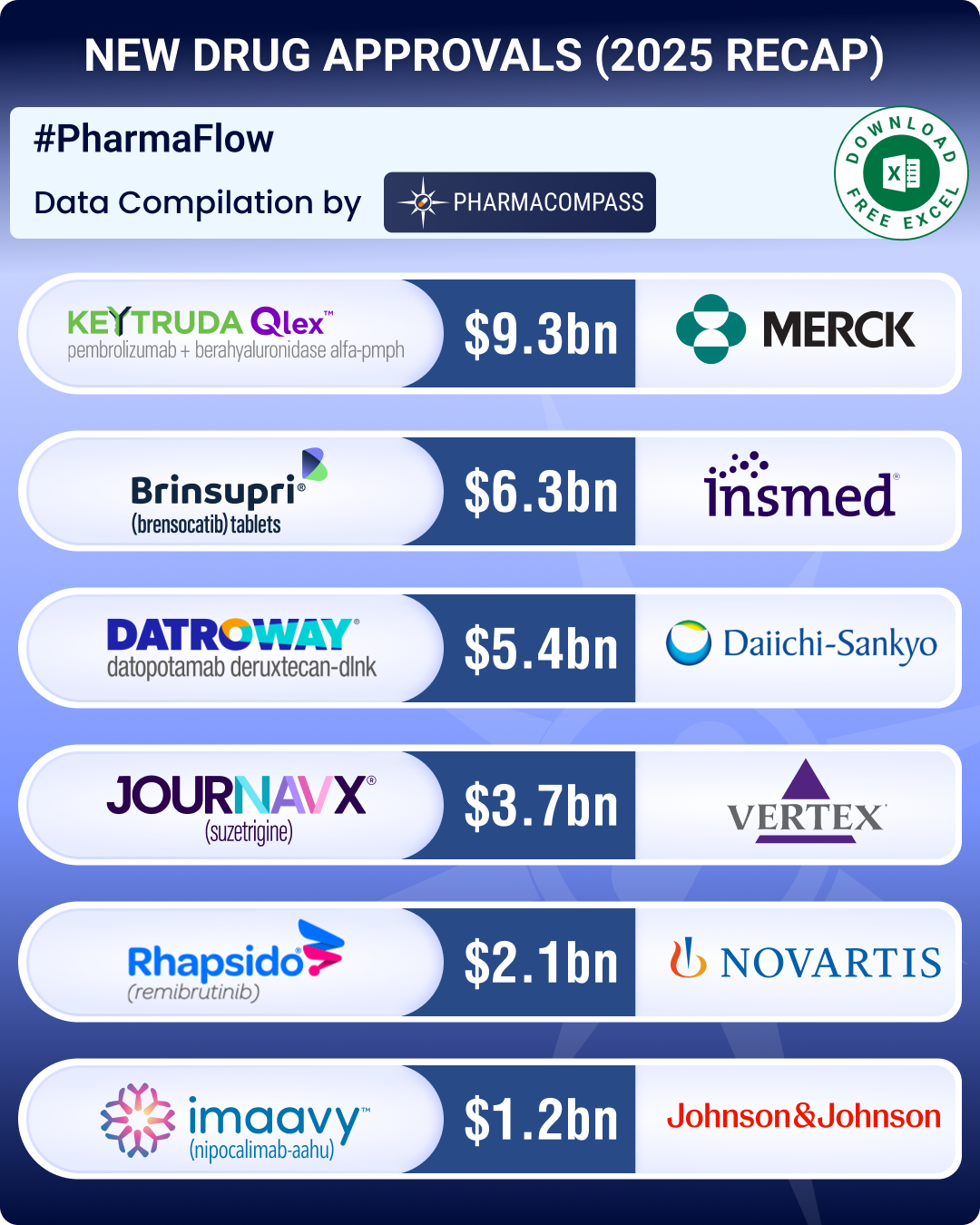
FDA approvals drop 8% in 2025, with fewer blockbusters; Brinsupri, Rhapsido make it to first-in-class list
Our update for new drug approvals by the US Food and Drug Administration (FDA) in the first half (H1) of 2025 had pointed out how upheavals at the agency had impacted its functioning, with drug approvals dropping by 24 percent. While the turbulence didn’t subside, approvals picked up considerably in the second half (H2) of 2025. FDA’s Center for Drug Evaluation and Research (CDER) approved 30 new drugs in H2 (as against 16 in H1), taking the total number of approvals for 2025 up to 46. This is an 8 percent drop compared with 50 approvals CDER had granted in 2024. During the year, CDER saw four new chiefs come and go — Jacqueline Corrigan-Curay (Jan-July 2025), George Tidmarsh (July-Nov 2025), Richard Pazdur (Nov-December 2025) and Tracy Beth Høeg (December 2025-present). In addition, the agency endured thousands of retrenchments. The US Department of Health and Human Services (HHS), under Health Secretary Robert F. Kennedy Jr., enforced funding cuts and changes in approval processes, especially for vaccines. Overall, we have been witnessing a steady drop in drug approvals by CDER — it approved 55 new drugs in 2023, 50 in 2024 and, 46 in 2025. Of the 46 new approvals in 2025, 20 were classified as first-in-class (therapies that use a new and unique mechanism of action), out of which 13 were approved in H2 2025. Overall, CDER approved 32 chemical entities and 14 biologics in 2025. In comparison, approvals by Health Canada and authorizations by the European Medicines Agency (EMA) rose in 2025. The EMA authorized 69 new therapies, up from 64 in 2024. Health Canada approved 46 new therapies in 2025, as compared with 28 in 2024. FDA’s Center for Biologics Evaluation and Research (CBER) approved 21 biologics in 2025, compared with 13 in 2024, of which eight were notable new drugs. Interestingly, both CDER and CBER rejected more drugs last year — 43 applications were rejected, including those for new drugs, supplemental filings, generics and biosimilars, as opposed to 29 in 2024.  View New Drug Approvals in 2025 with Estimated Sales (Free Excel Available) Blockbuster drug approvals drop by 60%, European drugmakers score more FDA nods  It wasn’t a year of blockbuster drug approvals — the agency approved a lower number of drugs that are expected to deliver sales of at least US$ 1 billion by 2030. While there were nearly 20 such drugs approved in 2024, the number dropped to just eight in 2025. Interestingly, European companies won many more approvals for new products than their counterparts in the US. GSK and Novartis achieved three approvals each, while Merck, Boehringer Ingelheim and Bayer AG won two approvals each. The first-in-class drugs approved in H2 are: Insmed's Brinsupri (brensocatib), Ionis's Dawnzera (donidalorsen), Stealth Bio's Forzinity (elamipretide), Boehringer's Jascayd (nerandomilast), UCB's Kygevvi (doxecitine and doxribtimine), Bayer's Lynkuet (elinzanetant), Chimerix's Modeyso (dordaviprone), Innoviva's Nuzolvence (zoliflodacin), Arrowhead's Redemplo (plozasiran), Novartis' Rhapsido (remibrutinib), Otsuka's Voyxact (sibeprenlimab-szsi), Sanofi's Wayrilz (rilzabrutinib) and Omeros' Yartemlea (narsoplimab-wuug). Insmed’s Brinsupri approved for chronic lung disease; Novartis’ Rhapsido okayed for urticaria As has been the trend, the field of oncology saw the maximum drug approvals (15), followed by rare diseases and disorders (7) and immunology (4). Three categories — infections and infectious diseases, respiratory diseases and cardiology/vascular diseases — saw three drug approvals each. Among the first-in-class approvals was Insmed’s Brinsupri (brensocatib), the first treatment for non-cystic fibrosis bronchiectasis, a chronic lung disease. Nature has estimated peak sales of US$ 6.3 billion for this treatment. Brinsupri was approved by the EMA in November. Another notable approval was granted to Novartis’ Rhapsido (remibrutinib), approved to treat the skin condition chronic spontaneous urticaria in adults who remain symptomatic despite treatment with antihistamines. Rhapsido is the first oral alternative to injectable treatments and has 2030 sales forecasts of US$ 2.1 billion. Novartis is also testing the drug for other immune conditions. A new drug that is estimated to bring in the maximum sales is Merck’s Keytruda Qlex, a subcutaneous formulation of pembrolizumab plus berahyaluronidase alfa approved for various solid tumors. While top-selling cancer drug Keytruda (pembrolizumab) was first approved in 2014, this is the first approval for an engineered variant of the hyaluronidase enzyme (berahyaluronidase alfa). Therefore, this combination counts as a novel approval. Fondazion’s CGT okayed for Wiskott-Aldrich syndrome; three drugs approved for hereditary angioedema  After a record nine new cell and gene therapy (CGT) approvals in 2024, only five CGTs were approved in 2025 (the lowest since 2022). With the exception of Novartis’ Itvisma (onasemnogene abeparvovec-brve), all other CGT approvals went to relatively lesser known companies such as Abeona, Precigen, Neurotech and Fondazione Telethon (an Italian firm that became the first nonprofit to get a CGT approval from the FDA). Fondazione Telethon’s Waskyra (etuvetidigene autotemcel) became the first gene therapy for Wiskott-Aldrich syndrome (WAS), a rare immune disorder that causes frequent infections, bleeding issues, and eczema. The one-time treatment uses patients’ own blood stem cells that are modified to restore the faulty WAS gene. Abeona’s Zevaskyntm (prademagene zamikeracel) became the first and only autologous cell sheet-based gene therapy indicated for the treatment of wounds in adult and pediatric patients with recessive dystrophic epidermolysis bullosa (a rare, genetic skin disorder). Patients with hereditary angioedema (or HAE, a genetic disorder characterized by recurrent episodes of severe swelling) gained access to three new drugs, including two first-in-class drugs — CSL Behring’s Andembry (garadacimab) and Ionis Pharma’s Dawnzera (donidalorsen). The third drug approved to treat HAE is KalVista Pharma’s Ekterly (sebetralstat). Our view The FDA has been bringing about considerable changes to its processes. In June, it launched the Commissioner’s National Priority Vouchers (CNPV) program to cut review timelines from the usual 10 to 12 months to two months. But the recent rejection of Disc Medicine’s application for bitopertin as a treatment for a rare blood disorder under the program took four months to materialize. Not only did the rejection come in late, it was based on information already known to the FDA at the time of granting the coveted voucher, raising controversy around the program. The agency is going to bring about more changes soon. It has proposed a plausible mechanism pathway for rare and ultra-rare diseases where randomized controlled trials are not feasible. And in April, it announced plans to phase out animal toxicity testing in the development of monoclonal antibody therapies and other drugs. The agency is increasingly relying on AI, and recently  announced the deployment of agentic AI capabilities for all employees. It will be interesting to see how these changes impact drug approvals in 2026.

Impressions: 2647

https://dev1.pharmacompass.com/radio-compass-blog/fda-approvals-drop-8-in-2025-with-fewer-blockbusters-brinsupri-rhapsido-make-it-to-first-in-class-list

#PharmaFlow by PHARMACOMPASS
26 Feb 2026

MARKET PERFORMANCE RECAP

2read-more
read-more
Market Performance Recap October 2026 highlights: FDA clears Teva’s Weltruza for schizophrenia; Novartis inks mRNA deal with Abogen
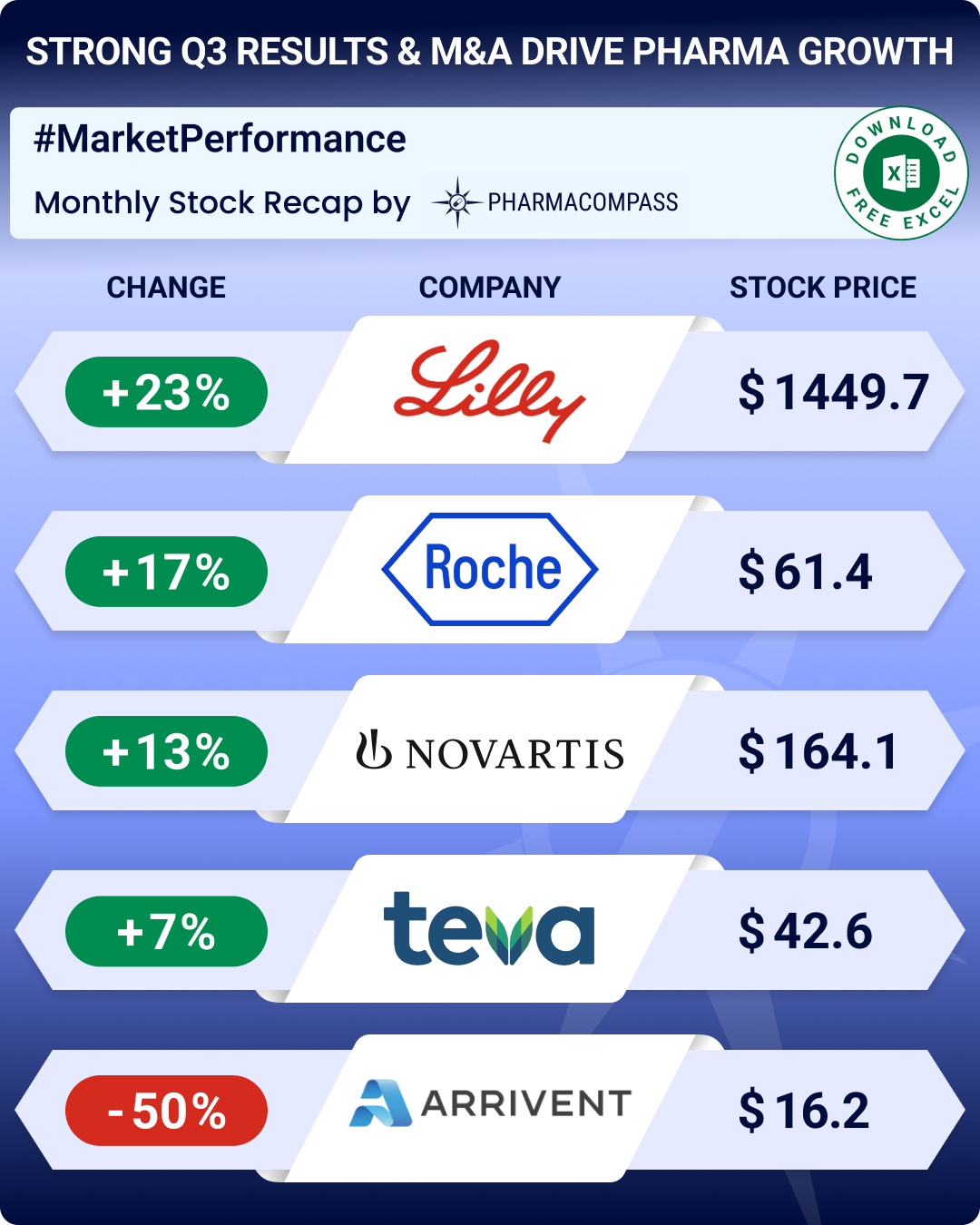
October was a quiet month for big-ticket acquisitions. That said, several global drug majors announced their third quarter (Q3 2026) results, with a majority reporting healthy growth rates. For instance, Eli Lilly reported a 39 percent rise in revenues compared to Q3 2025, driven by rising demand for its type 2 diabetes and obesity medications. Similarly, Regeneron’s revenues were up 36 percent. AstraZeneca posted a 7 percent rise in total revenue, while Merck reported 5 percent growth in worldwide sales. And Novartis reported 4 percent growth in net sales. The results appear to have had a positive impact on the pharma indices, which have otherwise been under pressure from wars, trade tensions and soaring public debt. The Nasdaq Biotechnology Index (NBI) increased by around 3.05 percent — from 7,102.91 at the end of September to 7,319.57 at the end of October. However, both the SPDR S&P Biotech ETF and the S&P Biotechnology Select Industry Index (SPSIBI) saw a marginal drop. While the former declined from 156.99 to 155.90, the SPSIBI dropped by 1.09 percent — from 12,346.20 to 12,211.80. Overall, the S&P 500 declined from 7,666.47 to 7,580.07.  Access the Pipeline Prospector Dashboard for October 2026 Newsmakers (Free Excel) FDA clears Teva’s drug for schizophrenia, UCB’s autoinjector for myasthenia gravis  Among the most notable approvals of the month was the US Food and Drug Administration’s approval of Teva Pharmaceuticals’ Weltruza (olanzapine) extended-release injectable suspension. This is the first and only once-monthly subcutaneous olanzapine injection for schizophrenia. Another first-time approval was granted to Asahi Kasei’s Hovilpri (pritelivir). It treats sores on the skin and mucous membranes caused by herpes simplex virus (HSV) in adults with weakened immune systems. GSK received FDA approval for Hibsago (bepirovirsen) to treat chronic hepatitis B in adults. Taken alongside existing antiviral therapy, it can offer some patients a functional cure, allowing them to stop lifelong treatment. UCB’s Zilbrysq (zilucoplan) was approved as an autoinjector that patients with generalized myasthenia gravis, an autoimmune disorder, can use by themselves. Among drugs that bagged FDA’s supplemental approvals were Roche’s Enspryng (satralizumab) for the treatment of adults with thyroid eye disease (TED) and Eli Lilly’s Jaypirca (pirtobrutinib). While Enspryng is the first and only at-home subcutaneous treatment option for TED, Jaypirca is now approved as a first-line treatment for adults with chronic lymphocytic leukemia (CLL) or small lymphocytic lymphoma (SLL), two forms of the same slow-growing blood cancer, provided they don't have a particular genetic change. The agency expanded the approvals of Novartis’ Rhapsido (remibrutinib) for symptomatic dermographism (a chronic skin condition) and Roche’s Tecentriq (atezolizumab), in combination with a fluoropyrimidine and oxaliplatin, for the adjuvant (or post-surgery) treatment of stage 3 deficient mismatch repair (dMMR) colon cancer. FDA also granted accelerated approval to AstraZeneca’s Ultomiris (ravulizumab) to reduce proteinuria in adults with primary immunoglobulin A nephropathy (IgAN) at risk of disease progression. And Novo Nordisk received FDA approval for Awiqli (insulin icodec-abae) for children aged 10 years and older with type 2 diabetes. Shionogi acquires IntraBio for US$ 2 bn; Merck KGaA buys Silence Therapeutics In deals, Shionogi agreed to acquire IntraBio, a biopharmaceutical company focused on rare neurodegenerative and genetic neurological diseases, for approximately US$ 2 billion. Viatris agreed to acquire Pacira BioSciences for an equity value of around US$ 1.65 billion. The deal will strengthen Viatris’ innovative medicines portfolio. Merck KGaA announced the acquisition of Silence Therapeutics for an enterprise value of US$ 1.1 billion to expand its RNA-silencing portfolio and strengthen its pipeline of investigational therapies. Gilead said it is acquiring PepStar’s HCXT-2001, an investigational drug, for US$ 1.275 billion upfront. The phase 1 asset is being developed for inflammatory bowel disease (IBD). In other deals, Novartis entered into a licensing and option agreement with China-based Abogen Biosciences worth up to US$ 7.8 billion to develop mRNA-encoded therapeutics. Abogen will receive US$ 575 million upfront. Australian biotechnology company CSL partnered with Switzerland-based Alentis Therapeutics to jointly develop and commercialize lixudebart, an investigational treatment for rare kidney and liver diseases, in a deal valued at up to US$ 1.6 billion before development funding. Hansoh, Roche sign ADC deal worth over US$ 15 bn; Vir, Gilead join hands to target solid tumors Hansoh Pharma signed a collaboration with Roche to develop a portfolio of antibody-drug conjugates (ADCs) for multiple cancers. Hansoh will receive US$ 400 million upfront, a first-anniversary payment of US$ 110 million, and potentially over US$ 15 billion in milestone payments. Several drugmakers signed AI deals in October. Vir Biotechnology entered into a multi-program collaboration and licensing agreement with Gilead Sciences to discover and develop three novel therapies that target solid tumors. Vir will lead the discovery, design, and optimization of the drug candidates using its AI-enabled platform. AstraZeneca entered into a new strategic drug discovery collaboration and licensing agreement with Insitro, an AI therapeutics company. Zealand Pharma and Generate Biomedicines forged a strategic collaboration to develop AI-engineered multi-specific protein therapeutics for obesity and other metabolic diseases. And METiS TechBio partnered with Eli Lilly to discover AI-driven, tissue-specific lipid nanoparticle (LNP) delivery technologies using its proprietary AiLNP platform. Cerevance’s Parkinson’s pill posts phase 3 win; Veradermics’ minoxidil tablet shows hair growth In clinical trials, Cerevance reported positive topline results from a phase 3 trial of solengepras, an investigational once-daily oral treatment for Parkinson’s disease. Genmab and AbbVie reported positive topline results from a phase 3 study of epcoritamab in combination with R-CHOP in newly diagnosed diffuse large B-cell lymphoma, the most common type of non-Hodgkin lymphoma. R-CHOP is a standard combination cancer treatment regimen used for non-Hodgkin lymphomas. Veradermics reported positive phase 3 results for VDPHL01 (extended-release minoxidil tablet) in male pattern hair loss, demonstrating significant hair growth and a favorable safety profile. Bristol Myers Squibb’s experimental radiopharmaceutical RYZ101 significantly delayed disease progression in patients with gastroenteropancreatic neuroendocrine tumors, rare cancers that typically form in the gastrointestinal tract. In negative news from clinical trials, FDA cited four deaths among patients being treated with Italian drugmaker Newron’s experimental schizophrenia drug evenamide across all clinical studies. Our view October’s deals were in line with the pattern we saw in September. The month’s two biggest bets went to Chinese drugmakers: Roche’s ADC pact with Hansoh, potentially worth over US$ 15 billion, and Novartis’ US$ 7.8 billion mRNA deal with Abogen. Equally notable was the wave of AI partnerships. With strong Q3 earnings, drugmakers appear to be showing foresight, and are busy picking up tomorrow’s pipelines.

Impressions: 1005

https://dev1.pharmacompass.com/pipeline-prospector-blog/market-performance-recap-october-2026-highlights-fda-clears-teva-s-weltruza-for-schizophrenia-novartis-inks-mrna-deal-with-abogen

#PharmaFlow by PHARMACOMPASS
05 Nov 2026

WEEKLY INDUSTRY NEWS

3read-more
read-more
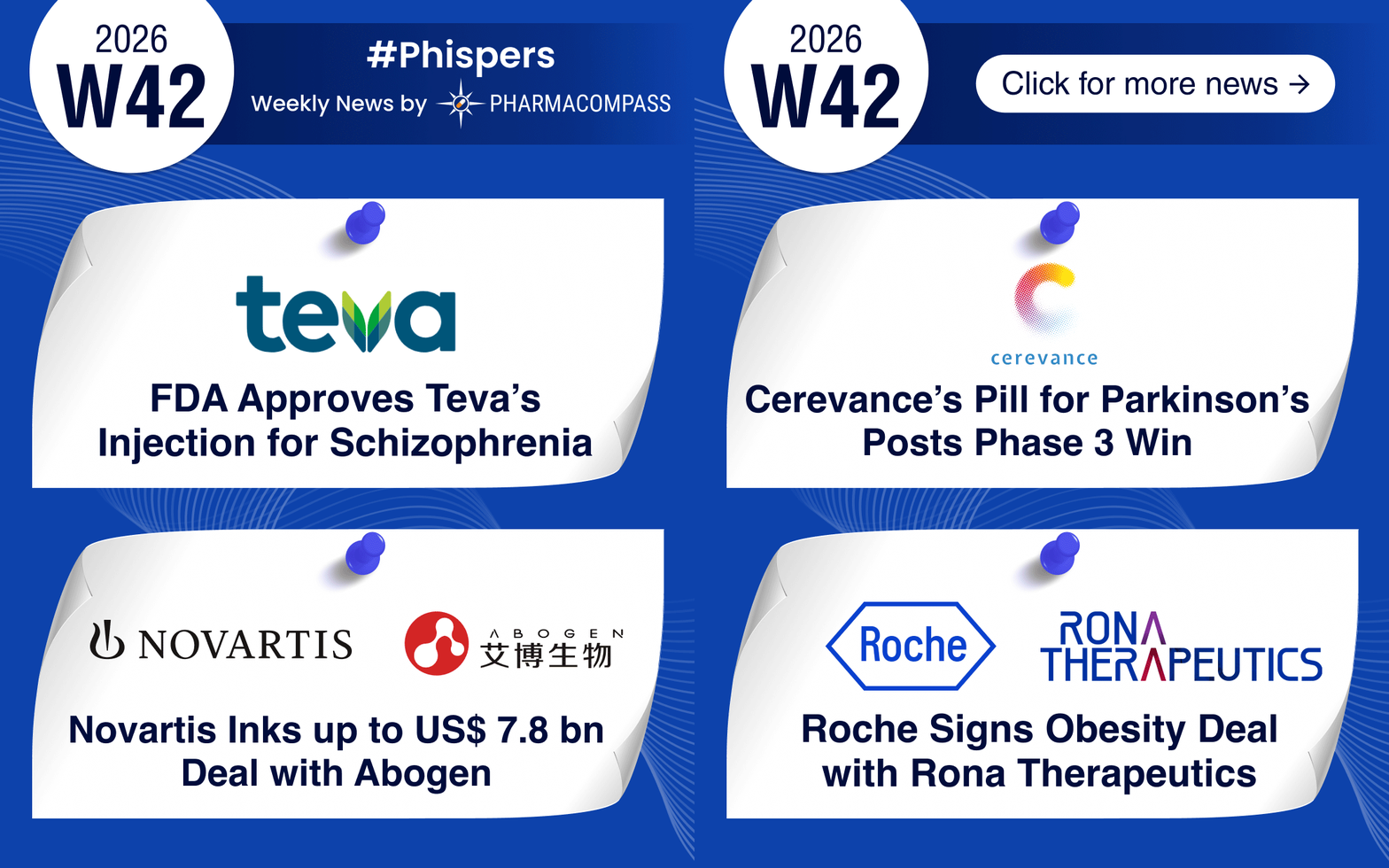
FDA approves Teva’s monthly injection for schizophrenia; Cerevance scores phase 3 win for its Parkinson’s pill
This week’s Phispers is a post-CPhI edition with news from the last two weeks. The US Food and Drug Administration (FDA) approved Teva’s extended-release injection of olanzapine — Weltruza — for adults with schizophrenia. It also cleared Pfizer’s Tukysa (tucatinib), in combination with trastuzumab and pertuzumab, as maintenance treatment for a type of breast cancer.Among other key drug approvals were Asahi Kasei Therapeutics’ Hovilpri (pritelivir) for treating persistent herpes simplex virus sores, Roche’s Tecentriq (atezolizumab), in combination with a fluoropyrimidine and oxaliplatin, for treating a type of colon cancer, Eli Lilly’s Jaypirca (pirtobrutinib) for treating chronic lymphocytic leukemia and Novartis’ Rhapsido (remibrutinib) for a chronic skin condition known as symptomatic dermographism.In clinical trials, Cerevance posted positive results from a phase 3 trial of solengepras, an investigational drug for Parkinson’s disease. Genmab and AbbVie reported positive results from a phase 3 study of epcoritamab in treating lymphoma. Meanwhile, FDA cited four deaths among patients being treated with Newron’s experimental schizophrenia drug across its clinical studies.In deals, Novartis signed an up to US$ 7.8 billion licensing and option agreement with China-based Abogen Biosciences to develop mRNA-encoded therapeutics. Denmark’s Zealand Pharma signed an AI deal with US-based Generate Biomedicines to design protein-based drugs for obesity and other metabolic diseases. And Roche secured an exclusive worldwide license to Rona Therapeutics’ experimental RNAi therapy targeting ALK7, a receptor found mainly in fat cells.Teva wins FDA approval for monthly schizophrenia injection Weltruza Teva has received FDA approval for Weltruza (olanzapine extended-release injectable suspension), a once-monthly subcutaneous formulation for adults with schizophrenia. According to the company, Weltruza is the first and only once-monthly subcutaneous olanzapine injection.Pfizer’s Tukysa okayed for breast cancer: FDA has approved Pfizer’s Tukysa (tucatinib), in combination with trastuzumab and pertuzumab, as maintenance treatment for adults with unresectable, locally advanced or metastatic HER2-positive breast cancer following induction therapy.Cerevance reports phase 3 win for its once-daily pill for Parkinson’s diseaseCerevance has reported positive topline results from a phase 3 trial of solengepras, an investigational once-daily oral treatment for Parkinson’s disease. The study met its primary endpoint, with the 150 mg dose significantly reducing daily OFF time in patients experiencing motor fluctuations despite being on levodopa and other Parkinson’s medicines. OFF time is a term for the period when medication wears off and symptoms return or worsen between doses.Genmab, AbbVie’s drug combo scores phase 3 win: Genmab and AbbVie reported positive topline results from a phase 3 study of epcoritamab in combination with R-CHOP in newly diagnosed diffuse large B-cell lymphoma, the most common type of non-Hodgkin lymphoma. R-CHOP is a standard combination cancer treatment regimen used for non-Hodgkin lymphomas. The combo cut the risk of disease progression or death by 51 percent, compared with R-CHOP alone.FDA flags four deaths in Newron’s schizophrenia drug trialsFDA has cited four deaths among patients being treated on Italian drugmaker Newron’s experimental schizophrenia drug evenamide across all clinical studies, and has kept its clinical hold on the US sites of a phase 3 trial. In comparison, there was just one death among those given a placebo. FDA’s concerns relate to risk of arrhythmias linked with the drug, which was being tested in people with treatment-resistant schizophrenia, a serious mental illness that affects thinking, emotions and perception of reality.BMS’ radiopharmaceutical delays tumor growth in rare gut and pancreatic cancersBristol Myers Squibb’s experimental radiopharmaceutical RYZ101 significantly delayed disease progression in patients with gastroenteropancreatic neuroendocrine tumors, rare cancers that typically form in the gastrointestinal tract. RYZ101 carries actinium-225, which emits more powerful, shorter-range alpha particles than Novartis’ Lutathera (lutetium Lu 177 dotatate).Lung disease trial: BMS has said that a lower dose (60 mg) of its experimental drug admilparant was successful in slowing the decline in lung function in patients with a potentially fatal lung disease, known as idiopathic pulmonary fibrosis (IPF), in a phase 3 trial. The higher 120 mg dose also slowed decline, but the effect was not statistically significant.Novartis signs up to US$ 7.8 bn mRNA licensing deal with China-based AbogenNovartis has entered into a licensing and option agreement with China-based Abogen Biosciences worth up to US$ 7.8 billion to develop mRNA-encoded therapeutics. Abogen will receive US$ 575 million upfront, with further payments tied to development milestones and the exercise of options. The agreement includes worldwide rights to ABO2203, an investigational mRNA-encoded therapy being developed for autoimmune diseases.Bayer to invest US$ 2.2 billion in Ohio: Bayer has announced an investment of US$ 2.2 billion in a new drug manufacturing site in New Albany, Ohio, expanding its production footprint in the US, which is its largest pharmaceuticals market.FDA approves Asahi Kasei’s drug for difficult-to-treat herpes infectionsFDA has approved Asahi Kasei Therapeutics’ Hovilpri (pritelivir) for treating immunocompromised adults with persistent herpes simplex virus sores that have not responded to standard antiviral therapies.Expands label of Roche’s Tecentriq: FDA has approved Roche’s Tecentriq (atezolizumab), in combination with a fluoropyrimidine and oxaliplatin, for the adjuvant (or post-surgery) treatment of stage 3 deficient mismatch repair (dMMR) colon cancer.Lilly’s Jaypirca okayed for lymphocytic leukemia: FDA has approved Eli Lilly’s Jaypirca (pirtobrutinib) for the first-line treatment of adults with chronic lymphocytic leukemia (CLL) or small lymphocytic lymphoma (SLL) without a known 17p deletion.Clears Rhapsido for a chronic skin condition: FDA has expanded the use of Novartis’ Rhapsido (remibrutinib) for treating adults with symptomatic dermographism, a chronic skin condition marked by itching. According to Novartis, Rhapsido is the first FDA-approved treatment for this condition.Zealand Pharma, Generate Biomedicines ink up to US$ 1.2 bn AI obesity drug deal Denmark’s Zealand Pharma has signed a collaboration and license agreement with US-based Generate Biomedicines to design protein-based drugs for obesity and other metabolic diseases using Generate’s generative AI platform. For two initial programs, Generate will receive US$ 30 million upfront and up to US$ 35 million in early preclinical milestones. It is also eligible for milestone payments of nearly US$ 1.2 billion, along with tiered royalties.Roche, Rona ink obesity drug deal: Roche has secured an exclusive worldwide license to Rona Therapeutics’ experimental RNAi therapy targeting ALK7, a receptor found mainly in fat cells that regulates how they store and burn fat. Blocking ALK7 could reduce harmful belly (visceral) fat, and could complement GLP-1 drugs such as Wegovy. Rona will receive up to US$ 100 million in upfront and near-term payments, and up to US$ 1.06 billion in milestones, and tiered royalties. Alnylam, Arrowhead, GSK, and Novo Nordisk are also developing ALK7 drugs. 

Impressions: 1882

https://dev1.pharmacompass.com/radio-compass-phisper/fda-approves-teva-s-monthly-injection-for-schizophrenia-cerevance-scores-phase-3-win-for-its-parkinson-s-pill

#Phispers by PHARMACOMPASS
15 Oct 2026

NEWS LIBRARY

21read-more
read-more

https://www.novartis.com/news/media-releases/novartis-remibrutinib-delivered-comprehensive-disease-control-phase-iii-rms-trials-proven-robust-safety-profile

PRESS RELEASE
23 Oct 2026

https://www.globenewswire.com/news-release/2026/10/07/3376686/0/en/novartis-rhapsido-remibrutinib-receives-fda-approval-as-first-treatment-for-symptomatic-dermographism-sd-expanding-its-use-beyond-chronic-spontaneous-urticaria-csu.html

GLOBENEWSWIRE
07 Oct 2026

https://www.globenewswire.com/news-release/2026/10/07/3376328/0/en/novartis-advances-multiple-sclerosis-innovation-with-late-breaking-remibrutinib-and-broad-portfolio-data-at-mstoronto2026.html

GLOBENEWSWIRE
07 Oct 2026

https://www.fiercepharma.com/pharma/novartis-claims-ms-win-rhapsido-remibrutinib-clears-phase-3-no-liver-safety-signal

FIERCE PHARMA
01 Sep 2026

https://www.canada.ca/en/health-canada/services/drugs-health-products/drug-products/prescription-drug-list/notices-changes/multiple-additions-2026-08-27.html

HEALTH CANADA
27 Aug 2026

https://www.novartis.com/uk-en/news/media-releases/novartis-rhapsidovremibrutinib-receives-mhra-authorisation-treatment-eligible-adults-chronic-spontaneous-urticaria-csu-inadequate-response-h1-antihistamine-treatment

PRESS RELEASE
06 Aug 2026
digital-content118107483##p