Please Wait
Applying Filters...
Menu

Digital Content read-more

Create Content with PharmaCompass, ask us

PHARMA & BIOTECH INSIGHTS

1read-more
read-more

A PHP Error was encountered

Severity: 8192

Message: mb_convert_encoding(): Handling HTML entities via mbstring is deprecated; use htmlspecialchars, htmlentities, or mb_encode_numericentity/mb_decode_numericentity instead

Filename: blog/grid.php

Line Number: 52

Backtrace:

File: /var/www/html/application/views/include/media/blog/grid.php
Line: 52
Function: mb_convert_encoding

File: /var/www/html/application/models/Cmn.php
Line: 3595
Function: view

File: /var/www/html/application/views/include/product/digitalContent/grid.php
Line: 17
Function: common

File: /var/www/html/application/views/include/desc/inner.php
Line: 13
Function: view

File: /var/www/html/application/views/include/desc/indexNew.php
Line: 2433
Function: include

File: /var/www/html/application/controllers/Common.php
Line: 11303
Function: view

File: /var/www/html/index.php
Line: 231
Function: require_once

FDA okays 50 new drugs in 2024; BMS’ Cobenfy, Lilly’s Kisunla lead pack of breakthrough therapies
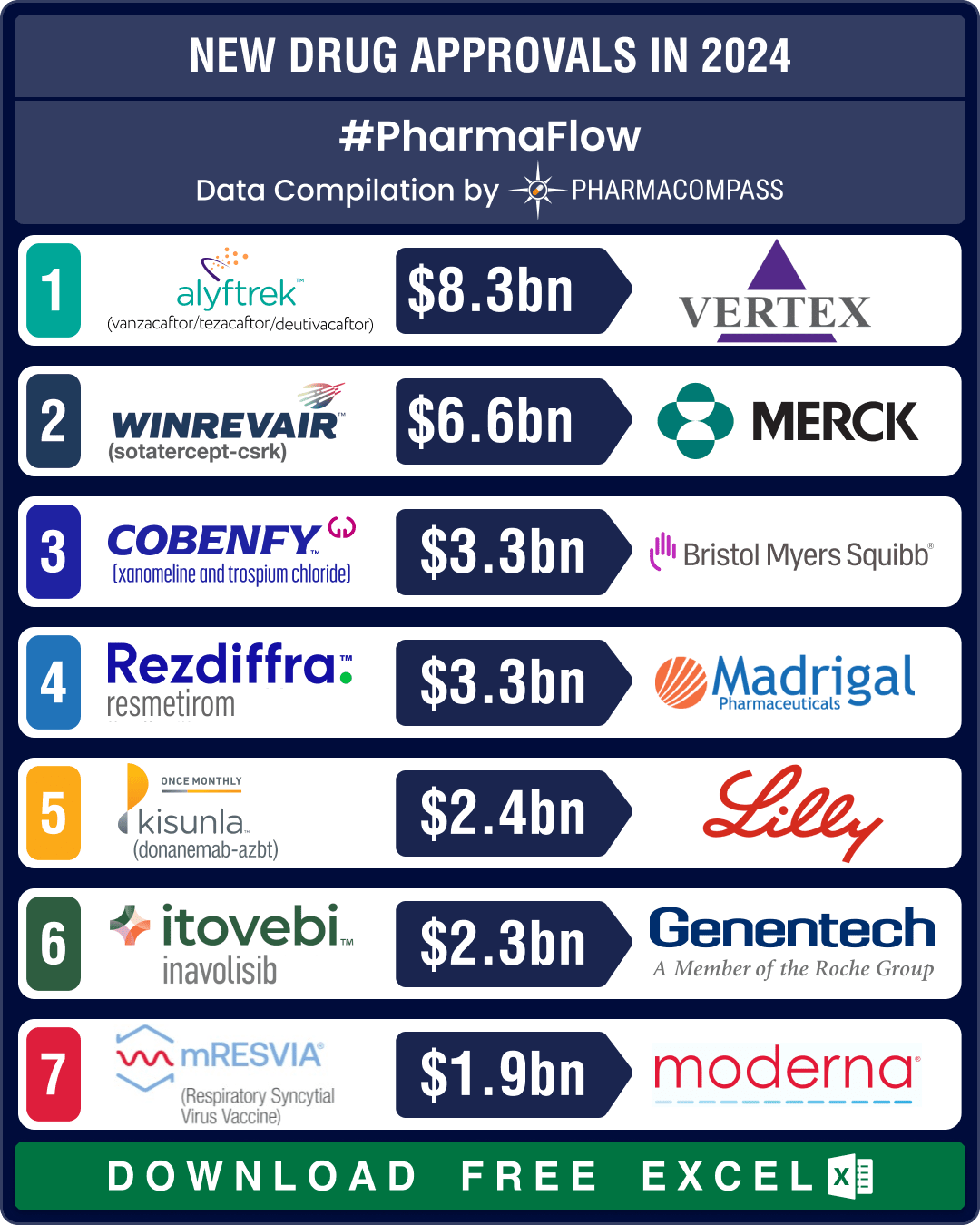
In 2024, the biopharma industry continued to advance on its robust trajectory of innovation. Though the US Food and Drug Administration’s Center for Drug Evaluation and Research (CDER) and the Center for Biologics Evaluation and Research (CBER) approved fewer drugs, there was a significant increase in medical breakthroughs.  While the CDER approved 50 new drugs in 2024, as compared to 55 in 2023, the CBER granted 14 biologics approvals in 2024, down from 20 in 2023. The European Medicines Agency (EMA) approved 34 new therapies, up from 32 in 2023, while Health Canada granted 28 approvals, down from 38 in 2023. The year saw long-awaited treatments being approved in areas such as schizophrenia and Alzheimer’s disease in the second half (H2) of 2024. In H1 2024, drugs to treat metabolic dysfunction-associated steatohepatitis (MASH) and chronic obstructive pulmonary disease (COPD) had been granted FDA approvals. As the year drew to a close, FDA began approving drugs at a feverish pace, with 29 of the CDER’s 50 approvals coming in H2. Like most years, the landscape of drug approvals was dominated by oncology, with 15 of the 50 drugs (30 percent) approved targeting various forms of cancer. This was followed by dermatology and non-malignant hematology, each accounting for 12 percent of approvals. Notably, small molecules continued to dominate the market, making up for 64 percent of the new drug approvals, while 32 percent were proteins, including monoclonal and bi-specific antibodies.  View New Drug Approvals in 2024 with Estimated Sales (Free Excel Available) Karuna-BMS’ schizophrenia drug, Lilly’s Alzheimer’s med, Neurocrine’s Crenessity dominate list of pathbreaking approvals in H2  Out of the 50 new drugs approved in 2024, CDER identified 24 (48 percent) as first-in-class, showcasing novel mechanisms of action. The most anticipated approval of 2024 was Karuna and Bristol Myers Squibb’s Cobenfy, a groundbreaking treatment for schizophrenia. This fixed-dose combination of xanomeline and trospium chloride represents the first novel mechanism of action in decades for this debilitating psychiatric condition. Analysts forecast peak annual sales of over US$ 3.3 billion for Cobenfy.  Eli Lilly’s Alzheimer’s drug Kisunla (donanemab) became the third amyloid-targeting antibody to gain FDA approval. Unlike its predecessors, Kisunla offers a unique limited-duration treatment regimen, allowing patients to discontinue therapy once amyloid levels in the brain drop below a certain threshold. Priced at approximately US$ 32,000 per year, it is positioned as a cost-effective alternative to existing treatments. Analysts estimate peak sales of US$ 2.4 billion for Kisunla. Crenessity (crinecerfont), developed by Neurocrine Biosciences, became the first FDA-approved treatment in decades for classic congenital adrenal hyperplasia (genetic conditions that affect the adrenal glands). Similarly, Vertex’s triple combination therapy of deutivacaftor, tezacaftor & vanzacaftor (Alyftrek) for cystic fibrosis represents a significant advancement in genetic disease treatment. Analysts forecast peak sales exceeding US$ 8.3 billion, underscoring the therapy’s potential to transform patient care. Meanwhile, Bridgebio’s Attruby (acoramidis hydrochloride) emerged as a promising treatment for cardiac amyloidosis, a life-threatening condition. Roche’s Itovebi, Checkpoint’s Unloxcyt clinch FDA approvals in H2 2024; forecast to achieve blockbuster status The dominance of cancer drug approvals reflects the ongoing focus on targeted therapies, immuno-oncology, and precision medicine to improve outcomes for patients with hard-to-treat cancers. Among the year’s notable FDA approvals was Genentech’s Itovebi (inavolisib), another targeted therapy that treats hormone receptor-positive (HR+), HER2-negative breast cancer. Itovebi is a PI3Kα inhibitor designed specifically for patients with PIK3CA mutations, a common driver of resistance to endocrine therapy in breast cancer. It demonstrated a more tolerable safety profile. Roche projects Itovebi’s peak (annual) sales to reach CHF 2 billion (US$ 2.3 billion). Checkpoint Therapeutics’ Unloxcyt (cosibelimab) joined the crowded checkpoint inhibitor market as the eleventh PD-1/PD-L1-targeting monoclonal antibody approved by the FDA. It was granted approval for cutaneous squamous cell carcinoma (cSCC), an aggressive form of skin cancer with high recurrence rates. As compared to other checkpoint inhibitors, like Keytruda (pembrolizumab) and Opdivo (nivolumab), Unloxcyt is likely to offer an advantage in immune activation. FDA also approved Astellas’ Vyloy (zolbetuximab), a first-in-class monoclonal antibody for metastatic gastric and gastroesophageal junction (GEJ) adenocarcinoma. Analysts forecast peak sales of approximately US$ 850 million for Vyloy. Syndax Pharmaceuticals’ Revuforj (revumenib) was approved by FDA to treat a type of acute leukemia in both adults and children. This approval introduces a novel class of medications known as menin inhibitors. These agents are currently in clinical development for the treatment of genetically defined subsets of acute leukemia. These inhibitors function by preventing the activation of cancer growth-related proteins. Potential blockbusters Lilly’s Ebglyss, Galderma’s Nemluvio lead advances in dermatology Eli Lilly’s Ebglyss (lebrikizumab) garnered significant attention. Approved by FDA for moderate-to-severe atopic dermatitis, this monoclonal antibody introduces a less burdensome dosing regimen compared to its competitors, with maintenance therapy required only once a month. This feature positions it as a potential contender to Dupixent (dupilumab), a market leader in atopic dermatitis. Ebglyss sales are forecast to reach US$ 1.9 billion by 2030. Galderma’s Nemluvio (nemolizumab) secured FDA approval for two indications in 2024 — prurigo nodularis (a chronic disorder of the skin) and moderate-to-severe atopic dermatitis in patients aged 12 years and older. As the first humanized IgG2 monoclonal antibody targeting the IL-31 receptor, Nemluvio directly inhibits the key driver of itch and inflammation in both these conditions. With its unique mechanism and broad dermatology potential, analysts forecast peak sales of approximately US$ 1.66 billion.  Ebglyss and Nemluvio underscore the growing importance of biologics in dermatological care. Botanix Pharmaceuticals also made strides in dermatology by clinching an FDA approval for Sofdra (sofpironium) in June. The drug has been okayed for the treatment of primary axillary hyperhidrosis, a condition characterized by excessive sweating. Ascendis Pharma’s Yorvipath (palopegteriparatide), a therapy approved by FDA to treat hypoparathyroidism, is forecast to achieve blockbuster sales of US$ 1.8 billion by 2030, highlighting its potential to transform endocrine care. Our view Overall, 2024 was defined by its breakthrough drug approvals. The year also saw significant reduction in complete response letters (CRLs) — they dropped from 43 in 2023 to just 29 in 2024. This suggests improved industry preparedness and alignment with regulatory expectations. The new year began with the approval of Datroway (datopotamab deruxtecan) from AstraZeneca and Daiichi Sankyo, marking a significant advancement in oncology. Several other promising new drugs are coming up for FDA approval this year, such as J&J’s nipocalimab, Vertex Pharmaceuticals’ suzetrigine, Elevar Therapeutics’ rivoceranib/camrelizumab, Sanofi’s fitusiran and GSK’s gepotidacin. Hopefully, the momentum of breakthrough approvals will continue through 2025, political headwinds in the US notwithstanding.

Impressions: 14617

https://dev1.pharmacompass.com/radio-compass-blog/fda-okays-50-new-drugs-in-2024-bms-cobenfy-lilly-s-kisunla-lead-pack-of-breakthrough-therapies

#PharmaFlow by PHARMACOMPASS
30 Jan 2025

WEEKLY INDUSTRY NEWS

15read-more
read-more
 FDA clears Bayer’s Kerendia for kidney disease in type 1 diabetes; Novo’s CagriSema beats Lilly’s Mounjaro
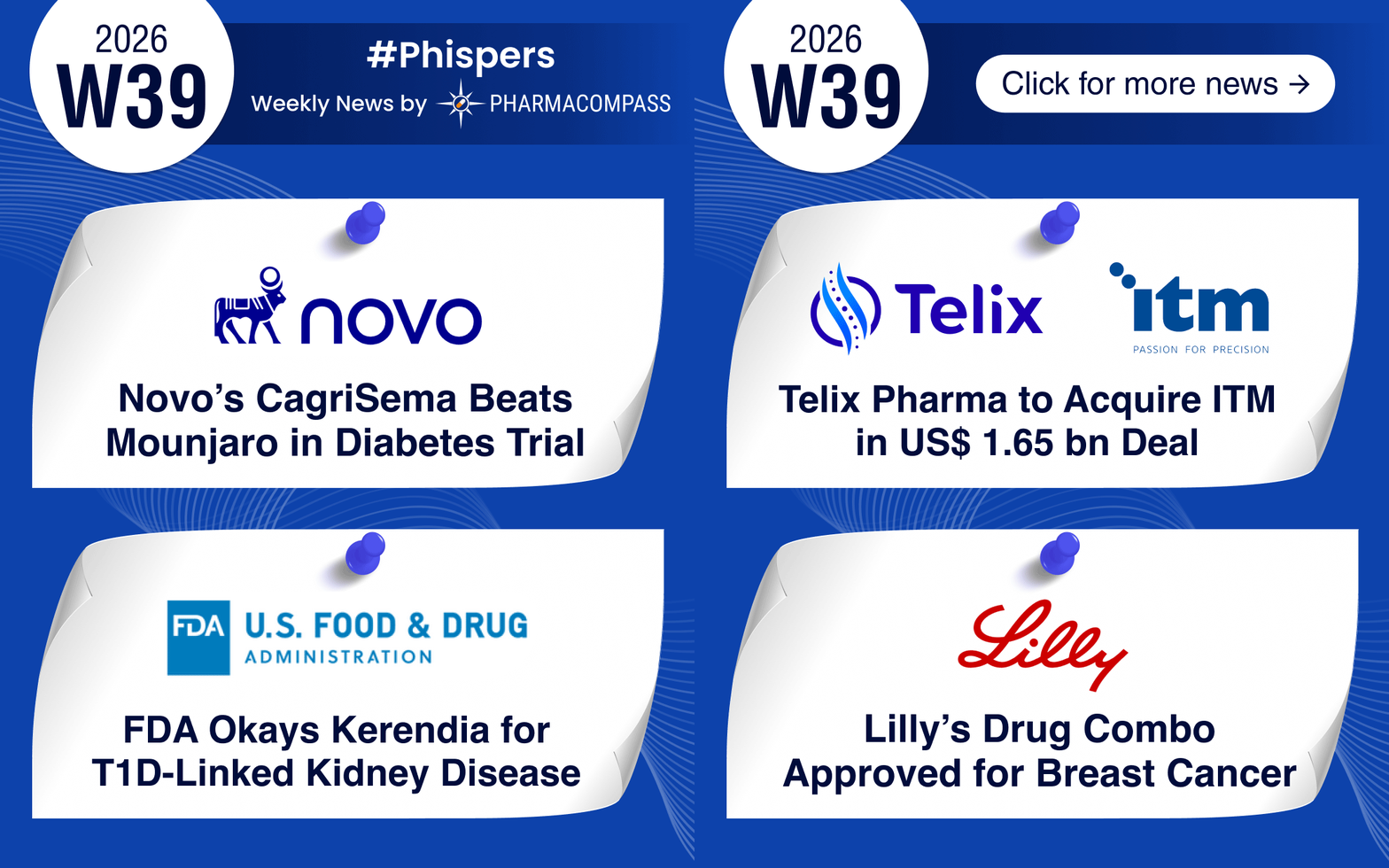
In Phispers this week, Novo’s CagriSema produced greater weight loss than Eli Lilly’s Mounjaro (tirzepatide) in a phase 3 trial in adults with type 2 diabetes. Novo, which dropped Nordisk from its everyday name last week, also signed a deal with Orbis Medicines.Artificial intelligence deals made headlines this week — Novo partnered Anthropic to use Claude models for drug discovery; AbbVie inked a deal with Iambic; and Boehringer Ingelheim signed a pact with Envisagenics.The US Food and Drug Administration (FDA) approved Bayer’s Kerendia (finerenone) for kidney disease associated with type 1 diabetes. The agency approved Eli Lilly’s Inluriyo (imlunestrant) in combination with Verzenio (abemaciclib) for treating a type of breast cancer. FDA also approved Ultragenyx’s Fayuvi (rebisufligene etisparvovec-hopf) as the first treatment for children with a rare disorder known as Sanfilippo syndrome type A.In news from clinical trials, Genentech’s Lunsumio (mosunetuzumab) showed benefit in relapsed or refractory follicular lymphoma; Johnson & Johnson’s Caplyta (lumateperone) reduced manic episodes associated with bipolar I disorder; and Otsuka and Ionis Pharmaceuticals’ ulefnersen showed benefit in amyotrophic lateral sclerosis (ALS) caused by mutations in the FUS gene.In deals, Australia’s Telix Pharmaceuticals agreed to acquire ITM Isotope Technologies Munich for US$ 1.65 billion upfront and Roche entered into a potential US$ 1 billion deal with Dualitas Therapeutics.Novo’s CagriSema beats Lilly’s Mounjaro in late-stage type 2 diabetes trial Novo has said CagriSema, a combination of cagrilintide and semaglutide, produced greater weight loss than Eli Lilly’s Mounjaro (tirzepatide) in a phase 3 trial in adults with type 2 diabetes not adequately controlled on metformin, an SGLT2 inhibitor or both. Novo’s CagriSema is being seen as a successor to the blockbuster weight loss drug Wegovy (semaglutide).Partners Anthropic for drug discovery: Novo has entered into a collaboration with American AI company Anthropic to apply its Claude models to drug discovery and software development. The two will work on drug discovery problems identified by Novo’s scientists and computational teams, and build tools for specific research workflows. In August, Novo had entered into an AI drug discovery pact with Amazon Web Services.Signs macrocycle pact with Orbis: Novo has entered into a multi-target discovery and license agreement with fellow Copenhagen company Orbis Medicines to develop oral macrocycle drugs for cardiometabolic disease. Orbis is eligible for up to US$ 1.4 billion in upfront and milestone payments plus tiered royalties.FDA approves Bayer’s Kerendia for kidney disease in type 1 diabetesFDA has approved Bayer’s Kerendia (finerenone) to reduce urinary albumin-to-creatinine ratio (UACR), a measure of protein leaking into the urine, in adults with chronic kidney disease (CKD) associated with type 1 diabetes. This is the first new treatment for the condition in over 30 years.Lilly’s drug combo approved for breast cancer: FDA has approved Eli Lilly’s Inluriyo (imlunestrant) in combination with its other drug Verzenio (abemaciclib) for adults with estrogen receptor-positive, HER2-negative, ESR1-mutated advanced or metastatic breast cancer whose disease has progressed after at least one line of endocrine therapy. FDA also approved the Guardant360 CDx blood test as a companion diagnostic device.Ultragenyx’s Fayuvi becomes first approved drug for Sanfilippo syndrome type AFDA has granted full approval to Ultragenyx’s Fayuvi (rebisufligene etisparvovec-hopf), the first treatment for children with Sanfilippo syndrome type A, a rare, progressive and fatal neurodegenerative disease. Ultragenyx has set a US list price of US$ 3.95 million for this gene therapy, making it one of the world’s most expensive drugs. Children with this disease are unable to make enough sulfamidase, an enzyme needed to break down a complex sugar. The sugar builds up in cells, progressively damaging the brain and nervous system.Approves IntraBio’s Aqneursa: FDA has approved IntraBio’s Aqneursa (levacetylleucine) to treat ataxia (loss of control of body movements) in adults and children weighing at least 15 kg with ataxia-telangiectasia, an inherited neurodegenerative disorder. This is the first treatment approved for ataxia in these patients.Genentech’s Lunsumio clears confirmatory phase 3 trial in follicular lymphomaRoche has said Genentech’s Lunsumio (mosunetuzumab) combined with lenalidomide significantly improved progression-free survival against Genentech-Biogen’s Rituxan (rituximab) plus lenalidomide in patients with relapsed or refractory follicular lymphoma who had received at least one prior line of treatment.Roche ties up with Dualitas: Roche has entered into a research collaboration and license agreement with South San Francisco-based Dualitas Therapeutics to screen over 300,000 novel bispecific combinations in search of new treatments for immunology and inflammation diseases. Dualitas receives US$ 36.5 million upfront and is eligible for research, development and commercial milestones plus tiered royalties, taking the potential total to US$ 1 billion.Telix Pharma to acquire ITM Isotope in US$ 1.65 bn radiopharma dealAustralia’s Telix Pharmaceuticals has agreed to acquire ITM Isotope Technologies Munich for US$ 1.65 billion upfront on a cash-free, debt-free basis, with up to US$ 700 million more tied to regulatory approvals and sales milestones for ITM’s lead drug. ITM is a major supplier of lutetium-177, a radioactive isotope used in targeted cancer radiotherapy. Its lead candidate, ITM-11 (lutetium Lu 177 edotreotide), targets gastroenteropancreatic neuroendocrine tumors and would compete with Novartis’ Lutathera (lutetium Lu 177 dotatate).AbbVie, Iambic ink AI deal: AbbVie has entered a multi-year collaboration with San Diego-based Iambic to use artificial intelligence to discover small molecule drugs in immunology, neuroscience and oncology.Boehringer, Envisagenics sign oncology pact: Boehringer Ingelheim has entered into a multi-year research collaboration and option agreement with New York-based Envisagenics to find and validate tumor-specific drug targets in hard-to-treat solid tumors. Envisagenics is eligible to receive more than US$ 1 billion in potential payments, plus royalties.J&J’s Caplyta cuts manic symptoms associated with bipolar disorder in phase 3 trial Johnson & Johnson has said Caplyta (lumateperone) met the primary endpoint of a phase 3 trial in adults with manic episodes associated with bipolar I disorder. This is the first of two pivotal trials in mania. Caplyta, an oral antipsychotic, is already approved in the US for schizophrenia, bipolar depression, and as an add-on treatment for major depressive disorder.Otsuka, Ionis’ ALS drug meets goal: Otsuka and Ionis Pharmaceuticals have said ulefnersen met the primary endpoint of a phase 3 trial in amyotrophic lateral sclerosis (ALS) caused by mutations in the FUS gene, a rare form commonly known as FUS-ALS. This is the first placebo-controlled trial to succeed against the underlying genetic cause of FUS-ALS.

Impressions: 1717

https://dev1.pharmacompass.com/radio-compass-phisper/fda-clears-bayer-s-kerendia-for-kidney-disease-in-type-1-diabetes-novo-s-cagrisema-beats-lilly-s-mounjaro

#Phispers by PHARMACOMPASS
24 Sep 2026

NEWS LIBRARY

279read-more
read-more

https://www.businesswire.com/news/home/20261023528477/en/Palleon-Pharmaceuticals-Presents-Phase-2-Results-for-HLX79E-602-in-Primary-Membranous-Nephropathy-at-ASN-Kidney-Week-2026

BUSINESSWIRE
23 Oct 2026

https://www.prnewswire.com/news-releases/abbvie-and-genmab-announce-epcoritamab-in-combination-with-r-chop-demonstrates-significant-improvement-in-progression-free-survival-versus-r-chop-in-patients-with-newly-diagnosed-diffuse-large-b-cell-lymphoma-302898795.html

PR NEWSWIRE
05 Oct 2026

https://www.globenewswire.com/news-release/2026/09/23/3367392/0/en/artiva-biotherapeutics-announces-oral-presentation-of-allonk-clinical-data-at-the-17th-international-symposium-on-sj%c3%b6gren-s-disease.html

GLOBENEWSWIRE
23 Sep 2026

https://www.globenewswire.com/news-release/2026/09/17/3363673/0/en/roche-s-lunsumio-based-regimen-significantly-improves-progression-free-survival-in-follicular-lymphoma-in-phase-iii-celestimo-study.html

GLOBENEWSWIRE
17 Sep 2026

https://www.globenewswire.com/news-release/2026/08/26/3351466/0/en/oddifact-and-mabion-receive-fda-pre-ind-meeting-grant-for-rtx-np-mabioncd20-in-immune-thrombocytopenia.html

GLOBENEWSWIRE
26 Aug 2026

https://www.globenewswire.com/news-release/2026/08/06/3340735/0/en/artiva-biotherapeutics-reports-second-quarter-2026-financial-results-and-recent-business-highlights.html

GLOBENEWSWIRE
06 Aug 2026
digital-contentPB000001##p