Please Wait
Applying Filters...
Menu

Digital Content read-more

Create Content with PharmaCompass, ask us

PHARMA & BIOTECH INSIGHTS

1read-more
read-more

A PHP Error was encountered

Severity: 8192

Message: mb_convert_encoding(): Handling HTML entities via mbstring is deprecated; use htmlspecialchars, htmlentities, or mb_encode_numericentity/mb_decode_numericentity instead

Filename: blog/grid.php

Line Number: 52

Backtrace:

File: /var/www/html/application/views/include/media/blog/grid.php
Line: 52
Function: mb_convert_encoding

File: /var/www/html/application/models/Cmn.php
Line: 3595
Function: view

File: /var/www/html/application/views/include/product/digitalContent/grid.php
Line: 17
Function: common

File: /var/www/html/application/views/include/desc/inner.php
Line: 13
Function: view

File: /var/www/html/application/views/include/desc/indexNew.php
Line: 2433
Function: include

File: /var/www/html/application/controllers/Common.php
Line: 11303
Function: view

File: /var/www/html/index.php
Line: 231
Function: require_once

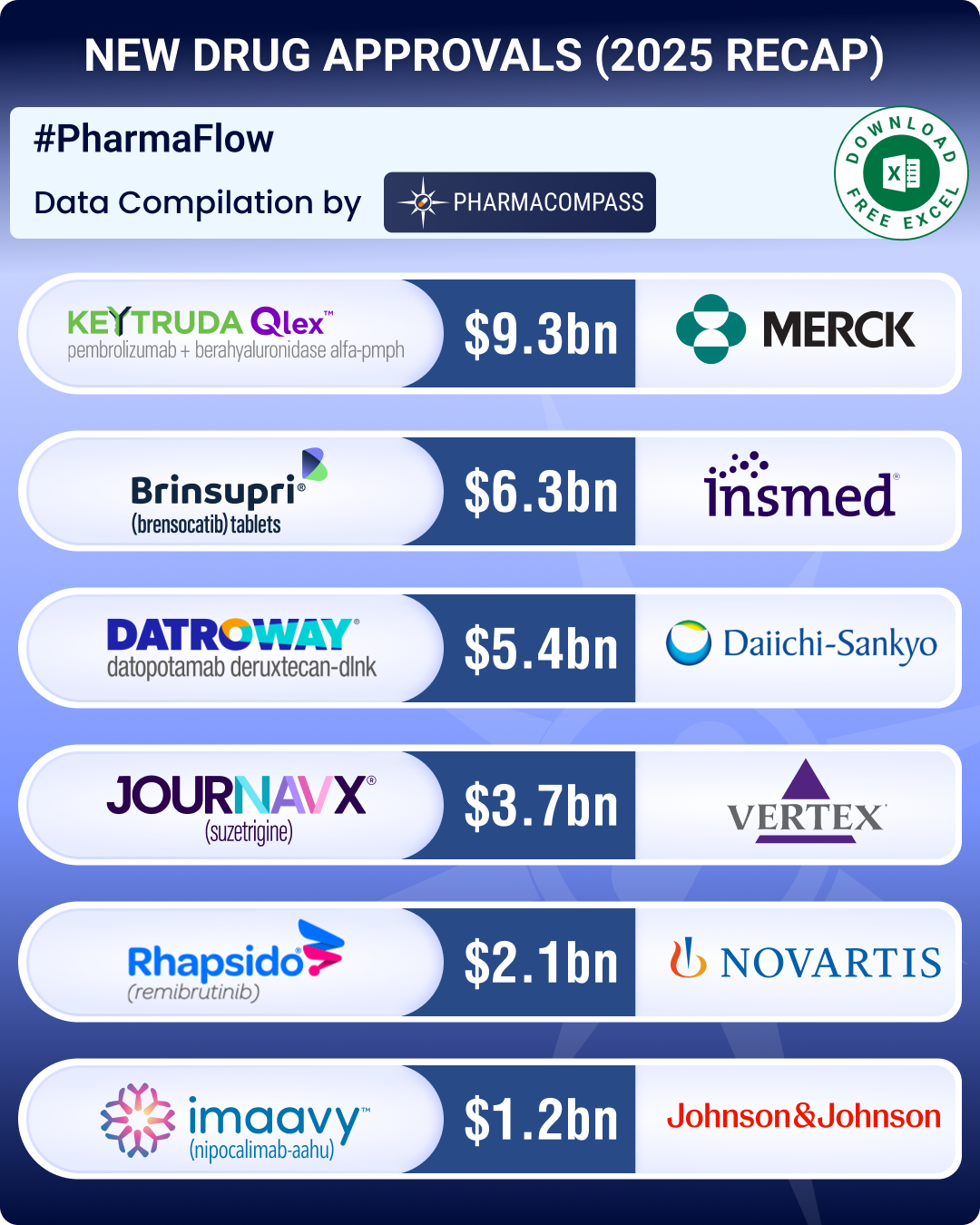
FDA approvals drop 8% in 2025, with fewer blockbusters; Brinsupri, Rhapsido make it to first-in-class list
Our update for new drug approvals by the US Food and Drug Administration (FDA) in the first half (H1) of 2025 had pointed out how upheavals at the agency had impacted its functioning, with drug approvals dropping by 24 percent. While the turbulence didn’t subside, approvals picked up considerably in the second half (H2) of 2025. FDA’s Center for Drug Evaluation and Research (CDER) approved 30 new drugs in H2 (as against 16 in H1), taking the total number of approvals for 2025 up to 46. This is an 8 percent drop compared with 50 approvals CDER had granted in 2024. During the year, CDER saw four new chiefs come and go — Jacqueline Corrigan-Curay (Jan-July 2025), George Tidmarsh (July-Nov 2025), Richard Pazdur (Nov-December 2025) and Tracy Beth Høeg (December 2025-present). In addition, the agency endured thousands of retrenchments. The US Department of Health and Human Services (HHS), under Health Secretary Robert F. Kennedy Jr., enforced funding cuts and changes in approval processes, especially for vaccines. Overall, we have been witnessing a steady drop in drug approvals by CDER — it approved 55 new drugs in 2023, 50 in 2024 and, 46 in 2025. Of the 46 new approvals in 2025, 20 were classified as first-in-class (therapies that use a new and unique mechanism of action), out of which 13 were approved in H2 2025. Overall, CDER approved 32 chemical entities and 14 biologics in 2025. In comparison, approvals by Health Canada and authorizations by the European Medicines Agency (EMA) rose in 2025. The EMA authorized 69 new therapies, up from 64 in 2024. Health Canada approved 46 new therapies in 2025, as compared with 28 in 2024. FDA’s Center for Biologics Evaluation and Research (CBER) approved 21 biologics in 2025, compared with 13 in 2024, of which eight were notable new drugs. Interestingly, both CDER and CBER rejected more drugs last year — 43 applications were rejected, including those for new drugs, supplemental filings, generics and biosimilars, as opposed to 29 in 2024.  View New Drug Approvals in 2025 with Estimated Sales (Free Excel Available) Blockbuster drug approvals drop by 60%, European drugmakers score more FDA nods  It wasn’t a year of blockbuster drug approvals — the agency approved a lower number of drugs that are expected to deliver sales of at least US$ 1 billion by 2030. While there were nearly 20 such drugs approved in 2024, the number dropped to just eight in 2025. Interestingly, European companies won many more approvals for new products than their counterparts in the US. GSK and Novartis achieved three approvals each, while Merck, Boehringer Ingelheim and Bayer AG won two approvals each. The first-in-class drugs approved in H2 are: Insmed's Brinsupri (brensocatib), Ionis's Dawnzera (donidalorsen), Stealth Bio's Forzinity (elamipretide), Boehringer's Jascayd (nerandomilast), UCB's Kygevvi (doxecitine and doxribtimine), Bayer's Lynkuet (elinzanetant), Chimerix's Modeyso (dordaviprone), Innoviva's Nuzolvence (zoliflodacin), Arrowhead's Redemplo (plozasiran), Novartis' Rhapsido (remibrutinib), Otsuka's Voyxact (sibeprenlimab-szsi), Sanofi's Wayrilz (rilzabrutinib) and Omeros' Yartemlea (narsoplimab-wuug). Insmed’s Brinsupri approved for chronic lung disease; Novartis’ Rhapsido okayed for urticaria As has been the trend, the field of oncology saw the maximum drug approvals (15), followed by rare diseases and disorders (7) and immunology (4). Three categories — infections and infectious diseases, respiratory diseases and cardiology/vascular diseases — saw three drug approvals each. Among the first-in-class approvals was Insmed’s Brinsupri (brensocatib), the first treatment for non-cystic fibrosis bronchiectasis, a chronic lung disease. Nature has estimated peak sales of US$ 6.3 billion for this treatment. Brinsupri was approved by the EMA in November. Another notable approval was granted to Novartis’ Rhapsido (remibrutinib), approved to treat the skin condition chronic spontaneous urticaria in adults who remain symptomatic despite treatment with antihistamines. Rhapsido is the first oral alternative to injectable treatments and has 2030 sales forecasts of US$ 2.1 billion. Novartis is also testing the drug for other immune conditions. A new drug that is estimated to bring in the maximum sales is Merck’s Keytruda Qlex, a subcutaneous formulation of pembrolizumab plus berahyaluronidase alfa approved for various solid tumors. While top-selling cancer drug Keytruda (pembrolizumab) was first approved in 2014, this is the first approval for an engineered variant of the hyaluronidase enzyme (berahyaluronidase alfa). Therefore, this combination counts as a novel approval. Fondazion’s CGT okayed for Wiskott-Aldrich syndrome; three drugs approved for hereditary angioedema  After a record nine new cell and gene therapy (CGT) approvals in 2024, only five CGTs were approved in 2025 (the lowest since 2022). With the exception of Novartis’ Itvisma (onasemnogene abeparvovec-brve), all other CGT approvals went to relatively lesser known companies such as Abeona, Precigen, Neurotech and Fondazione Telethon (an Italian firm that became the first nonprofit to get a CGT approval from the FDA). Fondazione Telethon’s Waskyra (etuvetidigene autotemcel) became the first gene therapy for Wiskott-Aldrich syndrome (WAS), a rare immune disorder that causes frequent infections, bleeding issues, and eczema. The one-time treatment uses patients’ own blood stem cells that are modified to restore the faulty WAS gene. Abeona’s Zevaskyntm (prademagene zamikeracel) became the first and only autologous cell sheet-based gene therapy indicated for the treatment of wounds in adult and pediatric patients with recessive dystrophic epidermolysis bullosa (a rare, genetic skin disorder). Patients with hereditary angioedema (or HAE, a genetic disorder characterized by recurrent episodes of severe swelling) gained access to three new drugs, including two first-in-class drugs — CSL Behring’s Andembry (garadacimab) and Ionis Pharma’s Dawnzera (donidalorsen). The third drug approved to treat HAE is KalVista Pharma’s Ekterly (sebetralstat). Our view The FDA has been bringing about considerable changes to its processes. In June, it launched the Commissioner’s National Priority Vouchers (CNPV) program to cut review timelines from the usual 10 to 12 months to two months. But the recent rejection of Disc Medicine’s application for bitopertin as a treatment for a rare blood disorder under the program took four months to materialize. Not only did the rejection come in late, it was based on information already known to the FDA at the time of granting the coveted voucher, raising controversy around the program. The agency is going to bring about more changes soon. It has proposed a plausible mechanism pathway for rare and ultra-rare diseases where randomized controlled trials are not feasible. And in April, it announced plans to phase out animal toxicity testing in the development of monoclonal antibody therapies and other drugs. The agency is increasingly relying on AI, and recently  announced the deployment of agentic AI capabilities for all employees. It will be interesting to see how these changes impact drug approvals in 2026.

Impressions: 2648

https://dev1.pharmacompass.com/radio-compass-blog/fda-approvals-drop-8-in-2025-with-fewer-blockbusters-brinsupri-rhapsido-make-it-to-first-in-class-list

#PharmaFlow by PHARMACOMPASS
26 Feb 2026

MARKET PERFORMANCE RECAP

1read-more
read-more
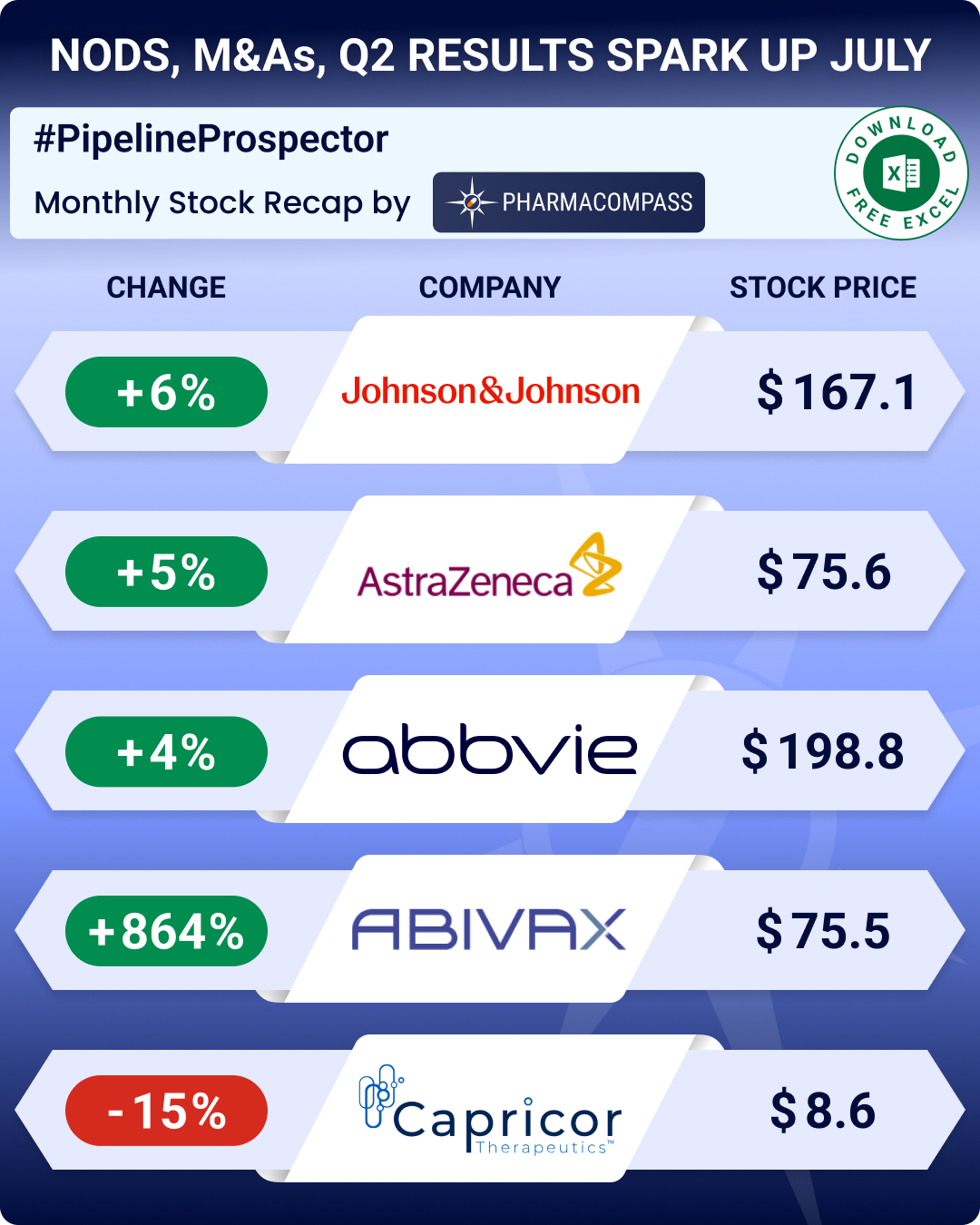
Pipeline Prospector July 2025: Merck to acquire Verona for US$ 10 bn; FDA okays Regeneron’s blood cancer med
In July, the pharmaceutical industry witnessed several deals and mergers and acquisitions (M&As). Big pharmaceutical companies such as AbbVie, Johnson & Johnson and Novo Nordisk posted robust second quarter (Q2) results. AbbVie and J&J also raised their outlook for the full year 2025. In the face of looming import tariffs on pharmaceuticals, companies continued to announce significant investments in the US. While AstraZeneca announced an investment of US$ 50 billion to expand manufacturing and research capabilities in America by 2030, Biogen announced an additional investment of US$ 2 billion at its existing manufacturing plants in North Carolina. These developments appeared to have pushed the pharma indices upwards. The Nasdaq Biotechnology Index (NBI) gained 5.74 percent from 4,219.14 to 4,461.23, while the SPDR S&P Biotech ETF (XBI) rose 4.58 percent from 82.46 to 86.24, and the S&P Biotechnology Select Industry Index (SPSIBI) surged 3.29 percent from 6,459.24  to 6,671.56.  Access the Pipeline Prospector Dashboard for July 2025 Newsmakers (Free Excel) Merck to acquire London-based Verona for US$ 10 bn, GSK buys Hengrui for US$ 12 bn  Amongst the notable M&As was American pharmaceutical giant Merck’s acquisition of  London‑based Verona Pharma for approximately US$ 10 billion. With this acquisition, Merck will get access to Verona’s Ohtuvayre (ensifentrine), an FDA-approved treatment for chronic obstructive pulmonary disease (COPD) that generated US$ 71.3 million in revenues during Q1 2025. This acquisition will help Merck diversify ahead of the 2028 patent expiration of its cancer blockbuster, Keytruda (pembrolizumab).  Similarly, GSK signed an up to US$ 12 billion biobucks deal with China’s Hengrui Pharma to work on up to 12 drugs. GSK is paying Hengrui US$ 500 million upfront. The programs were selected to complement GSK’s extensive respiratory, immunology, inflammation and oncology pipelines. Sanofi announced the acquisition of London-based biotech Vicebio for an upfront payment of US$ 1.15 billion in order to expand its respiratory vaccine portfolio. And vaccine maker Bavarian Nordic announced that a consortium led by Nordic Capital and Permira has made an offer of around US$ 3 billion to acquire it. In deals, Roche‑backed Chugai Pharmaceutical and Singapore‑based AI‑driven biotech Gero have launched a joint research and licensing agreement targeting age‑related diseases in a deal valued at up to US$ 1 billion. And Argenx entered into a multi-target research collaboration with Unnatural Products (UNP), a California-based biotech firm specializing in AI-driven macrocyclic peptide therapeutics. FDA approves Regeneron’s blood cancer med, okays PTC’s drug to treat genetic disorder Last month, the US Food and Drug Administration (FDA) granted an accelerated approval to Regeneron’s Lynozyfic (linvoseltamab-gcpt), a monoclonal antibody that treats adult patients with relapsed or refractory (R/R) multiple myeloma who have received at least four prior lines of therapy. Multiple myeloma is a cancer that forms in a type of white blood cell, known as plasma. The agency also granted accelerated approval to Zegfrovy (sunvozertinib), developed by Dizal Pharmaceutical, for the treatment of adults with locally advanced or metastatic non-small cell lung cancer (NSCLC) harboring EGFR exon 20 insertion mutations, making it the only drug for this condition. This approval is specifically for patients whose disease has progressed on or after platinum-based chemotherapy. The agency also approved PTC Therapeutics’ oral drug — Sephience (sepiapterin) — to treat a rare genetic disorder known as phenylketonuria (PKU). In PKU, the body can’t properly break down an amino acid known as phenylalanine, leading to its buildup in the blood which can potentially damage the brain. KalVista Pharmaceuticals secured FDA approval for Ekterly (sebetralstat), marking the first-ever oral, on‑demand treatment for hereditary angioedema (HAE), a rare and potentially fatal swelling disorder. Astra’s baxdrostat lowers BP in phase 3 trial; FDA declines to approve Ultragenyx’s gene therapy AstraZeneca’s experimental drug baxdrostat significantly lowered blood pressure in a phase 3 trial on patients with treatment-resistant hypertension. AstraZeneca had acquired baxdrostat through its 2023 purchase of CinCor Pharma for US$ 1.8 billion. The company expects peak annual sales of the drug to exceed US$ 5 billion. Clinical stage biotech Abivax presented top-line data from the twin phase 3 trials of its lead ulcerative colitis candidate — obefazimod. The drug produced a statistically significant pooled remission rate of 16.4 percent across both trials, largely hitting their primary endpoints. There was considerable negative news from clinical trials, including the death of a 51-year-old man participating in Sarepta’s phase 1 study for limb-girdle muscular dystrophy. This person was taking another gene therapy — Sarepta’s SRP-9004. The previous two deaths were of teenaged patients taking its gene therapy Elevidys. Post this news, Sarepta has decided to let go of 500 employees (36 percent of its workforce) and is also halting the development of several gene therapies for a group of muscle wasting disorders. The agency also raised efficacy concerns over the use of Otsuka Pharma’s drug — Rexulti (brexpiprazole) — in combination with Viatris’ antidepressant Zoloft (sertraline) for the treatment of adults with post-traumatic stress disorder (PTSD). FDA has cited inconsistent trial results and a modest treatment effect and is insisting on another study on Rexulti.  FDA declined to approve UX111, Ultragenyx’s gene therapy for Sanflilippo syndrome type A, a rare disease that causes progressive damage to the central nervous system. In the complete response letter (CRL), the agency has requested for additional information related to the company’s production processes and facilities. The FDA also declined to approve Capricor Therapeutics’ Deramiocel (CAP-1002) , a lead cell therapy candidate for the treatment of cardiomyopathy associated with Duchenne muscular dystrophy (DMD). In its CRL, FDA said the evidence submitted for the therapy does not meet efficacy requirements and has asked for more data. Our view Although the pharma indices are looking up and we are witnessing substantial M&A activity, we know that the drug industry is under considerable pressure from US President Donald Trump’s tariffs and other policies. His administration has sent letters to 17 major drug companies giving them 60 days to cut prices for US consumers to the lowest prices paid by other countries. The new tariffs, be it via the Europe-US trade deal or the increased tariffs on Indian goods, are likely to hurt the Americal healthcare system and raise costs. Moreover, Trump has said tariffs on drugs imported into the US could reach up to 250 percent in another 12 to 18 months. Once costs begin to escalate, the ripple effects across healthcare systems could be profound.

Impressions: 7532

https://dev1.pharmacompass.com/pipeline-prospector-blog/pipeline-prospector-july-2025-merck-to-acquire-verona-for-us-10-bn-fda-okays-regeneron-s-blood-cancer-med

#PharmaFlow by PHARMACOMPASS
07 Aug 2025

WEEKLY INDUSTRY NEWS

2read-more
read-more
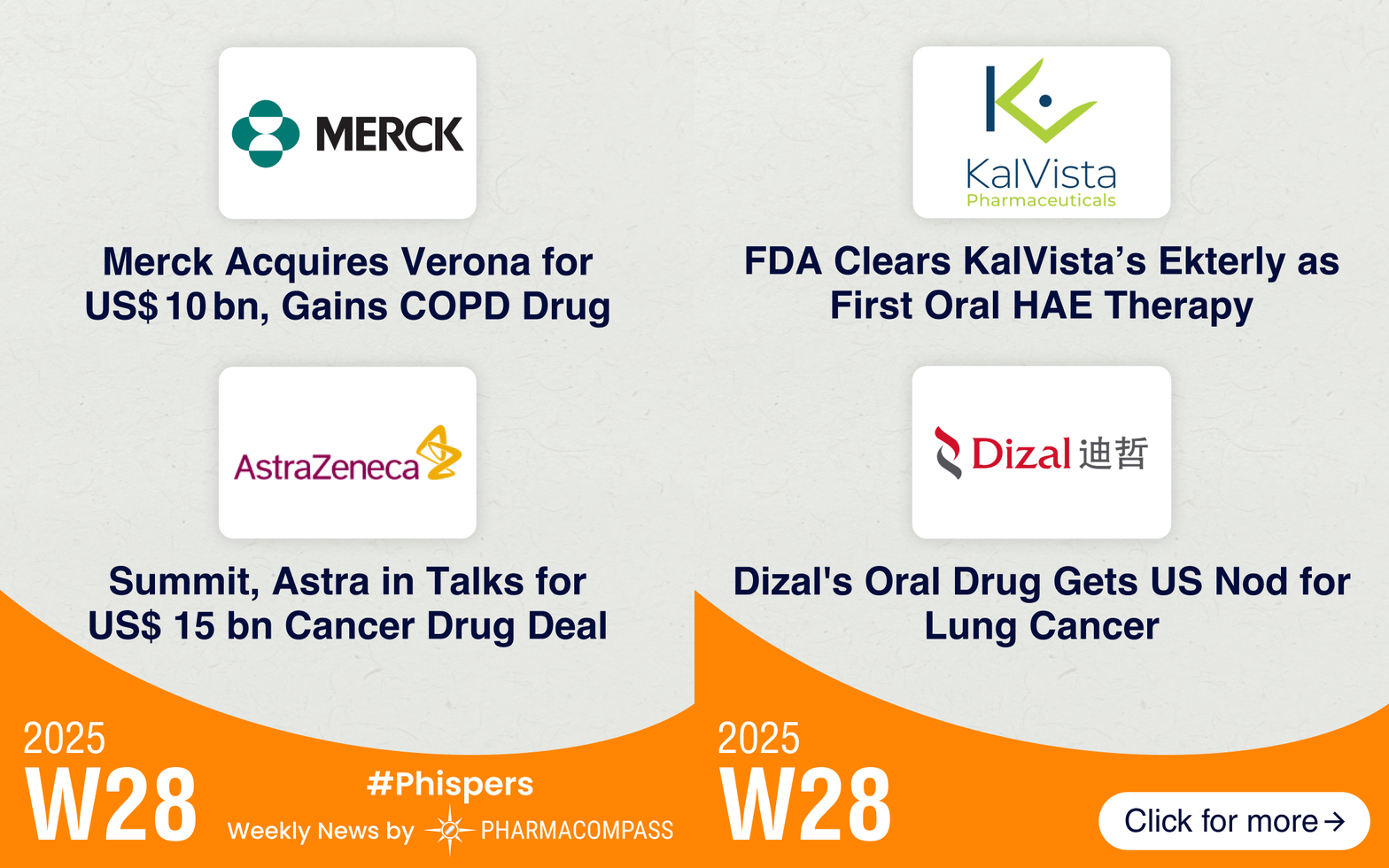
Merck buys Verona for US$ 10 bn, gains its COPD med; Summit, Astra reportedly in talks for US$ 15 bn cancer drug deal
The world of pharmaceuticals continued to witness large deals. Merck announced a US$ 10 billion acquisition of Verona Pharma, gaining access to a US-approved inhaled chronic obstructive pulmonary disease (COPD) drug, Ohtuvayre.  Summit Therapeutics and AstraZeneca are reportedly negotiating a licensing deal worth up to US$ 15 billion for the former’s promising bispecific lung cancer drug. And Chugai Pharmaceutical has struck a potential US$ 1 billion collaboration with AI-driven biotech Gero to discover new therapies for age-related diseases.Dizal Pharmaceutical received accelerated approval from the US Food and Drug Administration (FDA) for Zegfrovy, the first pill that targets a rare and tough-to-treat mutation in lung cancer (known as EGFR exon 20 insertion mutations), giving new hope to patients.KalVista Pharmaceuticals won FDA approval for Ekterly, the first oral, on-demand treatment for hereditary angioedema, offering patients a convenient, fast-acting alternative to injectable therapies.After threatening to impose tariffs on imported drugs back in February, US President Donald Trump is now giving drugmakers over a year to “get their act together”. Post that, imported drugs could face 200 percent taxes, he said.Novartis faced setback as its blockbuster Cosentyx failed a phase 3 trial in giant cell arteritis. However, the Swiss drugmaker notched a regulatory win in its homeland with the approval of Coartem Baby, the first antimalarial therapy specifically designed for newborns. And Taiho Pharmaceutical’s experimental treatment for Duchenne muscular dystrophy (DMD) fell short in a late-stage trial.Merck set to acquire Verona for US$ 10 bn, to gain its FDA-approved COPD drugAmerican pharmaceutical giant Merck is set to acquire London‑based Verona Pharma for approximately US$ 10 billion. Verona’s flagship product, Ohtuvayre (ensifentrine), an FDA-approved, inhalable, non-steroid maintenance treatment for COPD, generated over 96 percent of the company’s revenue (US$ 76 million) in the first quarter of this year. Analysts estimate it could reach peak annual sales of nearly US$ 4 billion by the mid‑2030s.The acquisition aligns with Merck’s strategy to diversify ahead of the 2028 patent expiration of its cancer blockbuster, Keytruda (pembrolizumab), which earned nearly US$ 30 billion in 2024. This will be Merck’s largest acquisition since its US$ 10.8 billion Prometheus Biosciences deal in 2023.Astra reportedly in talks for US$ 15 bn licensing deal with Summit for its cancer drugSummit Therapeutics and AstraZeneca are reportedly in discussions for a licensing agreement concerning ivonescimab, an experimental lung cancer drug, potentially valued at up to US$ 15 billion. The deal structure under consideration includes an upfront payment of several billion dollars to Summit, with additional milestone-based payments contingent upon regulatory approvals, commercialization, and sales targets.Meanwhile, Japanese drugmaker JCR Pharmaceuticals has entered into a license agreement with AstraZeneca’s rare disease unit Alexion for JCR’s adeno-associated virus (AAV) capsids. Under the terms of the agreement, Alexion may use the licensed capsids in up to five of Alexion's genomic medicines programs. The deal is potentially worth up to US$ 825 million.Dizal’s oral therapy okayed for hard-to-treat lung cancer: FDA has granted accelerated approval to Zegfrovy (sunvozertinib), developed by Dizal Pharmaceutical, for the treatment of adults with locally advanced or metastatic non-small cell lung cancer (NSCLC) harboring EGFR exon 20 insertion mutations. This approval is specifically for patients whose disease has progressed on or after platinum-based chemotherapy. Zegfrovy is the only FDA-approved targeted oral therapy for NSCLC patients with EGFR exon 20 insertion mutations.FDA okays KalVista’s oral drug for fatal swelling disorder after missing target dateKalVista Pharmaceuticals has secured FDA approval for Ekterly (sebetralstat), marking the first-ever oral, on‑demand treatment for hereditary angioedema (HAE), a rare and potentially fatal swelling disorder. The agency’s green light followed a month‑long review delay, attributed to “heavy workloads and limited resources” at the FDA. Ekterly offers a substantial improvement over bulky injectables, with analysts describing it as transformative for HAE care.Label update for Lilly’s Kinsula: FDA has approved a label update for Eli Lilly’s Kisunla (donanemab) to allow a more gradual dosing of this Alzheimer’s drug, thereby lowering the risk of a potentially dangerous type of brain swelling. Kisunla, given as a monthly infusion, was approved by the FDA in July 2024 for adults with early-stage Alzheimer’s disease.Chugai inks deal with AI-driven biotech Gero for age-related disease targetsRoche‑backed Chugai Pharmaceutical and Singapore‑based AI‑driven biotech Gero have launched a joint research and licensing agreement targeting age‑related diseases in a deal valued at up to US$ 1 billion. The partnership harnesses Gero’s machine learning platform — trained on large-scale human datasets — to uncover novel therapeutic targets. Chugai will provide an undisclosed upfront payment followed by up to US$ 250 million in milestone payments tied to development and sales achievements.Trump hints at 200 percent tariffs on imported drugs after 18 monthsAfter threatening to impose tariffs on imported drugs back in February, the US President Donald Trump is now open to giving drugmakers some time to “get their act together”.  Post that, imported pharma products could face 200 percent taxes. “We’re going to give people about a year, a year and a half to come in and, after that, they’re going to be tariffed…they’re going to be tariffed at a very, very high rate, like 200 percent,” Trump warned. Novartis’ blockbuster antibody fails late-stage trial for artery diseaseNovartis’ blockbuster drug Cosentyx (secukinumab) has failed to meet the primary endpoint in its phase 3 trial for treating giant cell arteritis (GCA), a serious inflammatory condition affecting arteries primarily in individuals over the age of 50. The trial did not demonstrate a statistically significant improvement in achieving sustained remission at week 52 for patients with newly diagnosed or relapsing GCA when compared to placebo.Swissmedic okays antimalarial med for newborns: Switzerland’s medical regulator, Swissmedic, has granted approval to Coartem Baby (artemether-lumefantrine), also known as Riamet Baby, making it the first antimalarial therapy designed specifically for infants weighing between 2 kg and 5 kg. The therapy has been developed by Novartis and Medicines for Malaria Venture.Taiho’s DMD candidate fails in phase 3 trial: Taiho Pharmaceutical’s investigational therapy for Duchenne muscular dystrophy (DMD), known as TAS-205 or pizuglanstat, did not meet its primary endpoint in a late-stage trial conducted in Japan. The study aimed to assess the efficacy of TAS-205 in improving motor function.  

Impressions: 1117

https://dev1.pharmacompass.com/radio-compass-phisper/merck-buys-verona-for-us-10-bn-gains-its-copd-med-summit-astra-reportedly-in-talks-for-us-15-bn-cancer-drug-deal

#Phispers by PHARMACOMPASS
10 Jul 2025

NEWS LIBRARY

38read-more
read-more

https://www.businesswire.com/news/home/20260330460675/en/KalVista-Pharmaceuticals-Announces-Positive-Interim-Phase-3-Data-From-KONFIDENT-KID-Trial-of-EKTERLY-sebetralstat-for-Children-Aged-2-11-Years-at-the-2026-Global-Angioedema-Leadership-Conference

BUSINESSWIRE
30 Mar 2026

https://www.pharmiweb.com/press-release/2026-03-25/kalvista-pharmaceuticals-reports-eight-months-fiscal-year-2025-financial-results-and-provides-corpor

PHARMIWEB
25 Mar 2026

https://www.pharmiweb.com/press-release/2026-03-20/kalvista-pharmaceuticals-to-present-new-ekterly-sebetralstat-data-at-the-2026-global-angioedema-l

PHARMIWEB
20 Mar 2026

https://www.pharmiweb.com/press-release/2026-03-02/kalvista-pharmaceuticals-presents-new-data-highlighting-high-patient-satisfaction-and-evolving-treat

PHARMIWEB
02 Mar 2026

https://www.businesswire.com/news/home/20251222393408/en/KalVista-Pharmaceuticals-Announces-Approval-of-EKTERLY-sebetralstat-in-Japan-First-and-Only-Oral-On-demand-Treatment-for-Hereditary-Angioedema

BUSINESSWIRE
22 Dec 2025

https://www.businesswire.com/news/home/20251106901557/en/KalVista-Pharmaceuticals-Presents-New-Data-Highlighting-Patient-Satisfaction-with-EKTERLY-sebetralstat-and-its-Potential-in-Children-Ages-2-11-at-the-ACAAI-2025-Annual-Scientific-Meeting

BUSINESS WIRE
06 Nov 2025
digital-content121365142##p