Please Wait
Applying Filters...
Menu

Digital Content read-more

Create Content with PharmaCompass, ask us

PHARMA & BIOTECH INSIGHTS

1read-more
read-more

A PHP Error was encountered

Severity: 8192

Message: mb_convert_encoding(): Handling HTML entities via mbstring is deprecated; use htmlspecialchars, htmlentities, or mb_encode_numericentity/mb_decode_numericentity instead

Filename: blog/grid.php

Line Number: 52

Backtrace:

File: /var/www/html/application/views/include/media/blog/grid.php
Line: 52
Function: mb_convert_encoding

File: /var/www/html/application/models/Cmn.php
Line: 3595
Function: view

File: /var/www/html/application/views/include/product/digitalContent/grid.php
Line: 17
Function: common

File: /var/www/html/application/views/include/desc/inner.php
Line: 13
Function: view

File: /var/www/html/application/views/include/desc/indexNew.php
Line: 2433
Function: include

File: /var/www/html/application/controllers/Common.php
Line: 11303
Function: view

File: /var/www/html/index.php
Line: 231
Function: require_once

FDA approvals drop 24% in H1 2025; GSK’s UTI med, Vertex’s non-opioid painkiller lead pack of first-in-class meds
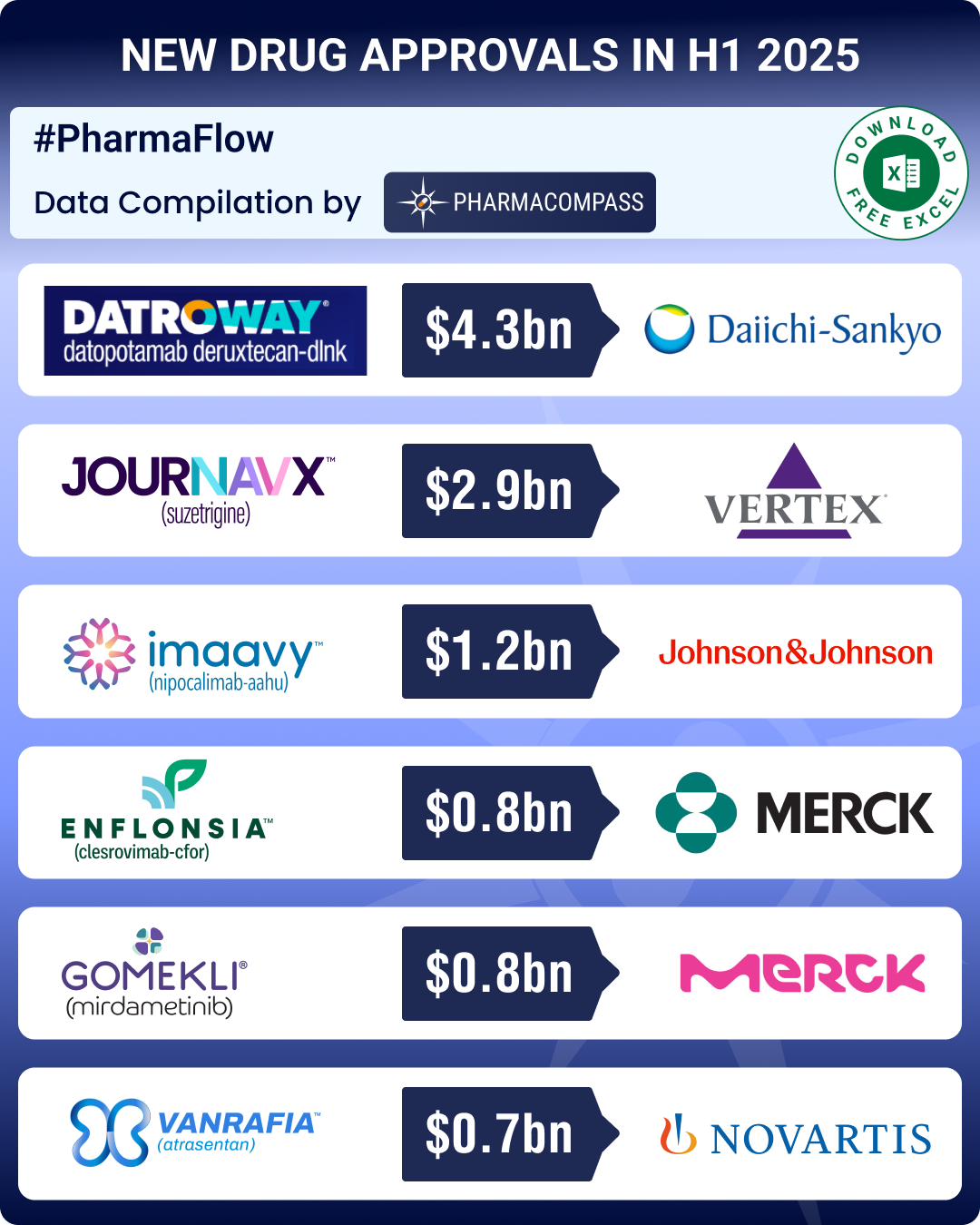
It has been a turbulent year for the US Food and Drug Administration (FDA), marked by reductions in both staff and budget, shake-ups at the top and a reduction in inspections. This upheaval has clearly impacted the functioning of the agency, with reports of missed deadlines and reduced responsiveness. This disruption resulted in a slowdown in new drug approvals in the first half of 2025 (H1 2025), as opposed to the same period last year. Incidentally, drug approvals in H1 2024 were also down by 19 percent compared to H1 2023. FDA’s Center for Drug Evaluation and Research (CDER) approved 16 novel drugs in H1 2025, down from 21 in H1 2024, a decline of nearly 24 percent. Of these, nine were small molecules and seven were biologics. The period saw eight first-in-class therapies get CDER’s approval, as opposed to 17 in H1 2024. FDA’s Center for Biologics Evaluation and Research (CBER) approved seven biologics in H1 2025, compared to eight in the same period last year. In comparison, both Health Canada and the European Medicines Agency (EMA) reported a strong rebound in approvals and authorizations, respectively. Health Canada approved 20 drugs in H1 2025, as opposed to 10 in H1 2024. Similarly, EMA authorized 19 new therapies in H1 2025, compared to 15 in H1 2024. Notably, EMA’s pending decisions increased to 25 in H1 2025, from 14 in the same period last year, while conditional authorizations remained static at five. This underscores EMA’s active regulatory pipeline, suggesting that more drugs could be approved in Europe soon.   View New Drug Approvals in H1 2025 with Estimated Sales (Free Excel Available) Vertex’s non-opioid painkiller, GSK’s antibiotic for UTI, Merck’s RSV antibody bag FDA nods  Oncology remained the single largest category in H1 2025 with seven new drugs being approved by the FDA, followed by four rare diseases and disorders and as many infections and infective diseases.  The eight drugs that were designated first-in-class in H1 2025 are: Journavx (Suzetrigine), Imaavy (nipocalimab), Emrelis (telisotuzumab vedotin), Blujepa (gepotidacin mesylate), Qfitlia (fitusiran), Avmapki Fakzynja Co-Pack (avutometinib potassium/defactinib hydrochloride), Tryptyr (acoltremon), and Andembry (garadacimab). In January, a new class of non-opioid pain therapy made a debut — FDA approved Vertex Pharmaceuticals’ Journavx (suzetrigine). This first-in-class oral analgesic could bring in US$ 2.9 billion in sales for Vertex by 2030. The half year also saw a new oral antibiotic — GSK’s Blujepa (gepotidacin) — for treating uncomplicated urinary tract infections (uUTIs) bag FDA approval. This is the first new antibiotic for uUTIs in nearly three decades. It treats infections caused by resistant pathogens such as E. coli and K. pneumoniae In June, Merck’s Enflonsia (clesrovimab), a long-acting monoclonal antibody, won FDA approval to prevent respiratory syncytial virus (RSV) lower respiratory tract disease in neonates and infants entering their first RSV season. A single 105 mg dose provides protection for about five months, the length of a typical RSV season. Enflonsia could bring in US$844 million in annual sales by 2030. FDA approves four meds for rare diseases, including SpringWorks’ Gomekli, Novartis’ Vanrafia In H1 2024, rare genetic diseases had witnessed some significant approvals. The trend continued in H1 2025. In February, Gomekli (mirdametinib), developed by SpringWorks Therapeutics, became the first approved therapy for neurofibromatosis type 1 (a genetic disorder that causes tumors to grow on nerve tissues) in adult and pediatric patients who have symptomatic plexiform neurofibromas (benign, complex nerve tumors) not amenable to complete resection. Analysts expect peak sales of around US$ 0.8 billion by 2030. Post this approval, SpringWorks got acquired by Merck KGaA for approximately US$ 3.9 billion. The same month, Ono Pharma-owned Deciphera’s Romvimza (vimseltinib) became the first oral therapy approved for another rare disease known as symptomatic tenosynovial giant cell tumor. This is a benign but aggressive growth that can be painful. This new drug offers patients an option beyond surgery. In March, Sanofi’s Qfitlia (fitusiran) was approved for routine prophylaxis in hemophilia A or B, with or without inhibitors. And in April, Novartis’ Vanrafia (atrasentan) was granted accelerated approval for IgA nephropathy (a chronic autoimmune kidney disease), which is at the risk of rapid progression. Vanrafia could bring in sales of over US$ 735 million by 2030 Johnson & Johnson secured approval for Imaavy (nipocalimab-aahu) for generalized myasthenia gravis (a chronic autoimmune disease that causes muscle weakness) in adults and adolescents. Imaavy’s sales could cross US$1.17 billion by 2030. Rare diseases continue to attract regulatory attention, with the trend carrying into the current quarter. July witnessed two noteworthy rare-disease approvals — Ekterly (garadacimab), CSL’s once-monthly prophylactic treatment for hereditary angioedema (a genetic disorder that causes recurrent episodes of swellings), and Sephience (pegvaliase-abcx), BioMarin’s new therapy for phenylketonuria (a rare metabolic disorder). FDA greenlights new oncology therapies, including Astra’s Datroway, AbbVie’s Emrelis The field of oncology saw some notable new drug approvals. In January, Datroway (datopotamab deruxtecan), an antibody-drug conjugate (ADC) developed by AstraZeneca and Daiichi Sankyo, was granted approval for adults with unresectable or metastatic, hormone receptor-positive, HER2-negative breast cancer. Later, in June, the FDA granted accelerated approval  to AstraZeneca;s Datroway for adults with locally advanced or metastatic, EGFR-mutated non-small cell lung cancer. The drug’s peak annual sales are projected at about US$ 4.2 billion by 2030. In May, Emrelis (telisotuzumab vedotin-tllv), AbbVie’s ADC was granted FDA’s accelerated approval. Emrelis treats locally advanced or metastatic non-squamous non-small cell lung cancer (NSCLC) characterized by significantly increased levels of the c-Met protein in cancer cells. FDA also approved a companion diagnostic test — Roche's Ventana — in May to determine the c-Met protein biomarker status in order to identify patients eligible for Emrelis.  The same month, FDA also granted accelerated approval to Verastem’s Avmapki Fakzynja Co-pack, a dual oral therapy for adults with KRAS‑mutated recurrent low‑grade serous ovarian cancer (LGSOC). This novel regimen combines two inhibitors — avutometinib and defactinib — to disrupt critical signaling pathways that fuel tumor growth. In ophthalmology, Alcon re-entered the prescription pharmaceutical market with Tryptry (acoltremon), a first-in-class TRPM8 agonist for dry eye disease, which stimulates corneal nerves to increase tear production. Our view The changes in the FDA are clearly having a far-reaching impact on the global pharmaceutical industry. There have been reports of drugmakers losing confidence in the FDA, which has been a gold standard for drug regulation. Some American biotechs are shifting early trials outside of the US. With EMA and Health Canada authorizing/approving a larger number of drugs in H1 2025, we do see some changes underway that may eventually reshape drug development.  

Impressions: 8106

https://dev1.pharmacompass.com/radio-compass-blog/fda-approvals-drop-24-in-h1-2025-gsk-s-uti-med-vertex-s-non-opioid-painkiller-lead-pack-of-first-in-class-meds

#PharmaFlow by PHARMACOMPASS
28 Aug 2025

MARKET PERFORMANCE RECAP

1read-more
read-more
Pipeline Prospector July 2025: Merck to acquire Verona for US$ 10 bn; FDA okays Regeneron’s blood cancer med
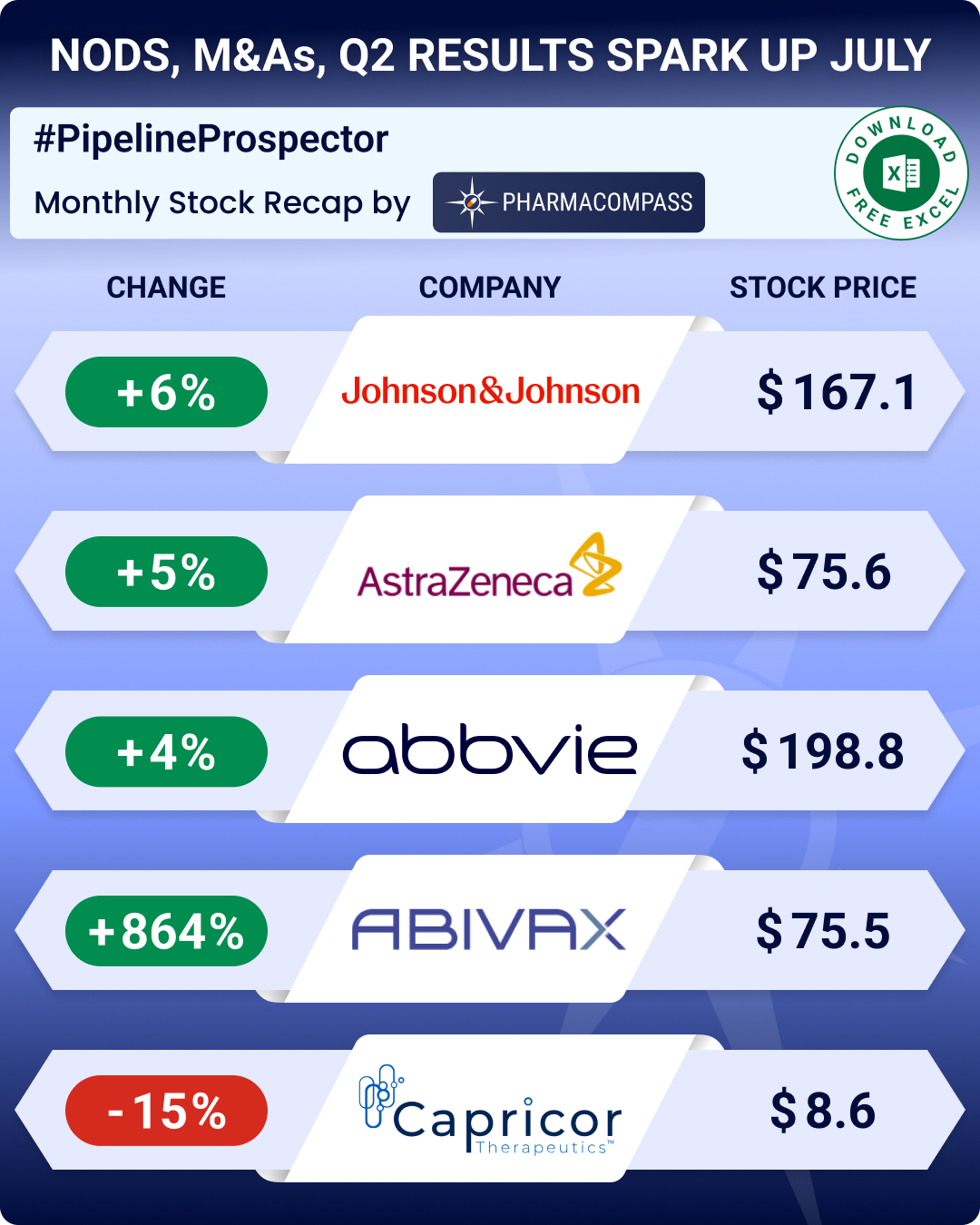
In July, the pharmaceutical industry witnessed several deals and mergers and acquisitions (M&As). Big pharmaceutical companies such as AbbVie, Johnson & Johnson and Novo Nordisk posted robust second quarter (Q2) results. AbbVie and J&J also raised their outlook for the full year 2025. In the face of looming import tariffs on pharmaceuticals, companies continued to announce significant investments in the US. While AstraZeneca announced an investment of US$ 50 billion to expand manufacturing and research capabilities in America by 2030, Biogen announced an additional investment of US$ 2 billion at its existing manufacturing plants in North Carolina. These developments appeared to have pushed the pharma indices upwards. The Nasdaq Biotechnology Index (NBI) gained 5.74 percent from 4,219.14 to 4,461.23, while the SPDR S&P Biotech ETF (XBI) rose 4.58 percent from 82.46 to 86.24, and the S&P Biotechnology Select Industry Index (SPSIBI) surged 3.29 percent from 6,459.24  to 6,671.56.  Access the Pipeline Prospector Dashboard for July 2025 Newsmakers (Free Excel) Merck to acquire London-based Verona for US$ 10 bn, GSK buys Hengrui for US$ 12 bn  Amongst the notable M&As was American pharmaceutical giant Merck’s acquisition of  London‑based Verona Pharma for approximately US$ 10 billion. With this acquisition, Merck will get access to Verona’s Ohtuvayre (ensifentrine), an FDA-approved treatment for chronic obstructive pulmonary disease (COPD) that generated US$ 71.3 million in revenues during Q1 2025. This acquisition will help Merck diversify ahead of the 2028 patent expiration of its cancer blockbuster, Keytruda (pembrolizumab).  Similarly, GSK signed an up to US$ 12 billion biobucks deal with China’s Hengrui Pharma to work on up to 12 drugs. GSK is paying Hengrui US$ 500 million upfront. The programs were selected to complement GSK’s extensive respiratory, immunology, inflammation and oncology pipelines. Sanofi announced the acquisition of London-based biotech Vicebio for an upfront payment of US$ 1.15 billion in order to expand its respiratory vaccine portfolio. And vaccine maker Bavarian Nordic announced that a consortium led by Nordic Capital and Permira has made an offer of around US$ 3 billion to acquire it. In deals, Roche‑backed Chugai Pharmaceutical and Singapore‑based AI‑driven biotech Gero have launched a joint research and licensing agreement targeting age‑related diseases in a deal valued at up to US$ 1 billion. And Argenx entered into a multi-target research collaboration with Unnatural Products (UNP), a California-based biotech firm specializing in AI-driven macrocyclic peptide therapeutics. FDA approves Regeneron’s blood cancer med, okays PTC’s drug to treat genetic disorder Last month, the US Food and Drug Administration (FDA) granted an accelerated approval to Regeneron’s Lynozyfic (linvoseltamab-gcpt), a monoclonal antibody that treats adult patients with relapsed or refractory (R/R) multiple myeloma who have received at least four prior lines of therapy. Multiple myeloma is a cancer that forms in a type of white blood cell, known as plasma. The agency also granted accelerated approval to Zegfrovy (sunvozertinib), developed by Dizal Pharmaceutical, for the treatment of adults with locally advanced or metastatic non-small cell lung cancer (NSCLC) harboring EGFR exon 20 insertion mutations, making it the only drug for this condition. This approval is specifically for patients whose disease has progressed on or after platinum-based chemotherapy. The agency also approved PTC Therapeutics’ oral drug — Sephience (sepiapterin) — to treat a rare genetic disorder known as phenylketonuria (PKU). In PKU, the body can’t properly break down an amino acid known as phenylalanine, leading to its buildup in the blood which can potentially damage the brain. KalVista Pharmaceuticals secured FDA approval for Ekterly (sebetralstat), marking the first-ever oral, on‑demand treatment for hereditary angioedema (HAE), a rare and potentially fatal swelling disorder. Astra’s baxdrostat lowers BP in phase 3 trial; FDA declines to approve Ultragenyx’s gene therapy AstraZeneca’s experimental drug baxdrostat significantly lowered blood pressure in a phase 3 trial on patients with treatment-resistant hypertension. AstraZeneca had acquired baxdrostat through its 2023 purchase of CinCor Pharma for US$ 1.8 billion. The company expects peak annual sales of the drug to exceed US$ 5 billion. Clinical stage biotech Abivax presented top-line data from the twin phase 3 trials of its lead ulcerative colitis candidate — obefazimod. The drug produced a statistically significant pooled remission rate of 16.4 percent across both trials, largely hitting their primary endpoints. There was considerable negative news from clinical trials, including the death of a 51-year-old man participating in Sarepta’s phase 1 study for limb-girdle muscular dystrophy. This person was taking another gene therapy — Sarepta’s SRP-9004. The previous two deaths were of teenaged patients taking its gene therapy Elevidys. Post this news, Sarepta has decided to let go of 500 employees (36 percent of its workforce) and is also halting the development of several gene therapies for a group of muscle wasting disorders. The agency also raised efficacy concerns over the use of Otsuka Pharma’s drug — Rexulti (brexpiprazole) — in combination with Viatris’ antidepressant Zoloft (sertraline) for the treatment of adults with post-traumatic stress disorder (PTSD). FDA has cited inconsistent trial results and a modest treatment effect and is insisting on another study on Rexulti.  FDA declined to approve UX111, Ultragenyx’s gene therapy for Sanflilippo syndrome type A, a rare disease that causes progressive damage to the central nervous system. In the complete response letter (CRL), the agency has requested for additional information related to the company’s production processes and facilities. The FDA also declined to approve Capricor Therapeutics’ Deramiocel (CAP-1002) , a lead cell therapy candidate for the treatment of cardiomyopathy associated with Duchenne muscular dystrophy (DMD). In its CRL, FDA said the evidence submitted for the therapy does not meet efficacy requirements and has asked for more data. Our view Although the pharma indices are looking up and we are witnessing substantial M&A activity, we know that the drug industry is under considerable pressure from US President Donald Trump’s tariffs and other policies. His administration has sent letters to 17 major drug companies giving them 60 days to cut prices for US consumers to the lowest prices paid by other countries. The new tariffs, be it via the Europe-US trade deal or the increased tariffs on Indian goods, are likely to hurt the Americal healthcare system and raise costs. Moreover, Trump has said tariffs on drugs imported into the US could reach up to 250 percent in another 12 to 18 months. Once costs begin to escalate, the ripple effects across healthcare systems could be profound.

Impressions: 7532

https://dev1.pharmacompass.com/pipeline-prospector-blog/pipeline-prospector-july-2025-merck-to-acquire-verona-for-us-10-bn-fda-okays-regeneron-s-blood-cancer-med

#PharmaFlow by PHARMACOMPASS
07 Aug 2025

WEEKLY INDUSTRY NEWS

1read-more
read-more
Consortium makes ~US$ 3 bn offer to buy Bavarian Nordic; FDA approves PTC’s rare genetic disorder drug
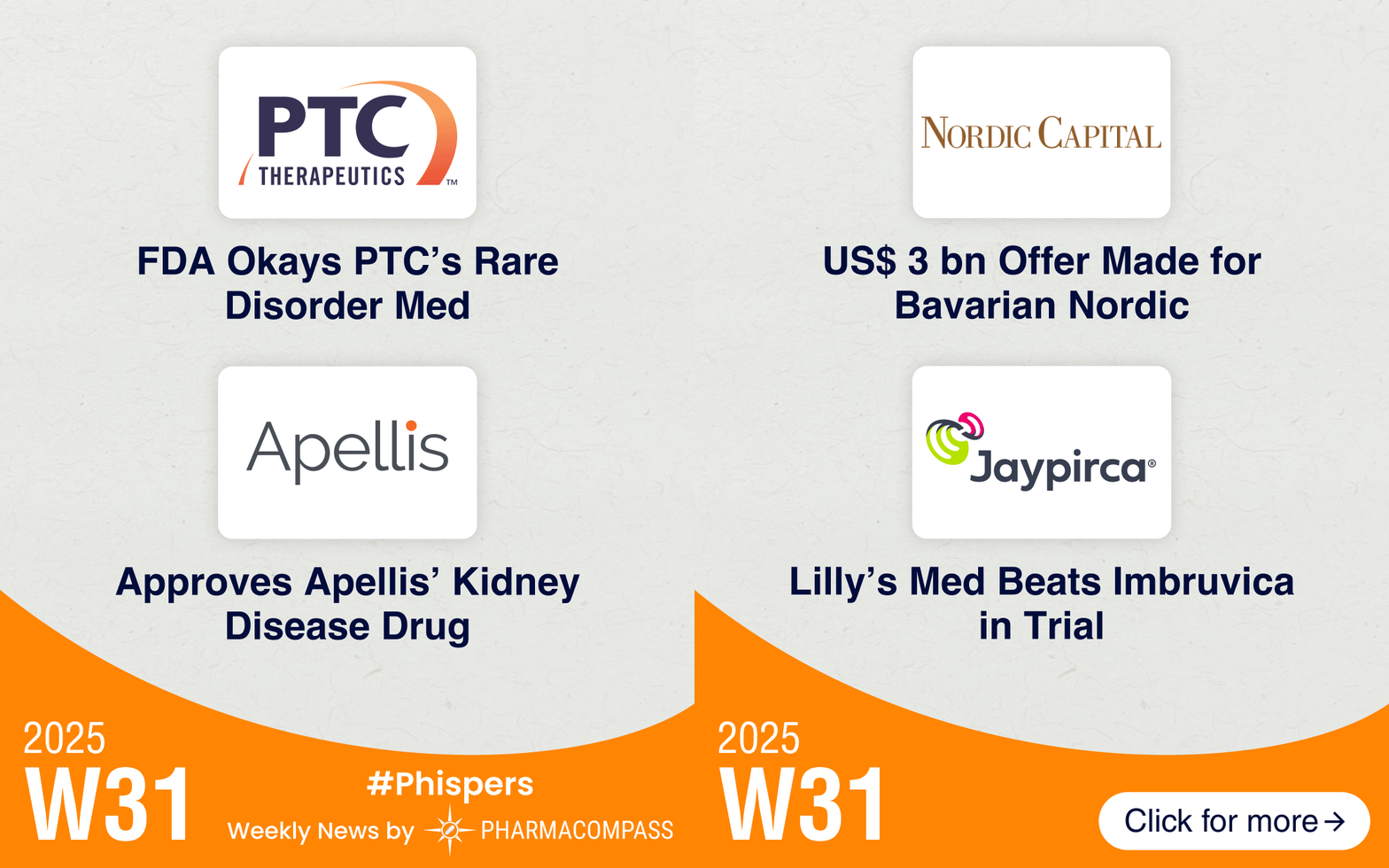
The US Food and Drug Administration (FDA) has approved PTC Therapeutics’ oral drug to treat a rare genetic disorder known as phenylketonuria (PKU). The agency also okayed Apellis Pharmaceutical’s Empaveli to treat two rare kidney disorders.There was news about two likely buyouts. First, a consortium led by Nordic Capital and Permira have made an offer of around US$ 3 billion to buy vaccine maker Bavarian Nordic. And a Bloomberg report said AbbVie is in talks to acquire privately-owned mental health therapeutics company Gilgamesh Pharmaceuticals for around US$ 1 billion.In deals, GSK signed an up to US$ 12 billion biobucks deal with China’s Hengrui Pharma to work on up to 12 drugs in the respiratory, immunology, inflammation and oncology space. Novartis entered into an exclusive deal with Matchpoint Therapeutics to develop drugs for a number of inflammatory diseases.Madrigal Pharmaceuticals signed a licensing deal with China’s CSPC Pharma Group for a liver disease drug. And Boehringer Ingelheim and Re-Vana Therapeutics announced an agreement to develop therapies for eye diseases.In a head-to-head study, Eli Lilly’s blood cancer drug Jaypirca (pirtobrutinib) was found to be more effective than AbbVie’s Imbruvica. And AstraZeneca’s experimental therapy, gefurulimab, met the primary goal and all secondary endpoints in a late-stage study aimed at improving symptoms of generalized myasthenia Gravis (gMG), a rare autoimmune condition.In other news, the European Commission signed a trade deal with the US, which is likely to result in higher drug prices for Americans. And Vinay Prasad, FDA’s top vaccine official, has quit just three months after joining as the Director of the Center for Biologics Evaluation and Research (CBER).FDA approves PTC Therapeutics’ rare genetic disorder drugThe US Food and Drug Administration (FDA) has approved PTC Therapeutics’ oral drug — Sephience (sepiapterin) — to treat a rare genetic disorder known as phenylketonuria (PKU). Sephience is an oral therapy for both children and adults with PKU. In PKU, the body can’t properly break down an amino acid known as phenylalanine, leading to its buildup in the blood which can potentially damage the brain. The approval is based on the evidence of significant efficacy and safety from a phase 3 trial.Apellis’ med okayed for two rare kidney diseases: FDA has approved Apellis Pharmaceuticals’ Empaveli (pegcetacoplan) as the first treatment for two rare kidney diseases known as C3 glomerulopathy and primary immune complex membranoproliferative glomerulonephritis.Nordic Capital, Permira make US$ 3 billion offer for vaccine maker Bavarian NordicVaccine maker Bavarian Nordic has announced that a consortium led by Nordic Capital and Permira has made an offer of around US$ 3 billion to acquire it. The offer price marks a 21 percent premium over Bavarian Nordic’s stock closing price of July 23, 2025. According to a press statement, the board of Bavarian Nordic has found the offer to be attractive, and has recommended that the “Bavarian Nordic shareholders accept” the offer when made.GSK signs US$ 12 bn biobucks deal with Hengrui: GSK has signed an up to US$ 12 billion biobucks deal with China’s Hengrui Pharma to work on up to 12 drugs. GSK is paying Hengrui US$ 500 million upfront. The programs were selected to complement GSK’s extensive respiratory, immunology, inflammation and oncology pipelines.Madrigal in deal with CSPC to develop liver drug: American drugmaker Madrigal Pharmaceuticals has signed a licensing deal with China’s CSPC Pharma Group for a liver disease drug. The deal could be potentially worth US$ 2 billion.Novartis in US$ 1 bn deal with Matchpoint; AbbVie may acquire GilgameshMatchpoint Therapeutics, a biotechnology company, has entered into an exclusive option and license agreement with Novartis for the development and commercialization of several oral drugs to treat various inflammatory diseases. Matchpoint is likely to receive up to US$ 60 million in upfront payment and research funding, with up to US$ 1 billion in total potential payments.AbbVie in talks to buy Gilgamesh: AbbVie is in talks to acquire privately-owned mental health therapeutics company Gilgamesh Pharmaceuticals in a deal that could be worth about US$ 1 billion, a Bloomberg news report said.Boehringer signs deal with Re-Vana: Boehringer Ingelheim and Re-Vana Therapeutics have announced a strategic collaboration and license agreement that aims to develop first-in-class extended-release therapies for eye diseases.Europe-US trade deal could result in higher drug prices for AmericansOn 27 July 2025, European Commission President Ursula von der Leyen and US President Donald Trump agreed on a trade deal. This deal is said to cost the pharmaceutical industry between US$ 13 billion and US$ 19 billion as branded medicines become subject to a tariff of 15 percent. Though this tariff rate is much lower than the levies of up to 200 percent that Trump had threatened Europe with, it stands to add billions of dollars in expenses for the drug industry and could lead to price increases for some medicines.FDA’s top vaccine official resigns: Vinay Prasad, FDA’s top vaccine official, has left the agency after just three months of joining it as the Director of the Center for Biologics Evaluation and Research (CBER). Of late, Prasad had faced criticism for the agency’s handling of Sarepta Therapeutics’ gene therapy for Duchenne muscular dystrophy. Prasad, was also a fierce critic of America’s Covid vaccine and mask mandates. George Tidmarsh, who was recently appointed as head of FDA’s Center for Drug Evaluation and Research, will also be the acting CBER director.Lilly’s leukemia med Jaypirca beats AbbVie’s Imbruvica in head-to-head trialIn a head-to-head study, Eli Lilly’s blood cancer drug Jaypirca (pirtobrutinib) was found to be more effective than AbbVie’s Imbruvica (ibrutinib) when tested in both untreated and previously treated patients. Jaypirca was tested in patients with chronic lymphocytic leukemia or small lymphocytic lymphoma, two kinds of blood cancer.Astra’s rare disease drug scores trial win: AstraZeneca experimental therapy, gefurulimab, met the primary goal and all secondary endpoints in a late-stage study aimed at improving symptoms of generalized myasthenia Gravis (gMG), a rare autoimmune condition that affects muscle function. The therapy reduced the severity of gMG in adults and improved functional activities, when compared with placebo at 26 weeks.Meanwhile, Alfasigma’s Jyseleca (filgotinib) met its primary endpoint in treating adults with active axial spondyloarthritis (axSpA), a type of inflammatory arthritis, in a phase 3 trial. Filgotinib is currently approved for the treatment of moderate to severe active rheumatoid arthritis (RA) and ulcerative colitis (UC).  

Impressions: 1247

https://dev1.pharmacompass.com/radio-compass-phisper/consortium-makes-us-3-bn-offer-to-buy-bavarian-nordic-fda-approves-ptc-s-rare-genetic-disorder-drug

#Phispers by PHARMACOMPASS
31 Jul 2025

NEWS LIBRARY

24read-more
read-more

https://www.prnewswire.com/news-releases/ptc-therapeutics-provides-corporate-update-and-reports-third-quarter-2026-financial-results-302924188.html

PR NEWSWIRE
29 Oct 2026

https://www.prnewswire.com/news-releases/ptc-therapeutics-announces-new-sephience-sepiapterin-data-reinforcing-broad-patient-benefits-including-sustained-metabolic-control-and-diet-liberalization-as-well-as-consistent-favorable-safety-profile-302857832.html

PR NEWSWIRE
24 Aug 2026

https://www.prnewswire.com/news-releases/ptc-therapeutics-provides-corporate-update-and-reports-second-quarter-2026-financial-results-302839385.html

PR NEWSWIRE
30 Jul 2026

https://www.prnewswire.com/news-releases/ptc-therapeutics-provides-corporate-update-and-reports-first-quarter-2026-financial-results-302766205.html

PR NEWSWIRE
08 May 2026

https://www.prnewswire.com/news-releases/ptc-therapeutics-provides-corporate-update-and-reports-fourth-quarter-and-full-year-2025-financial-results-302693077.html

PR NEWSWIRE
19 Feb 2026

https://www.prnewswire.com/news-releases/ptc-therapeutics-provides-update-at-jp-morgan-annual-healthcare-conference-302658410.html

PR NEWSWIRE
12 Jan 2026
digital-content135398579##p