Please Wait
Applying Filters...
Menu

Digital Content read-more

Create Content with PharmaCompass, ask us

PHARMA & BIOTECH INSIGHTS

1read-more
read-more

A PHP Error was encountered

Severity: 8192

Message: mb_convert_encoding(): Handling HTML entities via mbstring is deprecated; use htmlspecialchars, htmlentities, or mb_encode_numericentity/mb_decode_numericentity instead

Filename: blog/grid.php

Line Number: 52

Backtrace:

File: /var/www/html/application/views/include/media/blog/grid.php
Line: 52
Function: mb_convert_encoding

File: /var/www/html/application/models/Cmn.php
Line: 3595
Function: view

File: /var/www/html/application/views/include/product/digitalContent/grid.php
Line: 17
Function: common

File: /var/www/html/application/views/include/desc/inner.php
Line: 13
Function: view

File: /var/www/html/application/views/include/desc/indexNew.php
Line: 2433
Function: include

File: /var/www/html/application/controllers/Common.php
Line: 11303
Function: view

File: /var/www/html/index.php
Line: 231
Function: require_once

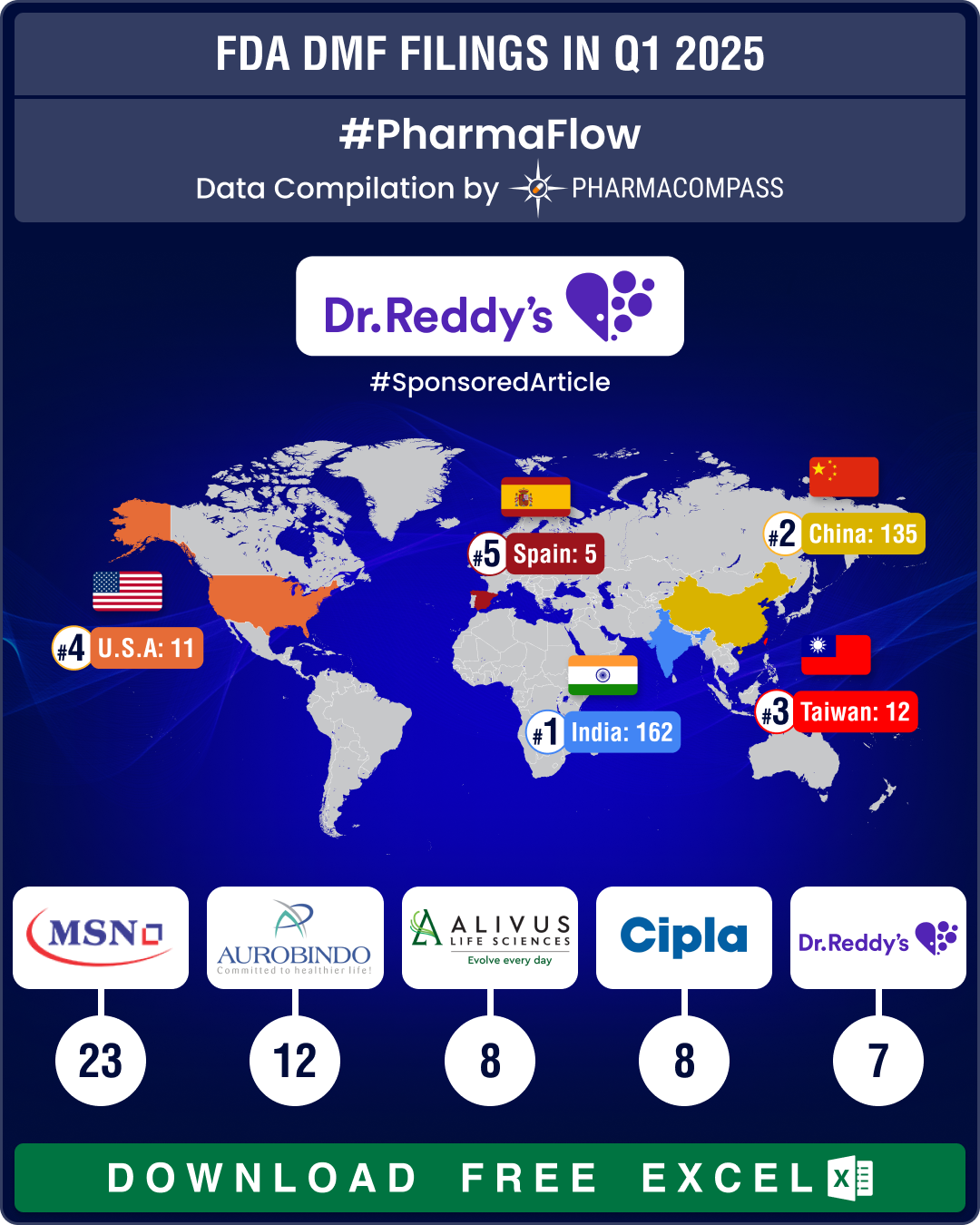
DMF filings surge 44% in Q1 2025; India tops list with 51% rise in year-on-year submissions
The first quarter (Q1) of 2025 witnessed an impressive surge in Drug Master File (DMF) submissions to the US Food and Drug Administration (FDA), signaling a robust expansion in pharmaceutical development activities, the looming threat of tariffs notwithstanding. A total of 339 Type II DMFs were submitted during this period, as opposed to 235 submissions in Q1 2024, marking an exceptional increase of 44.26 percent. PharmaCompass’ data suggests that this is a record high for any first quarter. Overall, 440 DMFs were submitted across all categories (Types II, III, IV, and V) during Q1 2025, compared to 353 in the same period last year — representing a 24.65 percent increase. India and China continued to dominate the DMF landscape. India led with 162 submissions in Q1 2025, posting a remarkable 51.4 percent increase over 107 submissions recorded in Q1 2024. China followed with 136 submissions, representing a 33.66 percent increase over the 101 filings in Q1 2024. Taiwan sprung a surprise as a distant third. It made 12 DMF submissions in Q1 2025, as opposed to just one in Q1 2024. Western countries like the US, Spain, Germany, and Italy have maintained relatively stable or declining submission rates. Only the Netherlands showed significant growth with four DMF submissions in Q1 2025, up from zero in Q1 2024.  View FDA DMF Filings in Q1 2025 (Power BI Dashboard, Free Excel Available) Indian giants MSN, Aurobindo, Cipla, Dr Reddy’s lead record-breaking DMF surge  India lived up to its “pharmacy of the world” reputation with the highest DMF submissions. In fact, seven of the top eight companies in the DMF tally were headquartered in India. MSN Group, emerged as the unequivocal leader with 23 submissions in Q1 2025, as against 15 in Q1 2024.  Aurobindo Pharma increased its DMF activity from seven submissions in Q1 2024 to 12 in Q1 2025. Alivus Life Sciences, formerly known as Glenmark, made a dramatic leap with eight submissions in Q1 2025, quadrupling its previous year’s count of just two. Cipla more than doubled its DMF submissions — from three in Q1 2024 to eight in Q1 2025. Dr. Reddy’s Laboratories, one of India’s largest generic drugmakers, filed seven DMF submissions. The company’s Q1 2025 DMF portfolio includes high-value molecules like deucravacitinib, finerenone, enzalutamide, niraparib tosylate monohydrate, tucatinib, and tizanidine hydrochloride. Dr. Reddy’s has also indicated that they are open to manufacturing in the US. Meanwhile, Hetero Drugs filed seven submissions while Lee Pharma recorded six in Q1 2025. Chinese manufacturer Jiangsu East-Mab Biomedical Technology also established a significant presence with six DMFs. Semaglutide, finerenone see most DMF submissions; first-time filings surge 64% Semaglutide and finerenone emerged as the most documented molecules in Q1 2025, each garnering nine DMF submissions. Semaglutide, a glucagon-like peptide-1 (GLP-1) receptor agonist that has revolutionized diabetes management and weight loss treatment, continues to attract significant manufacturer interest. Similarly, finerenone, a non-steroidal drug used in treating chronic kidney disease in type 2 diabetes patients, has garnered attention from manufacturers. Carfilzomib, used in multiple myeloma treatment, secured the third position with five DMF submissions. Deucravacitinib, a novel drug approved for moderate to severe plaque psoriasis, followed with four DMF submissions. There were several molecules with three DMF submissions each. Among them were tapinarof, a novel drug for psoriasis, and tirzepatide, a GLP-1/GIP receptor agonist that has shown remarkable efficacy in diabetes and weight management.  During the quarter, 23 molecules received their inaugural DMF submissions. This number has risen by 64 percent since Q1 2024, when only 14 drugs saw their first DMF filings. In Q1 2025, these 23 first-time molecules collectively garnered 30 DMF submissions, with deucravacitinib emerging as the clear leader. Indian companies Dr. Reddy’s Laboratories and Cipla filed DMFs for this plaque psoriasis treatment as did Spain’s Curia and PMC Global. The Q1 2025 roster of first-time DMF filings include retatrutide (another GLP-1 receptor agonist), sotagliflozin, setmelanotide acetate, daridorexant, nusinersen, zavegepant, belzutifan, elacestrant dihydrochloride, selumetinib sulfate, sotorasib, atogepant, omadacycline tosylate, osilodrostat phosphate, ensifentrine, landiolol hydrochloride, maralixibat chloride, maribavir, methyl olivetolate, diazoxide choline, sparsentan, thinnertide, and vismodegib. Our view Given Trump’s rhetoric around tariffs on imported drugs, the record-breaking DMF submissions in Q1 2025 sent out a strong message that the global pharmaceutical industry is willing to take on the complex geopolitical situation with resilience and strategic foresight. On a different note, the rise in DMF filings also indicate increased workload for the FDA staff, as also more inspections by the agency. It seems like more ‘laid off’ FDA employees will be asked to return to work in the coming days.

Impressions: 5597

https://dev1.pharmacompass.com/radio-compass-blog/dmf-filings-surge-44-in-q1-2025-india-tops-list-with-51-rise-in-year-on-year-submissions

#PharmaFlow by PHARMACOMPASS
15 May 2025

MARKET PERFORMANCE RECAP

1read-more
read-more
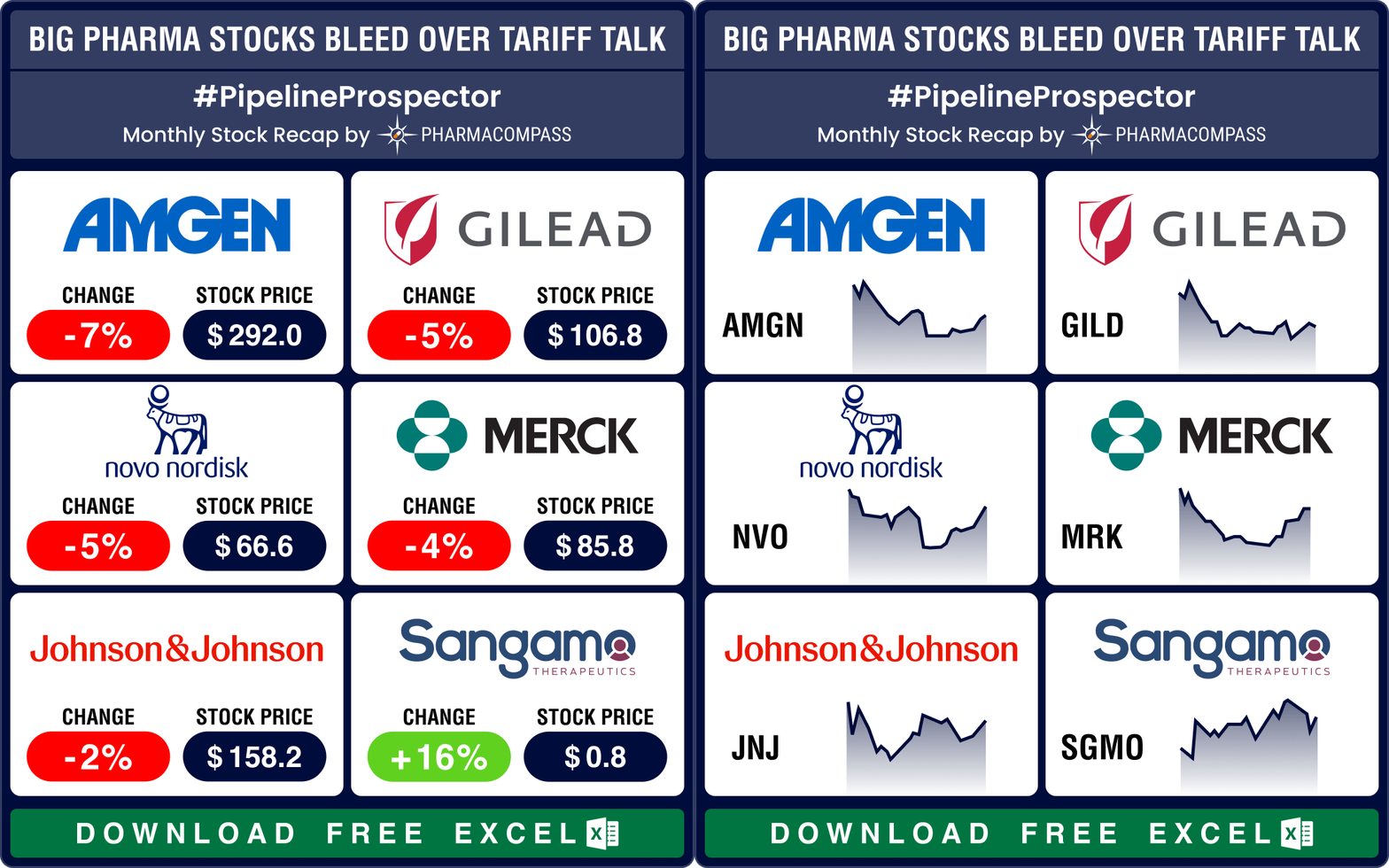
Pipeline Prospector April 2025: Merck KGaA buys SpringWorks for US$ 3.9 bn; Swiss giants lead pharma migration to US soil
April witnessed considerable volatility in pharmaceutical stocks as the US President Donald Trump’s administration signaled major shifts in drug pricing policies and import regulations. These include Trump’s proposed international reference pricing to align US drug prices with lower costs in other developed countries, a national security investigation into pharmaceutical imports that could lead to tariffs of 25 percent or more on foreign-made drugs and, a sweeping executive order to reshape Medicare drug pricing. However, as the month drew to a close, key pharmaceutical indices rebounded and were back in the black. The Nasdaq Biotechnology Index (NBI) rose 0.44 percent from 4,241.91 to 4,260.42. The SPDR S&P Biotech ETF (XBI) rose 2.58 percent — from 80.86 to 82.95. And the S&P Biotechnology Select Industry Index (SPSIBI) increased 0.91 percent — from 6,319.47 to 6,376.95. However, stocks of most drugmakers ended the month in the red.  Access the Pipeline Prospector Dashboard for April 2025 Newsmakers (Free Excel) Trump’s tariff threats prompt drug majors to announce investments in US  The unrest created by Trump’s tariff threat on drug imports was palpable across the world. In Europe, CEOs of nearly three dozen global drugmakers, including Pfizer, Eli Lilly, and AstraZeneca, warned European Commission President Ursula von der Leyen that without "rapid, radical policy change", over US$ 100 billion in pharma R&D and manufacturing could leave the European Union. These drugmakers are pushing for abandonment of price controls to match US pricing levels.  Global players are also rapidly reorienting their manufacturing strategies towards the US soil in order to avoid imminent tariffs on imported medicines. For instance, Swiss pharmaceutical giant Roche has announced a massive US$ 50 billion investment in the US over the next five years. Another Swiss drugmaker, Novartis, has committed US$ 23 billion to expand its US operations over the next five years. Meanwhile, AstraZeneca has said it will be shifting the production of some drugs sold in America from Europe to the US in order to avoid Trump’s tariffs. Even American drugmaker AbbVie plans to invest US$ 10 billion in US manufacturing over the next decade to avoid tariffs. Regeneron Pharmaceuticals has taken a different approach by announcing an investment exceeding US$ 3 billion through a 10-year strategic partnership with Fujifilm Diosynth Biotechnologies. This collaboration aims to nearly double Regeneron’s US production capacity for biologic medicines. Merck buys SpringWorks for US$ 3.9 bn; GSK inks US$ 2.7 bn deal with ABL Bio This was going to be a year of mergers and acquisitions. But with the imminent policy changes in America’s healthcare sector, M&A activity appears to have slowed down. However, the last days of April saw two M&A announcements — Merck KGaA entered into a deal to buy US biotech company SpringWorks Therapeutics for US$ 3.9 billion, and Novartis announced the acquisition of Regulus Therapeutics for up to US$ 1.7 billion. The month saw several licensing deals. GSK signed a licensing agreement valued at approximately £ 2.08 billion (US$ 2.66 billion) with South Korea’s ABL Bio for exclusive access to ABL’s innovative Grabody-B brain delivery platform, a technology designed to enhance the penetration of therapeutic antibodies across the notoriously selective blood-brain barrier (BBB). The BBB acts as the body’s natural defense to protect the brain from toxins and pathogens. Similarly, Eli Lilly inked a US$ 1.4 billion licensing agreement with Sangamo Therapeutics to gain access to Sangamo’s proprietary neurotropic adeno-associated virus (AAV) capsid, STAC-BBB, which has shown remarkable potential in crossing the BBB. In the autoimmune and immunology space, Sanofi signed an exclusive licensing agreement with US biotech Earendil Labs valued at up to US$ 1.8 billion. The agreement centers on two next-generation bispecific antibodies, HXN-1002 and HXN-1003, discovered through Earendil's AI-driven high-throughput protein modeling platform. Lilly’s obesity pill matches Ozempic in trial; Novo seeks FDA nod for semaglutide pill In the market for obesity meds, Eli Lilly’s experimental weight-loss pill, orforglipron, demonstrated efficacy that was comparable to its rival Novo Nordisk’s injectable Ozempic. Analysts view orforglipron pill as a potential game-changer in obesity treatment. Meanwhile, Novo Nordisk has sought FDA approval for a 25-mg pill version of its weight loss medication semaglutide. And Rhythm Pharmaceuticals’ drug, Imcivree (setmelanotide), achieved primary endpoint in a late-stage trial for acquired hypothalamic obesity, a rare condition resulting from damage to the brain’s hypothalamus. Meanwhile, in a high profile trial failure, Pfizer discontinued development of its experimental oral weight-loss pill, danuglipron, following a case of potential drug-induced liver injury in a clinical trial participant. Another significant disappointment came from BMS’ investigational schizophrenia drug, Cobenfy (xanomeline and trospium chloride) — it failed to meet the primary endpoint in a pivotal late-stage trial evaluating its use as an adjunctive treatment for patients who no longer respond to standard antipsychotics. Adding to the month’s disappointments, FDA declined to approve Aldeyra Therapeutics’ dry eye disease treatment, reproxalap, for the second time. Amgen’s Uplizna, Sanofi’s Dupixent among noteworthy FDA approvals Amgen received a groundbreaking approval for Uplizna (inebilizumab-cdon) as the first and only treatment for immunoglobulin G4-related disease (IgG4-RD), a rare and chronic immune-mediated inflammatory condition. Analysts estimate that Uplizna could generate global annual sales of US$ 1.3 billion by 2030 for the IgG4-RD indication alone.  Sanofi and Regeneron received FDA approval for Dupixent (dupilumab) to treat chronic spontaneous urticaria (CSU) in patients aged 12 and older who remain symptomatic despite antihistamine therapy. Sanofi’s bestselling drug is now FDA-approved for seven indications. As the month drew to a close, FDA approved Abeona Therapeutics’ gene therapy — Zevaskyn (prademagene zamikeracel) — for a rare skin disorder known as recessive dystrophic epidermolysis bullosa. It also approved Johnson & Johnson’s Imaavy (nipocalimab-aahu), a drug that treats patients aged 12 years and older with a form of generalized myasthenia gravis (gMG) — an immunity-related disorder that weakens the skeletal muscles, especially those in the eyes, mouth, throat and limbs. Our view The US economy contracted by 0.3 percent during the first quarter of 2025, as businesses panicked and imported goods to avoid higher costs. The US dollar has been weakening, and has hit a fresh low against the euro, Japanese yen and the Swiss franc. This will reduce the profit of foreign companies from their US divisions once they remit their earnings back to their home country. A study undertaken by Ernst & Young has predicted that a 25 percent US tariff on drug imports would increase drug cost by nearly US$ 51 billion annually, thereby boosting drug prices in America by 12.9 percent. These and other cues only point to the fact that Trump administration’s policies will hurt the US. As of today, a rollback or a softening of stand looks like a distant possibility.

Impressions: 6342

https://dev1.pharmacompass.com/pipeline-prospector-blog/pipeline-prospector-april-2025-merck-kgaa-buys-springwork-for-us-3-9-bn-swiss-giants-lead-pharma-migration-to-us-soil

#PharmaFlow by PHARMACOMPASS
01 May 2025

WEEKLY INDUSTRY NEWS

1read-more
read-more
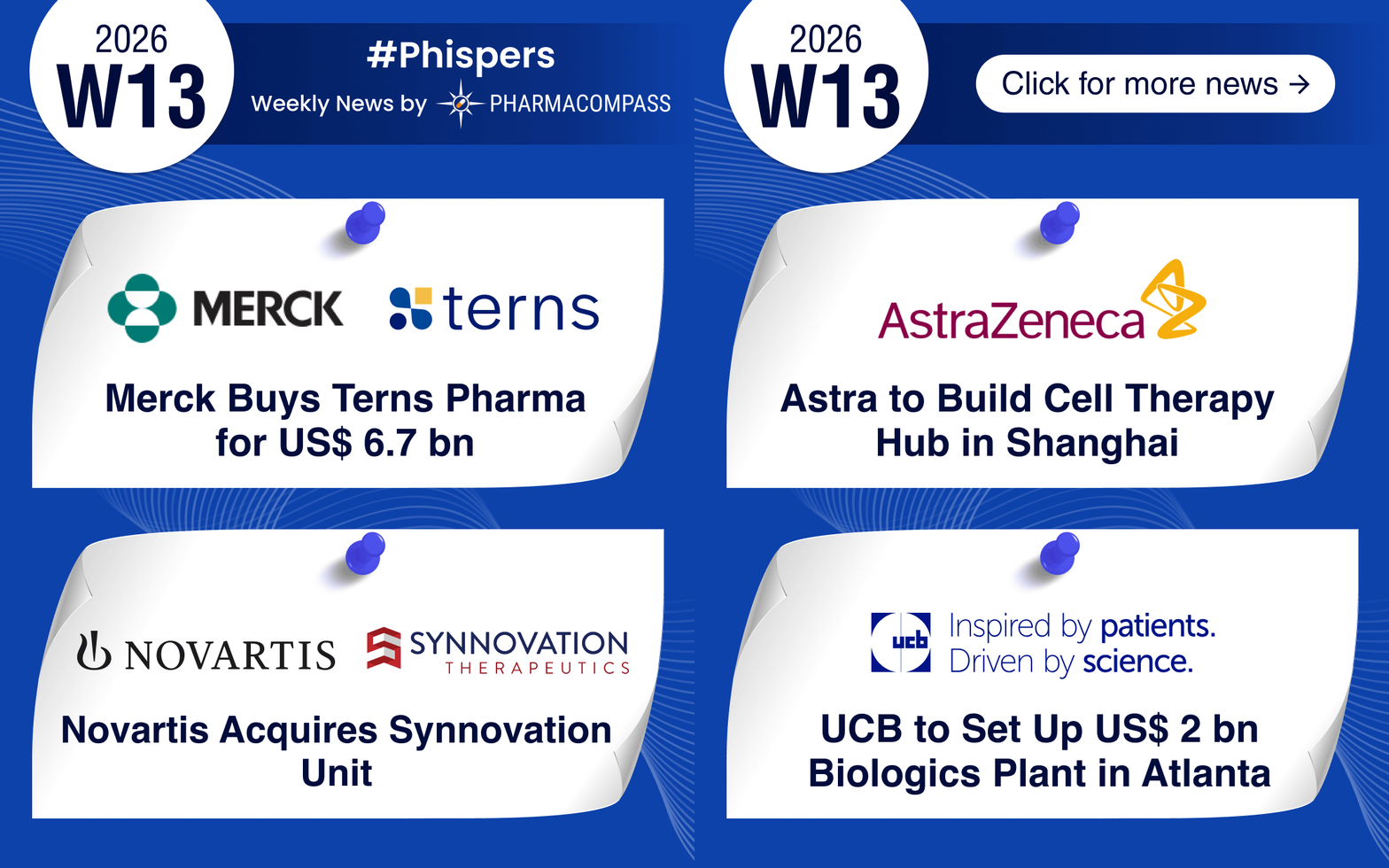
Merck buys Terns Pharma for US$ 6.7 bn to boost cancer portfolio; Novartis acquires Synnovation unit for up to US$ 3bn
This week’s Phispers is packed with news of drug approvals and M&As. Merck is preparing for its future post-Keytruda patent cliff. It made its third multi-billion-dollar acquisition in recent months by acquiring Terns Pharma for US$ 6.7 billion to bolster its cancer portfolio. Novartis has acquired Pikavation, a subsidiary of US biotech firm Synnovation Therapeutics, along with its portfolio of PI3Kα inhibitor programs. Sanofi has entered into a licensing agreement with biotech Kali Therapeutics to develop its experimental treatment for multiple autoimmune diseases. Gilead, meanwhile, has acquired privately held Ouro Medicines to expand its pipeline of autoimmune therapies.In drug approvals, the US Food and Drug Administration (FDA) has approved Bristol Myers Squibb’s Opdivo (nivolumab) for two new classical Hodgkin lymphoma indications in the US and Europe. Denali Therapeutics has secured its first FDA accelerated approval for a therapy targeting Hunter syndrome, a rare genetic disorder. The agency also approved GSK’s Lynavoy (linerixibat) for cholestatic pruritus, a severe itching condition associated with primary biliary cholangitis (PBC). FDA has also expanded the use of Rhythm Pharmaceuticals’ Imcivree (setmelanotide) to treat acquired hypothalamic obesity.In investments, AstraZeneca has said it plans to establish a cell therapy manufacturing and supply base, along with an innovation centre, in Shanghai. And UCB is setting up a new biologics manufacturing facility in Atlanta.Meanwhile, FDA has asked manufacturers of certain Parkinson’s disease treatments — levodopa and carbidopa — to update prescribing information with a new warning about a potential risk of seizures.Merck snaps up Terns Pharma for US$ 6.7 billion to boost cancer portfolioMerck is acquiring American biotech Terns Pharmaceuticals for US$ 6.7 billion. The clinical-stage biopharma is developing treatments for a rare form of blood and bone cancer. The deal is likely to close in the second quarter of this year and is expected to bolster Merck’s cancer pipeline ahead of the patent expiry of its blockbuster cancer drug Keytruda (pembrolizumab) later this ‌decade. This is the third multi-billion-dollar acquisition for Merck in recent months. Novartis buys Synnovation subsidiary and its oncology programs for up to US$ 3 bnNovartis has acquired Pikavation Therapeutics, a subsidiary of US biotech firm Synnovation Therapeutics, and its portfolio of PI3Kα inhibitor programs, including an experimental breast cancer drug candidate — SNV4818 — for up ‌to US$ 3 billion. The company will pay Synnovation US$ 2 billion upfront and up to US$ 1 billion contingent on further development achievements.Sanofi in licensing deal with Kali Therapeutics: Sanofi has entered into a licensing agreement with biotech Kali Therapeutics to develop the firm’s experimental treatment for autoimmune diseases. Under the deal, Sanofi will obtain global rights to KT501, a tri-specific antibody, which is currently being tested in rheumatoid arthritis. Kali Therapeutics will receive US$ 180 million in upfront and near-term payments and is eligible for up to US$ 1.05 billion in development and commercial milestone payments.Gilead to buy Ouro Medicines: Gilead Sciences is acquiring Ouro Medicines, a privately held biotechnology company, for US$ 2.18 billion to expand its pipeline of therapies for autoimmune diseases. Gilead will pay US$ 1.68 billion in cash upfront to buy Ouro, and an additional US$ 500 million upon meeting certain milestones. Ouro’s experimental antibody drug, OM336, is in early-stage trials to treat autoimmune conditions, including hemolytic anemia and Sjogren’s disease.US, Europe okay BMS’ Opdivo combo to treat two Hodgkin’s lymphoma indicationsBristol Myers Squibb’s Opdivo (nivolumab) has received approval for two new classical Hodgkin lymphoma indications in the US and Europe. In the US, FDA has approved Opdivo in combination with doxorubicin, vinblastine and dacarbazine as treatment for adults and adolescents aged 12 and older ‌with previously untreated stage 3 or 4 classical Hodgkin’s lymphoma, the most common cancer diagnosed in adolescents aged 15 to 19, the company said.Additionally, the European Commission has approved Opdivo, in combination with brentuximab vedotin, for the treatment of children five years of age and older, adolescents, and adults up to 30 years of age with relapsed or refractory Hodgkin’s lymphoma after one prior line of therapy.Opdivo is already approved to treat various advanced or metastatic cancers, including melanoma, non-small cell lung cancer, and kidney cancer.Denali’s therapy for Hunter syndrome okayed: Denali Therapeutics has received its first FDA approval. Its therapy Avlayah (tividenofusp alfa-eknm) was granted an accelerated approved to treat children with Hunter syndrome, ‌a rare genetic disorder caused by the buildup of certain sugar molecules in the brain and body. It leads to developmental delays, cognitive decline and behavioral abnormalities. However, the agency has asked for a confirmatory trial for continuation of the approval.Rhythm’s therapy to treat hypothalamic obesity: FDA has expanded the use of Rhythm Pharmaceuticals’ Imcivree (setmelanotide) to treat patients living with acquired hypothalamic obesity (HO), a rare disease characterized by accelerated and sustained weight gain caused by an injury to the hypothalamus.FDA approves GSK’s drug for treating liver disease-related itchingFDA has approved GSK’s Lynavoy (linerixibat) for cholestatic pruritus, or severe itching experienced by patients living with a liver disease known as primary biliary cholangitis (PBC). Lynavoy is the first medicine approved in the US for this condition. Earlier this month, GSK had announced it has struck a licensing agreement under which Alfasigma will acquire worldwide exclusive rights to develop, manufacture, and commercialize linerixibat.Flags seizure risk with certain Parkinson’s drugs: FDA has notified manufacturers of certain Parkinson’s disease treatments — levodopa and carbidopa — to update their prescribing information with a new warning about ‌a potential risk of seizures. These drugs should state that they can cause vitamin B6 deficiency and seizures associated with it.Astra to build cell therapy base, innovation centre in Shanghai; UCB invests US$ 2 bn in AtlantaAstraZeneca announced it will build a cell therapy manufacturing and supply base and an innovation centre ‌in Shanghai. This will make AstraZeneca the first global drugmaker with end-to-end cell therapy capabilities in China. The facility will make and supply CAR‑T cell therapies for China and other Asian markets, and is part of the US$ 15 billion investment pledge made by AstraZeneca earlier this year.UCB’s biologics plant: Belgian pharmaceutical company UCB has selected Gwinnett County, Georgia as the location for setting up its new US biologics manufacturing facility. It will be built on an investment of US$ 2 billion. 

Impressions: 1134

https://dev1.pharmacompass.com/radio-compass-phisper/merck-buys-terns-pharma-for-us-6-7-bn-to-boost-cancer-portfolio-novartis-acquires-synnovation-unit-for-up-to-us-3bn

#Phispers by PHARMACOMPASS
26 Mar 2026

NEWS LIBRARY

75read-more
read-more

https://www.globenewswire.com/news-release/2026/08/11/3342640/0/en/rhythm-pharmaceuticals-announces-imcivree-setmelanotide-receives-expanded-marketing-authorization-in-the-united-kingdom-for-treatment-of-obesity-and-control-of-hunger-in-patients-w.html

GLOBENEWSWIRE
11 Aug 2026

https://www.globenewswire.com/news-release/2026/06/12/3311304/0/en/rhythm-pharmaceuticals-to-announce-interim-six-month-phase-2-results-evaluating-setmelanotide-in-patients-with-prader-willi-syndrome.html

GLOBENEWSWIRE
12 Jun 2026

https://www.globenewswire.com/news-release/2026/05/04/3286656/0/en/rhythm-pharmaceuticals-announces-new-data-presentations-in-acquired-hypothalamic-obesity-at-pediatric-endocrine-society.html

GLOBENEWSWIRE
04 May 2026

https://firstwordpharma.com/story/7259127

FIRSTWORD PHARMA
01 May 2026

https://www.globenewswire.com/news-release/2026/03/26/3263104/0/en/Rhythm-Pharmaceuticals-Receives-Positive-CHMP-Opinion-for-IMCIVREE-setmelanotide-for-the-Treatment-of-Obesity-and-Control-of-Hunger-in-Patients-with-Acquired-Hypothalamic-Obesity-d.html

GLOBENEWSWIRE
26 Mar 2026

https://www.prnewswire.com/news-releases/pantherx-rare-selected-by-rhythm-pharmaceuticals-inc-as-the-exclusive-us-specialty-pharmacy-for-the-expanded-indication-for-imcivree-setmelanotide-302720005.html

PR NEWSWIRE
20 Mar 2026
digital-content11993702##p