Please Wait
Applying Filters...
Menu

Digital Content read-more

Create Content with PharmaCompass, ask us

PHARMA & BIOTECH INSIGHTS

1read-more
read-more

A PHP Error was encountered

Severity: 8192

Message: mb_convert_encoding(): Handling HTML entities via mbstring is deprecated; use htmlspecialchars, htmlentities, or mb_encode_numericentity/mb_decode_numericentity instead

Filename: blog/grid.php

Line Number: 52

Backtrace:

File: /var/www/html/application/views/include/media/blog/grid.php
Line: 52
Function: mb_convert_encoding

File: /var/www/html/application/models/Cmn.php
Line: 3595
Function: view

File: /var/www/html/application/views/include/product/digitalContent/grid.php
Line: 17
Function: common

File: /var/www/html/application/views/include/desc/inner.php
Line: 13
Function: view

File: /var/www/html/application/views/include/desc/indexNew.php
Line: 2433
Function: include

File: /var/www/html/application/controllers/Common.php
Line: 11303
Function: view

File: /var/www/html/index.php
Line: 231
Function: require_once

FDA okays 50 new drugs in 2024; BMS’ Cobenfy, Lilly’s Kisunla lead pack of breakthrough therapies
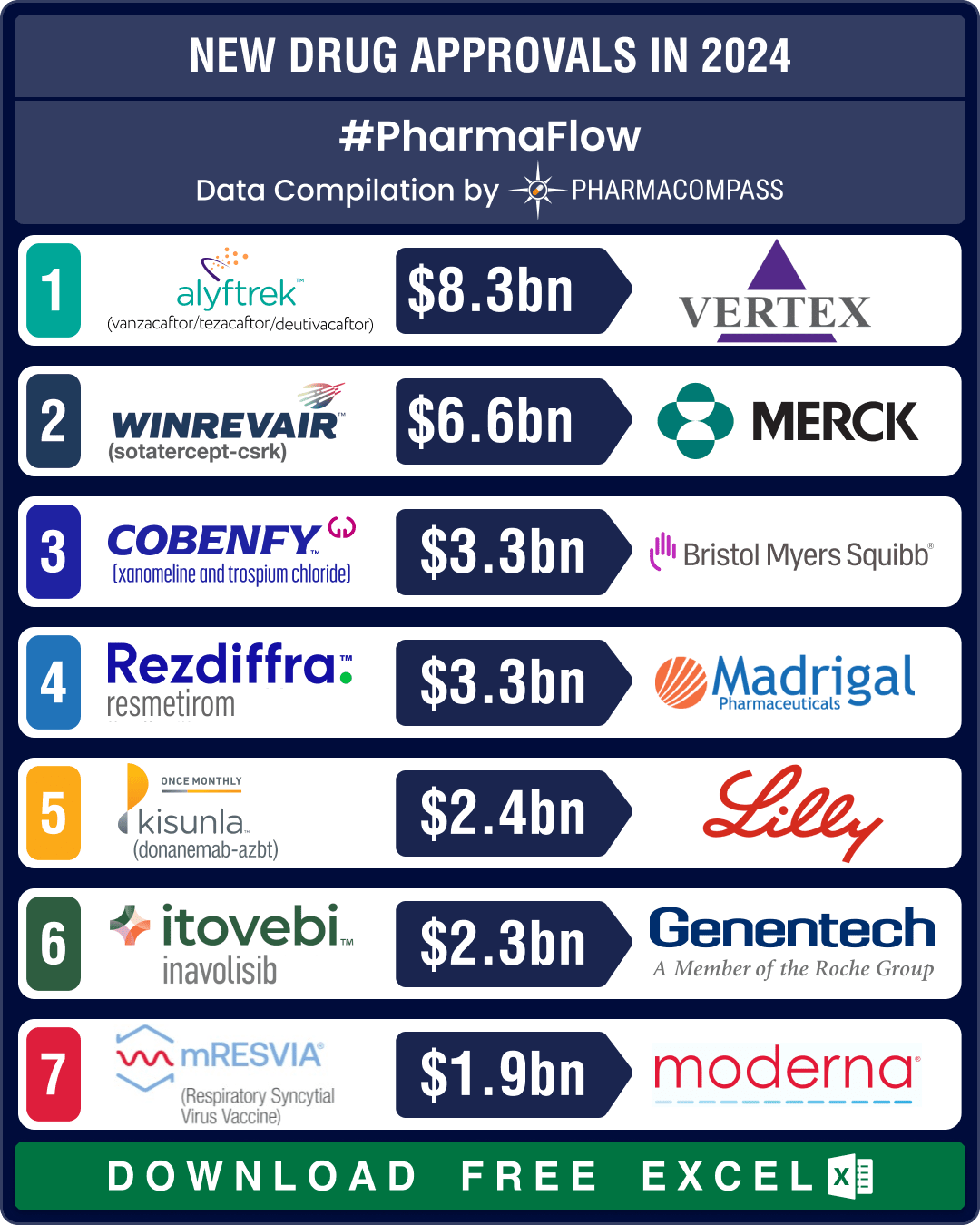
In 2024, the biopharma industry continued to advance on its robust trajectory of innovation. Though the US Food and Drug Administration’s Center for Drug Evaluation and Research (CDER) and the Center for Biologics Evaluation and Research (CBER) approved fewer drugs, there was a significant increase in medical breakthroughs.  While the CDER approved 50 new drugs in 2024, as compared to 55 in 2023, the CBER granted 14 biologics approvals in 2024, down from 20 in 2023. The European Medicines Agency (EMA) approved 34 new therapies, up from 32 in 2023, while Health Canada granted 28 approvals, down from 38 in 2023. The year saw long-awaited treatments being approved in areas such as schizophrenia and Alzheimer’s disease in the second half (H2) of 2024. In H1 2024, drugs to treat metabolic dysfunction-associated steatohepatitis (MASH) and chronic obstructive pulmonary disease (COPD) had been granted FDA approvals. As the year drew to a close, FDA began approving drugs at a feverish pace, with 29 of the CDER’s 50 approvals coming in H2. Like most years, the landscape of drug approvals was dominated by oncology, with 15 of the 50 drugs (30 percent) approved targeting various forms of cancer. This was followed by dermatology and non-malignant hematology, each accounting for 12 percent of approvals. Notably, small molecules continued to dominate the market, making up for 64 percent of the new drug approvals, while 32 percent were proteins, including monoclonal and bi-specific antibodies.  View New Drug Approvals in 2024 with Estimated Sales (Free Excel Available) Karuna-BMS’ schizophrenia drug, Lilly’s Alzheimer’s med, Neurocrine’s Crenessity dominate list of pathbreaking approvals in H2  Out of the 50 new drugs approved in 2024, CDER identified 24 (48 percent) as first-in-class, showcasing novel mechanisms of action. The most anticipated approval of 2024 was Karuna and Bristol Myers Squibb’s Cobenfy, a groundbreaking treatment for schizophrenia. This fixed-dose combination of xanomeline and trospium chloride represents the first novel mechanism of action in decades for this debilitating psychiatric condition. Analysts forecast peak annual sales of over US$ 3.3 billion for Cobenfy.  Eli Lilly’s Alzheimer’s drug Kisunla (donanemab) became the third amyloid-targeting antibody to gain FDA approval. Unlike its predecessors, Kisunla offers a unique limited-duration treatment regimen, allowing patients to discontinue therapy once amyloid levels in the brain drop below a certain threshold. Priced at approximately US$ 32,000 per year, it is positioned as a cost-effective alternative to existing treatments. Analysts estimate peak sales of US$ 2.4 billion for Kisunla. Crenessity (crinecerfont), developed by Neurocrine Biosciences, became the first FDA-approved treatment in decades for classic congenital adrenal hyperplasia (genetic conditions that affect the adrenal glands). Similarly, Vertex’s triple combination therapy of deutivacaftor, tezacaftor & vanzacaftor (Alyftrek) for cystic fibrosis represents a significant advancement in genetic disease treatment. Analysts forecast peak sales exceeding US$ 8.3 billion, underscoring the therapy’s potential to transform patient care. Meanwhile, Bridgebio’s Attruby (acoramidis hydrochloride) emerged as a promising treatment for cardiac amyloidosis, a life-threatening condition. Roche’s Itovebi, Checkpoint’s Unloxcyt clinch FDA approvals in H2 2024; forecast to achieve blockbuster status The dominance of cancer drug approvals reflects the ongoing focus on targeted therapies, immuno-oncology, and precision medicine to improve outcomes for patients with hard-to-treat cancers. Among the year’s notable FDA approvals was Genentech’s Itovebi (inavolisib), another targeted therapy that treats hormone receptor-positive (HR+), HER2-negative breast cancer. Itovebi is a PI3Kα inhibitor designed specifically for patients with PIK3CA mutations, a common driver of resistance to endocrine therapy in breast cancer. It demonstrated a more tolerable safety profile. Roche projects Itovebi’s peak (annual) sales to reach CHF 2 billion (US$ 2.3 billion). Checkpoint Therapeutics’ Unloxcyt (cosibelimab) joined the crowded checkpoint inhibitor market as the eleventh PD-1/PD-L1-targeting monoclonal antibody approved by the FDA. It was granted approval for cutaneous squamous cell carcinoma (cSCC), an aggressive form of skin cancer with high recurrence rates. As compared to other checkpoint inhibitors, like Keytruda (pembrolizumab) and Opdivo (nivolumab), Unloxcyt is likely to offer an advantage in immune activation. FDA also approved Astellas’ Vyloy (zolbetuximab), a first-in-class monoclonal antibody for metastatic gastric and gastroesophageal junction (GEJ) adenocarcinoma. Analysts forecast peak sales of approximately US$ 850 million for Vyloy. Syndax Pharmaceuticals’ Revuforj (revumenib) was approved by FDA to treat a type of acute leukemia in both adults and children. This approval introduces a novel class of medications known as menin inhibitors. These agents are currently in clinical development for the treatment of genetically defined subsets of acute leukemia. These inhibitors function by preventing the activation of cancer growth-related proteins. Potential blockbusters Lilly’s Ebglyss, Galderma’s Nemluvio lead advances in dermatology Eli Lilly’s Ebglyss (lebrikizumab) garnered significant attention. Approved by FDA for moderate-to-severe atopic dermatitis, this monoclonal antibody introduces a less burdensome dosing regimen compared to its competitors, with maintenance therapy required only once a month. This feature positions it as a potential contender to Dupixent (dupilumab), a market leader in atopic dermatitis. Ebglyss sales are forecast to reach US$ 1.9 billion by 2030. Galderma’s Nemluvio (nemolizumab) secured FDA approval for two indications in 2024 — prurigo nodularis (a chronic disorder of the skin) and moderate-to-severe atopic dermatitis in patients aged 12 years and older. As the first humanized IgG2 monoclonal antibody targeting the IL-31 receptor, Nemluvio directly inhibits the key driver of itch and inflammation in both these conditions. With its unique mechanism and broad dermatology potential, analysts forecast peak sales of approximately US$ 1.66 billion.  Ebglyss and Nemluvio underscore the growing importance of biologics in dermatological care. Botanix Pharmaceuticals also made strides in dermatology by clinching an FDA approval for Sofdra (sofpironium) in June. The drug has been okayed for the treatment of primary axillary hyperhidrosis, a condition characterized by excessive sweating. Ascendis Pharma’s Yorvipath (palopegteriparatide), a therapy approved by FDA to treat hypoparathyroidism, is forecast to achieve blockbuster sales of US$ 1.8 billion by 2030, highlighting its potential to transform endocrine care. Our view Overall, 2024 was defined by its breakthrough drug approvals. The year also saw significant reduction in complete response letters (CRLs) — they dropped from 43 in 2023 to just 29 in 2024. This suggests improved industry preparedness and alignment with regulatory expectations. The new year began with the approval of Datroway (datopotamab deruxtecan) from AstraZeneca and Daiichi Sankyo, marking a significant advancement in oncology. Several other promising new drugs are coming up for FDA approval this year, such as J&J’s nipocalimab, Vertex Pharmaceuticals’ suzetrigine, Elevar Therapeutics’ rivoceranib/camrelizumab, Sanofi’s fitusiran and GSK’s gepotidacin. Hopefully, the momentum of breakthrough approvals will continue through 2025, political headwinds in the US notwithstanding.

Impressions: 14618

https://dev1.pharmacompass.com/radio-compass-blog/fda-okays-50-new-drugs-in-2024-bms-cobenfy-lilly-s-kisunla-lead-pack-of-breakthrough-therapies

#PharmaFlow by PHARMACOMPASS
30 Jan 2025

WEEKLY INDUSTRY NEWS

5read-more
read-more
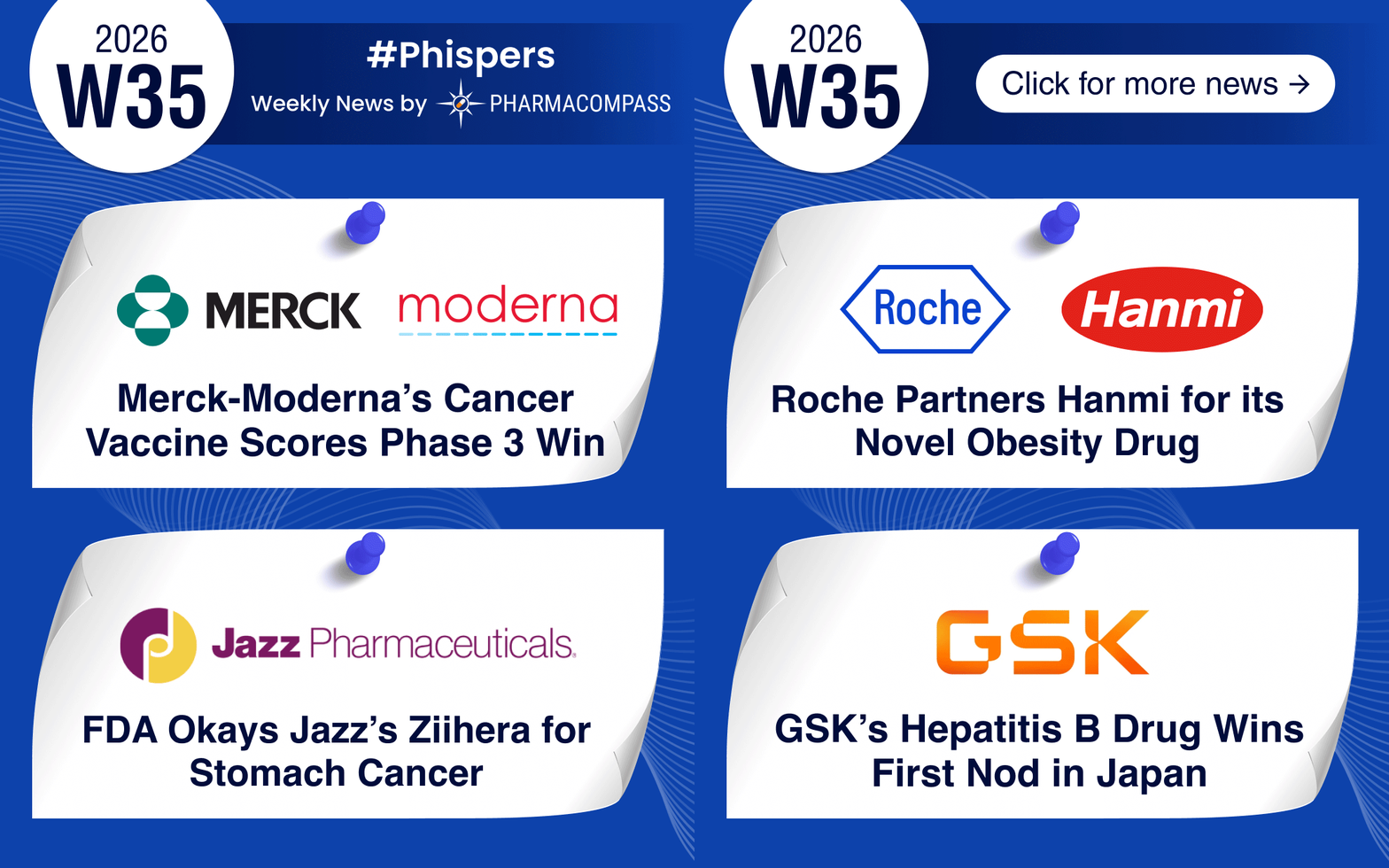
Merck, Moderna’s cancer vaccine slows melanoma recurrence in phase 3 trial; FDA clears Jazz’s Ziihera for stomach cancer
In Phispers this week, we bring you the first positive late-stage trial result for an mRNA cancer vaccine that trains a patient’s immune system to fight tumors. The vaccine, developed by Merck and Moderna, and given in combination with Keytruda (pembrolizumab), significantly delayed melanoma from returning in patients whose tumors had been surgically removed.In drug approvals, FDA cleared Jazz Pharmaceuticals’ Ziihera (zanidatamab-hrii) in two combinations as first-line treatment for HER2-positive advanced gastroesophageal adenocarcinoma. The agency also approved several drugs for rare diseases, including Regeneron Pharmaceuticals’ Pasatru (garetosmab-grts) for fibrodysplasia ossificans progressiva (FOP), Ultragenyx’s Genglycos (pariglasgene brecaparvovec-opnr) for glycogen storage disease type Ia (GSD1a) and Johnson & Johnson’s Imaavy (nipocalimab-aahu) for the treatment of warm autoimmune hemolytic anemia (wAIHA).Meanwhile, Japan’s health ministry approved GSK’s Hibsago (bepirovirsen) as a functional cure for chronic hepatitis B in adults who have taken antiviral pills for at least six months. This is the drug’s first approval anywhere in the world.Roche’s Genentech has signed a deal worth up to US$ 2.3 billion with South Korea’s Hanmi Pharm to advance a novel therapy that could improve the quality of weight loss by preserving lean mass.After a turbulent year, Regenxbio’s Hunter syndrome gene therapy was placed on FDA’s clinical hold after abnormalities were found in MRI scans of five patients. The agency has also issued Form 483s to two Indian companies Natco Pharma and Caplin Point Laboratories’ subsidiary Caplin Steriles.Merck, Moderna’s cancer vaccine slows melanoma recurrence in phase 3 trial In a phase 3 trial, Merck and Moderna’s personalized mRNA cancer vaccine intismeran autogene, given in combination with Keytruda (pembrolizumab), significantly delayed melanoma from returning in patients whose tumors had been surgically removed. The vaccine is tailored to each patient’s tumor mutations. This is the first positive late-stage trial result for an mRNA cancer vaccine that trains a patient’s immune system to fight tumors.FDA approves Jazz’s Ziihera as first-line treatment for stomach cancerFDA has approved Jazz Pharmaceuticals’ Ziihera (zanidatamab-hrii) in two combinations as first-line treatment for HER2-positive advanced gastroesophageal adenocarcinoma, commonly understood as cancers of the stomach, esophagus and the junction between them. Ziihera is to  be given in combination with BeOne Medicines’ Tevimbra (tislelizumab) and chemotherapy. Ziihera, a bispecific antibody licensed from Zymeworks, was previously approved only for biliary tract cancer.Okays Regeneron’s rare bone disorder drug: FDA has approved Regeneron Pharmaceuticals’ Pasatru (garetosmab-grts) for a rare genetic disorder known as fibrodysplasia ossificans progressiva (FOP). In this condition, muscle, tendon and ligament tissue gradually turn into bone. This results in a progressive loss of mobility and early death. This is the second drug approved for treating FOP.Roche partners South Korea’s Hanmi for novel obesity drug that preserves lean massRoche’s Genentech is partnering with South Korea’s Hanmi Pharm to advance a novel therapy (HM17321) that could improve the quality of weight loss by preserving lean mass. Roche will pay US$ 190 million upfront, with milestones taking the total to as much as US$ 2.3 billion plus royalties. Unlike GLP-1 drugs, which result in muscle loss along with fat, HM17321 is designed to cut fat while increasing lean mass. The drug is still in phase 1 trials.GSK’s hepatitis B drug wins first approval in JapanJapan’s health ministry has approved GSK’s Hibsago (bepirovirsen) as a functional cure for chronic hepatitis B in adults who have taken antiviral pills for at least six months and meet defined viral thresholds. This is the drug’s first approval anywhere in the world. A functional cure means the virus stays undetectable for at least 24 weeks after all treatment is stopped. GSK expects bepirovirsen to bring in around £2 billion (US$ 2.73 ‌billion) in peak annual sales.FDA grants accelerated nod to Ultragenyx’s gene therapy for rare metabolic disorderFDA has granted accelerated approval to Ultragenyx’s Genglycos (pariglasgene brecaparvovec-opnr), the first treatment for glycogen storage disease type Ia (GSD1a) in patients aged eight and above. Children and adults with the rare disorder lack an enzyme needed to release stored sugar from the liver. As a result, their blood sugar crashes whenever they go too long without eating.Approves J&J’s Imaavy for rare blood disorder: FDA has approved Johnson & Johnson’s Imaavy (nipocalimab-aahu) for the treatment of warm autoimmune hemolytic anemia (wAIHA) in patients aged 12 and above who have been treated with corticosteroids. This is the first time a therapy has proven safe and effective for the treatment of wAIHA, a rare, life-threatening disease in which the immune system produces antibodies that attack the body’s own red blood cells, causing severe anemia and exhausting fatigue.FDA puts Regenxbio’s Hunter syndrome gene therapy on clinical holdFDA has placed clinical hold on Regenxbio’s investigational gene therapy RGX-121 (clemidsogene lanparvovec) to treat Hunter syndrome after MRI scans found abnormalities (small lump or fluid-filled mass) in the spines of five patients treated three to six years ago. Hunter syndrome is a rare genetic disorder in which the body doesn’t properly break down certain sugar molecules. All five patients remain symptom-free and stable. The gene therapy has had a turbulent year — FDA rejected it in February, then agreed to review it in June. Regenxbio doesn’t expect to resubmit its application in the near term.Rejects Xspray’s Dasynoc: Sweden’s Xspray Pharma has received yet another complete response letter (CRL) from FDA for Dasynoc, its formulation of Bristol Myers Squibb’s cancer drug dasatinib for the treatment of chronic myeloid leukemia (CML) and acute lymphoblastic leukemia (ALL).  The CRL was sent over deficiencies at the third-party manufacturer NerPharMa’s site. FDA has not raised any objections regarding Dasynoc’s clinical data, bioequivalence, or stability.FDA issues Form 483s to India’s Natco Pharma, Caplin Point Laboratories FDA issued Form 483s to two Indian companies recently. The first one was issued to Natco Pharma’s finished-dosage formulation plant in Parawada, Visakhapatnam, following an inspection from August 17 to 21. Natco called the findings procedural and said it expects to resolve them within the standard response window. The second Form 483 was issued to Caplin Point Laboratories’ subsidiary Caplin Steriles. FDA had performed an unannounced inspection of its injectable and ophthalmic plant in Gummidipoondi, Tamil Nadu, from August 13 to 21, and made 10 observations. The company said it is preparing a corrective response.

Impressions: 2369

https://dev1.pharmacompass.com/radio-compass-phisper/merck-moderna-s-cancer-vaccine-slows-melanoma-recurrence-in-phase-3-trial-fda-clears-jazz-s-ziihera-for-stomach-cancer

#Phispers by PHARMACOMPASS
27 Aug 2026

NEWS LIBRARY

134read-more
read-more

https://www.businesswire.com/news/home/20261023068473/en/BeOne-Medicines-Reports-Sustained-Survival-Benefit-with-TEVIMBRA-ZIIHERA-Combination-in-First-Line-HER2-Gastroesophageal-Cancer

BUSINESSWIRE
23 Oct 2026

https://www.prnewswire.com/news-releases/ziihera-zanidatamab-hrii-combinations-demonstrate-sustained-survival-at-three-years-in-first-line-her2-advanced-gastroesophageal-adenocarcinoma-at-esmo-2026-302917899.html

PR NEWSWIRE
23 Oct 2026

https://www.prnewswire.com/news-releases/ziihera-zanidatamab-hrii-plus-chemotherapy-demonstrates-statistically-significant-overall-survival-benefit-versus-trastuzumab-plus-chemotherapy-in-first-line-her2-advanced-gea-302864427.html

PR NEWSWIRE
31 Aug 2026

https://www.globenewswire.com/news-release/2026/08/25/3350636/0/en/u-s-fda-approves-ziihera-zanidatamab-hrii-with-and-without-tislelizumab-plus-chemotherapy-in-first-line-her2-advanced-gastroesophageal-adenocarcinoma.html

GLOBENEWSWIRE
25 Aug 2026

https://www.businesswire.com/news/home/20260531161413/en/Ivonescimab-with-Chemotherapy-Demonstrated-a-Statistically-Significant-Overall-Survival-Benefit-Compared-to-Tislelizumab-Plus-Chemotherapy-in-1L-Treatment-of-Patients-with-Squamous-NSCLC-in-the-HARMONi-6-Study-Conducted-by-Akeso-in-China

BUSINESSWIRE
31 May 2026

https://www.globenewswire.com/news-release/2026/05/18/3296319/0/en/cytovation-to-evaluate-getacatetide-cy-101-in-combination-with-checkpoint-inhibitor-tislelizumab-in-colorectal-cancer.html

GLOBENEWSWIRE
18 May 2026
digital-contentPB000613##p