Please Wait
Applying Filters...
Menu

Digital Content read-more

Create Content with PharmaCompass, ask us

PHARMA & BIOTECH INSIGHTS

1read-more
read-more

A PHP Error was encountered

Severity: 8192

Message: mb_convert_encoding(): Handling HTML entities via mbstring is deprecated; use htmlspecialchars, htmlentities, or mb_encode_numericentity/mb_decode_numericentity instead

Filename: blog/grid.php

Line Number: 52

Backtrace:

File: /var/www/html/application/views/include/media/blog/grid.php
Line: 52
Function: mb_convert_encoding

File: /var/www/html/application/models/Cmn.php
Line: 3595
Function: view

File: /var/www/html/application/views/include/product/digitalContent/grid.php
Line: 17
Function: common

File: /var/www/html/application/views/include/desc/inner.php
Line: 13
Function: view

File: /var/www/html/application/views/include/desc/indexNew.php
Line: 2433
Function: include

File: /var/www/html/application/controllers/Common.php
Line: 11303
Function: view

File: /var/www/html/index.php
Line: 231
Function: require_once

FDA okays 50 new drugs in 2024; BMS’ Cobenfy, Lilly’s Kisunla lead pack of breakthrough therapies
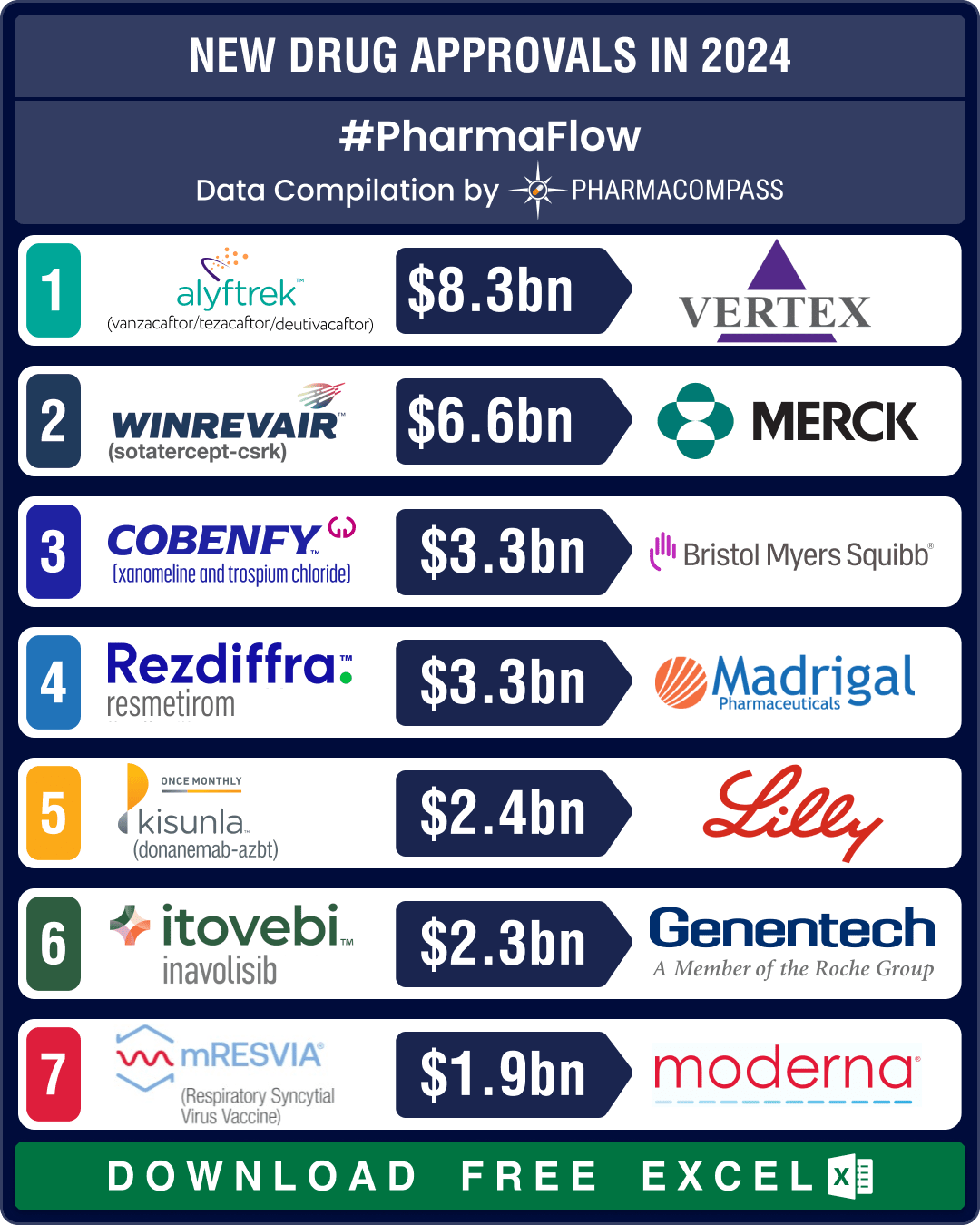
In 2024, the biopharma industry continued to advance on its robust trajectory of innovation. Though the US Food and Drug Administration’s Center for Drug Evaluation and Research (CDER) and the Center for Biologics Evaluation and Research (CBER) approved fewer drugs, there was a significant increase in medical breakthroughs.  While the CDER approved 50 new drugs in 2024, as compared to 55 in 2023, the CBER granted 14 biologics approvals in 2024, down from 20 in 2023. The European Medicines Agency (EMA) approved 34 new therapies, up from 32 in 2023, while Health Canada granted 28 approvals, down from 38 in 2023. The year saw long-awaited treatments being approved in areas such as schizophrenia and Alzheimer’s disease in the second half (H2) of 2024. In H1 2024, drugs to treat metabolic dysfunction-associated steatohepatitis (MASH) and chronic obstructive pulmonary disease (COPD) had been granted FDA approvals. As the year drew to a close, FDA began approving drugs at a feverish pace, with 29 of the CDER’s 50 approvals coming in H2. Like most years, the landscape of drug approvals was dominated by oncology, with 15 of the 50 drugs (30 percent) approved targeting various forms of cancer. This was followed by dermatology and non-malignant hematology, each accounting for 12 percent of approvals. Notably, small molecules continued to dominate the market, making up for 64 percent of the new drug approvals, while 32 percent were proteins, including monoclonal and bi-specific antibodies.  View New Drug Approvals in 2024 with Estimated Sales (Free Excel Available) Karuna-BMS’ schizophrenia drug, Lilly’s Alzheimer’s med, Neurocrine’s Crenessity dominate list of pathbreaking approvals in H2  Out of the 50 new drugs approved in 2024, CDER identified 24 (48 percent) as first-in-class, showcasing novel mechanisms of action. The most anticipated approval of 2024 was Karuna and Bristol Myers Squibb’s Cobenfy, a groundbreaking treatment for schizophrenia. This fixed-dose combination of xanomeline and trospium chloride represents the first novel mechanism of action in decades for this debilitating psychiatric condition. Analysts forecast peak annual sales of over US$ 3.3 billion for Cobenfy.  Eli Lilly’s Alzheimer’s drug Kisunla (donanemab) became the third amyloid-targeting antibody to gain FDA approval. Unlike its predecessors, Kisunla offers a unique limited-duration treatment regimen, allowing patients to discontinue therapy once amyloid levels in the brain drop below a certain threshold. Priced at approximately US$ 32,000 per year, it is positioned as a cost-effective alternative to existing treatments. Analysts estimate peak sales of US$ 2.4 billion for Kisunla. Crenessity (crinecerfont), developed by Neurocrine Biosciences, became the first FDA-approved treatment in decades for classic congenital adrenal hyperplasia (genetic conditions that affect the adrenal glands). Similarly, Vertex’s triple combination therapy of deutivacaftor, tezacaftor & vanzacaftor (Alyftrek) for cystic fibrosis represents a significant advancement in genetic disease treatment. Analysts forecast peak sales exceeding US$ 8.3 billion, underscoring the therapy’s potential to transform patient care. Meanwhile, Bridgebio’s Attruby (acoramidis hydrochloride) emerged as a promising treatment for cardiac amyloidosis, a life-threatening condition. Roche’s Itovebi, Checkpoint’s Unloxcyt clinch FDA approvals in H2 2024; forecast to achieve blockbuster status The dominance of cancer drug approvals reflects the ongoing focus on targeted therapies, immuno-oncology, and precision medicine to improve outcomes for patients with hard-to-treat cancers. Among the year’s notable FDA approvals was Genentech’s Itovebi (inavolisib), another targeted therapy that treats hormone receptor-positive (HR+), HER2-negative breast cancer. Itovebi is a PI3Kα inhibitor designed specifically for patients with PIK3CA mutations, a common driver of resistance to endocrine therapy in breast cancer. It demonstrated a more tolerable safety profile. Roche projects Itovebi’s peak (annual) sales to reach CHF 2 billion (US$ 2.3 billion). Checkpoint Therapeutics’ Unloxcyt (cosibelimab) joined the crowded checkpoint inhibitor market as the eleventh PD-1/PD-L1-targeting monoclonal antibody approved by the FDA. It was granted approval for cutaneous squamous cell carcinoma (cSCC), an aggressive form of skin cancer with high recurrence rates. As compared to other checkpoint inhibitors, like Keytruda (pembrolizumab) and Opdivo (nivolumab), Unloxcyt is likely to offer an advantage in immune activation. FDA also approved Astellas’ Vyloy (zolbetuximab), a first-in-class monoclonal antibody for metastatic gastric and gastroesophageal junction (GEJ) adenocarcinoma. Analysts forecast peak sales of approximately US$ 850 million for Vyloy. Syndax Pharmaceuticals’ Revuforj (revumenib) was approved by FDA to treat a type of acute leukemia in both adults and children. This approval introduces a novel class of medications known as menin inhibitors. These agents are currently in clinical development for the treatment of genetically defined subsets of acute leukemia. These inhibitors function by preventing the activation of cancer growth-related proteins. Potential blockbusters Lilly’s Ebglyss, Galderma’s Nemluvio lead advances in dermatology Eli Lilly’s Ebglyss (lebrikizumab) garnered significant attention. Approved by FDA for moderate-to-severe atopic dermatitis, this monoclonal antibody introduces a less burdensome dosing regimen compared to its competitors, with maintenance therapy required only once a month. This feature positions it as a potential contender to Dupixent (dupilumab), a market leader in atopic dermatitis. Ebglyss sales are forecast to reach US$ 1.9 billion by 2030. Galderma’s Nemluvio (nemolizumab) secured FDA approval for two indications in 2024 — prurigo nodularis (a chronic disorder of the skin) and moderate-to-severe atopic dermatitis in patients aged 12 years and older. As the first humanized IgG2 monoclonal antibody targeting the IL-31 receptor, Nemluvio directly inhibits the key driver of itch and inflammation in both these conditions. With its unique mechanism and broad dermatology potential, analysts forecast peak sales of approximately US$ 1.66 billion.  Ebglyss and Nemluvio underscore the growing importance of biologics in dermatological care. Botanix Pharmaceuticals also made strides in dermatology by clinching an FDA approval for Sofdra (sofpironium) in June. The drug has been okayed for the treatment of primary axillary hyperhidrosis, a condition characterized by excessive sweating. Ascendis Pharma’s Yorvipath (palopegteriparatide), a therapy approved by FDA to treat hypoparathyroidism, is forecast to achieve blockbuster sales of US$ 1.8 billion by 2030, highlighting its potential to transform endocrine care. Our view Overall, 2024 was defined by its breakthrough drug approvals. The year also saw significant reduction in complete response letters (CRLs) — they dropped from 43 in 2023 to just 29 in 2024. This suggests improved industry preparedness and alignment with regulatory expectations. The new year began with the approval of Datroway (datopotamab deruxtecan) from AstraZeneca and Daiichi Sankyo, marking a significant advancement in oncology. Several other promising new drugs are coming up for FDA approval this year, such as J&J’s nipocalimab, Vertex Pharmaceuticals’ suzetrigine, Elevar Therapeutics’ rivoceranib/camrelizumab, Sanofi’s fitusiran and GSK’s gepotidacin. Hopefully, the momentum of breakthrough approvals will continue through 2025, political headwinds in the US notwithstanding.

Impressions: 14617

https://dev1.pharmacompass.com/radio-compass-blog/fda-okays-50-new-drugs-in-2024-bms-cobenfy-lilly-s-kisunla-lead-pack-of-breakthrough-therapies

#PharmaFlow by PHARMACOMPASS
30 Jan 2025

WEEKLY INDUSTRY NEWS

1read-more
read-more
Covid-19 update: Remdesivir found to accelerate recovery in key trial; France to study nicotine patches on patients
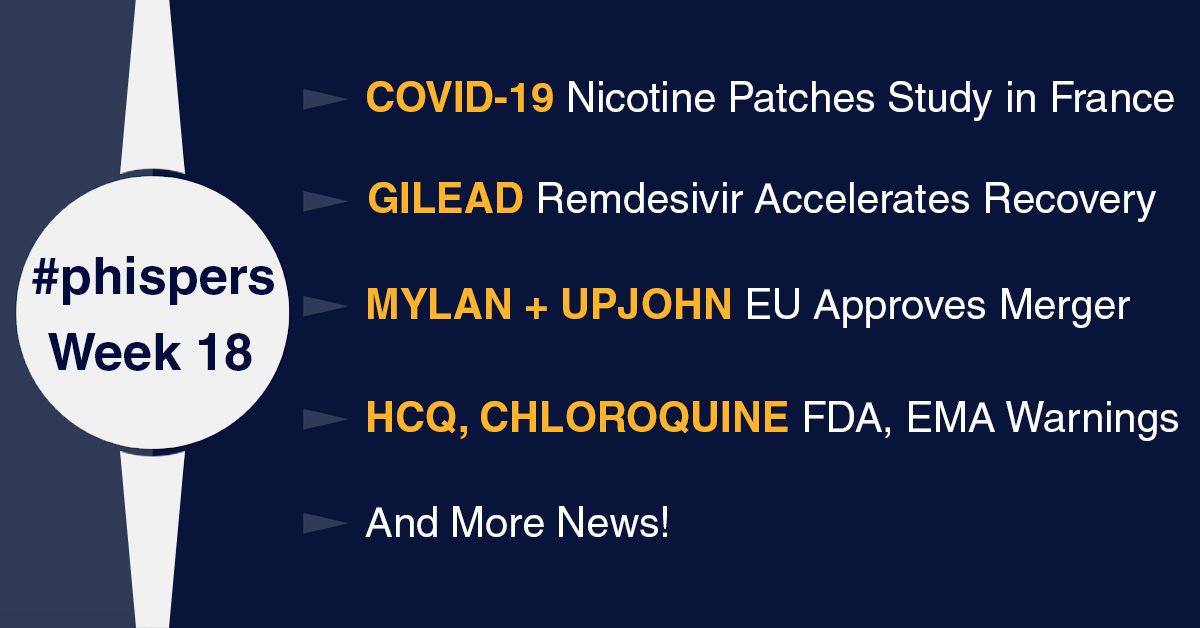
This week, Phispers brings you news that a key study undertaken by the National Institute of Allergy and Infectious Diseases in the US has revealed that Gilead’s remdesivir accelerates recovery against Covid-19. Japan will approve the drug for treating the disease. The USFDA and the EMA have issued warnings on the side-effects of HCQ and CQ and have cautioned against the use of these drugs for Covid-19.  FDA’s Janet Woodcock said the agency did its best by approving emergency use of Bayer’s chloroquine, since people with auto immune diseases were having trouble accessing the drug due to its high demand. A study undertaken by a French hospital has suggested that smokers may be at much less risk of contracting Covid-19.  Human trials on this hypothesis will begin soon. Another study undertaken in France found tocilizumab to significantly improve clinical outcomes of patients with moderate or severe Covid-19 pneumonia. And the European Commission approved the proposed merger of Mylan and Upjohn, the Pfizer division that handles off-patent branded and generic drugs, though the approval is subject to conditions. French researchers to test nicotine patches on Covid-19 patients after study shows smokers at lower risk   French researchers are planning to test nicotine patches on Covid-19 patients and frontline health workers after a study suggested smokers may be much less at risk of contracting the virus. They are getting ready to launch a human trial to test this hypothesis. The trial will begin in around three weeks. The study at the Pitié-Salpêtrière hospital in Paris suggests that nicotine in tobacco may be stopping patients who smoke from catching Covid-19. The trial will involve groups of healthcare workers and patients wearing nicotine patches and other groups wearing placebo patches. They will then be tested to see if there is a difference in how their bodies respond to the virus. However, the researchers insisted they were not encouraging the population to take up smoking, which carries other potentially fatal health risks and kills 50 percent of smokers. The researchers also said while nicotine may protect those from the virus, smokers who have caught it often develop more serious symptoms because of the toxic effect of tobacco smoke on the lungs. The team at Pitié-Salpêtrière hospital questioned 480 patients who tested positive for the virus. Out of them, 350 had been hospitalized while the rest with less serious symptoms were at home. The median age of those who were admitted to the hospital was 65 years. Out of those, only 4.4 percent were regular/daily smokers. In the French population, 25.4 percent are daily smokers. Since the proportion of daily smokers was significantly lower in the 480 patient group who had tested positive for Covid-19, the authors concluded that daily smokers had a much lower probability of developing symptomatic or severe SARS-CoV-2 infection as compared to the general population. However, this hypothesis needs to be tested clinically. Therefore, researchers are carrying out a trial by making healthcare workers and patients wear nicotine and placebo patches. Meanwhile, France has banned online sale of nicotine substitutes after the release of this study as the government fears panic buying of nicotine replacement therapies. The government said the ban would stop people from rushing out and potentially over-consuming nicotine substitutes, as well as ensure a steady supply for patients genuinely being treated for smoking addiction. Tocilizumab findings: A study in France found tocilizumab to significantly improve clinical outcomes of patients with moderate or severe Covid-19 pneumonia. A total of 129 patients were randomized: 65 to standard of care + tocilizumab and 64 to standard of care alone.  Patients were selected on the basis of being hospitalized for Covid-19 moderate or severe pneumonia not requiring intensive care upon admission. The primary composite outcome was need for ventilation (non-invasive or mechanical) or death at day 14. A significantly lower proportion of patients reached the primary outcome in the tocilizumab arm. Results of this study will be submitted for publication in a peer-reviewed journal. Tocilizumab suppresses overreactions of the immune system and helps inhibit a deadly medical condition called a cytokine storm — an overproduction of immune cells that damage healthy tissues — which is also one of the main causes of death for critically ill Covid-19 patients.  Last month, China had approved Swiss drugmaker Roche’s Actemra (tocilizumab) for patients who develop severe complications from Covid-19. Crucial study shows remdesivir accelerates recovery against Covid-19; Japan set to approve it   The closely-watched experimental drug to treat Covid-19 — Gilead Sciences’ remdesivir — saw news reports swaying in favor and against the drug over the course of the week. On Wednesday though, a US government-run study of remdesivir showed that the medicine accelerates recovery from advanced Covid-19, the disease caused by the novel coronavirus. In a statement, Gilead said: “We understand that the trial has met its primary endpoint.”  Time to recovery is a metric often used in influenza trials and is defined as being well enough for hospital discharge or returning to normal activity level. Preliminary results indicate that patients who received remdesivir had a 31 percent faster time (11 days) to recovery as compared to those who received placebo (15 days). Results also suggested a survival benefit, with a mortality rate of 8.0 percent for the group receiving remdesivir versus 11.6 percent for the placebo group. The study compared remdesivir to placebo with neither patients nor physicians knowing who got the drug instead of a placebo. Such a study means unconscious biases will not affect the conclusions.   Once the data is out, the findings are likely to represent the first treatment shown to improve outcomes in Covid-19 patients. A total of 68 sites were involved in the study — 47 in the United States and 21 in countries in Europe and Asia.  Last week, a summary of the results of a clinical trial undertaken in China on remdesivir got inadvertently posted to the website of the World Health Organization (WHO). It suggested that the drug shows no benefit to Covid-19 patients and didn’t prevent them from dying. The summary was taken down soon, though a screenshot of the WHO post was captured by a medical news website. The news of the China trial came days after the University of Chicago Medicine hospital reported detailed rapid recovery in fever and respiratory symptoms in some patients with Covid-19. Gilead, however, said the data from the Chinese trial suggests a “potential benefit.” There are multiple phase 3 studies underway to gauge how effective remdesivir is in combating Covid-19. In addition to carrying two phase 3 studies, Gilead has made the drug available to studies run by other sponsors, including the one in China, as well as to more than 1,700 people on a compassionate use basis. The NIAID study was among the most important and rigorously designed to test remdesivir in Covid-19. Meanwhile, Japan’s Prime Minister Shinzo Abe said the country will soon approve remdesivir for the treatment of coronavirus patients. A government official said the drug will be approved as early as next month to treat patients with Covid-19. In Japan, the anti-influenza drug Avigan is also going through clinical tests on Covid-19 patients. A scientific study in China has shown its efficacy in treating the disease. EU approves merger of Mylan and Pfizer’s Upjohn division, subject to conditions   The European Commission has approved the proposed merger of Mylan and Upjohn, a business division of Pfizer that operates Pfizer’s off-patent branded and generic established medicines under the EU Merger Regulation. The decision is conditional, depending upon divestment of Mylan’s business for certain generic medicines. Margrethe Vestager, executive vice-president responsible for competition policy of the European Commission said: “Ensuring that patients and hospitals have access to medicines at fair and competitive prices, as well as ensuring security of supply, is always a key priority which resonates even more strongly in the current challenging context. Our decision ensures that the merger between Mylan and Upjohn does not harm competition, thus preserving competitive access to certain genericised medicines for national health services and European citizens”. The Commission’s probe focused on the market for generic medicines. Mylan and Upjohn overlap in various therapeutic areas such as cardiovascular, genito-urinary, musculoskeletal, nervous system, and sensory organ treatments. The investigation found no competition concerns arise for the majority of the products supplied by both Mylan and Upjohn. “The Commission has concluded that the proposed transaction, as modified by the commitments, would no longer raise competition concerns in the EEA. The decision is conditional upon full compliance with the commitment,” a statement said. FDA, EMA issue warnings on HCQ over side effects; FDA speaks up on Bayer’s CQ   The US Food and Drug Administration has cautioned against use of hydroxychloroquine (HCQ) or chloroquine (CQ) for Covid-19 outside of the hospital setting or a clinical trial due to risk of heart rhythm problems. The EMA has also said CQ and HCQ are known to potentially cause heart rhythm problems. “Recent studies have reported serious, in some cases fatal, heart rhythm problems with chloroquine or hydroxychloroquine, particularly when taken at high doses or in combination with the antibiotic azithromycin,” EMA said in a statement. The two drugs are currently authorized for treating malaria and certain autoimmune diseases. In addition to side effects affecting the heart, they are known to potentially cause liver and kidney problems, nerve cell damage that can lead to seizures (fits) and low blood sugar (hypoglycaemia), the statement added. “Healthcare professionals are recommended to closely monitor patients with Covid-19 receiving chloroquine or hydroxychloroquine and to take into account pre-existing heart problems that can make patients more prone to heart rhythm issues,” it said.  ‘FDA did best by granting EUA to Bayer’s CQ’: In an interview to STAT News, Janet Woodcock, who heads the FDA Center for Drug Evaluation and Research, said the FDA approved the EUA (Emergency Use Authorization) for a Bayer drug (chloroquine) that wasn’t approved in the US and a couple of other HCQ drugs during a time when there was tremendous demand and people with lupus and other autoimmune diseases were having trouble accessing the drug because of the demand. “We were clear that an Emergency Use Authorization is not an FDA approval in any shape or form. We simply said it’s possible from the in vitro data this may have a beneficial effect and the benefits may outweigh the risks,” she said.  “Given the circumstances, I would say we did the best we could,” Woodcock added.  

Impressions: 49801

https://dev1.pharmacompass.com/radio-compass-phisper/covid-19-update-remdesivir-found-to-accelerate-recovery-in-key-trial-france-to-study-nicotine-patches-on-patients

#PharmaFlow by PHARMACOMPASS
30 Apr 2020

NEWS LIBRARY

177read-more
read-more

https://www.pharmacompass.com/pdf/news/enforcement-report-week-of-september-02-2026-43668.pdf

FDA
02 Sep 2026

https://www.businesswire.com/news/home/20260810034320/en/Fresenius-Kabi-Issues-Nationwide-Recall-of-Tyenne-tocilizumab-aazg-Injection-400-mg20-mL-Vials-Due-to-Presence-of-Glass-Particles

BUSINESSWIRE
10 Aug 2026

https://firstwordpharma.com/story/7543500

FIRSTWORD PHARMA
10 Jun 2026

https://www.ema.europa.eu/en/medicines/human/EPAR/tuyory

EMA
27 Apr 2026

https://www.businesswire.com/news/home/20260409993943/en/CMS-Grants-Fresenius-Kabi-COVID-19-Indication-Specific-HCPCS-Codes-for-Tyenne-tocilizumab-aazg

BUSINESSWIRE
09 Apr 2026

https://www.prnewswire.com/news-releases/celltrion-announces-us-availability-of-avtozma-tocilizumab-anoh-subcutaneous-sc-formulation-302712962.html

PR NEWSWIRE
16 Mar 2026
digital-contentPB000248##p