Please Wait
Applying Filters...
Menu

Digital Content read-more

Create Content with PharmaCompass, ask us

PHARMA & BIOTECH INSIGHTS

1read-more
read-more

A PHP Error was encountered

Severity: 8192

Message: mb_convert_encoding(): Handling HTML entities via mbstring is deprecated; use htmlspecialchars, htmlentities, or mb_encode_numericentity/mb_decode_numericentity instead

Filename: blog/grid.php

Line Number: 52

Backtrace:

File: /var/www/html/application/views/include/media/blog/grid.php
Line: 52
Function: mb_convert_encoding

File: /var/www/html/application/models/Cmn.php
Line: 3595
Function: view

File: /var/www/html/application/views/include/product/digitalContent/grid.php
Line: 17
Function: common

File: /var/www/html/application/views/include/desc/inner.php
Line: 13
Function: view

File: /var/www/html/application/views/include/desc/indexNew.php
Line: 2433
Function: include

File: /var/www/html/application/controllers/Common.php
Line: 11303
Function: view

File: /var/www/html/index.php
Line: 231
Function: require_once

FDA okays 50 new drugs in 2024; BMS’ Cobenfy, Lilly’s Kisunla lead pack of breakthrough therapies
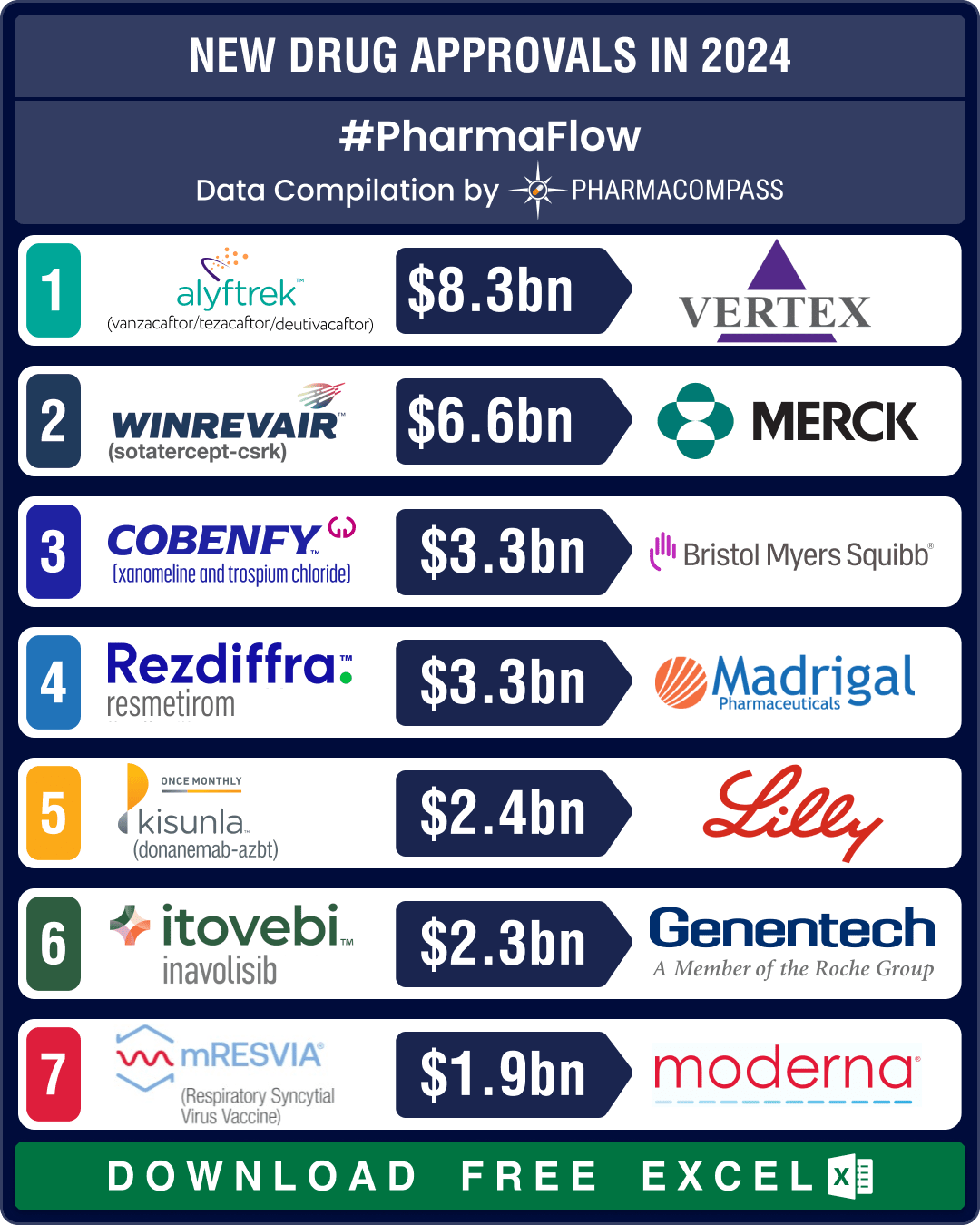
In 2024, the biopharma industry continued to advance on its robust trajectory of innovation. Though the US Food and Drug Administration’s Center for Drug Evaluation and Research (CDER) and the Center for Biologics Evaluation and Research (CBER) approved fewer drugs, there was a significant increase in medical breakthroughs.  While the CDER approved 50 new drugs in 2024, as compared to 55 in 2023, the CBER granted 14 biologics approvals in 2024, down from 20 in 2023. The European Medicines Agency (EMA) approved 34 new therapies, up from 32 in 2023, while Health Canada granted 28 approvals, down from 38 in 2023. The year saw long-awaited treatments being approved in areas such as schizophrenia and Alzheimer’s disease in the second half (H2) of 2024. In H1 2024, drugs to treat metabolic dysfunction-associated steatohepatitis (MASH) and chronic obstructive pulmonary disease (COPD) had been granted FDA approvals. As the year drew to a close, FDA began approving drugs at a feverish pace, with 29 of the CDER’s 50 approvals coming in H2. Like most years, the landscape of drug approvals was dominated by oncology, with 15 of the 50 drugs (30 percent) approved targeting various forms of cancer. This was followed by dermatology and non-malignant hematology, each accounting for 12 percent of approvals. Notably, small molecules continued to dominate the market, making up for 64 percent of the new drug approvals, while 32 percent were proteins, including monoclonal and bi-specific antibodies.  View New Drug Approvals in 2024 with Estimated Sales (Free Excel Available) Karuna-BMS’ schizophrenia drug, Lilly’s Alzheimer’s med, Neurocrine’s Crenessity dominate list of pathbreaking approvals in H2  Out of the 50 new drugs approved in 2024, CDER identified 24 (48 percent) as first-in-class, showcasing novel mechanisms of action. The most anticipated approval of 2024 was Karuna and Bristol Myers Squibb’s Cobenfy, a groundbreaking treatment for schizophrenia. This fixed-dose combination of xanomeline and trospium chloride represents the first novel mechanism of action in decades for this debilitating psychiatric condition. Analysts forecast peak annual sales of over US$ 3.3 billion for Cobenfy.  Eli Lilly’s Alzheimer’s drug Kisunla (donanemab) became the third amyloid-targeting antibody to gain FDA approval. Unlike its predecessors, Kisunla offers a unique limited-duration treatment regimen, allowing patients to discontinue therapy once amyloid levels in the brain drop below a certain threshold. Priced at approximately US$ 32,000 per year, it is positioned as a cost-effective alternative to existing treatments. Analysts estimate peak sales of US$ 2.4 billion for Kisunla. Crenessity (crinecerfont), developed by Neurocrine Biosciences, became the first FDA-approved treatment in decades for classic congenital adrenal hyperplasia (genetic conditions that affect the adrenal glands). Similarly, Vertex’s triple combination therapy of deutivacaftor, tezacaftor & vanzacaftor (Alyftrek) for cystic fibrosis represents a significant advancement in genetic disease treatment. Analysts forecast peak sales exceeding US$ 8.3 billion, underscoring the therapy’s potential to transform patient care. Meanwhile, Bridgebio’s Attruby (acoramidis hydrochloride) emerged as a promising treatment for cardiac amyloidosis, a life-threatening condition. Roche’s Itovebi, Checkpoint’s Unloxcyt clinch FDA approvals in H2 2024; forecast to achieve blockbuster status The dominance of cancer drug approvals reflects the ongoing focus on targeted therapies, immuno-oncology, and precision medicine to improve outcomes for patients with hard-to-treat cancers. Among the year’s notable FDA approvals was Genentech’s Itovebi (inavolisib), another targeted therapy that treats hormone receptor-positive (HR+), HER2-negative breast cancer. Itovebi is a PI3Kα inhibitor designed specifically for patients with PIK3CA mutations, a common driver of resistance to endocrine therapy in breast cancer. It demonstrated a more tolerable safety profile. Roche projects Itovebi’s peak (annual) sales to reach CHF 2 billion (US$ 2.3 billion). Checkpoint Therapeutics’ Unloxcyt (cosibelimab) joined the crowded checkpoint inhibitor market as the eleventh PD-1/PD-L1-targeting monoclonal antibody approved by the FDA. It was granted approval for cutaneous squamous cell carcinoma (cSCC), an aggressive form of skin cancer with high recurrence rates. As compared to other checkpoint inhibitors, like Keytruda (pembrolizumab) and Opdivo (nivolumab), Unloxcyt is likely to offer an advantage in immune activation. FDA also approved Astellas’ Vyloy (zolbetuximab), a first-in-class monoclonal antibody for metastatic gastric and gastroesophageal junction (GEJ) adenocarcinoma. Analysts forecast peak sales of approximately US$ 850 million for Vyloy. Syndax Pharmaceuticals’ Revuforj (revumenib) was approved by FDA to treat a type of acute leukemia in both adults and children. This approval introduces a novel class of medications known as menin inhibitors. These agents are currently in clinical development for the treatment of genetically defined subsets of acute leukemia. These inhibitors function by preventing the activation of cancer growth-related proteins. Potential blockbusters Lilly’s Ebglyss, Galderma’s Nemluvio lead advances in dermatology Eli Lilly’s Ebglyss (lebrikizumab) garnered significant attention. Approved by FDA for moderate-to-severe atopic dermatitis, this monoclonal antibody introduces a less burdensome dosing regimen compared to its competitors, with maintenance therapy required only once a month. This feature positions it as a potential contender to Dupixent (dupilumab), a market leader in atopic dermatitis. Ebglyss sales are forecast to reach US$ 1.9 billion by 2030. Galderma’s Nemluvio (nemolizumab) secured FDA approval for two indications in 2024 — prurigo nodularis (a chronic disorder of the skin) and moderate-to-severe atopic dermatitis in patients aged 12 years and older. As the first humanized IgG2 monoclonal antibody targeting the IL-31 receptor, Nemluvio directly inhibits the key driver of itch and inflammation in both these conditions. With its unique mechanism and broad dermatology potential, analysts forecast peak sales of approximately US$ 1.66 billion.  Ebglyss and Nemluvio underscore the growing importance of biologics in dermatological care. Botanix Pharmaceuticals also made strides in dermatology by clinching an FDA approval for Sofdra (sofpironium) in June. The drug has been okayed for the treatment of primary axillary hyperhidrosis, a condition characterized by excessive sweating. Ascendis Pharma’s Yorvipath (palopegteriparatide), a therapy approved by FDA to treat hypoparathyroidism, is forecast to achieve blockbuster sales of US$ 1.8 billion by 2030, highlighting its potential to transform endocrine care. Our view Overall, 2024 was defined by its breakthrough drug approvals. The year also saw significant reduction in complete response letters (CRLs) — they dropped from 43 in 2023 to just 29 in 2024. This suggests improved industry preparedness and alignment with regulatory expectations. The new year began with the approval of Datroway (datopotamab deruxtecan) from AstraZeneca and Daiichi Sankyo, marking a significant advancement in oncology. Several other promising new drugs are coming up for FDA approval this year, such as J&J’s nipocalimab, Vertex Pharmaceuticals’ suzetrigine, Elevar Therapeutics’ rivoceranib/camrelizumab, Sanofi’s fitusiran and GSK’s gepotidacin. Hopefully, the momentum of breakthrough approvals will continue through 2025, political headwinds in the US notwithstanding.

Impressions: 14617

https://dev1.pharmacompass.com/radio-compass-blog/fda-okays-50-new-drugs-in-2024-bms-cobenfy-lilly-s-kisunla-lead-pack-of-breakthrough-therapies

#PharmaFlow by PHARMACOMPASS
30 Jan 2025

WEEKLY INDUSTRY NEWS

2read-more
read-more
FDA approves first ever T-cell receptor gene therapy from Adaptimmune, Servier’s brain tumor pill
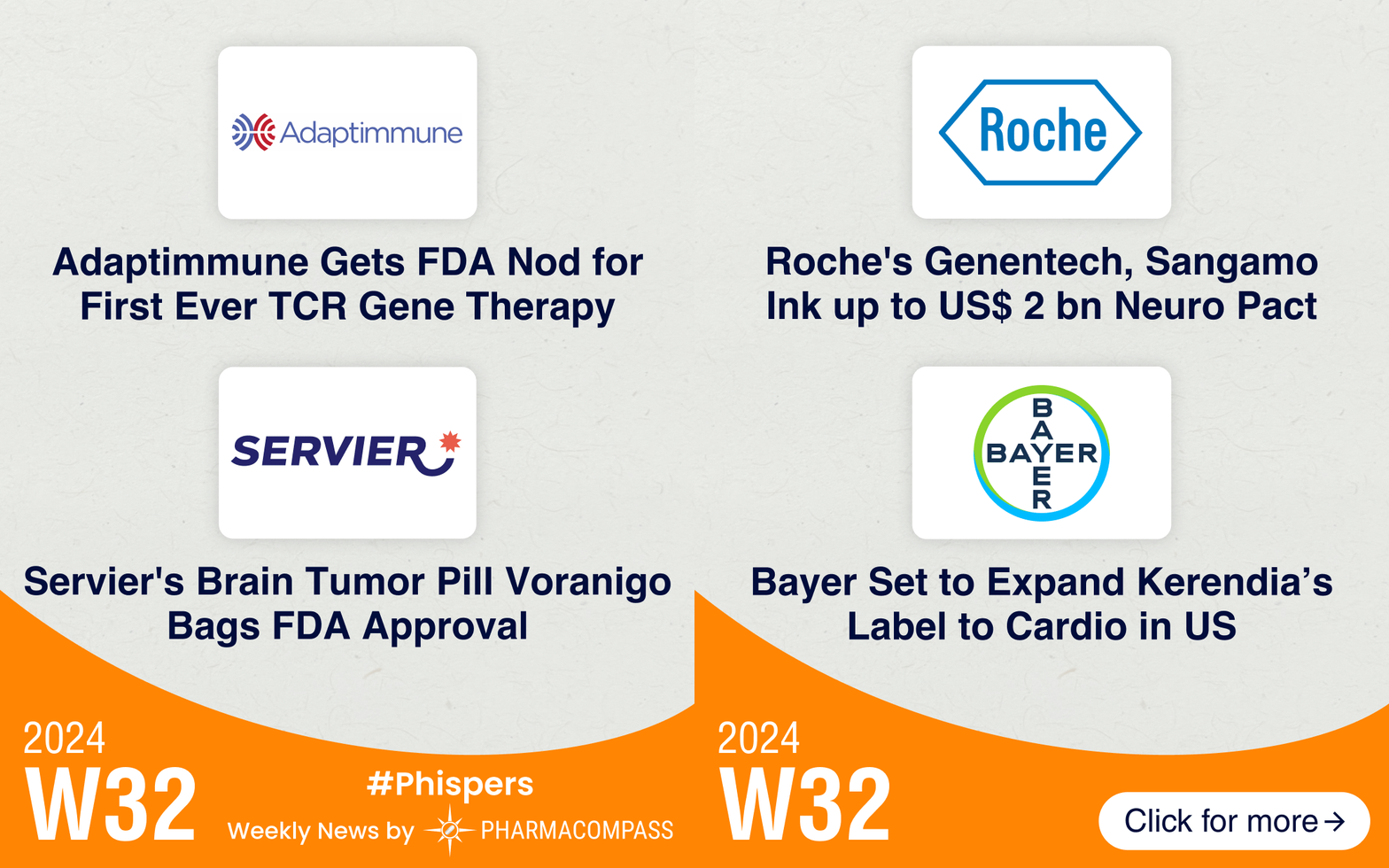
This week, Adaptimmune clinched gold when it secured the first-ever US Food and Drug Administration (FDA) approval for a T-cell receptor gene therapy. Its drug Tecelra was okayed to treat a rare and aggressive cancer, known as synovial sarcoma, that often affects young people. FDA also expanded the label of GSK’s Jemperli in endometrial cancer.Besides these approvals, the agency approved Servier’s drug for a certain kind of brain tumor, known as  Grade 2 IDH-mutant gliom. It also granted accelerated approval to Novartis’ Fabhalta (iptacopan) to reduce excess protein in the urine of patients with primary immunoglobulin A nephropathy (IgAN) at risk of rapid disease progression.In deals, Roche’s Genentech has signed a potential US$ 2 billion deal with Sangamo for novel genomic medicines. And Instil has signed a potential US$ 2 billion deal with ImmuneOnco for two cancer candidates.The White House has said that China has imposed restrictions on chemicals critical to fentanyl production. And the Lacks family is suing Novartis and Viatris, alleging they unjustly profited from the genetic material of deceased Henrietta Lacks, without the family’s consent.FDA grants accelerated approval to Adaptimmune’s gene therapy to cure rare cancerFDA has granted accelerated approval to Adaptimmune’s first-of-its-kind therapy — Tecelra (afami-cel) — for a rare type of cancer that often affects young people. Synovial sarcoma is a potential life threatening soft-tissue sarcoma that usually develops in the extremities. This is the maiden FDA approval for Adaptimmune. Tecelra is the first ever T cell receptor (TCR) gene therapy approved by the FDA. It was okayed for certain patients whose cancer had spread and cannot be completely removed by surgery after they’ve been through chemotherapy. Tecelra is a one-time treatment listed at a whopping price of US$ 727,000.Servier lands approval for first therapy to treat common type of brain tumor in USFDA has approved Servier’s drug for a certain kind of brain tumor rendering it the first and only treatment in the US for the condition. The French drugmaker’s Voranigo (vorasidenib) was okayed to treat Grade 2 IDH-mutant glioma in patients 12 years and older following surgery. Gliomas are common types of brain cancers that can hinder the normal functioning of the brain. Voranigo offers the convenience of a once-daily pill to actively manage the disease.FDA okays Novartis’ kidney disease drug: FDA has granted accelerated approval to Novartis’ Fabhalta (iptacopan) to reduce excess protein in the urine of patients with primary immunoglobulin A nephropathy (IgAN) at risk of rapid disease progression. Excess urine protein can be an indication of the kidney failing to properly filter and Novartis’ first-in-class drug reduced it by 43.8 percent compared to a placebo.GSK scores broad endometrial cancer label expansion for Jemperli: FDA has expanded the label of GSK’s Jemperli in endometrial cancer. Jemperli has now bagged a broad approval as a first-line treatment for endometrial cancer, regardless of the biomarker status, when used in combination with chemotherapy. This includes patients with mismatch repair proficient (pMMR) or microsatellite-stable (MSS) tumors. Barely a month ago, FDA had okayed Merck’s Keytruda for a broad first-line endometrial cancer population.Roche’s Genentech inks potential US$ 2 bn deal with Sangamo for Alzheimer’sRoche, via its subsidiary Genentech, has secured exclusive rights to molecules from Sangamo Therapeutics designed to repress the gene that makes “tau,” a protein many scientists believe is a main driver of Alzheimer’s disease. The potential US$ 1.95 billion deal comprises other novel genomic medicines for neurodegenerative diseases. Also, a report in the Financial Times citing insiders said Roche is looking to divest its cancer data specialist Flatiron Health for US$ 1.2 billion. In 2018, Roche paid US$ 1.9 billion for Flatiron to speed up the development of cancer meds and help price them.Instil in up to US$ 2 bn deal with ImmuneOnco for two cancer candidates: Dallas-based biotech Instil Bio has agreed to pay up to US$ 2 billion as well as US$ 50 million in upfront and near-term payments to China’s ImmuneOnco Biopharmaceuticals for two clinical-stage candidates.Eisai inks deal with SEED: Eisai has inked a deal with SEED Therapeutics worth up to US$ 1.5 billion to develop novel molecular glue degraders for the treatment of neurodegenerative diseases and cancer. The drugs work by linking the body’s natural protein recycling machinery with the disease-causing protein.Bayer scores phase 3 win as Kerendia cuts risk of cardiovascular death, heart failureBayer saw a key win with Kerendia (finerenone) showing it can reduce the risk of cardiovascular death, and first and recurrent heart failure events in a phase 3 trial. The German multinational is betting big on Kerendia and expects peak sales to the tune of € 3 billion (US$ 3.3 billion) from it.Novartis, Viatris hit with lawsuit over stolen genetic material of Henrietta LacksThe family of Henrietta Lacks has filed a lawsuit against Novartis and Viatris, alleging they unjustly profited from Lacks’ genetic material without her family’s consent. Lacks was an African-American woman whose cancer cells were the source of the first immortalized human cell line – a cell line that can reproduce indefinitely under specific conditions. The HeLa cell line derived from her cancer cells is one of the most important cell lines in medical research and a cornerstone in modern medicine that is accountable for an untold number of innovations, including polio and Covid vaccines. The HeLa cells were cut from Lacks’ cervix without her permission in 1951, while she was being treated at Johns Hopkins for cervical cancer. Her family has been on a quest to get compensation for her immortal HeLa cells.US says China has imposed restrictions on chemicals critical to fentanyl productionAccording to the White House, China has imposed controls on the production of chemicals critical to making fentanyl. In April this year, the House China committee had accused the Asian country of subsidizing production of illicit fentanyl precursors for export. Fentanyl is the leading cause of death between the ages of 18 and 45 in the US. 

Impressions: 1277

https://dev1.pharmacompass.com/radio-compass-phisper/fda-approves-first-ever-t-cell-receptor-gene-therapy-from-adaptimmune-servier-s-brain-tumor-pill

#Phispers by PHARMACOMPASS
08 Aug 2024

NEWS LIBRARY

23read-more
read-more

https://www.prnewswire.com/news-releases/nuvation-bio-announces-positive-updated-phase-2-data-and-expansion-of-safusidenib-clinical-program-with-two-new-studies-to-explore-broad-spectrum-of-idh1-mutant-glioma-302828874.html

PR NEWSWIRE
20 Jul 2026

https://www.prnewswire.com/news-releases/servier-to-present-extended-follow-up-results-from-the-phase-3-indigo-trial-showing-durable-and-sustained-treatment-benefits-of-voranigo-vorasidenib-at-asco-2026-302786471.html

PR NEWSWIRE
31 May 2026

https://www.pharmiweb.com/press-release/2026-03-31/servier-receives-news-that-nice-draft-guidance-recommends-vorasidenib-voranigo-q-for-use-in-the-nhs-for-eligible-patients-with-low-grade-glioma

PHARMIWEB
31 Mar 2026

https://www.expresspharma.in/servier-india-secures-cdsco-approval-for-vorasidenib-for-grade-2-idh-mutant-glioma/

EXPRESSPHARMA
10 Dec 2025

https://www.prnewswire.com/news-releases/serviers-voranigo-vorasidenib-receives-prix-galien-awards-across-multiple-regions-302635232.html

PR NEWSWIRE
08 Dec 2025

https://investors.nuvationbio.com/news/news-details/2025/Nuvation-Bio-Enrolls-First-Patient-in-Global-Randomized-Study-of-Safusidenib-for-Maintenance-Treatment-of-High-Grade-IDH1-Mutant-Glioma/default.aspx

PRESS RELEASE
04 Nov 2025
digital-content117817422##p